From Brand Guidelines to Story Bible: Translating Visual Identity Systems into Questas-Ready Worlds

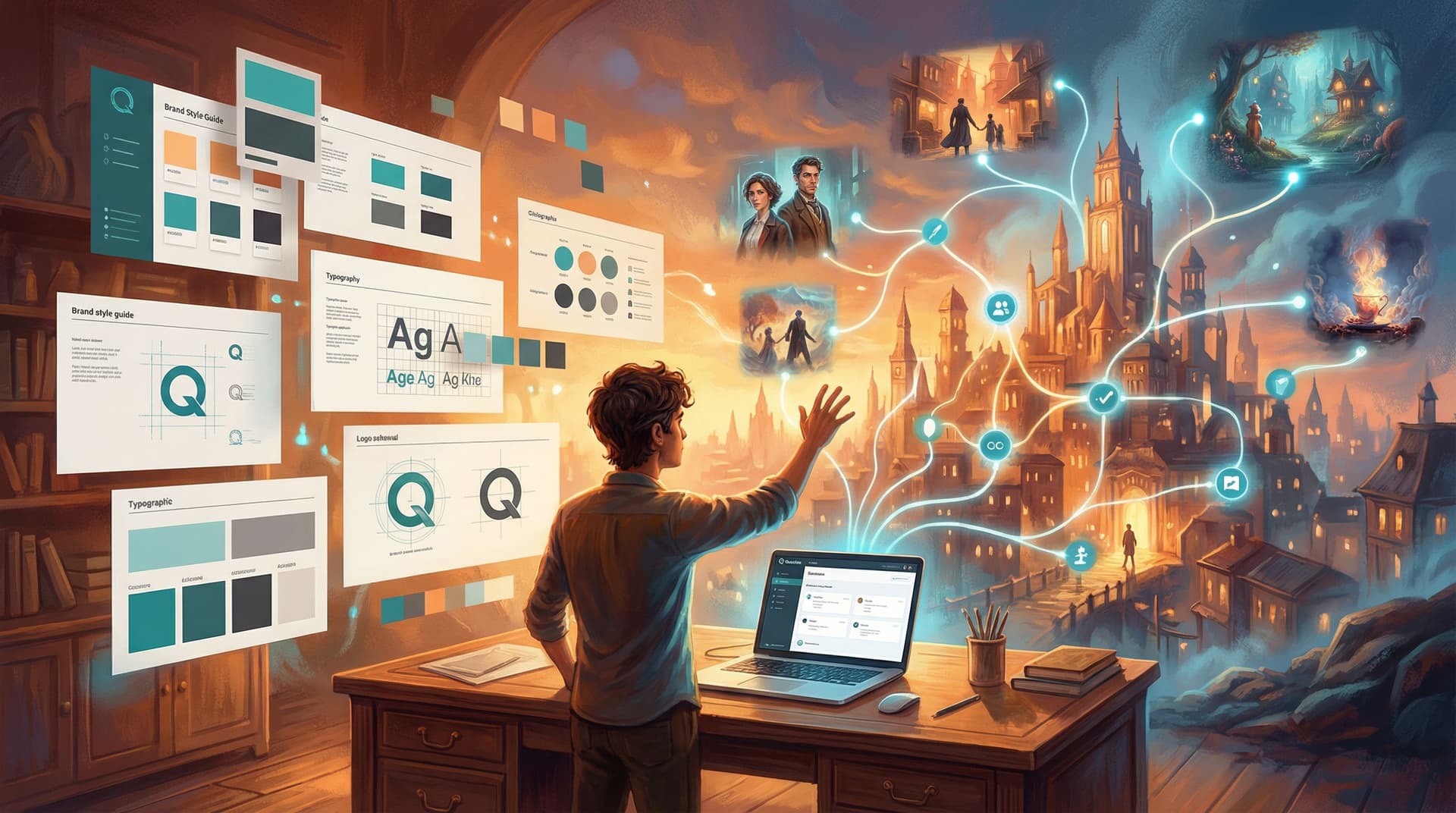
Brand teams are sitting on story gold and often don’t realize it.
Every color token, logo rule, tone‑of‑voice note, and photography guideline in your brand book is really a set of worldbuilding constraints. They define what your universe looks and feels like, how it speaks, and what it believes.
The challenge: brand guidelines are usually written for decks and campaigns—not for interactive, branching stories.
This is where turning your brand system into a story bible pays off. When you translate your guidelines into a Questas‑ready world, you give your team a reusable foundation for:
- Playable campaigns and product tours
- Training and onboarding journeys
- Narrative prototypes for pitches and concepts
- Long‑running storyworlds that stay on‑brand, even as they branch in dozens of directions
And because Questas is visual and no‑code, your strategists, writers, and educators can build those experiences themselves—without waiting on a dev sprint.
In this post, we’ll walk through how to go from static brand guidelines to a living story bible that plugs cleanly into Questas.
Why Turn Brand Guidelines into a Story Bible?
Before we get tactical, it’s worth naming what you gain by doing this work.
1. Consistency across every branch
Interactive stories multiply surface area. One campaign might have:
- 30+ scenes
- 10–20 unique decision points
- Multiple endings and side paths
Without a story bible, each new scene risks drifting off‑brand—especially when different people are writing copy or generating visuals. A story bible gives everyone a single source of truth for tone, visuals, and narrative rules.
2. Faster production with fewer approvals
When your world is defined in advance, your team can:
- Generate AI images that “just look right” on the first or second try
- Reuse character archetypes and locations instead of reinventing them
- Approve scenes based on alignment with the bible, not personal taste
That’s especially powerful for agencies building playable pitches. If that’s you, you’ll find this pairs well with the workflow in From Brief to Branches: Agencies Using Questas to Pitch Campaign Concepts as Playable Stories.
3. A foundation for long‑term IP
Once your brand world exists as a bible, you can:
- Spin up sequels, side stories, and seasonal specials
- Hand the world to partners or creators without diluting it
- Turn one campaign into a reusable story system, not a one‑off asset
4. Better measurement and iteration
When your world is structured, you can test:
- How different tones of voice affect choices
- Which character archetypes drive completion
- Which visual styles keep people exploring
And then update the bible instead of fixing every scene individually.
Step 1: Audit Your Existing Brand System Through a Story Lens
You probably already have:
- A brand book or style guide
- A tone‑of‑voice document
- Example campaigns, landing pages, or scripts
Your first move is to re‑read these as a narrative designer, not a marketer.
Look for four categories:
-
Values and themes
- What does the brand believe about the world and the people in it?
- What tensions or conflicts show up again and again? (e.g., security vs. freedom, ambition vs. burnout, order vs. creativity)
-
Personality and voice
- If your brand were a character, how would they speak?
- What’s off‑limits? (e.g., no sarcasm, no jargon, no fear‑based messaging)
-
Visual DNA
- Color palettes and what they’re used for
- Photography or illustration styles (e.g., cinematic, collage, flat, 3D, lo‑fi)
- Motion or video guidelines (e.g., handheld, documentary, hyper‑polished)
-
Audience archetypes
- Who are you talking to?
- What are their goals, fears, and constraints?
Turn this audit into a one‑page summary you can reference while building your bible. Don’t overcomplicate it; you’re just extracting the raw materials.
Step 2: Define Your Storyworld’s Core Premise and Rules
A story bible starts with a clear answer to: “What kind of world is this?”
For a brand, that doesn’t have to mean dragons or starships. It might be:
- A near‑future city where your productivity tool quietly orchestrates everyone’s day
- A campus where educators test new teaching methods through interactive journeys
- A startup accelerator told as a hero’s journey for founders
Craft a one‑paragraph premise
Aim for a short, vivid description that:
- Names the setting (where things happen)
- Names the protagonist type (who we follow)
- Names the central tension (what’s at stake)
Example:
In a sprawling, neon‑flecked city of side hustlers and micro‑brands, creators juggle a dozen tools just to stay afloat. Our world follows one creator at a time as they try to build something meaningful without burning out—guided (and sometimes challenged) by a quiet AI partner that sees patterns they can’t.
Establish “physics” for choices
Interactive stories need rules. Your bible should answer:
- What kinds of choices matter here? (Ethical, strategic, relational, creative?)
- What do players usually trade off? (Time vs. quality, growth vs. integrity, safety vs. exploration?)
- What can never happen? (No humiliation, no graphic violence, no deus‑ex‑machina rescues?)
This becomes your choice design charter—crucial when you start applying frameworks like those in The Tension Triangle: Balancing Risk, Reward, and Information in Each Questas Choice Point.

Step 3: Turn Brand Personality into Character and Faction Guides
Your brand voice doc already hints at characters. Now make that explicit.
Build a protagonist template
Define your default playable character (or character type):
- Role: e.g., “mid‑level product manager,” “first‑time founder,” “overloaded teacher”
- Core drive: what do they want most?
- Shadow fear: what are they afraid of becoming or losing?
- Typical dilemma: a recurring type of hard choice they face
This template helps you write consistent, grounded choices across branches.
Define recurring factions or groups
Instead of inventing new groups every time, define 3–6:
- Allies – who usually shares the player’s goals?
- Foils – who pushes back and embodies the “opposite” philosophy?
- Institutions – companies, schools, guilds, or systems that set rules
For each faction, capture:
- What they value
- How they speak
- How they usually appear visually
If you plan to build rich side characters, your story bible should connect with the practices in Designing ‘Living NPCs’: How to Give Side Characters Memory, Motives, and Agency in Questas. You can dive deeper into that in Designing ‘Living NPCs’: How to Give Side Characters Memory, Motives, and Agency in Questas.
Map brand tones to character voices
If your guidelines define multiple tones (e.g., “playful,” “confident,” “reassuring”), assign them to character types:
- Support AI: calm, precise, reassuring
- Founder mentor: confident, direct, occasionally blunt
- Peer creator: playful, self‑deprecating, meme‑aware
Write sample lines for each, including:
- A line of praise
- A line of challenge
- A line of warning
Drop these into your bible so writers can copy, paste, and adapt.
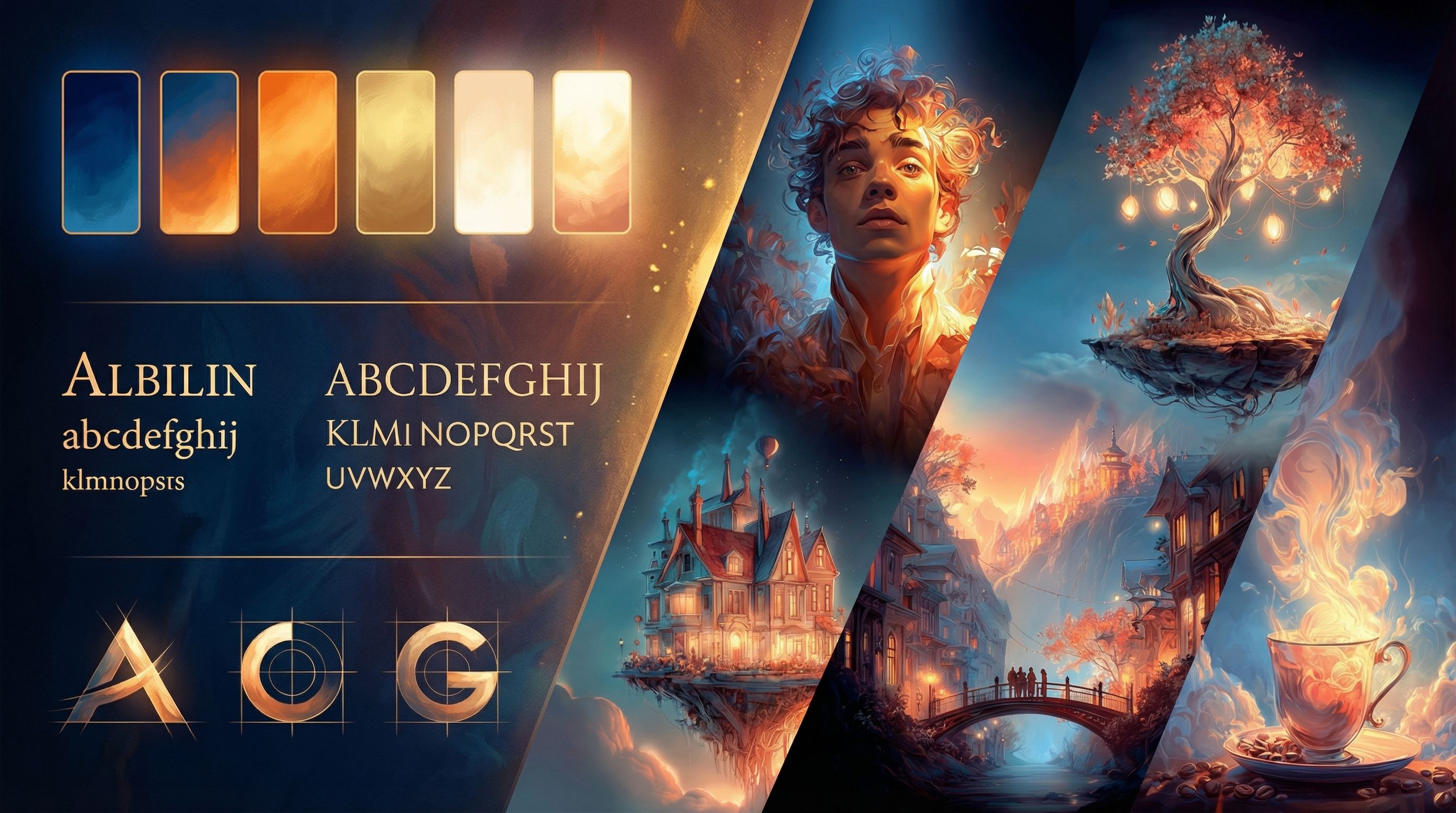
Step 4: Translate Visual Identity into AI‑Ready Prompts
A lot of brand teams stop at “our colors are teal and charcoal.” For interactive stories with AI visuals, you need to go further: you need prompt recipes.
Break your visual system into ingredients
From your brand and design system, list:
- Primary and secondary colors
- Preferred lighting (e.g., soft daylight, moody chiaroscuro, neon glow)
- Typical environments (e.g., open office, home studio, city streets, classrooms)
- Texture and finish (e.g., grainy, glossy, vector‑clean, painterly)
- Level of realism (e.g., stylized 2D, semi‑realistic 3D, photoreal)
Build master prompts for your world
Create a few base prompts that encode your world’s look and feel. For example, in your bible you might include:
"Young indie creator in a cozy home studio, teal and charcoal color palette, soft window light, subtle film grain, semi‑realistic illustration, wide shot, clean composition"
Then define variants for:
- High tension scenes (darker tones, stronger contrast)
- Reflective scenes (warmer light, softer focus)
- Decision moments (clear focal point on the choice object or character)
In Questas, you can reuse and tweak these prompts at the scene level so that each image feels unique and unmistakably on‑brand.
Standardize character looks
To avoid characters “shapeshifting” between scenes, define:
- Hair, clothing, and signature accessories
- Body type and posture
- A few consistent camera angles (e.g., over‑the‑shoulder, medium close‑up)
Then write prompt anchors like:
"Same protagonist as previous scenes: mid‑20s, Afro‑textured hair in a bun, round glasses, loose sweatshirt, thoughtful expression"
Add these to your bible, so anyone generating images knows how to keep continuity.
Step 5: Codify Reusable Narrative Structures
Your brand doesn’t just have a look and voice; it has favorite story shapes.
Think about:
- Case studies you’ve told
- Customer journeys you map
- Internal success stories
Patterns will emerge, like:
- “Struggling → insight → experiment → breakthrough”
- “Curiosity → exploration → risk → commitment”
- “Conflict → negotiation → compromise → shared win”
Turn patterns into scene templates
For each pattern, define:
- Beats – 3–6 key moments that always appear
- Choice types – what decisions show up at each beat
- Suggested stakes – what the player stands to gain or lose
Example template: “Experiment Loop”
- Beat 1: Notice a problem or opportunity
- Beat 2: Choose an experiment (safe vs. bold)
- Beat 3: See results (partial success, failure, or unexpected upside)
- Beat 4: Decide whether to double down, pivot, or stop
In Questas, you can map each beat to a node pattern:
- Intro node → choice node → outcome node → reflection node
Once defined in your bible, these become plug‑and‑play structures your team can reuse across campaigns, training modules, or narrative prototypes.
If you’re coming from linear storytelling, you might also like From Short Story to Story System: Adapting Linear Fiction into Modular Scenes for Questas, which shows how to think in modular beats instead of pages.
Step 6: Design Interaction Guidelines that Match Your Brand
Not every brand should use the same kind of choices.
Your story bible should spell out how interaction feels in your world:
- Are choices frequent and snappy, or occasional and weighty?
- Do you encourage playful exploration or careful deliberation?
- Are there visible stats (trust, risk, creativity), or is everything conveyed through narrative alone?
Define choice categories
Create 3–5 labeled categories you’ll use repeatedly, such as:
- Head vs. heart – logical vs. emotional decisions
- Now vs. later – immediate payoff vs. long‑term gain
- Self vs. system – personal benefit vs. group or institutional needs
For each category, include:
- Example choices
- How they should be framed visually
- Any language do’s and don’ts
This gives your team a menu of choice types that always feel on‑brand.
Step 7: Package Everything into a Questas‑Ready Bible
Now you’re ready to turn your work into a resource your whole team can actually use.
A practical format:
-
World Overview (2–3 pages)
- Premise
- Core tensions and themes
- Audience archetypes
-
Characters and Factions (3–5 pages)
- Protagonist template(s)
- Faction profiles
- Voice samples
-
Visual System for AI (3–5 pages)
- Prompt recipes and variants
- Character appearance anchors
- Environment and prop guidelines
-
Narrative Structures (3–5 pages)
- Common story patterns
- Scene templates with suggested Questas node layouts
-
Interaction & Choice Design (2–4 pages)
- Choice categories
- Stakes and boundaries
- Examples of on‑brand vs. off‑brand choices
-
Implementation Notes for Questas (1–2 pages)
- Naming conventions for scenes, branches, and variables
- How to tag scenes by theme, location, or character
- Notes on analytics you care about (e.g., which choices to track)
Store this where your team already works (Notion, Confluence, Google Docs) and link it directly inside your Questas projects so builders can reference it while designing.
Step 8: Start Small, Then Iterate with Playtests
You don’t need a 60‑page tome before you build anything. In fact, it’s better if you treat your bible as a living artifact.
A good approach:
- Draft a minimum viable bible (10–15 pages)
- Build a small Questas prototype (10–20 nodes)
- Playtest with a handful of people from your real audience
- Watch where your world feels thin, off‑brand, or confusing
- Update the bible based on what you learn
Qualitative feedback is especially valuable here—how players talk about your characters, visuals, and choices often reveals where your brand DNA is (or isn’t) shining through. For techniques, check out Beyond Clicks and Completion Rates: Qualitative Playtesting Methods for Deeply Improving Your Questas Stories when you’re ready to go deeper.
Bringing It All Together
Translating brand guidelines into a Questas‑ready story bible isn’t just a documentation exercise. It’s a strategic shift:
- From assets to worlds
- From campaigns to story systems
- From messaging to playable experiences
When you:
- Audit your brand through a story lens
- Define a clear world premise and rules
- Turn personality into character and faction guides
- Encode your visual identity into AI‑ready prompts
- Capture reusable narrative structures
- Align interaction design with your brand’s philosophy
- Package it all into a living bible you test and refine
…you give your team everything they need to build interactive journeys that are recognizably you, no matter how wild the branches get.
Your Next Step
If you’ve read this far, you probably already have a brand system that deserves to become a world.
Here’s a simple way to start this week:
- Pull up your brand guidelines.
- Write a one‑paragraph world premise and a one‑page character and visual snapshot based on what you already have.
- Open Questas and build a single branching vignette—5–10 scenes that live inside that world.
You don’t need to get it perfect. You just need to get it playable.
Once your audience can step into your brand instead of just reading about it, you’ll never look at a style guide the same way again.