Posts tagged with "Interactive Storytelling"

134 posts

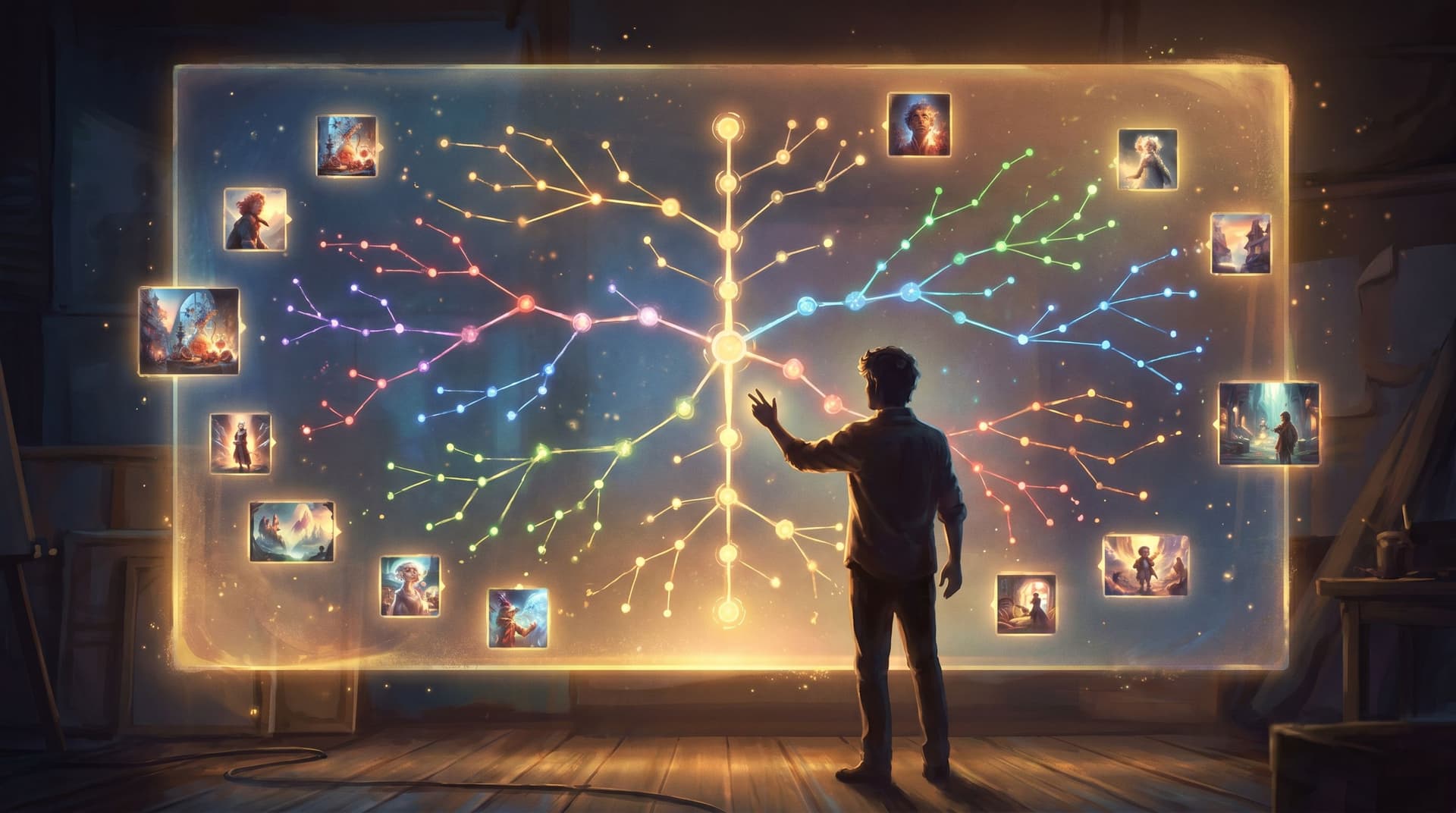
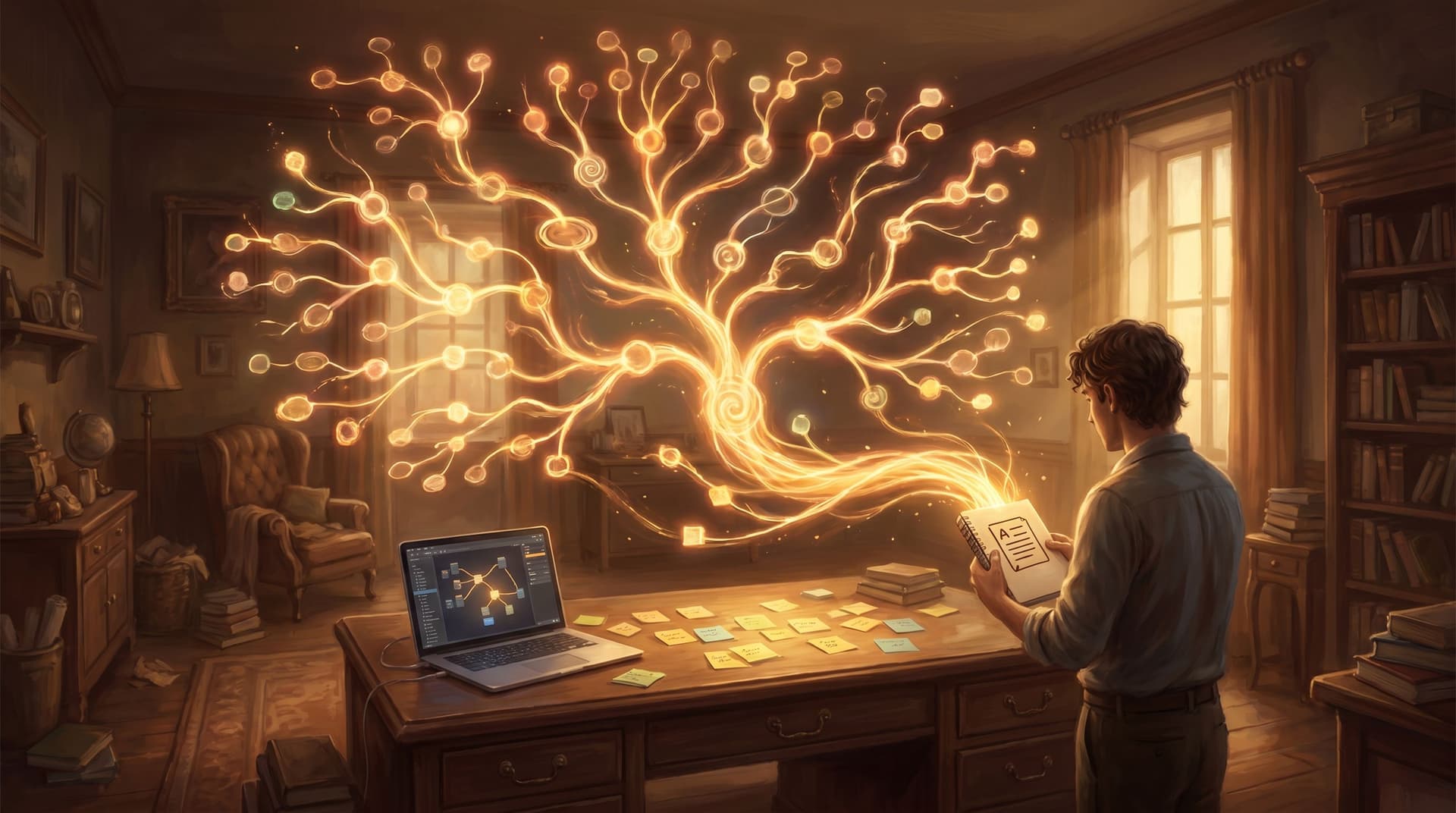
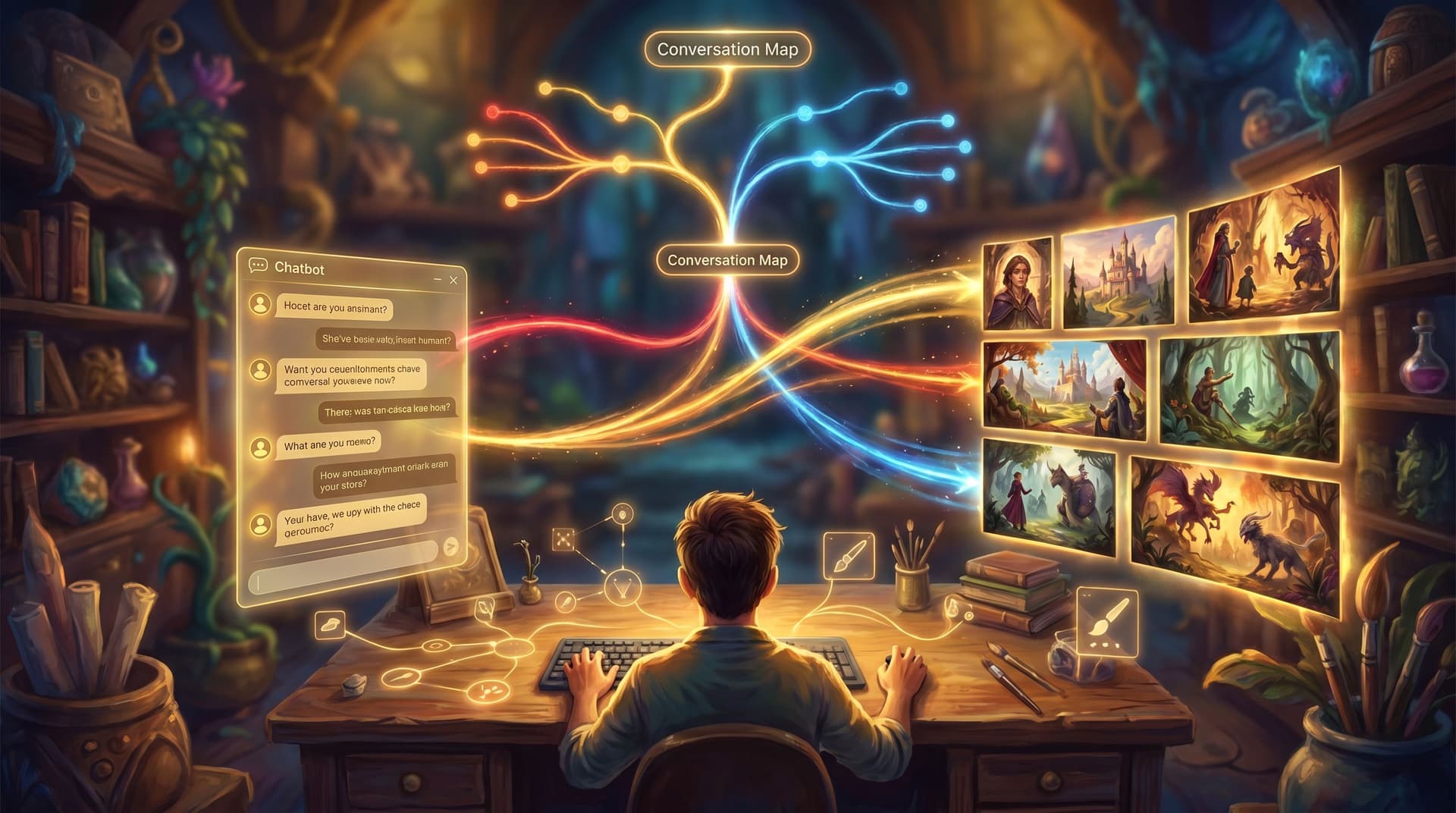
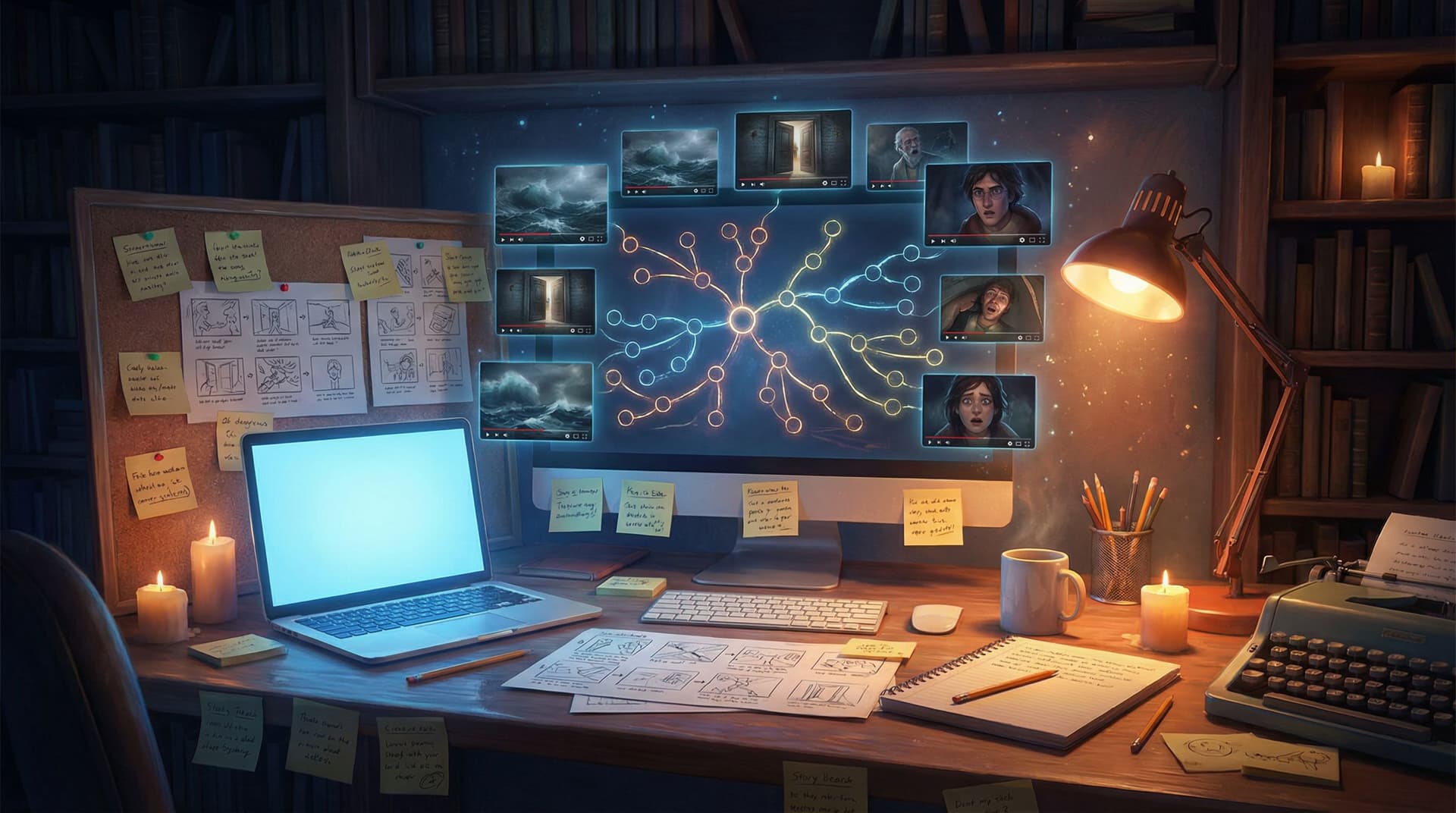
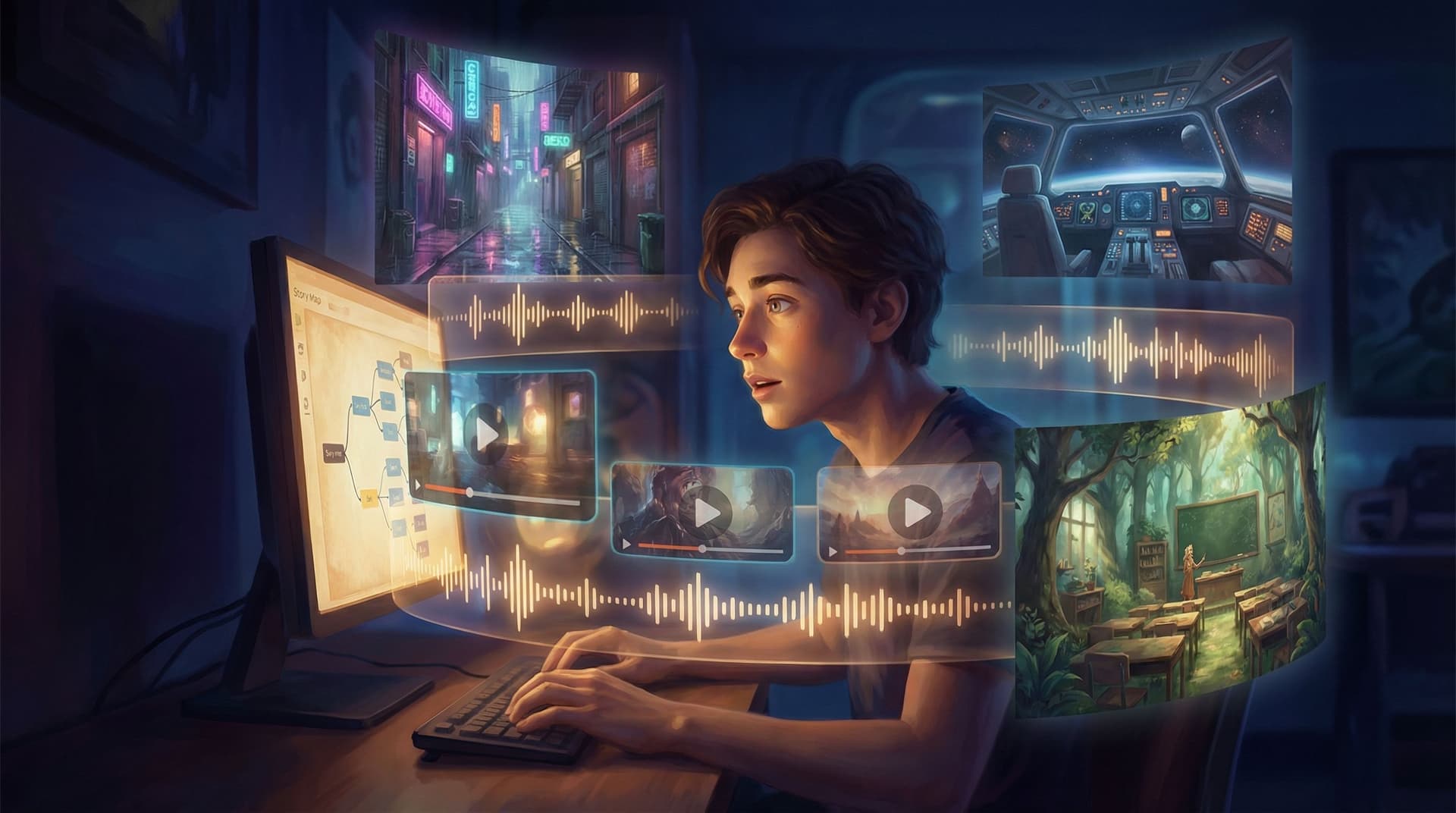
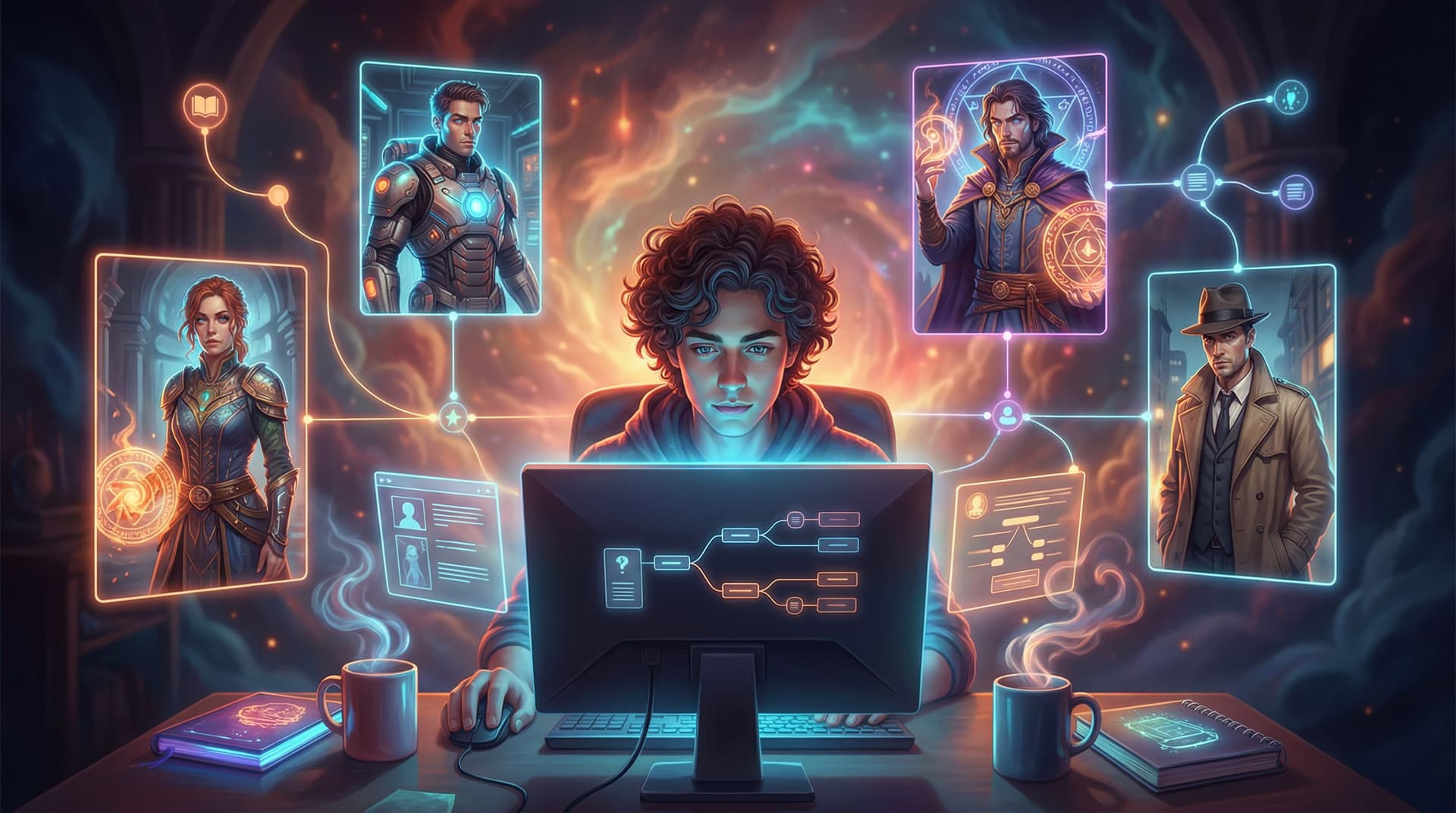
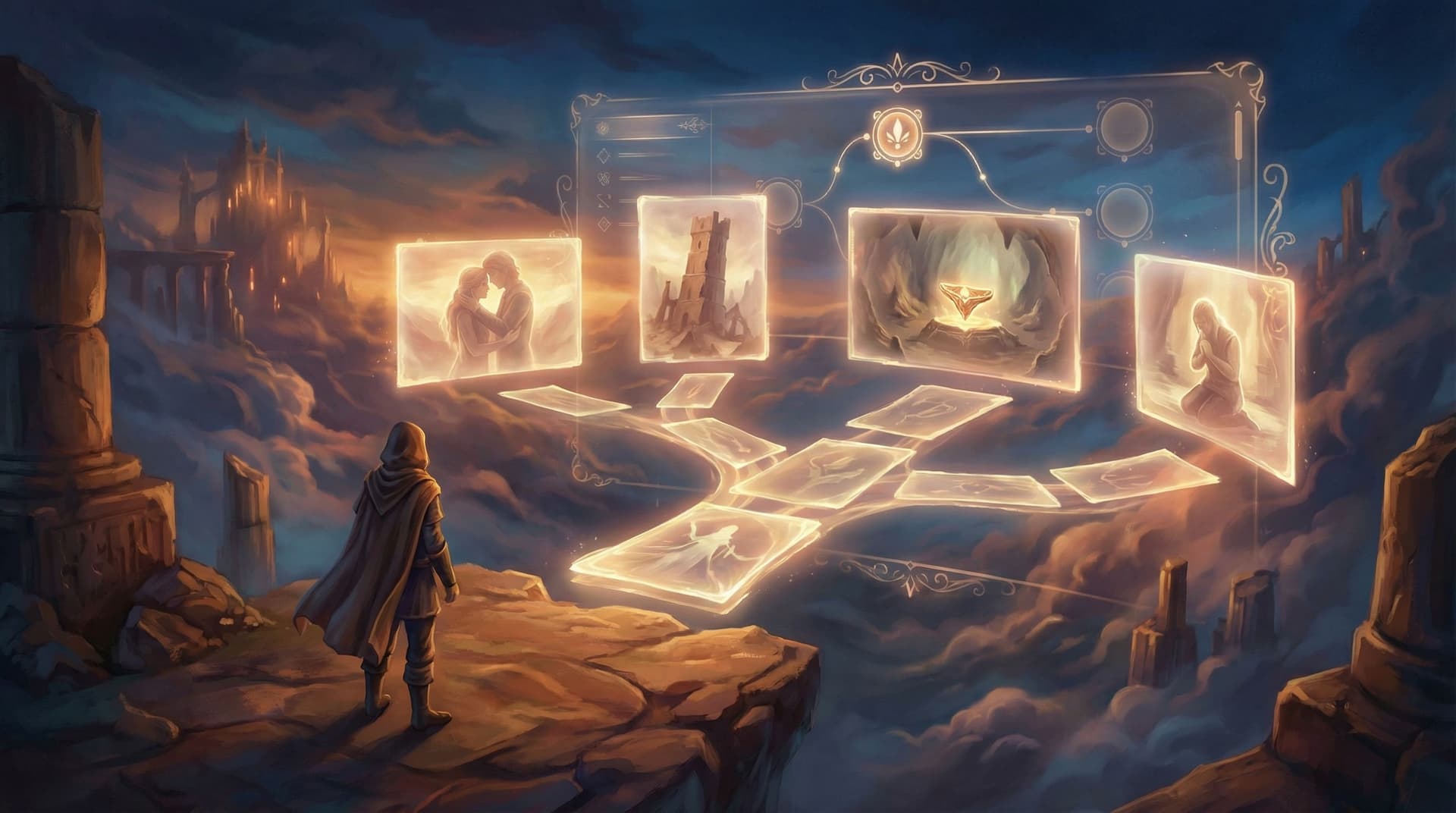
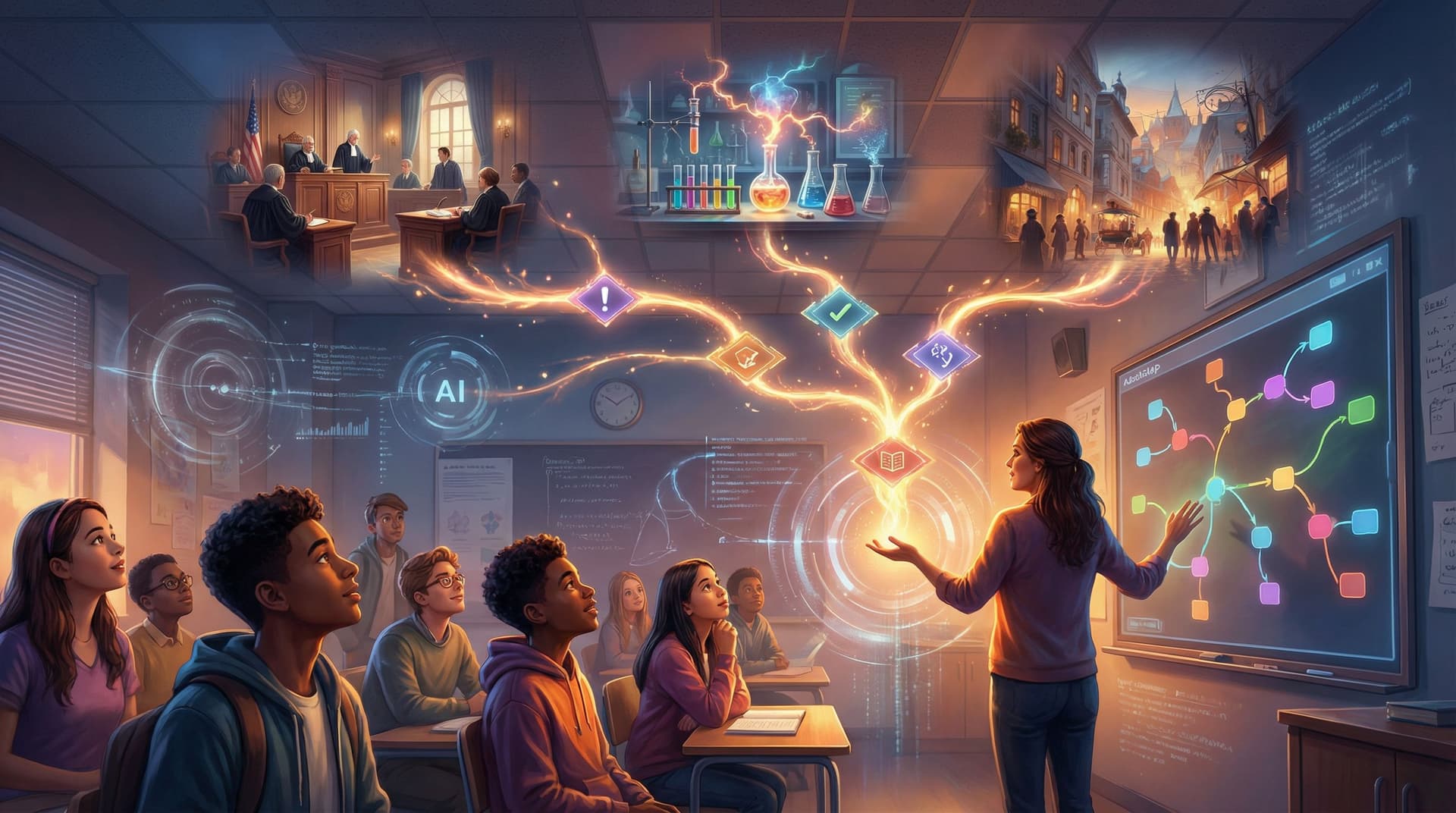
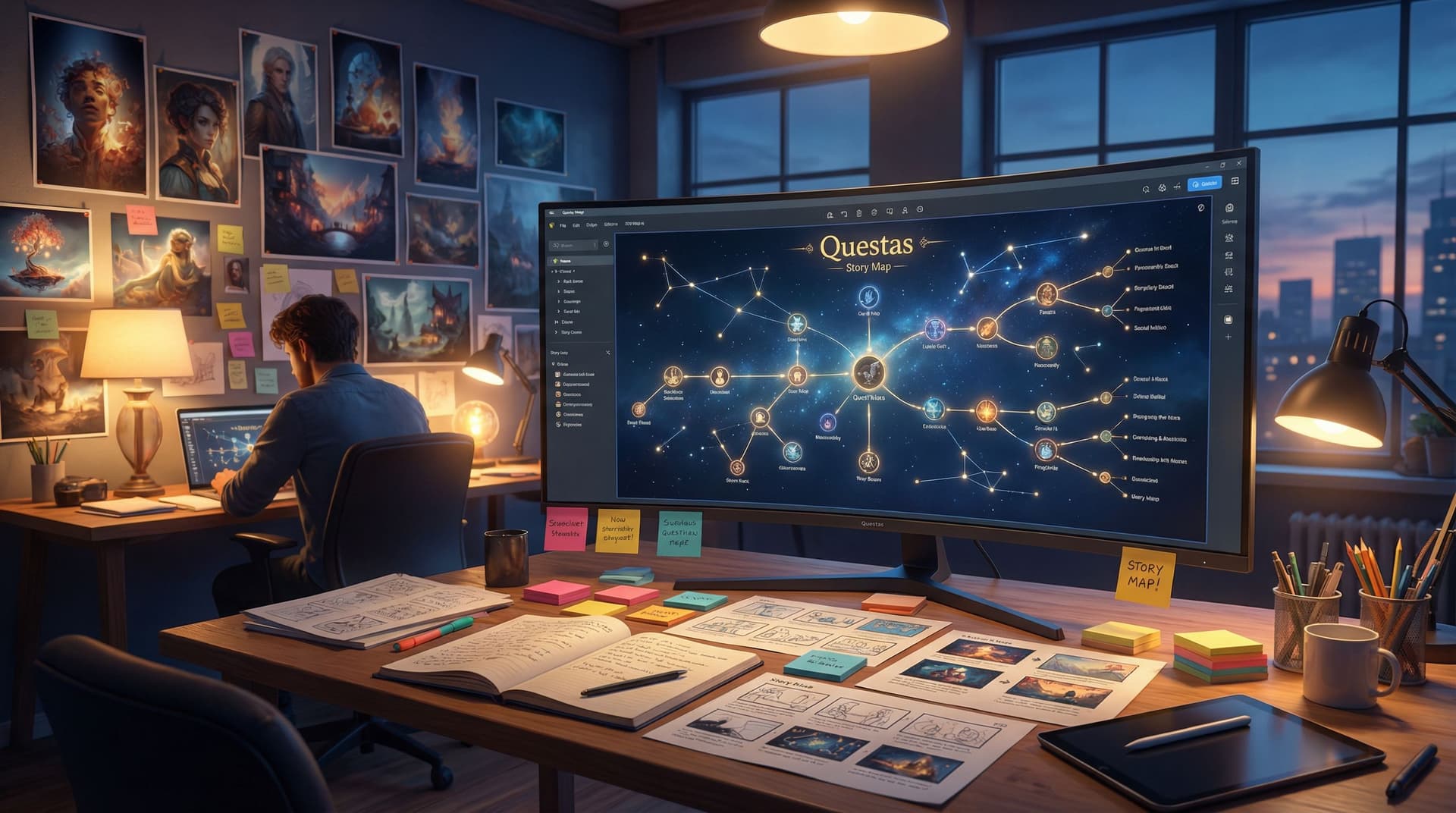
AI-First Worldbuilding: Letting Images, Not Outlines, Lead Your Next Interactive Quest
Interactive Storytelling
AI Tools

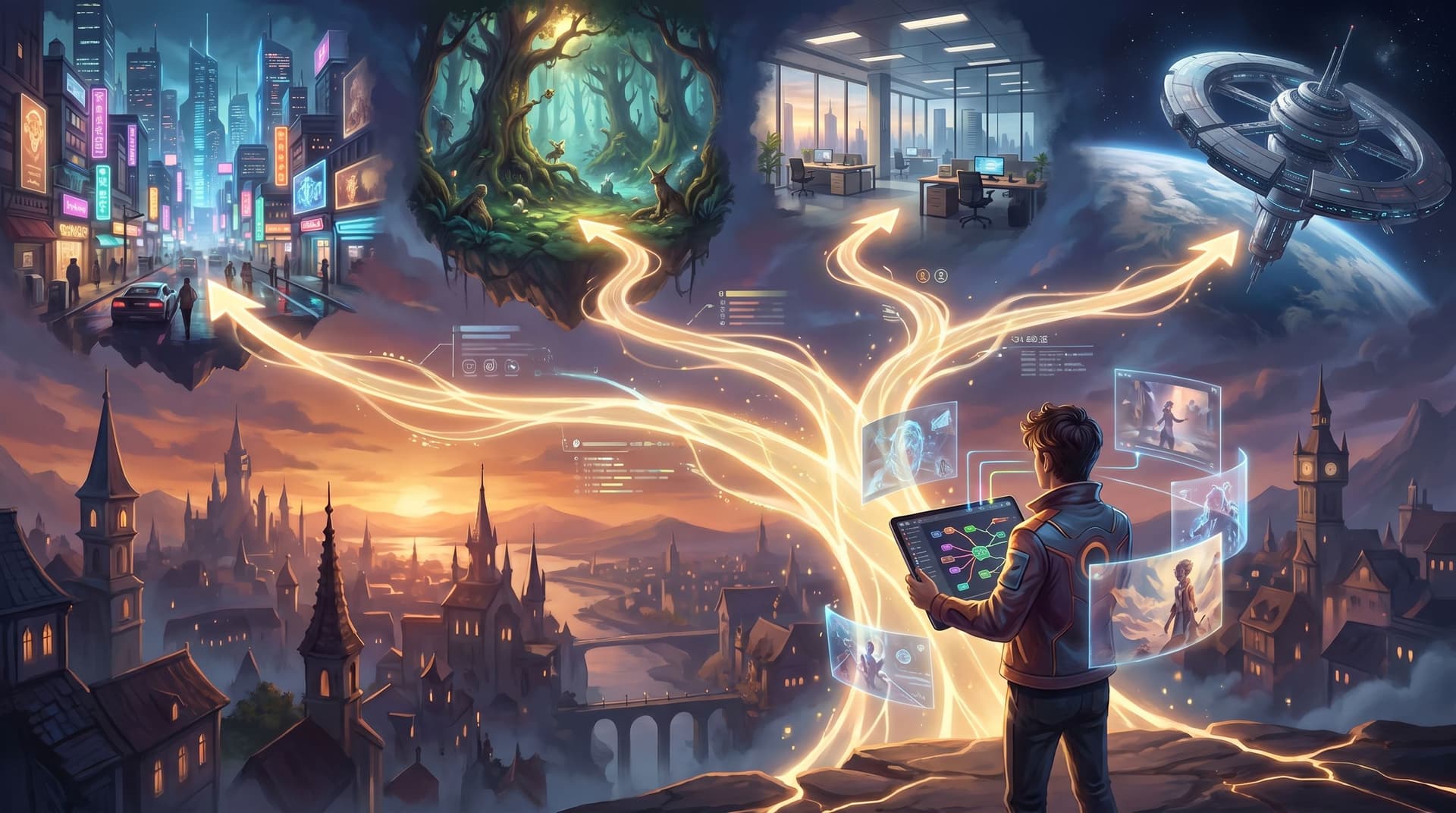
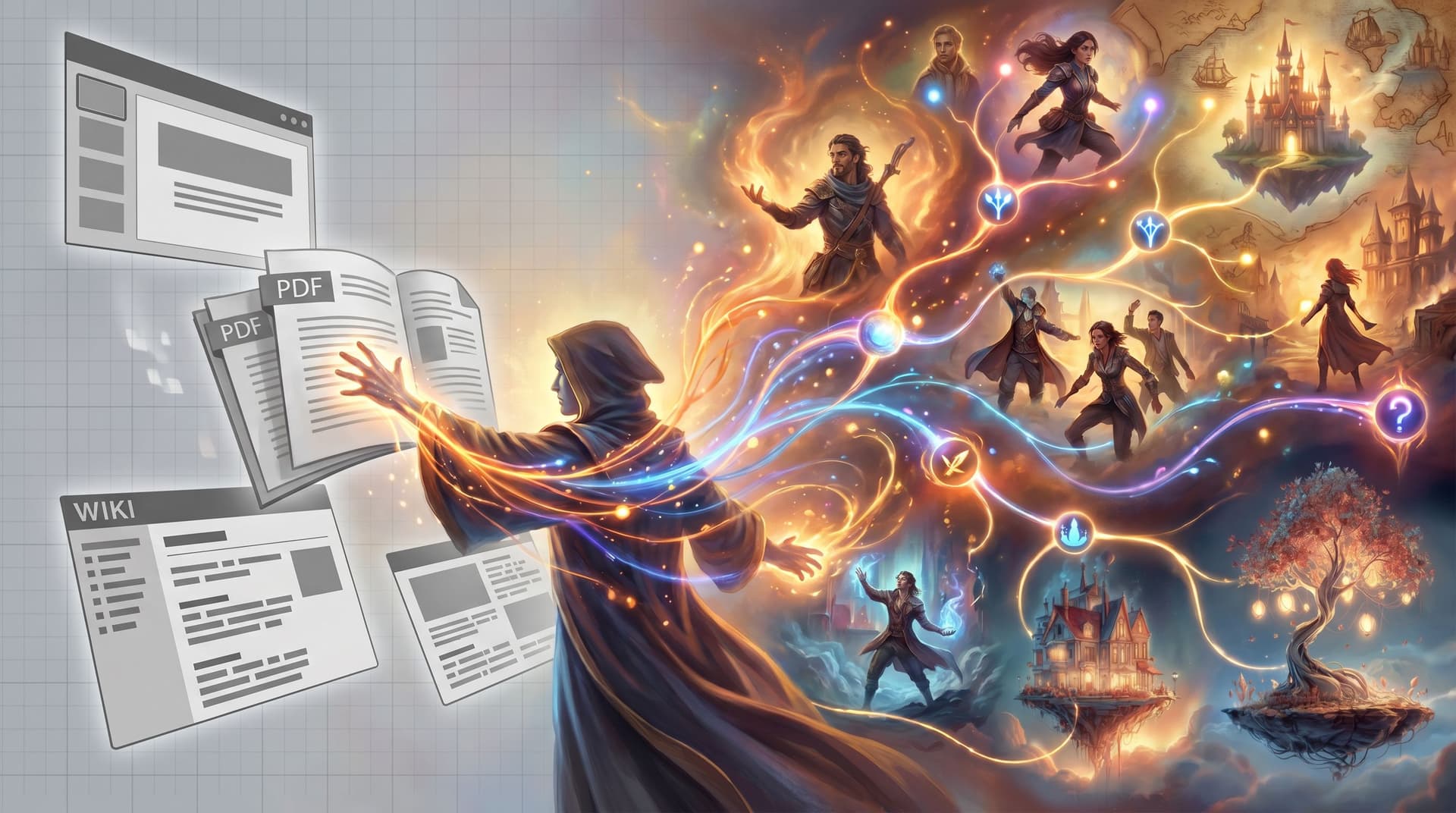
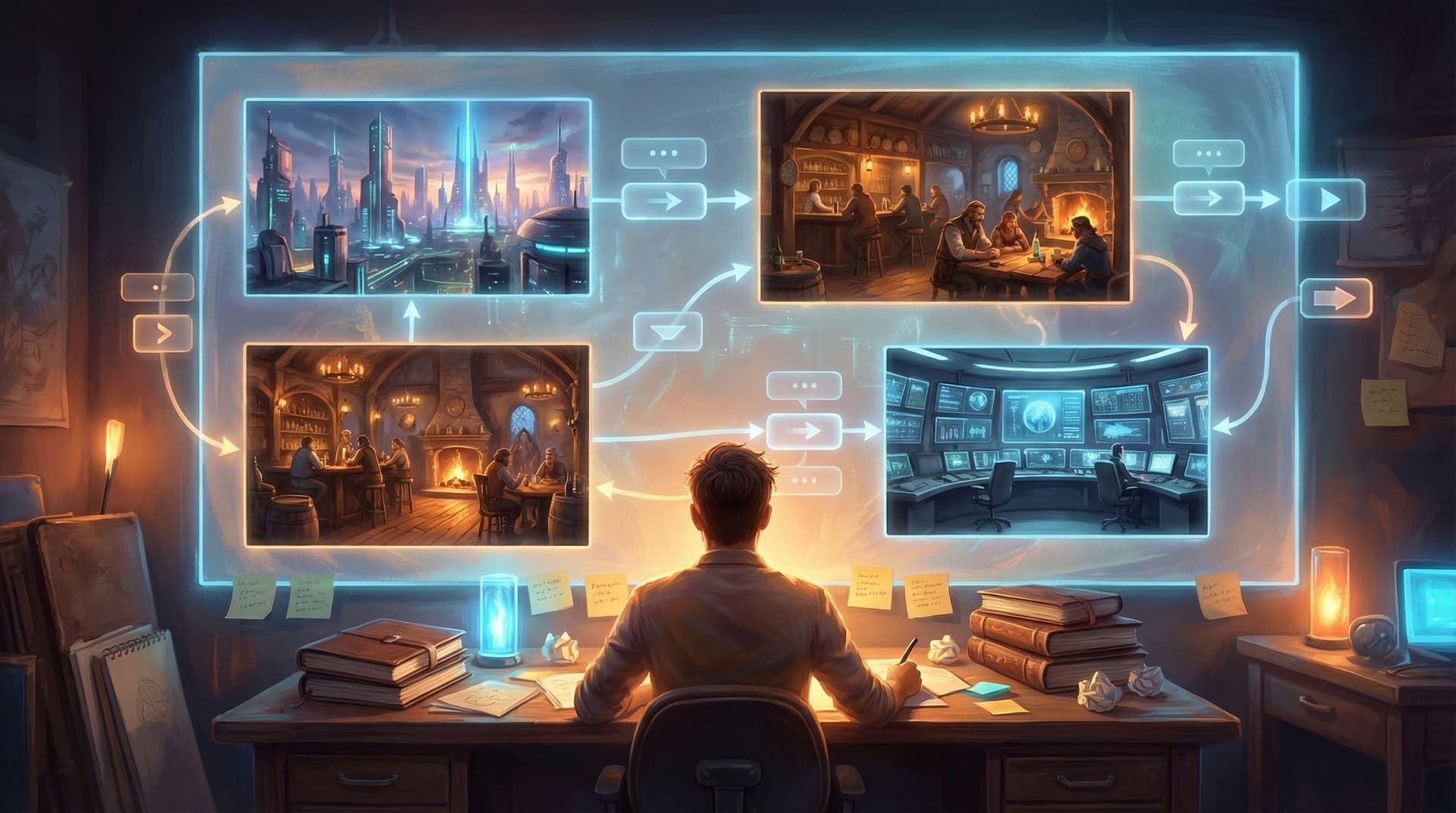
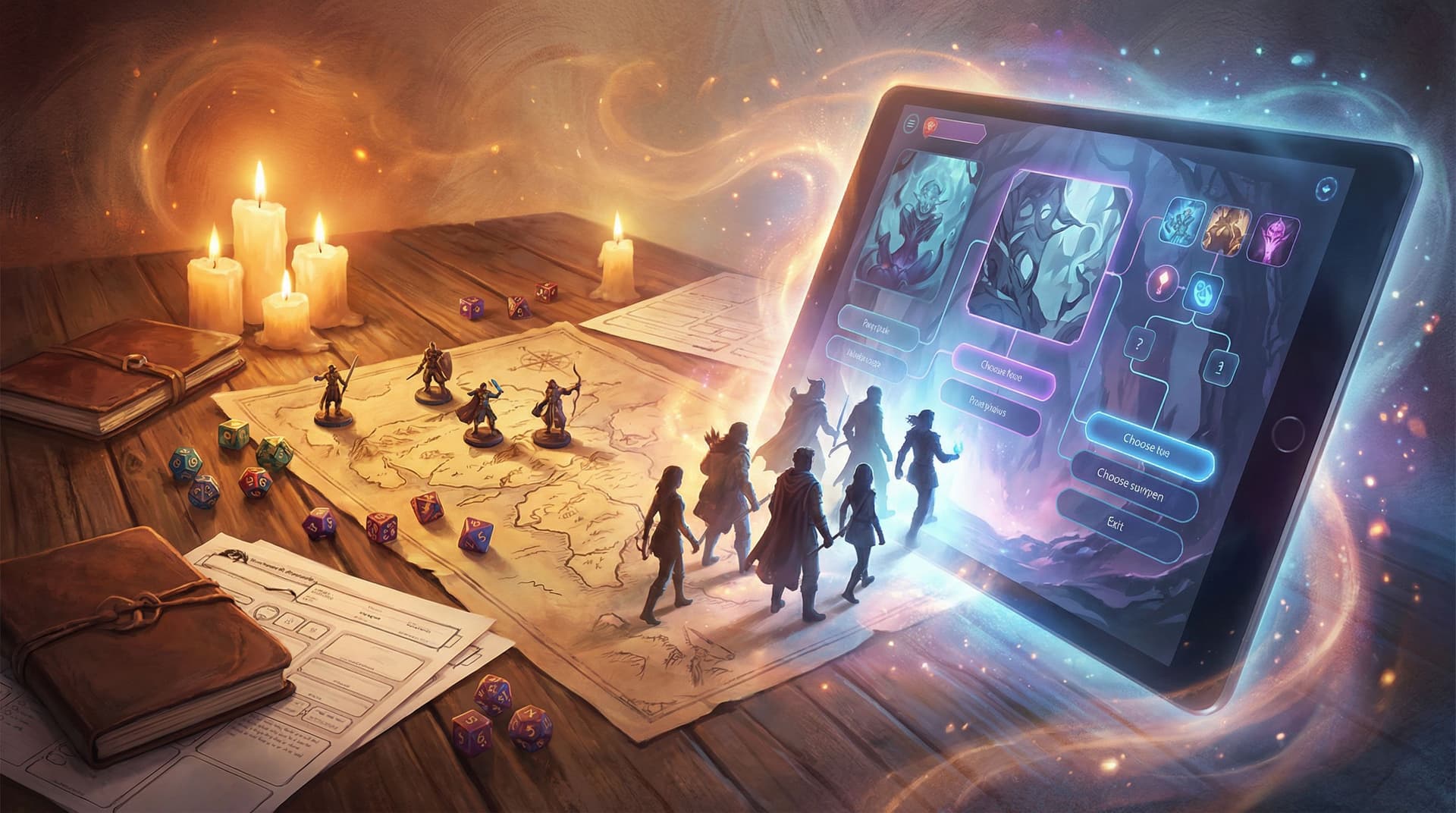
AI-First Worldbuilding: Letting Images, Not Outlines, Lead Your Next Interactive Quest

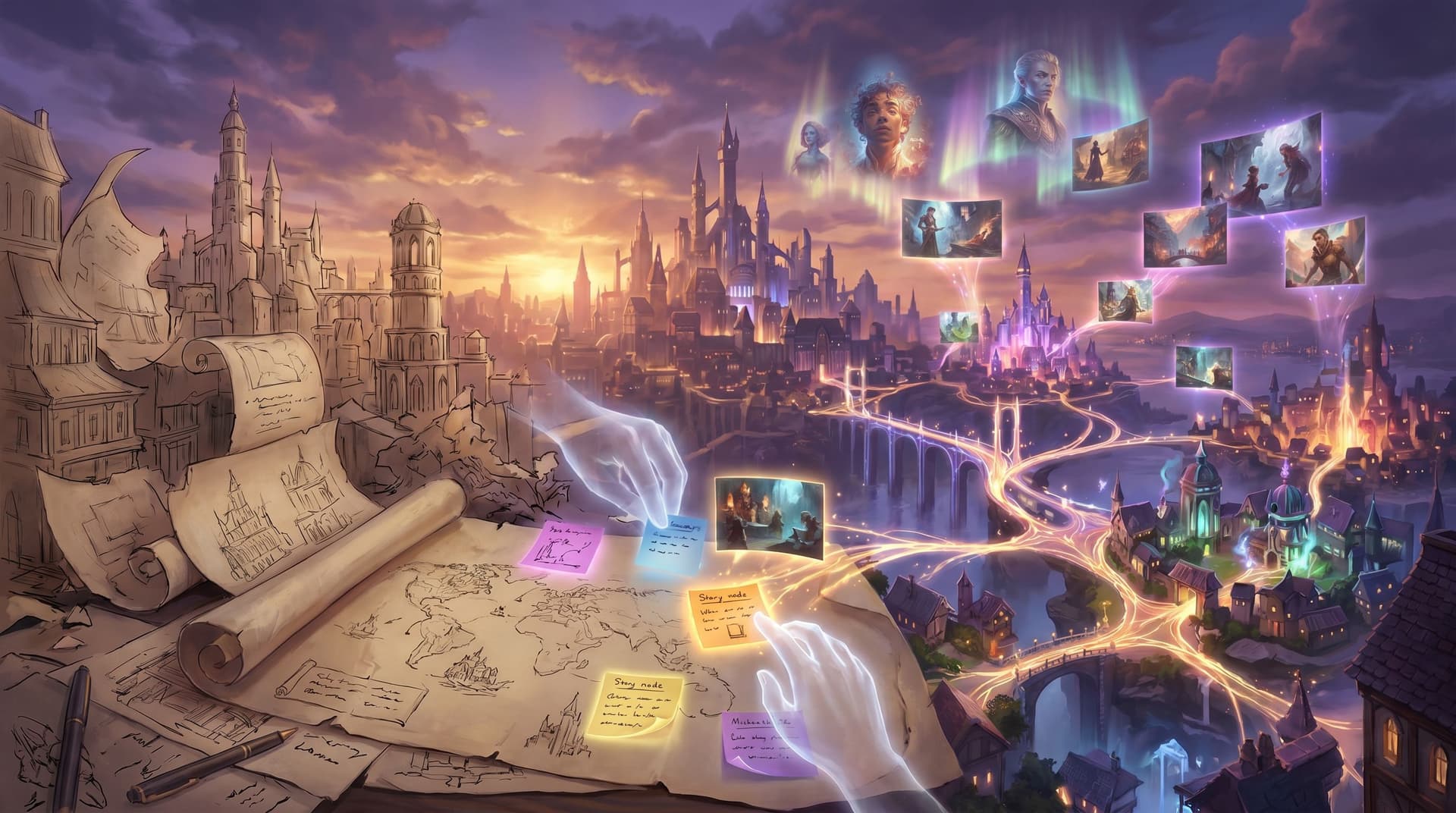
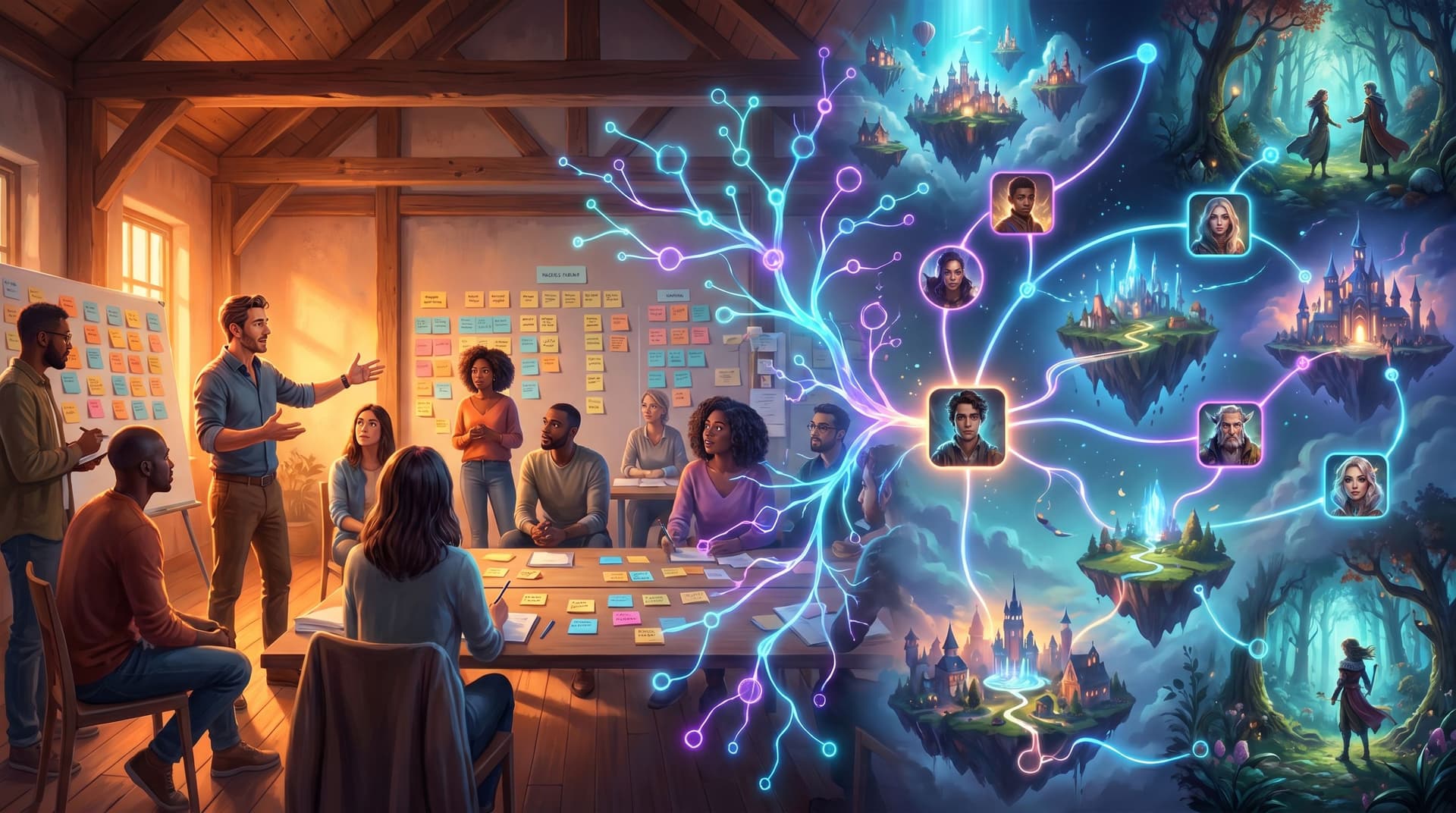
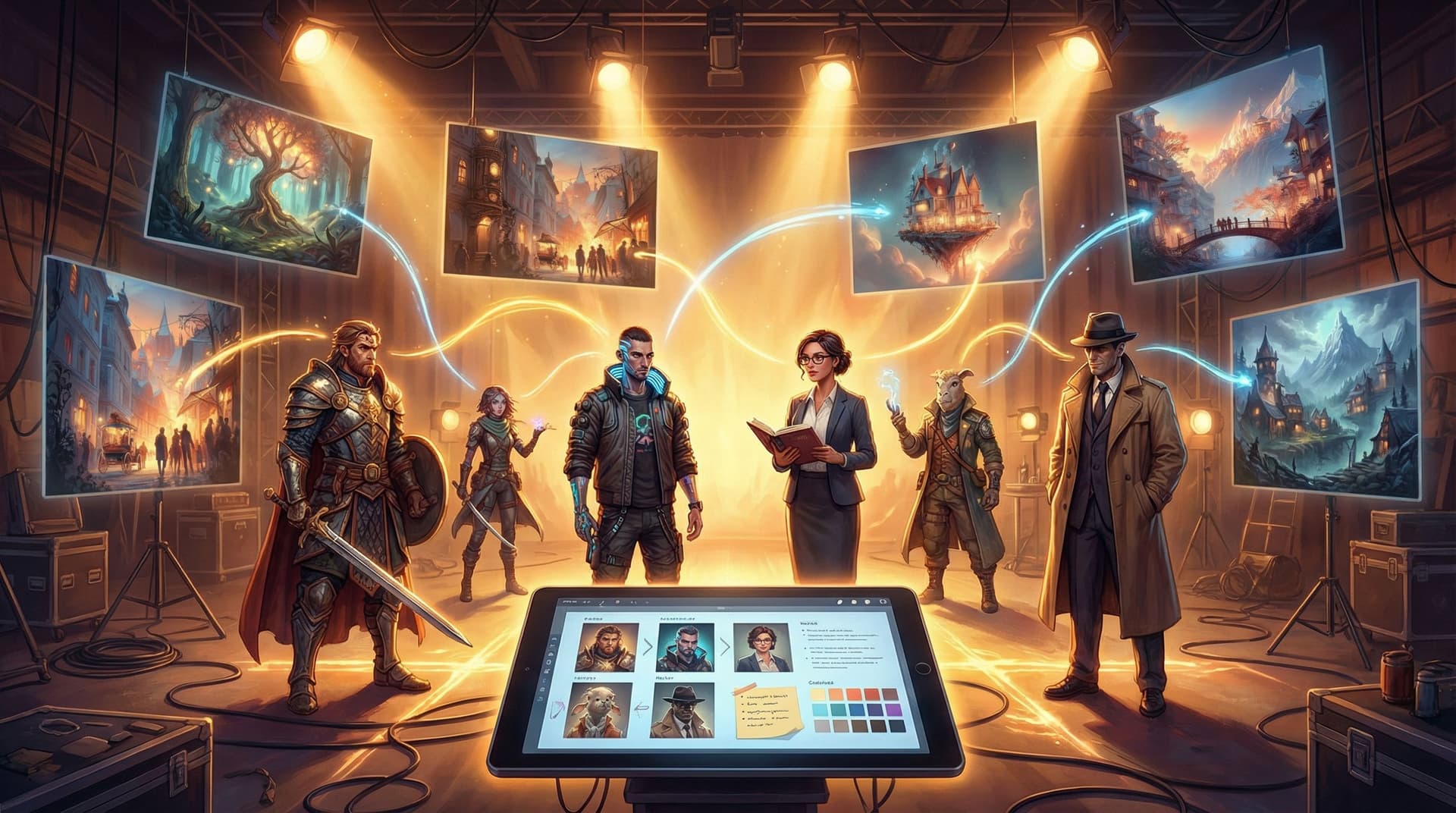
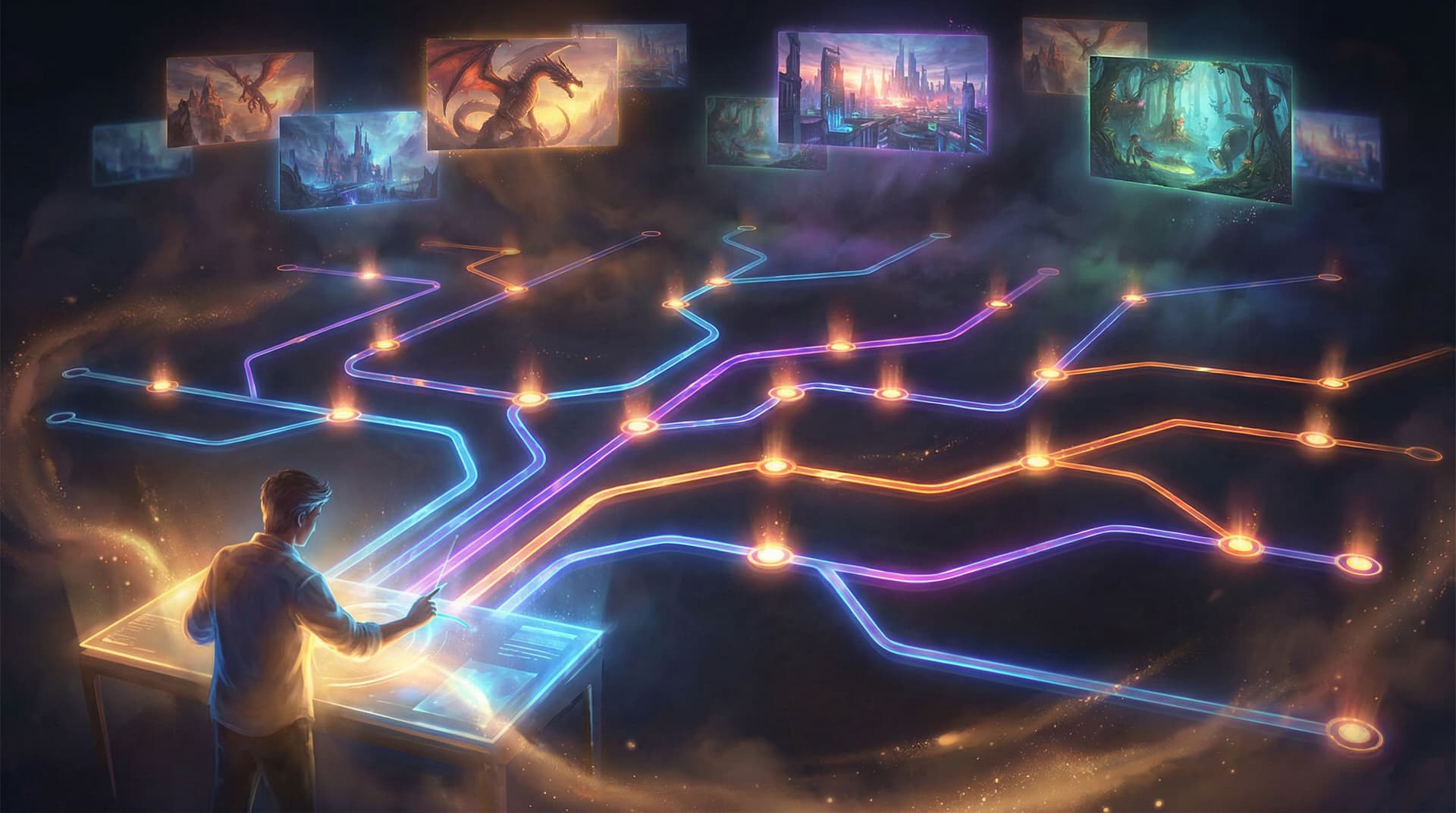
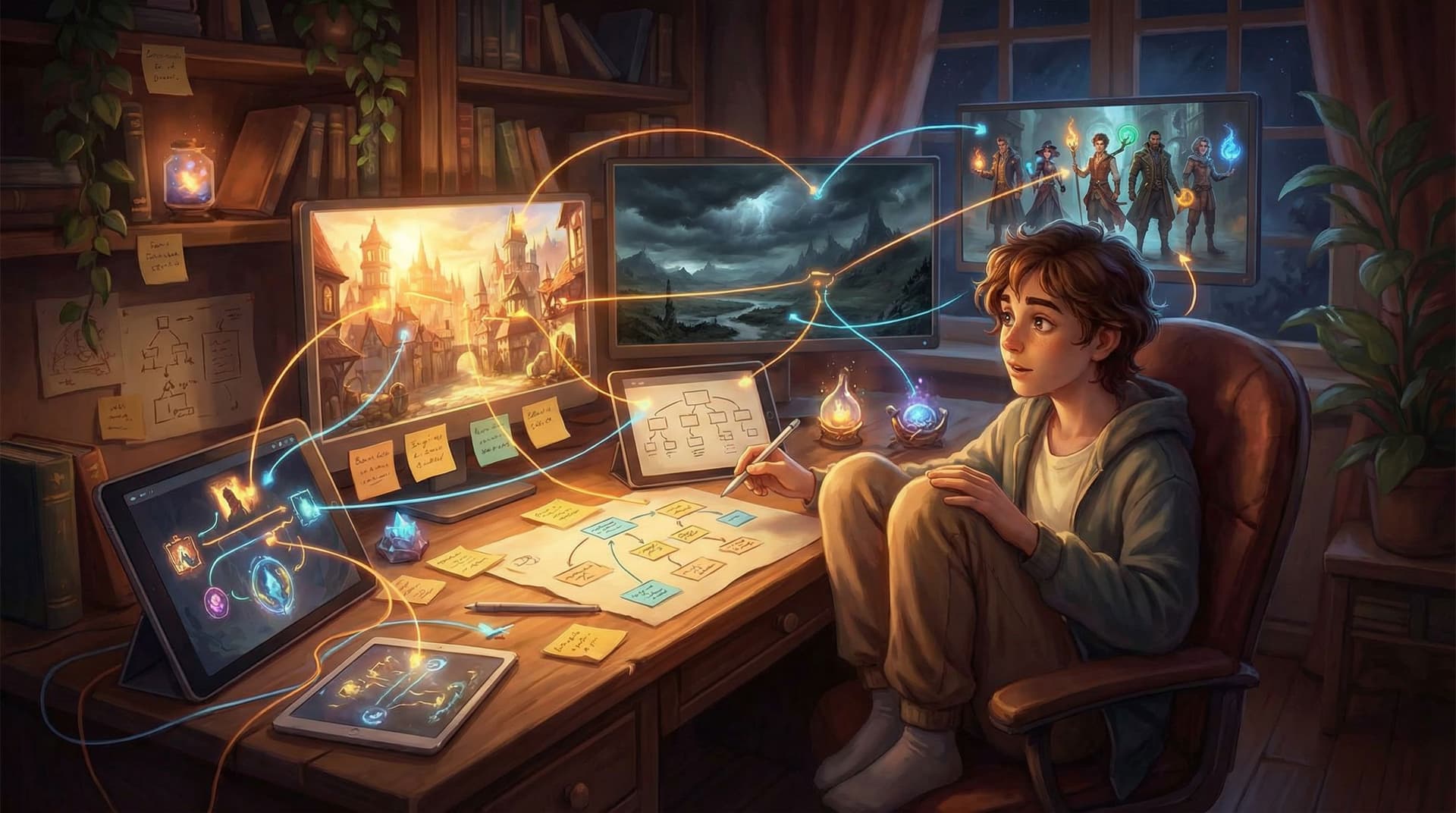
Most interactive creators were trained to start with structure: Outline the plot. Map the branches. Add visuals at the end. That method works—but it also quietly limits you. Your worlds end up shaped by what you can plan in a spreadsheet, not by what you can see and feel on the screen. An AI‑first approach to worldbuilding flips that sequence: you start with images, moods, and locations, then let those visuals pull the story out of you. When you’re building in a visual, no‑code platform like Questas, that shift can make your interactive stories more surprising, cohesive, and much faster to prototyp

Team Questas
Team Questas
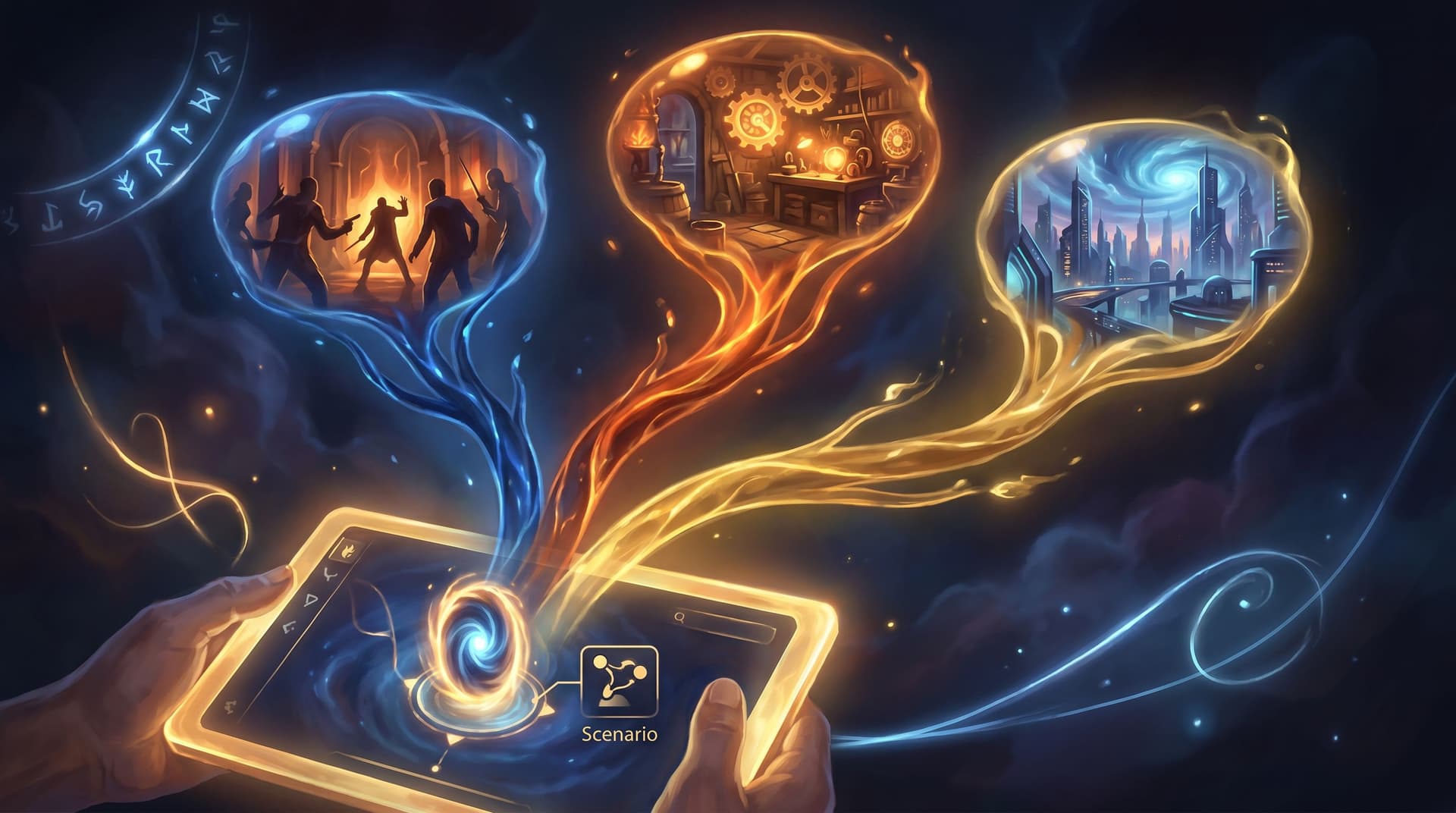
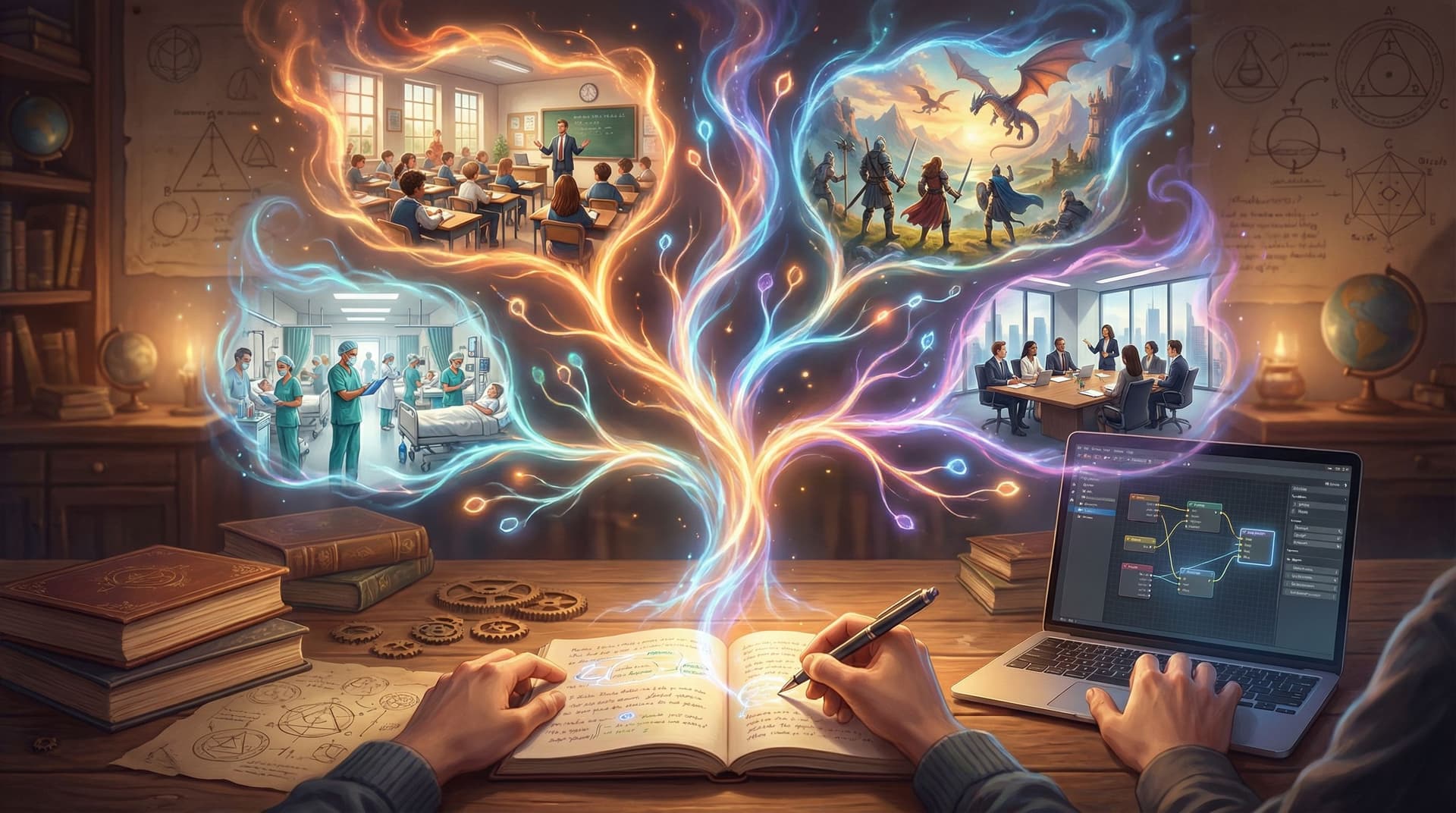
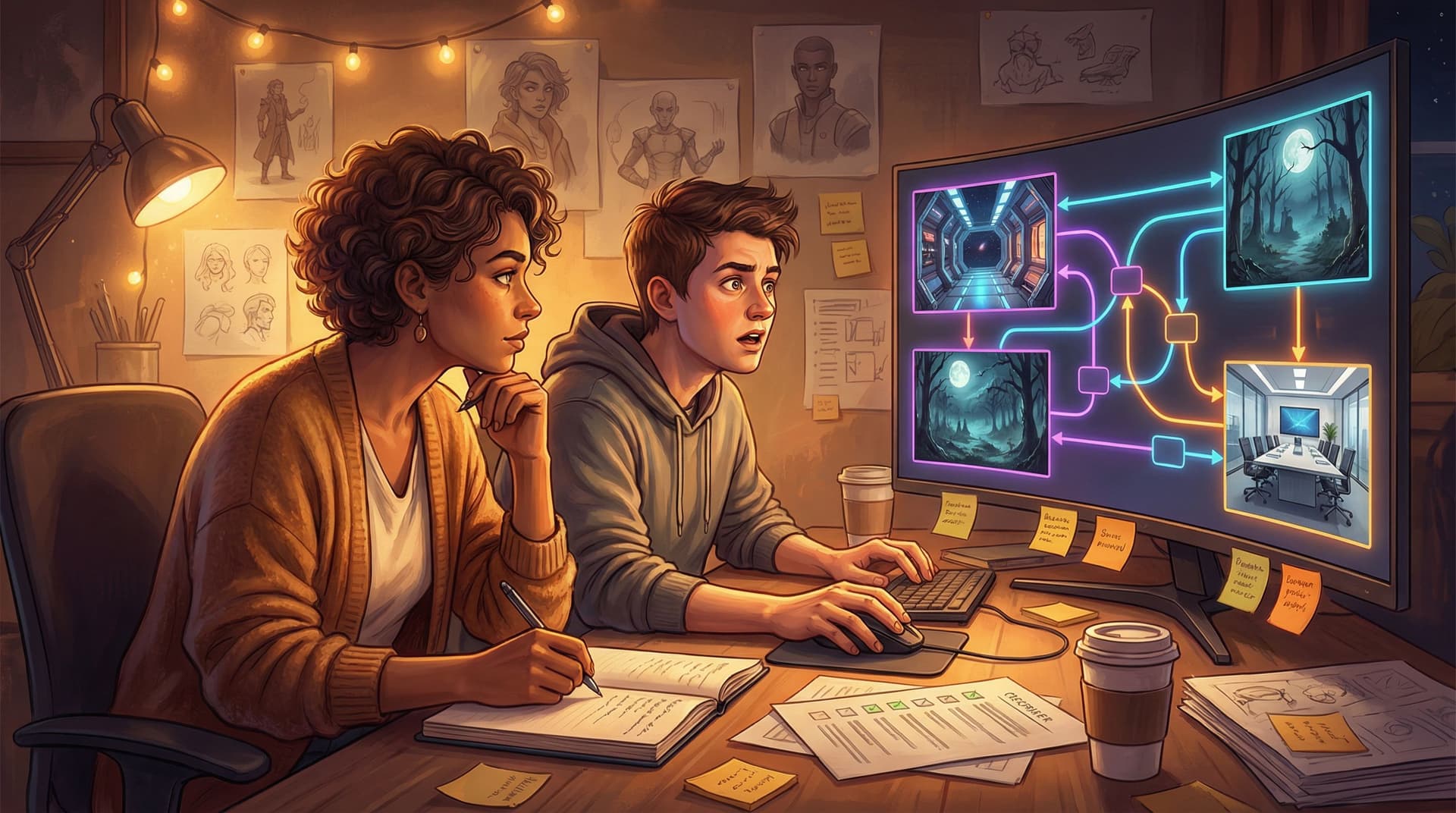
Interactive Thought Experiments: Turning ‘What If?’ Questions into Playable Questas Scenarios
Interactive Storytelling
AI Tools

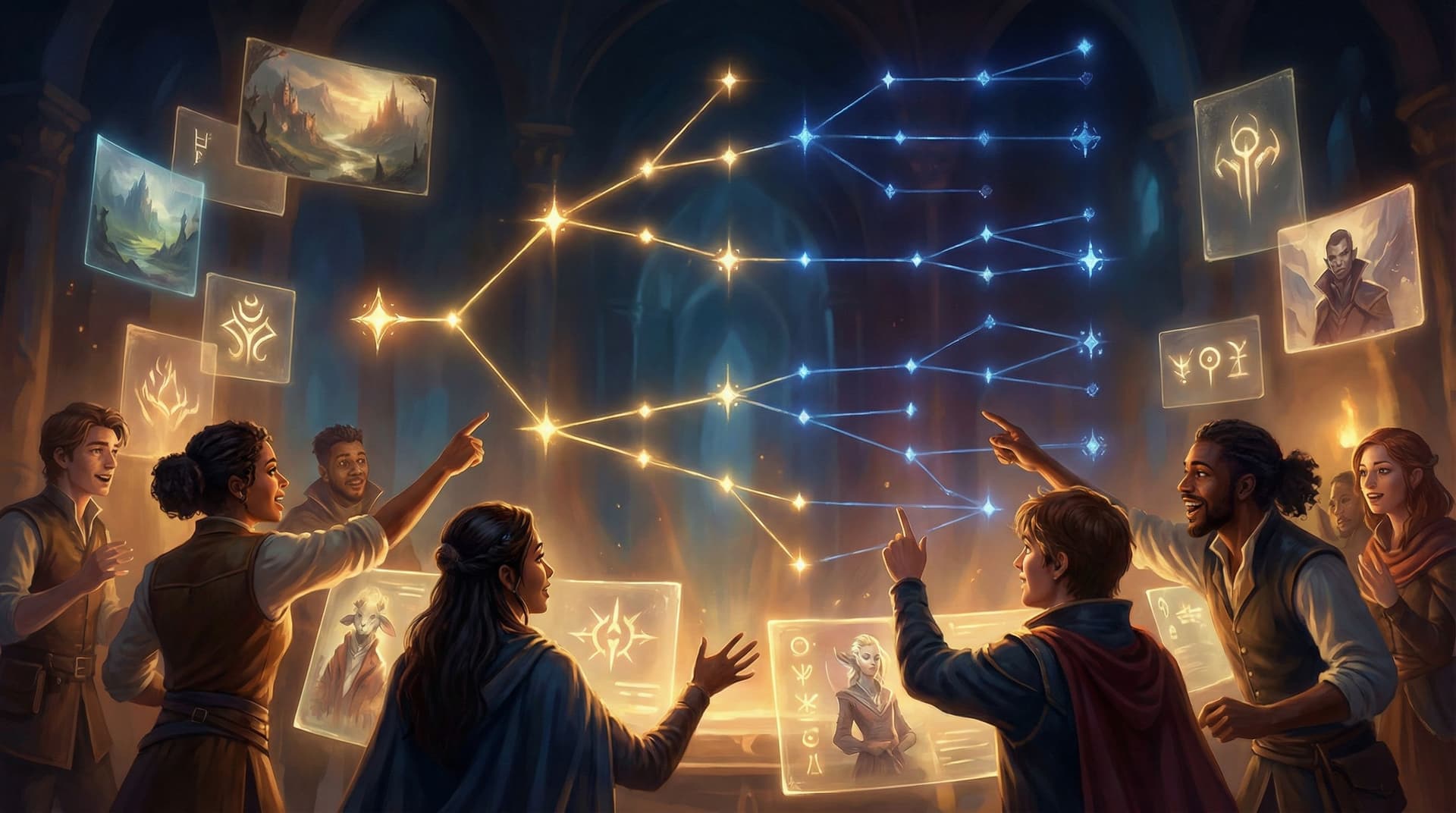
Interactive Thought Experiments: Turning ‘What If?’ Questions into Playable Questas Scenarios

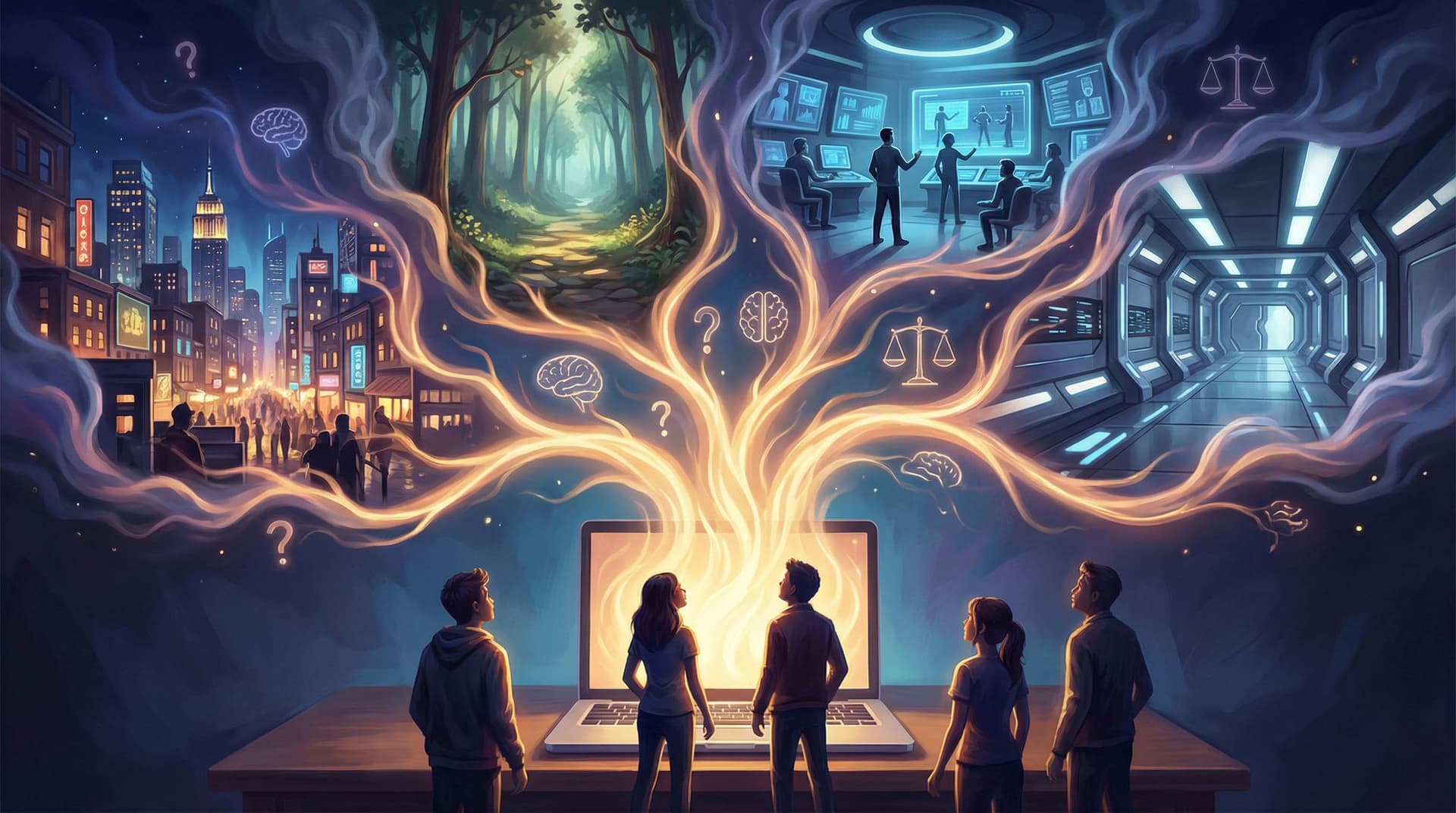
Thought experiments are how humans rehearse reality. What if I quit my job? What if the AI really is conscious? What if the reactor fails and the backup doesn’t kick in? Philosophers, scientists, leaders, and storytellers have used these “what if?” questions for centuries to test ideas, expose hidden assumptions, and explore consequences without real‑world risk. Now you don’t have to leave them on the whiteboard or in a late‑night conversation. With interactive, branching stories, you can turn thought experiments into playable experiences—letting people step inside a question and explore its bran

Team Questas
Team Questas
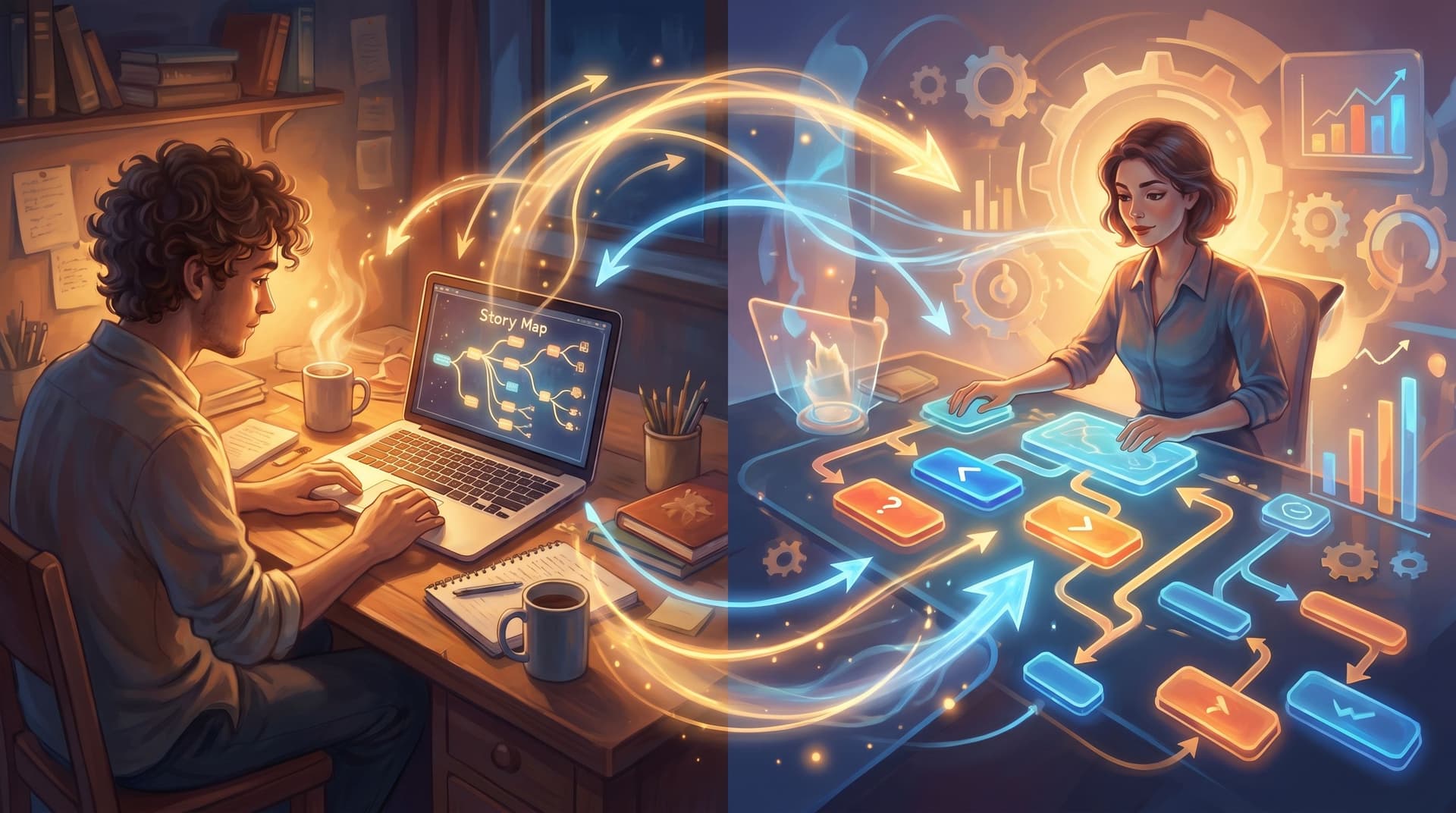
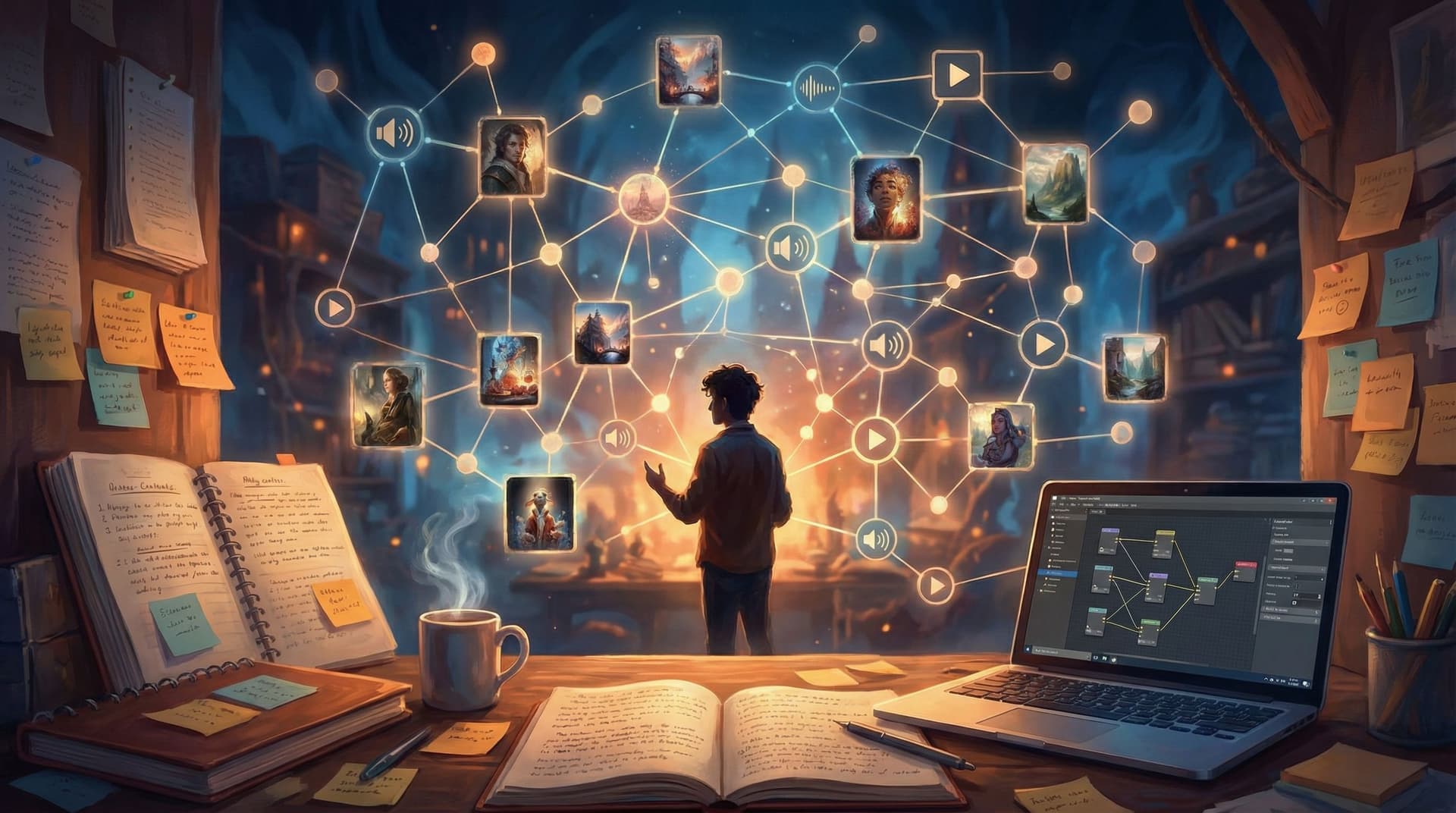
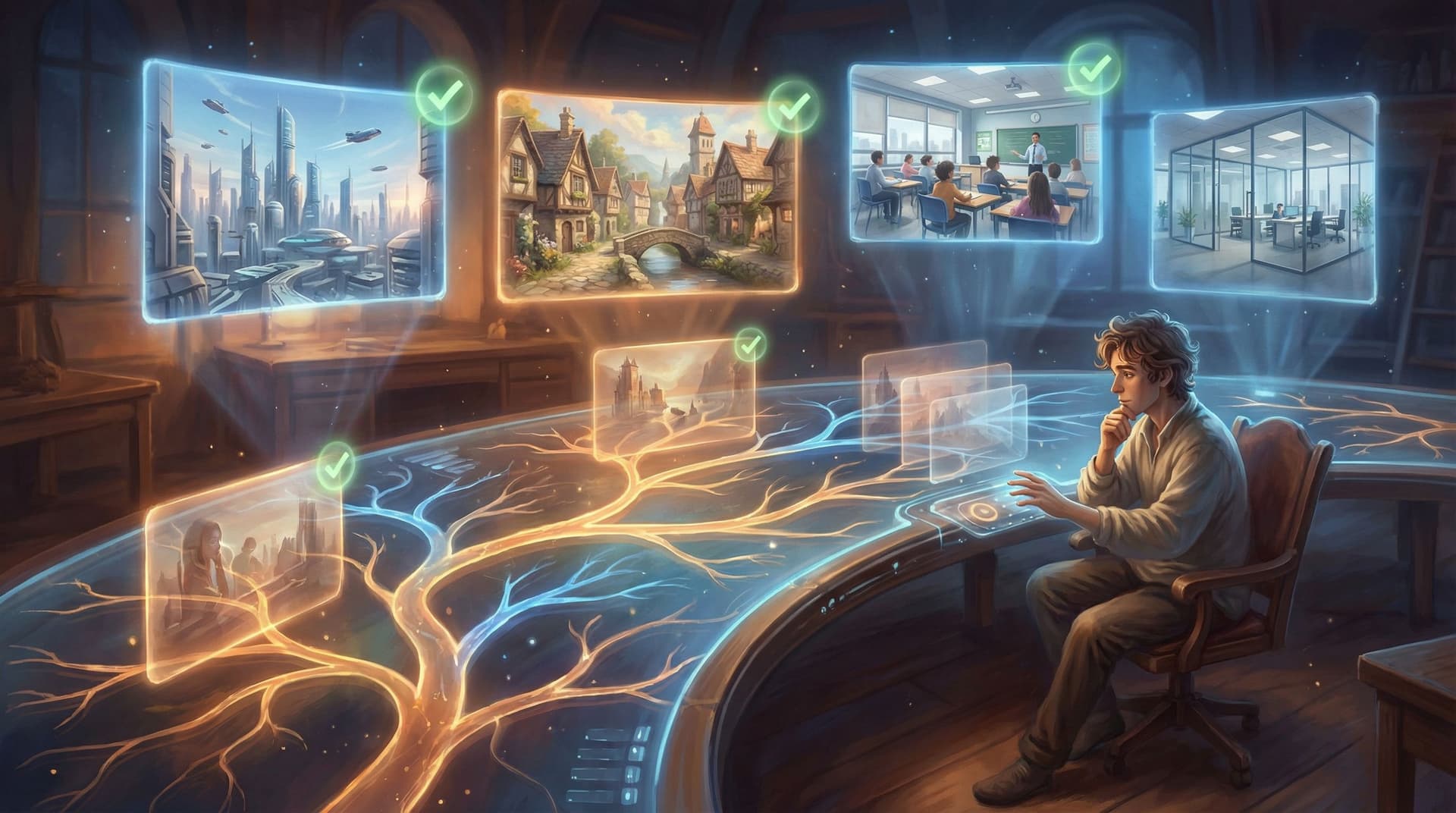
The Multiplayer Question: Turning Single-Player Questas Stories into Shared, Facilitated, and Asynchronous Experiences
Interactive Storytelling
AI Tools

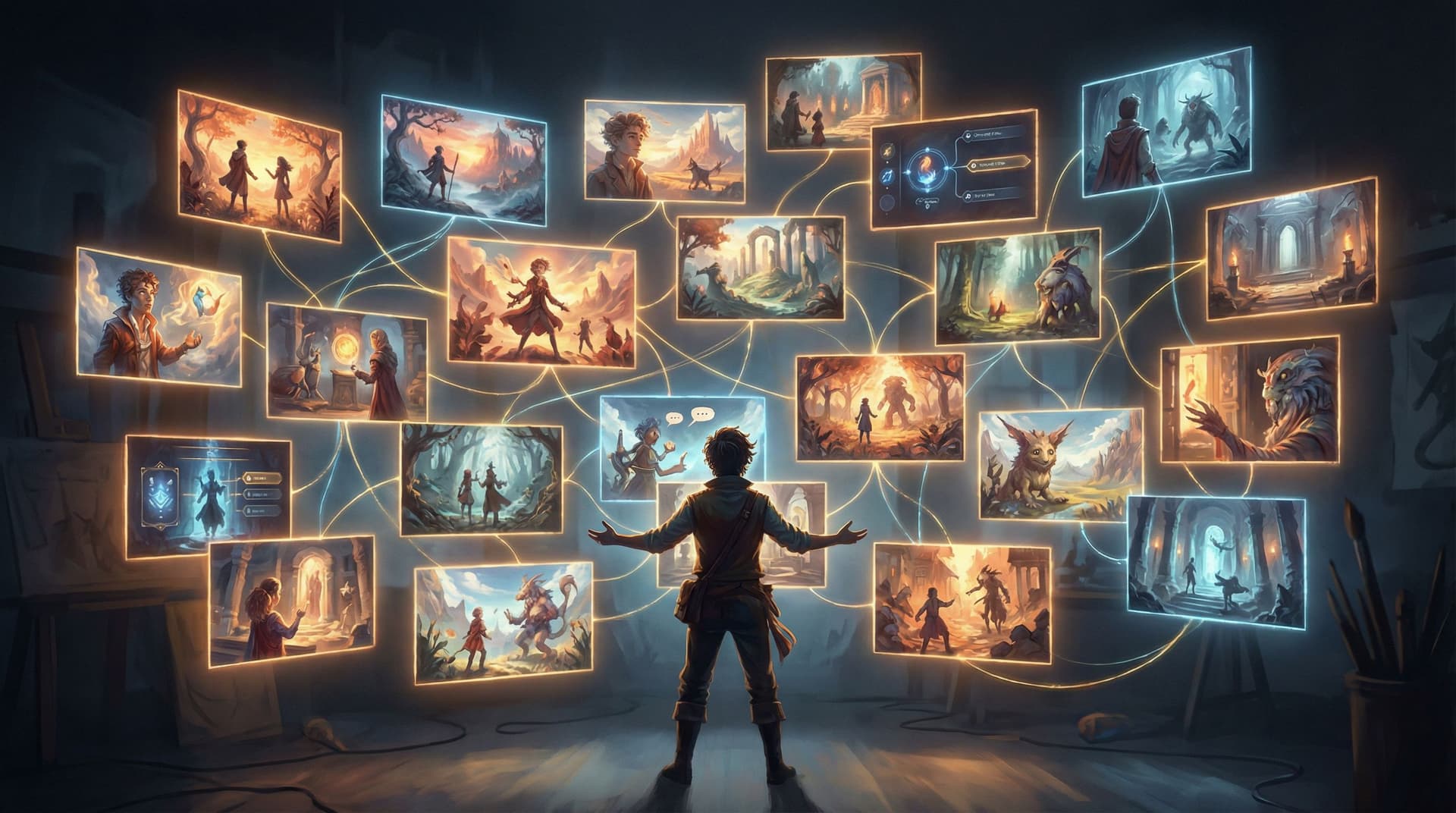
The Multiplayer Question: Turning Single-Player Questas Stories into Shared, Facilitated, and Asynchronous Experiences

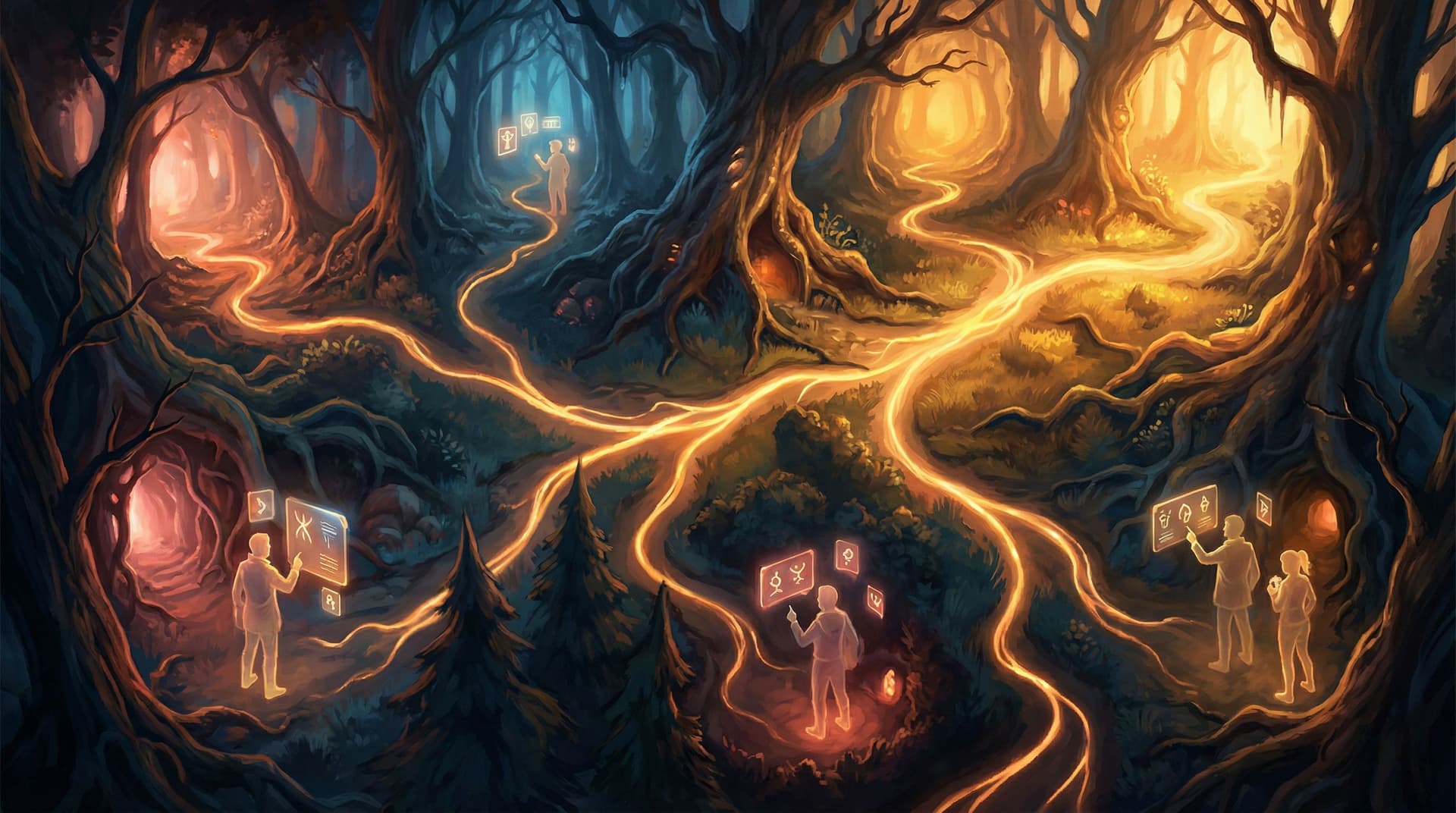
Interactive stories feel like games, but most are built for one person, one screen, one timeline. That’s fine—until you notice how often people want to play together: A facilitator wants to run your branching scenario live with a workshop group. A teacher wants a whole class to explore the same story, then compare paths. A sales leader wants reps to play through a scenario asynchronously, then debrief in a team meeting. A fandom wants to argue over which route through your saga is “canon.” The “multiplayer question” is simple: how do you take a story you designed as a solo experience and turn it into something people can share, facilitate, and revisit together—without rebuilding everything from scratch

Team Questas
Team Questas
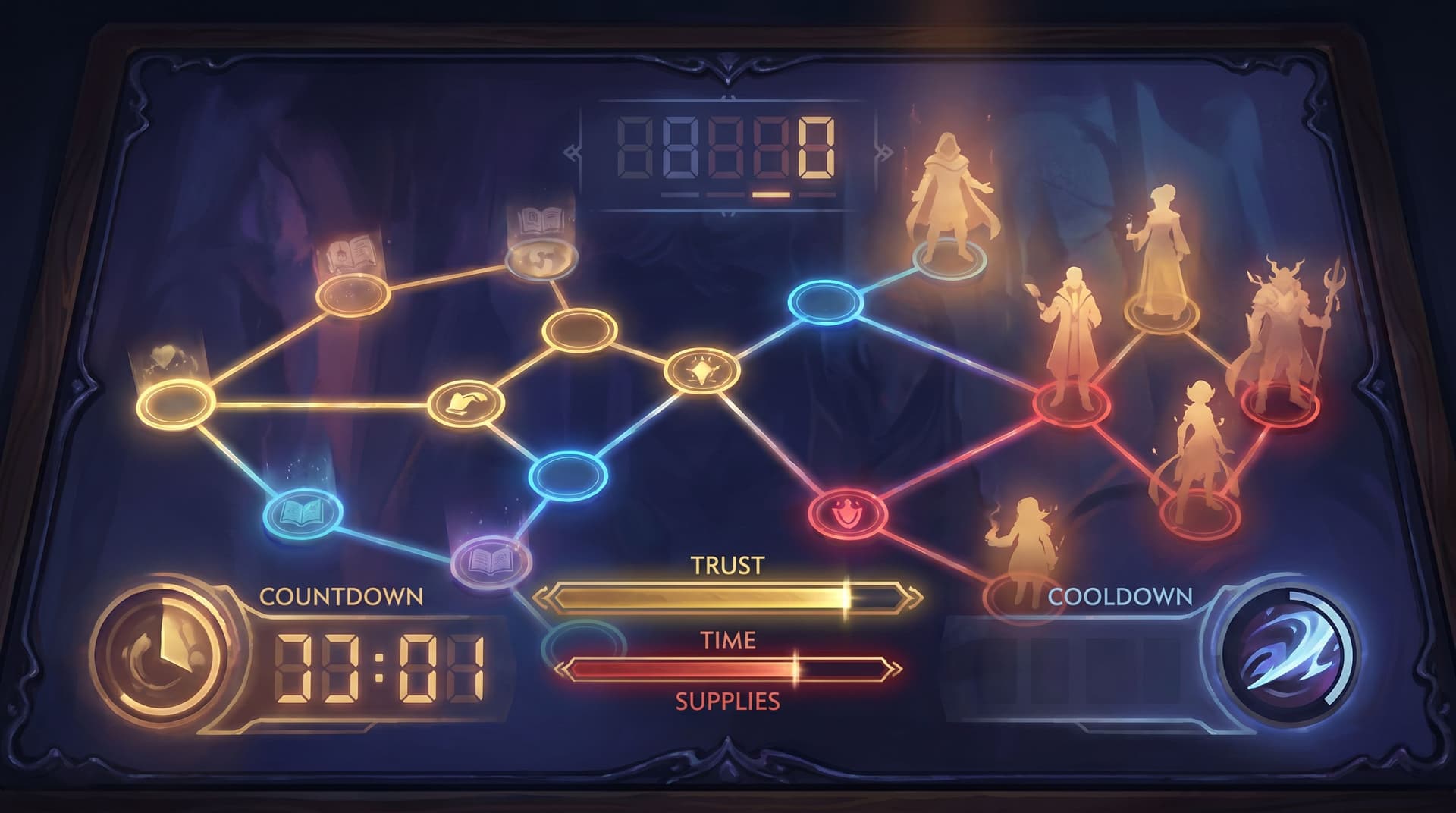
No-Code, All Systems: Building Reputation, Factions, and Hidden Meters in Questas Without a Dev Team
Interactive Storytelling
AI Tools

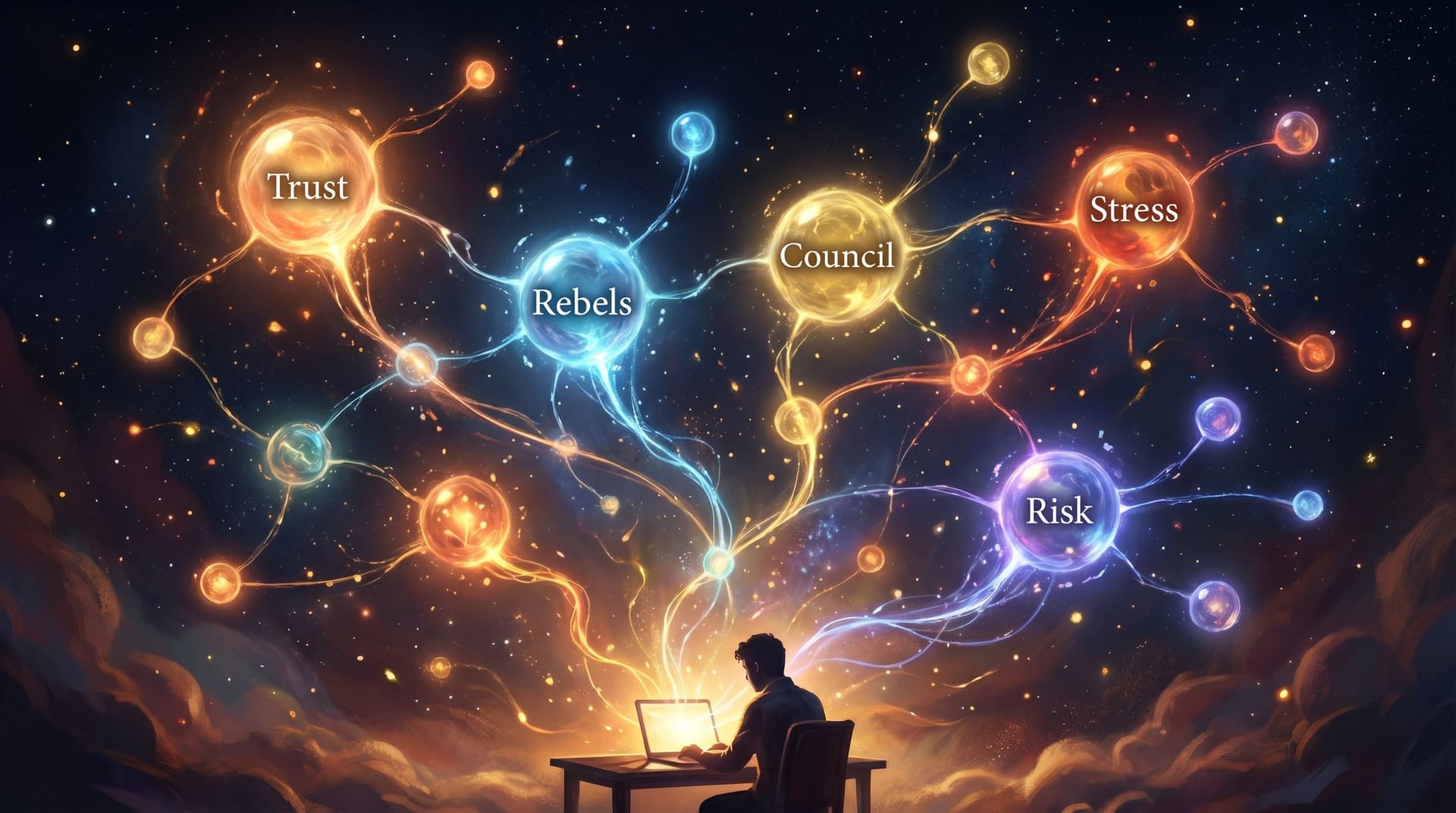
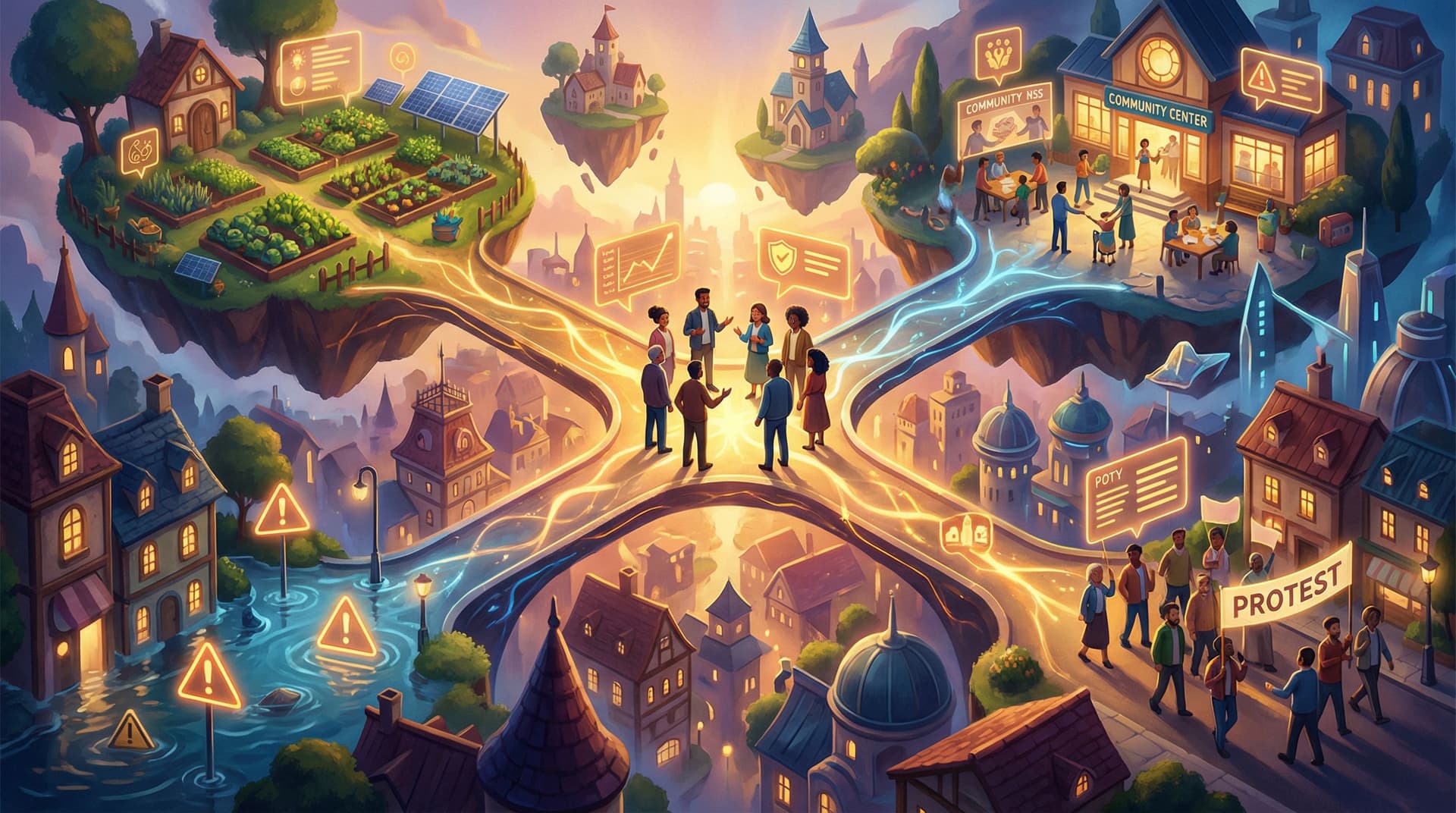
No-Code, All Systems: Building Reputation, Factions, and Hidden Meters in Questas Without a Dev Team

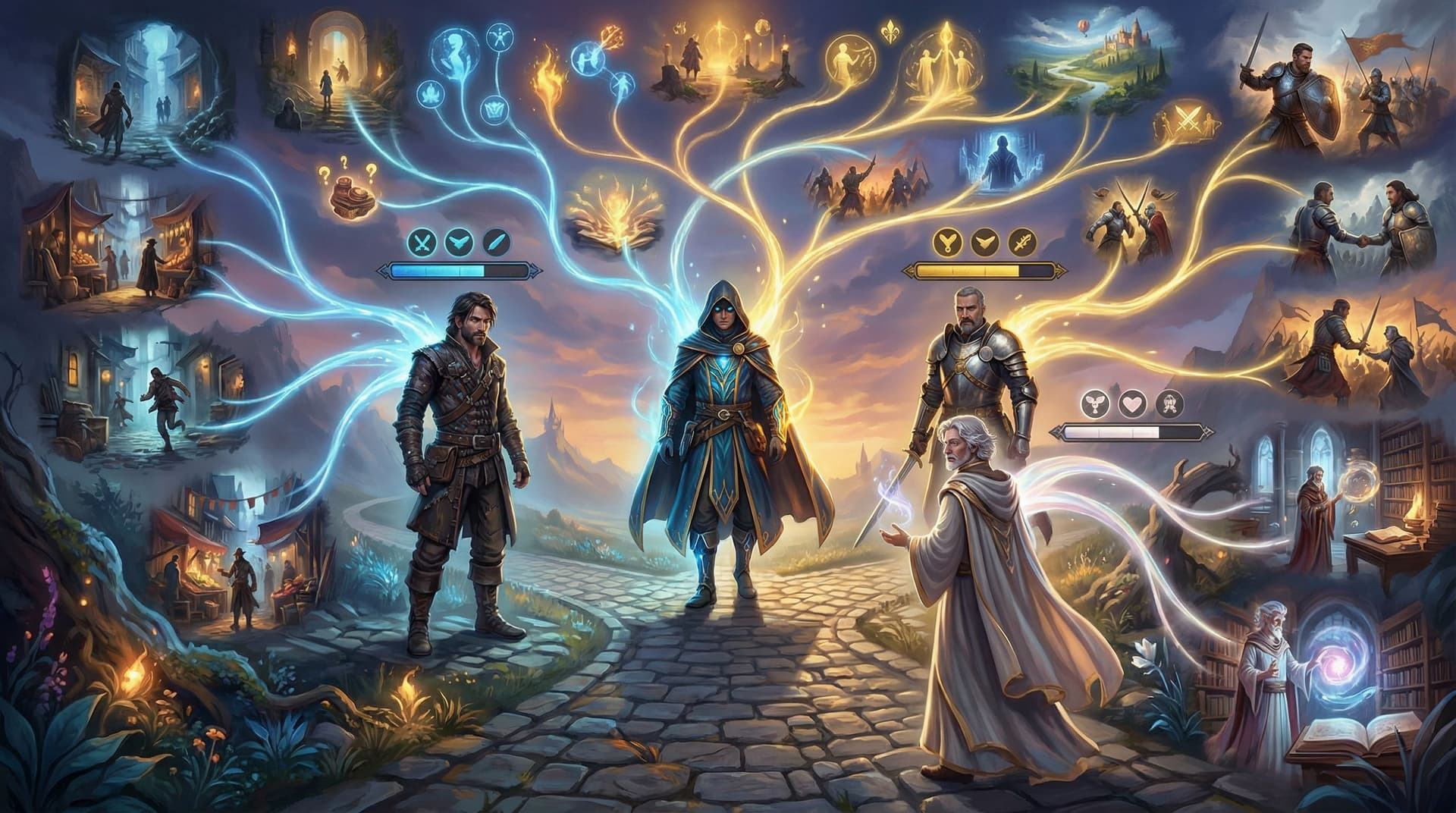
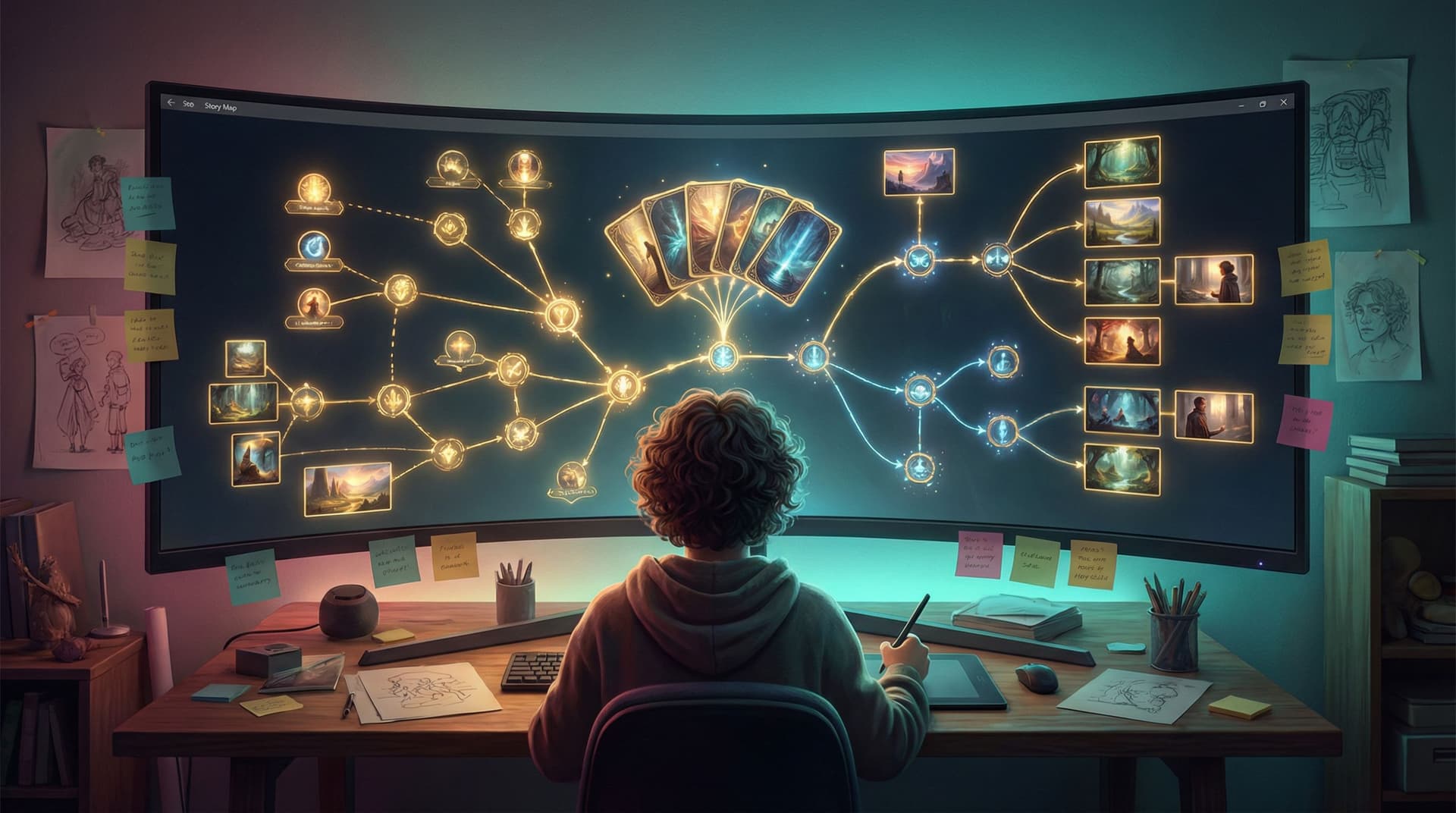
Interactive stories get truly memorable when choices echo. Not just, “You picked the left door, so you see a different room,” but: A mentor remembers you lied three scenes ago. A rebel faction quietly tracks how often you help them. Your “stress” level spikes after a brutal decision, unlocking a breakdown later. That’s systems design: invisible meters, reputations, and factions quietly shaping what’s possible. It’s what makes RPGs and narrative games feel alive—and for a long time, it was something you needed a dev team to pull off. With Questas, you can build those systems visually, without writing a line of co

Team Questas
Team Questas
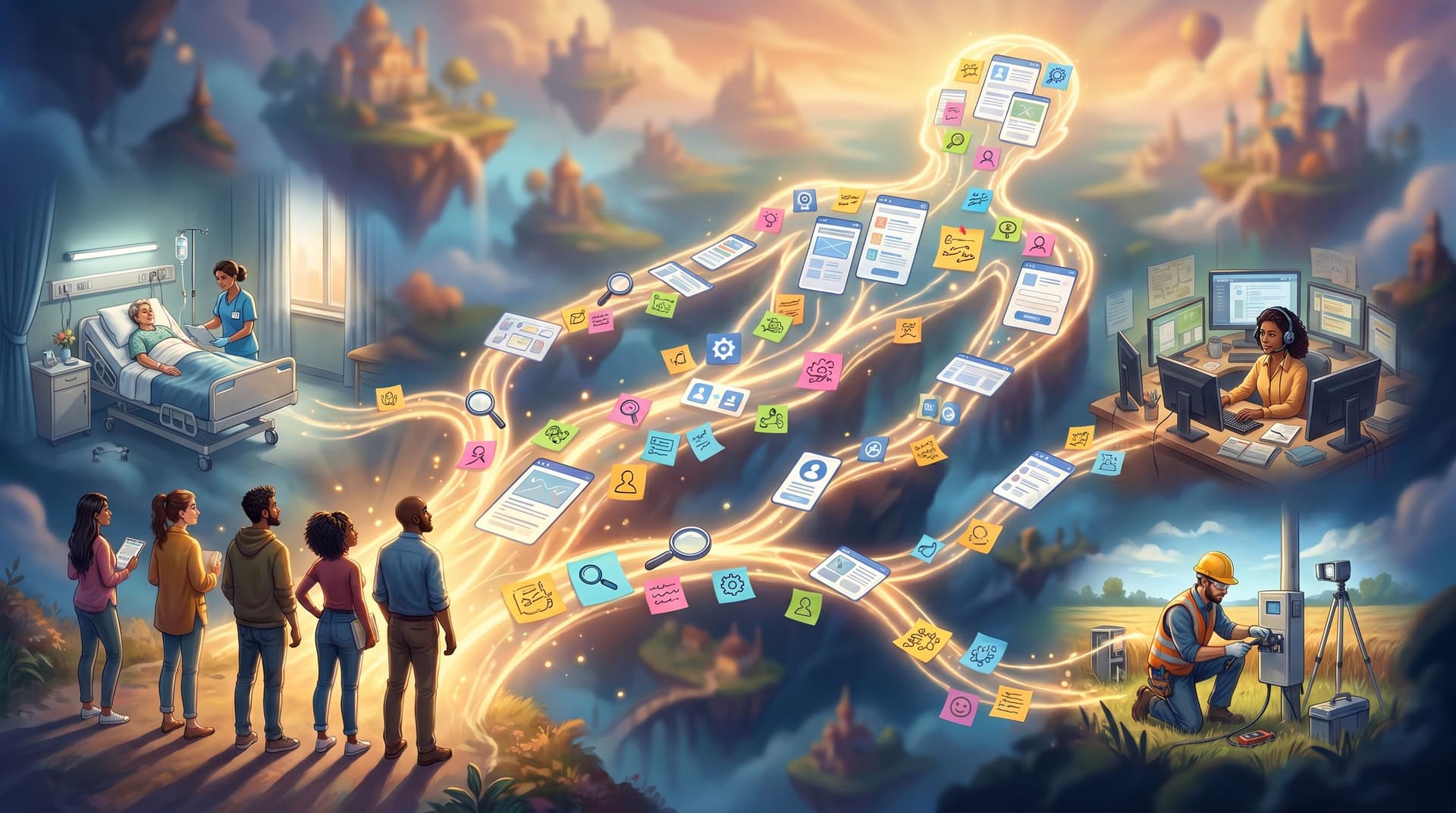
Branching Narratives for Health and Safety: Turning Procedures and Protocols into Rehearsable Questas Scenarios
Interactive Storytelling
AI Tools

Branching Narratives for Health and Safety: Turning Procedures and Protocols into Rehearsable Questas Scenarios

Health, safety, and compliance teams all wrestle with the same paradox: The moments that matter most are rare, high‑stakes, and stressful. Most training for those moments is low‑stakes, forgettable, and passive. Fire evacuations. Chemical spills. De‑escalating an aggressive customer. Responding to a data breach. These are exactly the situations where you want people to act quickly, calmly, and correctly—yet they’ve usually only read about them in a PDF or clicked through a linear LMS module. Interactive, branching narratives change that equatio

Team Questas
Team Questas
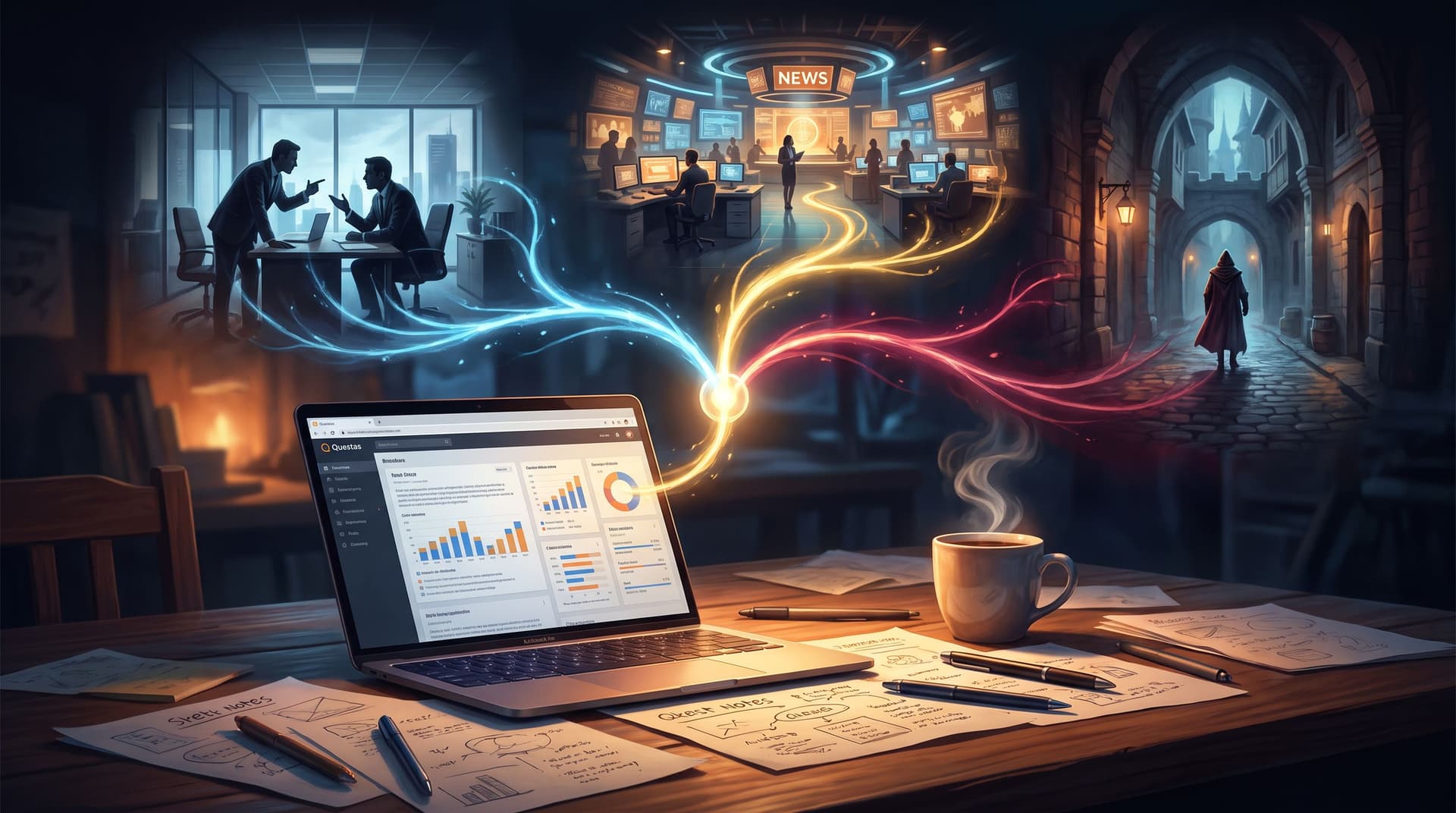
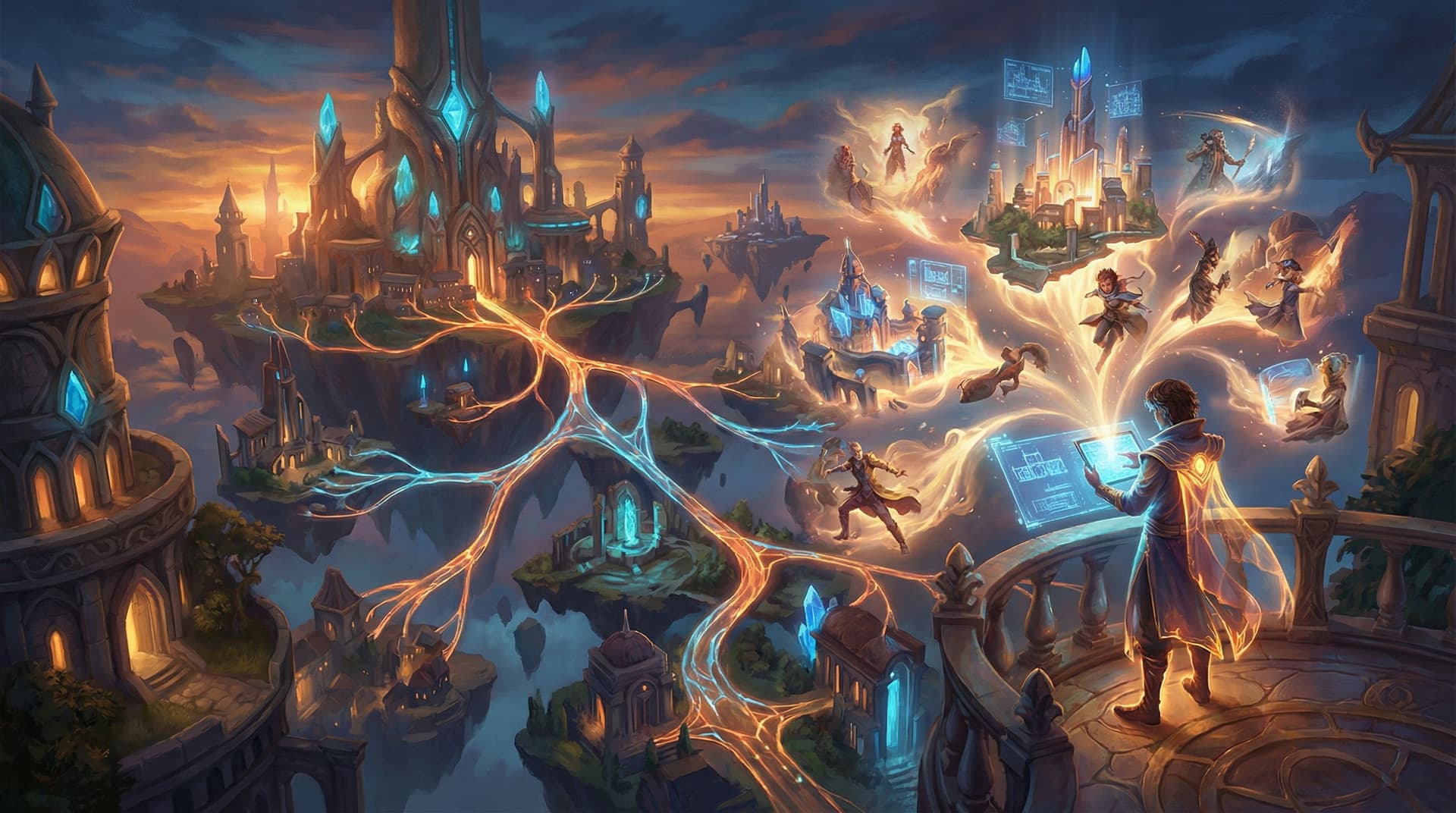
AI as Location Scout: Rapidly Prototyping Believable Worlds and Setpieces for Your Questas
Interactive Storytelling
AI Tools

AI as Location Scout: Rapidly Prototyping Believable Worlds and Setpieces for Your Questas

When you think about building an interactive story, you probably picture characters and choices first. But what actually makes your adventure feel real are the places: the creaking space station corridor, the neon‑washed alley, the HR manager’s cramped office before a tough conversation. Those locations don’t just decorate your story—they drive it. And that’s where AI can quietly become your best location scout. With platforms like Questas, you’re not just writing scenes; you’re designing playable worlds. AI image and video generation turns that worldbuilding into something you can iterate on in hours instead of weeks—if you learn to use it like a scout, not a slot machin

Team Questas
Team Questas
Beyond DALL·E and Midjourney: Evaluating AI Art Tools for Building Rich Questas Worlds
Interactive Storytelling
AI Tools

Beyond DALL·E and Midjourney: Evaluating AI Art Tools for Building Rich Questas Worlds

If you’re serious about building immersive, branching storyworlds in Questas, your visuals can’t be an afterthought. AI image generators like DALL·E and Midjourney are powerful, but when you’re crafting a whole world—with recurring characters, locations, props, and emotional beats—your needs are very different from someone making a single poster or meme

Team Questas
Team Questas
Branching Narratives for Product Marketing: Let Prospects ‘Test-Drive’ Your Value Prop in Questas
Interactive Storytelling
AI Tools

Branching Narratives for Product Marketing: Let Prospects ‘Test-Drive’ Your Value Prop in Questas

Static product pages ask prospects to believe your value prop. Branching, interactive stories invite them to experience it. That difference is why interactive content consistently outperforms static assets on engagement and conversion. Studies show interactive formats can generate 2–3x more engagement and 2x more leads than traditional content, while brands using interactive experiences report 30% better lead quality on average. Interactive demos on marketing sites have been measured converting at 24%+, nearly 8x higher than traditional conten

Team Questas
Team Questas
Adaptive Difficulty in Interactive Stories: Using Soft Gates, Hints, and Optional Paths in Your Questas
Interactive Storytelling
AI Tools

Adaptive Difficulty in Interactive Stories: Using Soft Gates, Hints, and Optional Paths in Your Questas

Interactive stories used to be pretty unforgiving. Miss a clue? Game over. Choose the wrong door? Back to the start. That kind of design can work for hardcore players—but it quietly pushes away everyone else: busy learners, casual readers, nervous trainees, or people just testing your story on their phone between meetings. Adaptive difficulty gives you a better toolkit. Instead of a single fixed challenge level, you design stories that respond to the player: offering hints when they’re stuck, bonus challenges when they’re cruising, and alternate routes when they need a different way thro

Team Questas
Team Questas
Micro-Quests, Macro Insight: 10 Bite-Size Questas Formats for User Research, Polls, and Surveys
Interactive Storytelling
AI Tools

Micro-Quests, Macro Insight: 10 Bite-Size Questas Formats for User Research, Polls, and Surveys

If you run research, marketing, product, or learning initiatives, you already know the problem: people are tired of long forms and boring surveys. They’ll skip a 15‑minute questionnaire—but happily tap through a short, visual story where their choices shape what happens next. That’s where micro-quests shine: small, interactive stories that feel like adventures to your audience and goldmines of insight to you. With a platform like Questas, you can build these bite-size experiences in a no‑code, visual editor—complete with AI‑generated images and videos—then share them as links or embeds. Each choice becomes a data point, and each branch helps you understand your users’ priorities, hesitations, and mental mode

Team Questas
Team Questas
Branching Narratives for Sales Teams: Using Questas to Rehearse Objections, Negotiations, and Closing Moves
Interactive Storytelling
AI Tools

Branching Narratives for Sales Teams: Using Questas to Rehearse Objections, Negotiations, and Closing Moves

Most sales leaders agree on one thing: reps don’t get enough live practice on the moments that actually decide deals. Objections. Procurement pushback. Last‑minute competitors. Discount requests. Silent buying committees. These are the moments where confidence, clarity, and emotional control matter more than product knowledge. Yet most teams still rely on: One‑off workshops Awkward peer role‑plays Static playbooks and PDFs Post‑mortems after deals are already lost Simulation‑based sales training is changing that. Teams that adopt scenario‑based, interactive practice are seeing double‑digit gains in win rates and faster ramp times compared to traditional training alon

Team Questas
Team Questas
From Workshop to World: Using Questas for Live Writing Classes, Retreats, and Cohorts
Interactive Storytelling
AI Tools

From Workshop to World: Using Questas for Live Writing Classes, Retreats, and Cohorts

Live writing experiences are having a moment. From Zoom-based generative workshops to week-long retreats in the mountains, writers are looking for spaces where they can: Draft in community Get immediate feedback Experiment with new forms Leave with something finished, not just a notebook full of prompts Interactive storytelling adds a new layer to that mix. When your students or participants can see their choices ripple through a branching story, the craft lessons land deeper. And when they can build those experiences visually—without code—you unlock a whole new format for classes, retreats, and cohort-based courses

Team Questas
Team Questas
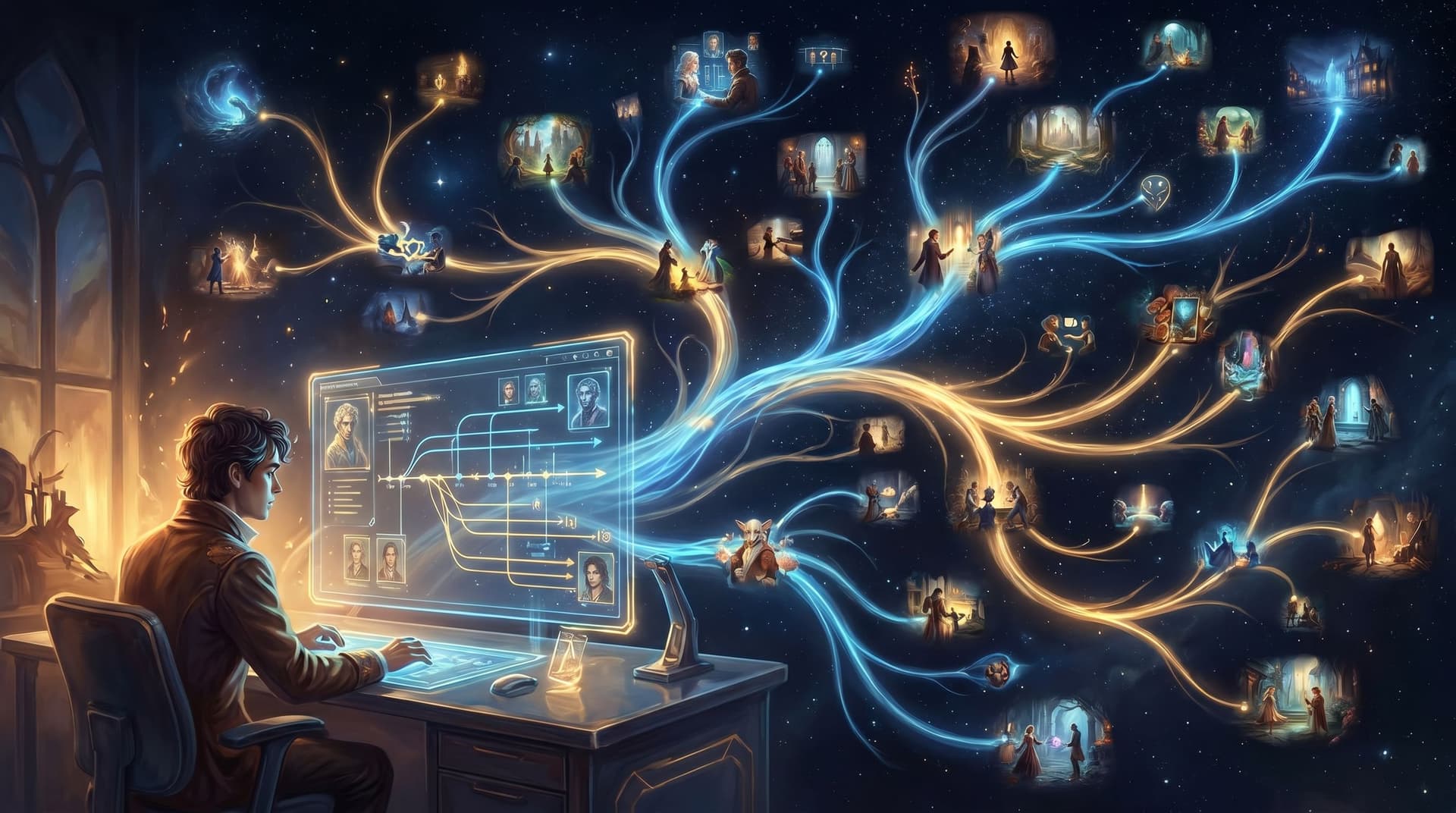
AI Storyboarding for Nonfiction: Mapping Real Events into Branching Questas Timelines
Interactive Storytelling
AI Tools

AI Storyboarding for Nonfiction: Mapping Real Events into Branching Questas Timelines

Nonfiction doesn’t have to mean linear. Biographies, case studies, investigations, policy rollouts, customer journeys, even internal retrospectives—all of these are really networks of decisions, perspectives, and what‑ifs. Yet we usually flatten them into a single path: one article, one video, one slide deck. Interactive story platforms like Questas open up a different approach: treat real events as story systems, then let your audience explore them as branching timelines. In this post, we’ll dig into how to use AI storyboarding to turn nonfiction material into playable, branching narratives—especially using Questas’ visual, no‑code editor and AI visuals. Why Branch Real Events at

Team Questas
Team Questas
The One-Evening Story Sprint: Shipping a Complete Questas Prototype from Blank Page to Playtest
Interactive Storytelling
AI Tools

The One-Evening Story Sprint: Shipping a Complete Questas Prototype from Blank Page to Playtest

You have an idea for an interactive story. Maybe it’s a haunted museum tour, a branching sales roleplay, or a political thriller where every decision reshapes the map. You know it would be perfect as a playable experience—but the thought of planning, writing, and illustrating a full branching narrative feels… huge. What if you could ship a real, playable prototype in a single evening instead? That’s the promise of a one-evening story sprint: a focused, time-boxed session where you go from blank page to a shareable, testable story inside Quest

Team Questas
Team Questas
AI as Dungeon Builder: Designing Replayable Dungeons, Raids, and Heists in Questas
Interactive Storytelling
AI Tools

AI as Dungeon Builder: Designing Replayable Dungeons, Raids, and Heists in Questas

If you’ve ever sketched a dungeon on graph paper, improvised a heist in a tabletop session, or wiped for the tenth time on a raid boss, you already know the magic of a well‑designed encounter: The anticipation as players step into the unknown The tension of limited information and risky choices The relief or devastation when a plan finally either works… or spectacularly fails Now imagine bottling that energy into interactive stories anyone can play in a browser—and that you can build visually, without code. That’s where Questas shines as an “AI dungeon builder”: a place where you can design branching dungeons, raids, and heists powered by AI‑generated images and videos, then tune them for replayability

Team Questas
Team Questas
From Static IP to Living Canon: Keeping Fan Theories and Player Choices in Sync Across a Questas Series
Interactive Storytelling
AI Tools

From Static IP to Living Canon: Keeping Fan Theories and Player Choices in Sync Across a Questas Series

Interactive stories don’t end at the last scene anymore. Once you publish a branching story, players keep going—on Discord, in comment threads, in classrooms and teams. They argue about what really happened, share screenshots of obscure branches, and spin elaborate theories about side characters you barely outlined. If you’re building a series of stories in Questas, that energy is gold. But it also creates a new challenge: How do you keep a coherent canon when your world is shaped by player choices and an active fandom that’s constantly discovering edge case

Team Questas
Team Questas
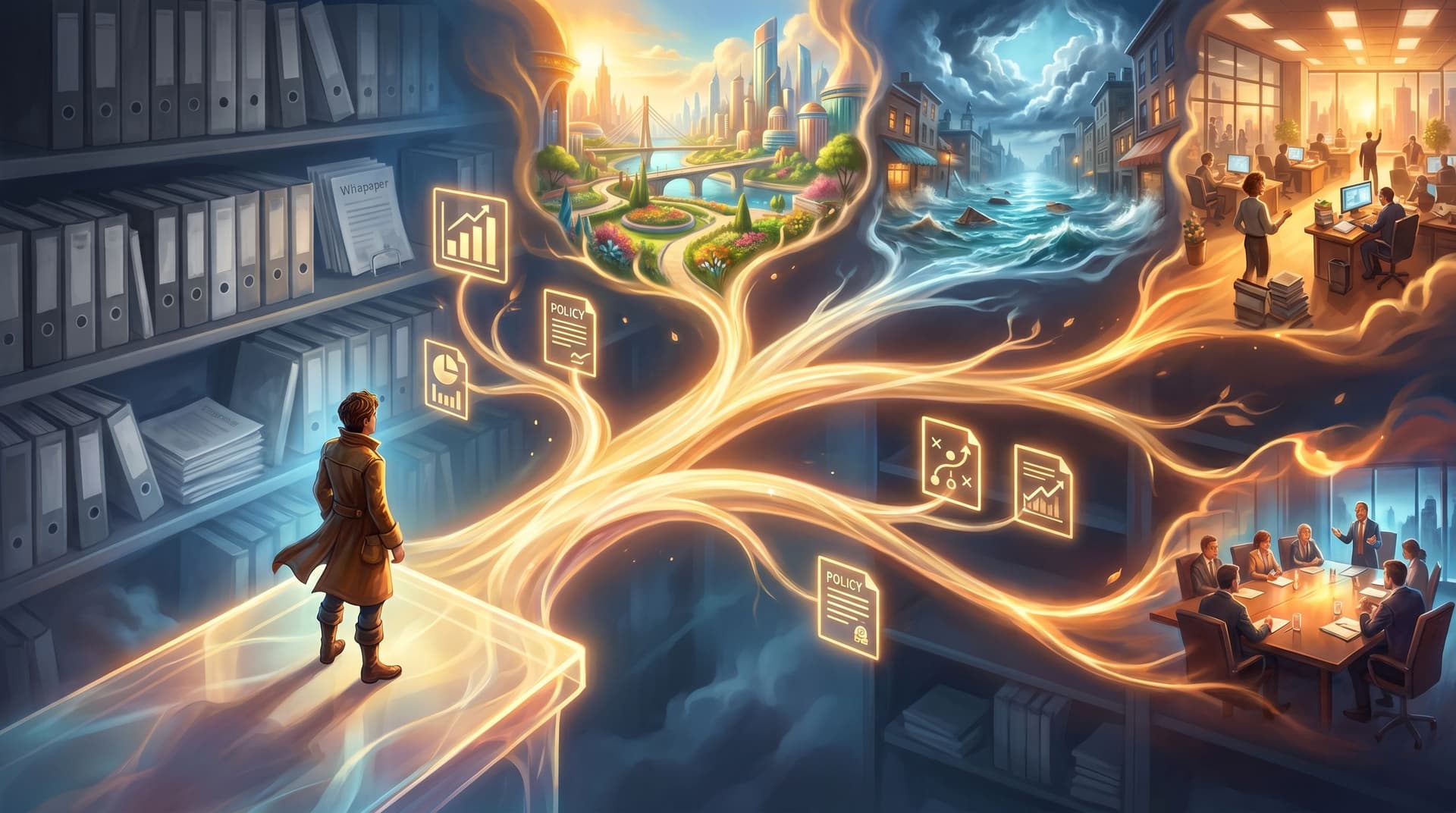
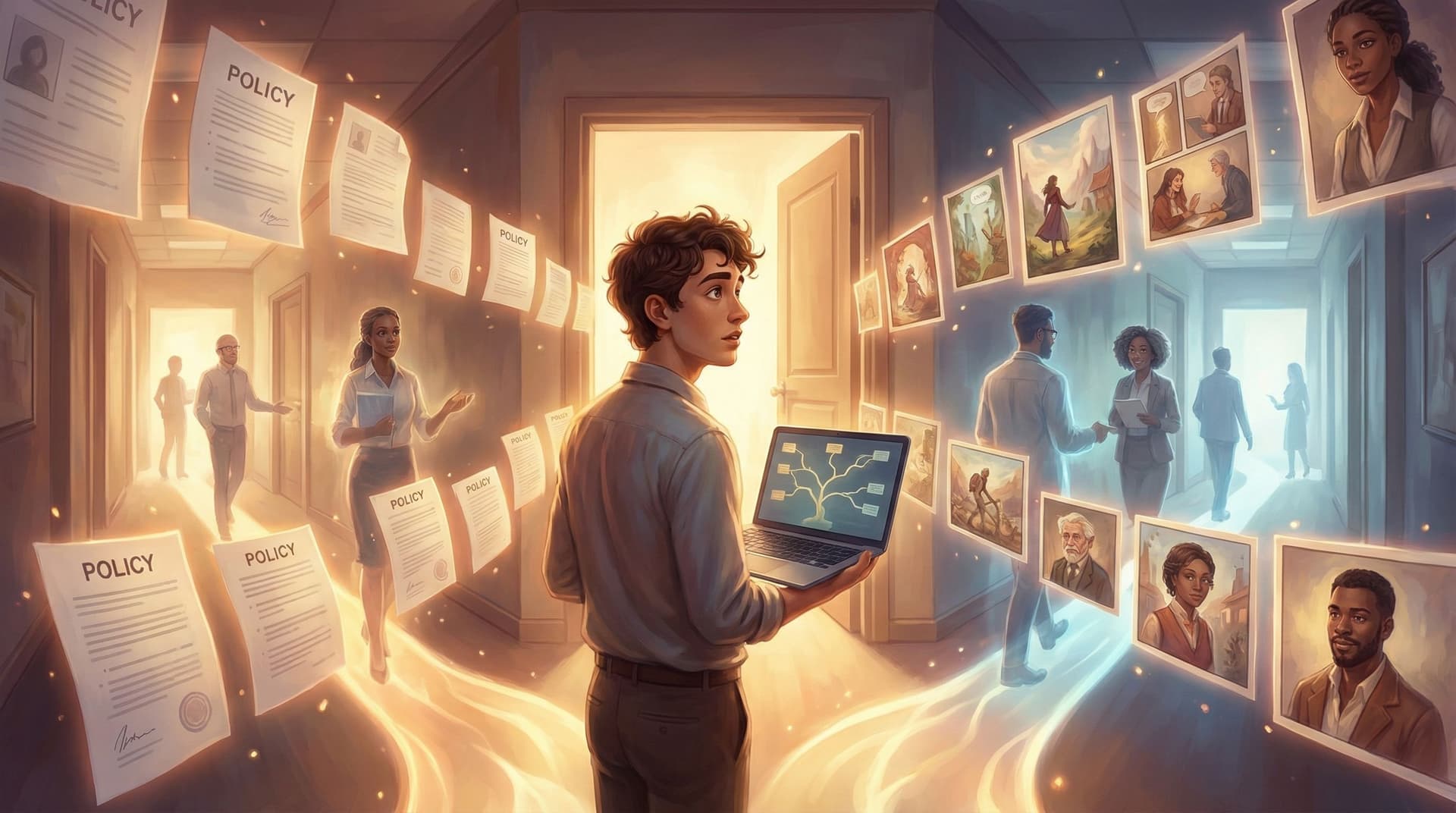
Beyond PDFs and Portals: How HR Teams Can Turn Policy Rollouts into Playable Questas Change Journeys
Interactive Storytelling
AI Tools

Beyond PDFs and Portals: How HR Teams Can Turn Policy Rollouts into Playable Questas Change Journeys

Policy rollouts are one of the toughest parts of HR’s job. You’re asking busy people to: Understand new rules Change familiar habits Trust that this isn’t “just another initiative” that will vanish in six months And you’re doing it with… PDFs, email blasts, and LMS modules. No surprise that adoption often lags, managers improvise, and HR ends up in “policing” mode instead of partner mode. Interactive, playable change journeys offer a different path. Instead of pushing information at employees, you invite them into a story where their choices, context, and concerns actually matter. That’s where a platform like Questas comes

Team Questas
Team Questas
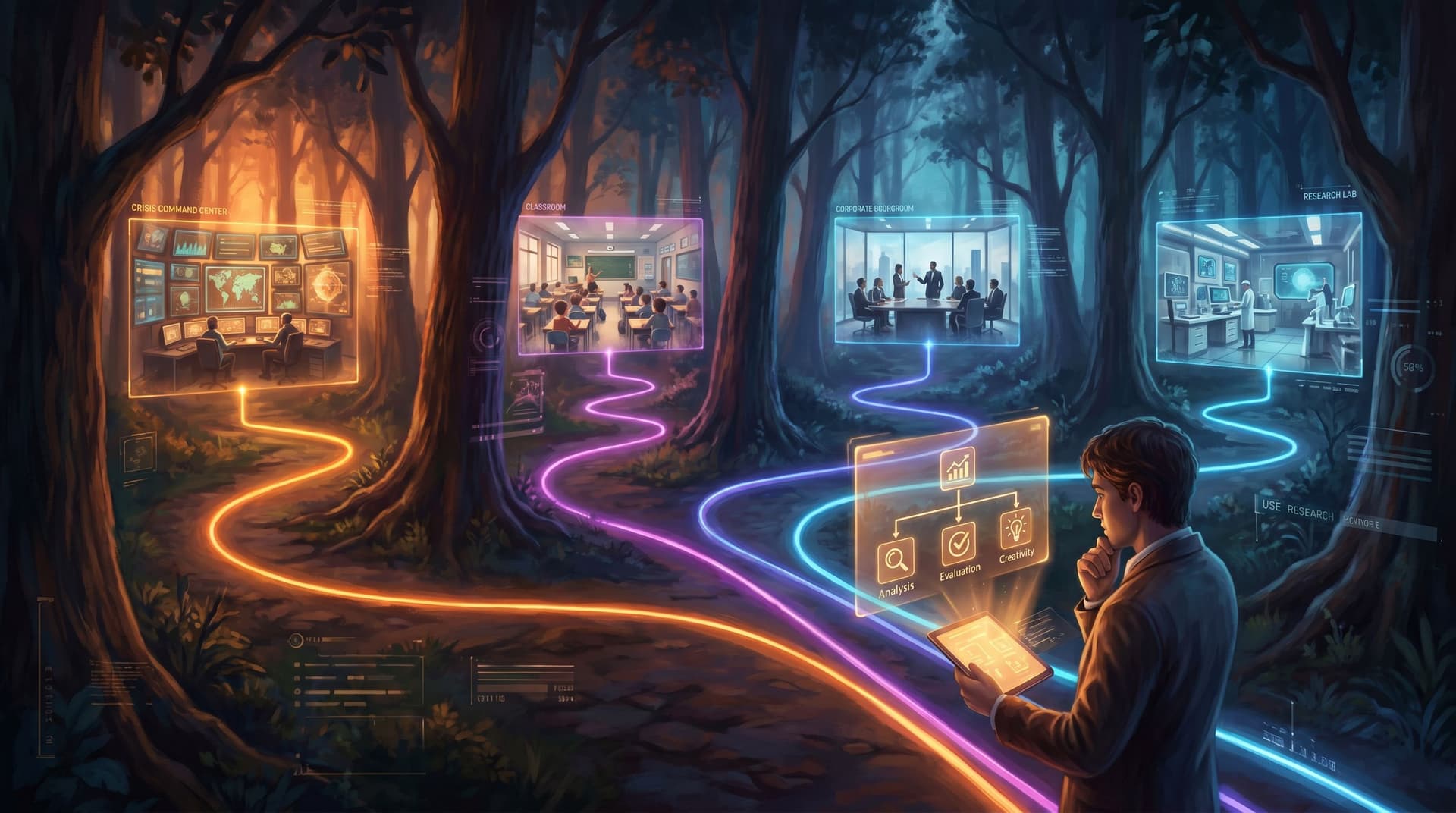
Scenario-First Story Design: Building Training Questas That Start with Real-World Decisions
Interactive Storytelling
AI Tools

Scenario-First Story Design: Building Training Questas That Start with Real-World Decisions

Most training content starts from the wrong end. We begin with topics ("compliance," "onboarding," "sales discovery"), list learning objectives, then cram everything into slides, handbooks, or videos. Only at the very end do we ask: "Where could we add an interactive scenario?" Scenario-first story design flips that. Instead of starting with content, you start with a real decision your learner actually has to make—the moment they feel stakes, uncertainty, and pressure. Then you build your training story outward from that choice, using a platform like Questas to turn it into a branching, visual experience people can safely rehears

Team Questas
Team Questas
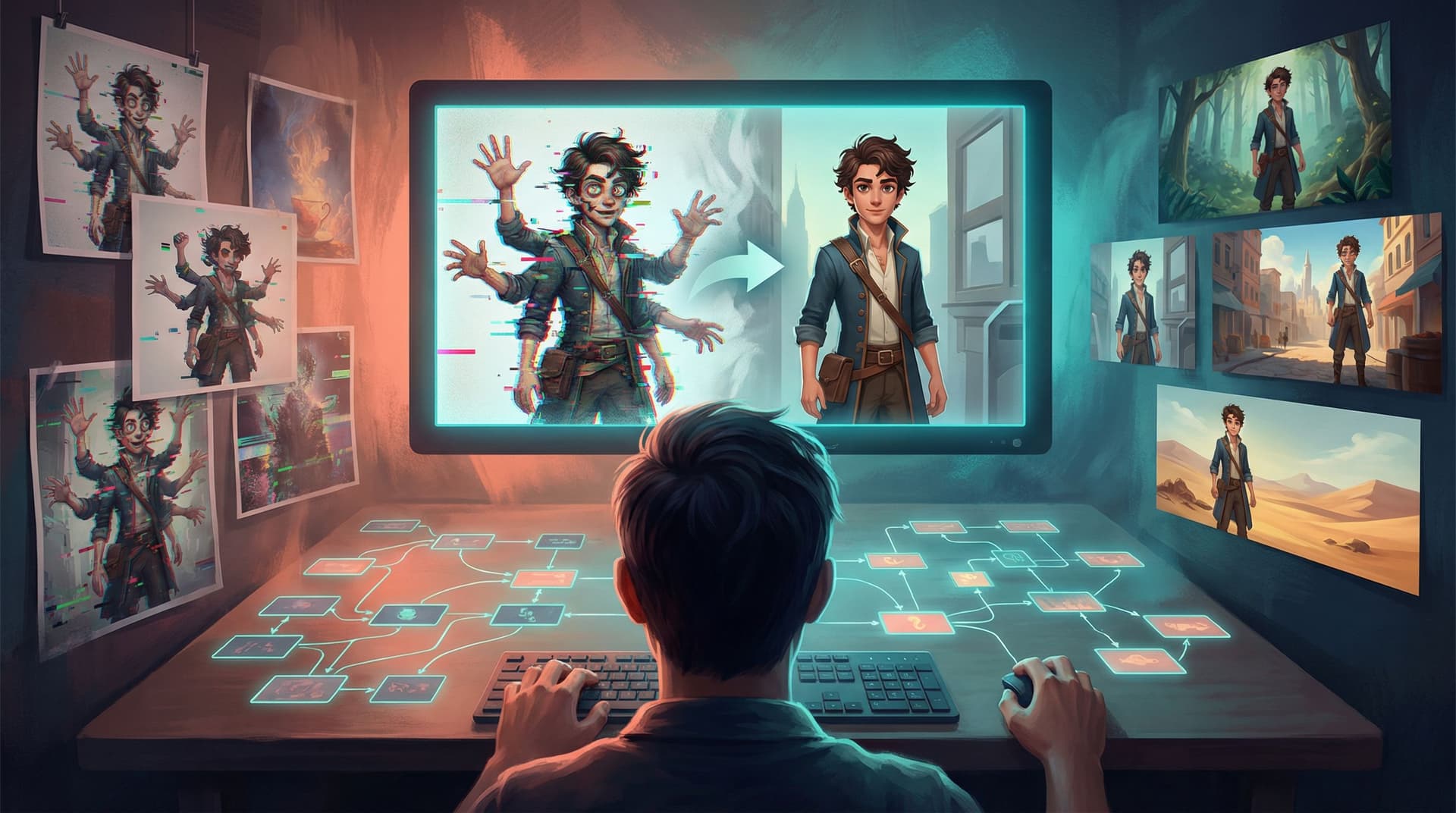
AI Style Chains: Keeping Characters, Locations, and Props Consistent Across a Questas Series
Interactive Storytelling
AI Tools

AI Style Chains: Keeping Characters, Locations, and Props Consistent Across a Questas Series

If you’ve ever fallen in love with a character in episode one of your interactive story, only to have them “recast” three scenes later by a slightly confused AI image model, you know the problem we’re tackling here. Consistency is what makes a storyworld feel real. When your detective’s trench coat keeps changing color, the city skyline morphs every chapter, or a crucial artifact looks different in each scene, players feel the seams. They stop believing and start noticing the tool. AI style chains are your antidot

Team Questas
Team Questas
AI as Co‑Writer, Not Ghostwriter: Collaborative Writing Workflows for Complex Questas Plots
Interactive Storytelling
AI Tools

AI as Co‑Writer, Not Ghostwriter: Collaborative Writing Workflows for Complex Questas Plots

AI as Co‑Writer, Not Ghostwriter: Collaborative Writing Workflows for Complex Questas Plots Complex branching stories are hard. You’re juggling: Multiple protagonists and perspectives Choices that echo ten scenes later Visual continuity across dozens (or hundreds) of AI‑generated images The constant temptation to “just let the AI write it all” That last one is the trap. When you’re building interactive adventures in Questas, AI can absolutely accelerate your process—but if you hand over the steering wheel, you end up with plots that feel generic, inconsistent, or emotionally flat. The better model: AI as co‑writer, not ghostwrit

Team Questas
Team Questas
From Onboarding Docs to Day-One Adventures: Turning Employee Handbooks into Questas Storyworlds
Interactive Storytelling
AI Tools

From Onboarding Docs to Day-One Adventures: Turning Employee Handbooks into Questas Storyworlds

Employee handbooks are supposed to be the gateway into a company’s culture, expectations, and rituals. In practice, they’re often something else entirely: A PDF that gets skimmed once and forgotten A compliance checkbox HR has to chase A wall of text that overwhelms new hires already juggling logins, intros, and first-week nerves But what if your handbook wasn’t a document at all? What if it were a playable storyworld—one where new hires make choices, meet characters, explore scenarios, and see how your values play out in practice? That’s exactly what happens when you turn your handbook into an interactive experience built with Questas. Instead of reading about your company, new hires step into it

Team Questas
Team Questas
From Walkthroughs to Walkthrough Worlds: Turning How‑To Guides into Branching Questas Tutorials
Interactive Storytelling
AI Tools

From Walkthroughs to Walkthrough Worlds: Turning How‑To Guides into Branching Questas Tutorials

Most how‑to content assumes a straight line. Step 1, step 2, step 3… success. But real learners don’t move in straight lines. They: Skip ahead and get stuck Take the “wrong” path and need to recover Arrive with wildly different levels of experience Want to explore why a choice matters, not just what to click That gap between neat, linear walkthroughs and messy, real behavior is exactly where branching tutorials shine. With a platform like Questas, you can turn static guides into walkthrough worlds—playable journeys where people try things, make decisions, and see what happen

Team Questas
Team Questas
Writing Moral Gray Areas: Designing Ambiguous Choices That Still Feel Fair in Questas
Interactive Storytelling
Creative Writing

Writing Moral Gray Areas: Designing Ambiguous Choices That Still Feel Fair in Questas

Moral gray areas are where interactive stories get under a player’s skin. It’s not hard to write a choice between obviously good and cartoonishly evil. What’s hard—and far more memorable—is asking players to pick between: Two values they both care about Two characters they both like Two outcomes that help in one way and hurt in another Done well, these moments make people pause at a node in Questas, reread the options, and sit with the discomfort. Done poorly, they feel rigged, manipulative, or random. This post is a practical guide to building morally ambiguous choices that still feel fair—so players feel responsible for what happens, not tricked by the autho

Team Questas
Team Questas
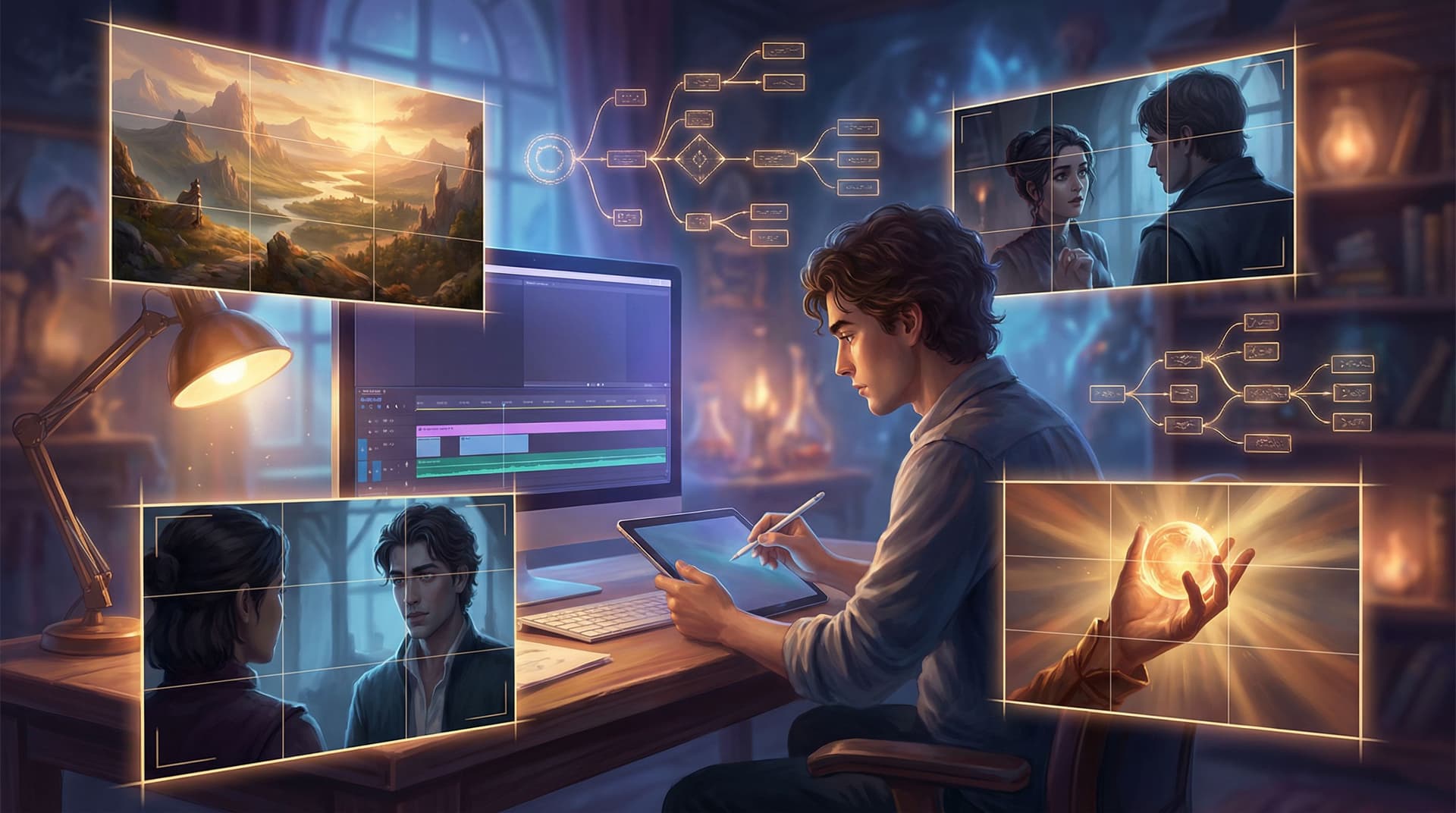
Writing with the Camera in Mind: Cinematic Techniques for Framing AI Images in Your Questas Scenes
Interactive Storytelling
AI Tools

Writing with the Camera in Mind: Cinematic Techniques for Framing AI Images in Your Questas Scenes

Interactive stories don’t just live in words anymore. When you’re building in Questas, every node can become a “shot” — a framed moment that tells the player what to feel before they even read a line of text. That’s why thinking like a director, not just a writer, is such a powerful shift

Team Questas
Team Questas
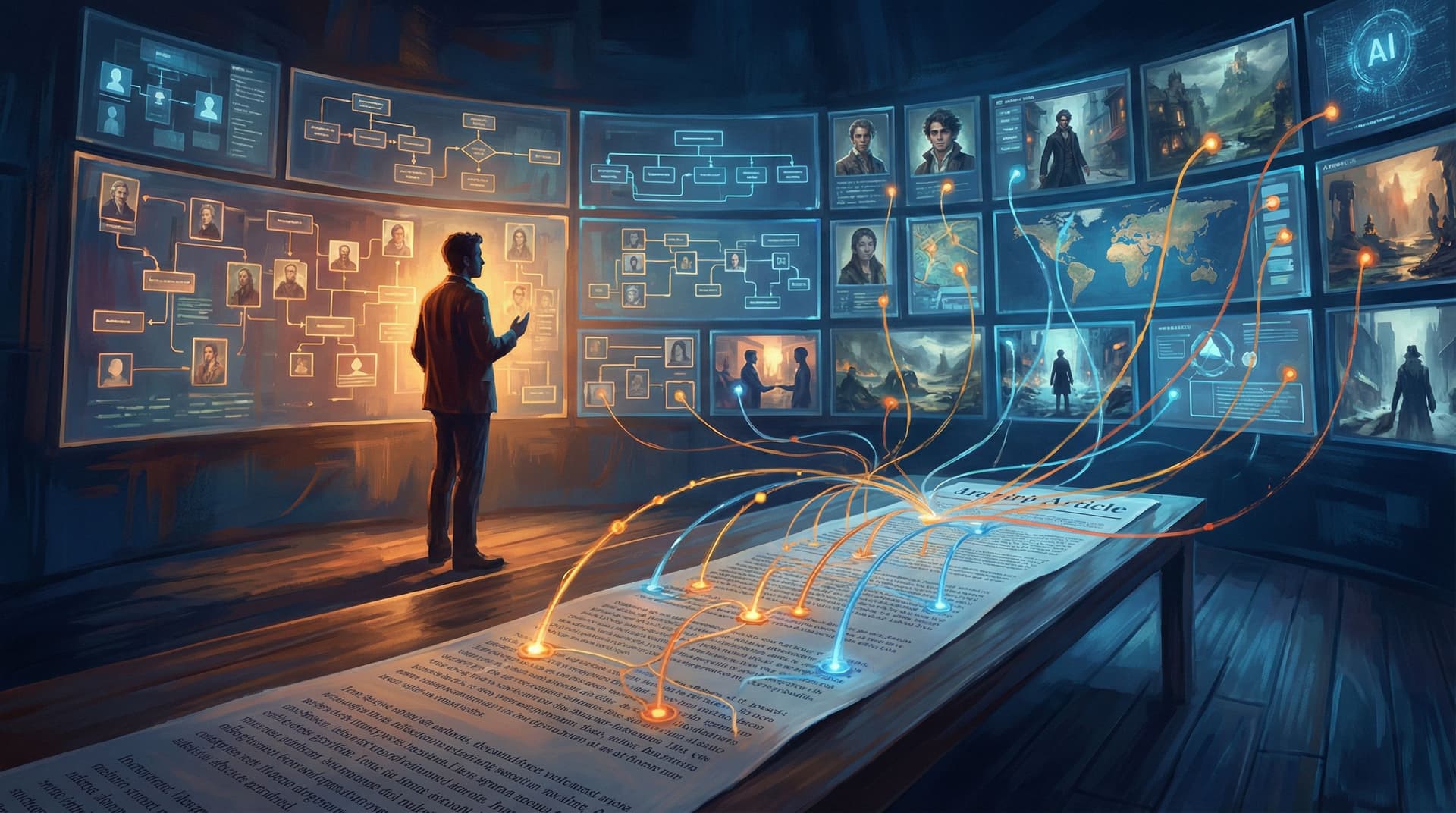
Interactive Brand Journalism: Turning Long-Form Articles into Questas Investigations Readers Can Play Through
Interactive Storytelling
AI Tools

Interactive Brand Journalism: Turning Long-Form Articles into Questas Investigations Readers Can Play Through

Brand stories used to live in 1,500-word articles, glossy PDFs, and polished case studies. People might skim the headline, maybe scroll once, and then bounce to the next tab. Interactive brand journalism flips that script. Instead of telling readers what happened, you invite them to investigate it—following leads, making judgment calls, and feeling the tradeoffs your team actually faced. With platforms like Questas, those investigations don’t require code or a game studio. They’re built from the same raw material you already have: long-form articles, reports, and narratives. This post is a practical guide to transforming static brand stories into playable investigations that feel closer to a documentary game than a blog po

Team Questas
Team Questas
AI Visual Etiquette: Avoiding Tropes, Stereotypes, and Overload in Image-Heavy Questas Stories
Interactive Storytelling
AI Tools

AI Visual Etiquette: Avoiding Tropes, Stereotypes, and Overload in Image-Heavy Questas Stories

Interactive stories are no longer just text with the occasional illustration. With AI image and video tools built directly into platforms like Questas, it’s easier than ever to turn every node of your branching narrative into a richly rendered scene. That power comes with a responsibility: how you use visuals shapes how players feel, who they see themselves as, and whether they want to keep going

Team Questas
Team Questas
Interactive Brand Bibles: Turning Style Guides into Questas Adventures Your Team Will Actually Use
Interactive Storytelling
AI Tools

Interactive Brand Bibles: Turning Style Guides into Questas Adventures Your Team Will Actually Use

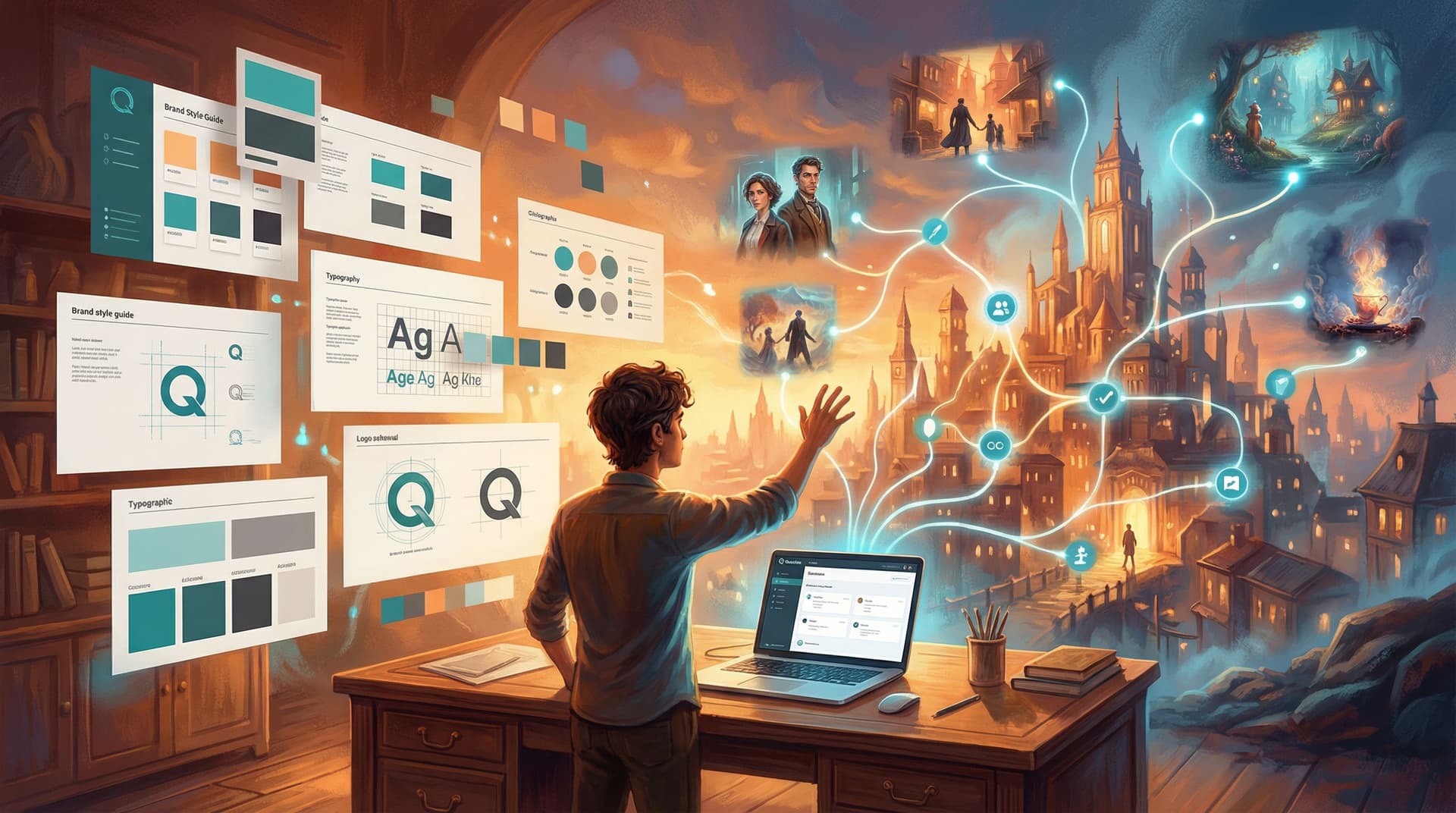
Most brand teams have a familiar pain: you pour months into a beautiful brand book… and then watch people ignore it. Designers hunt for the “right” logo in random Slack threads. Sales decks show up in off-brand gradients. New hires get a 60-page PDF in onboarding, skim the first five, and never open it again. You’re not alone. Surveys suggest that while the vast majority of companies have some form of brand guidelines, only a minority actively enforce or consistently follow them. One recent roundup put it bluntly: 95% of companies report having brand guidelines, but only about a quarter say they’re actually enforced. That gap between having a brand bible and living it is where consistency, trust, and growth quietly leak awa

Team Questas
Team Questas
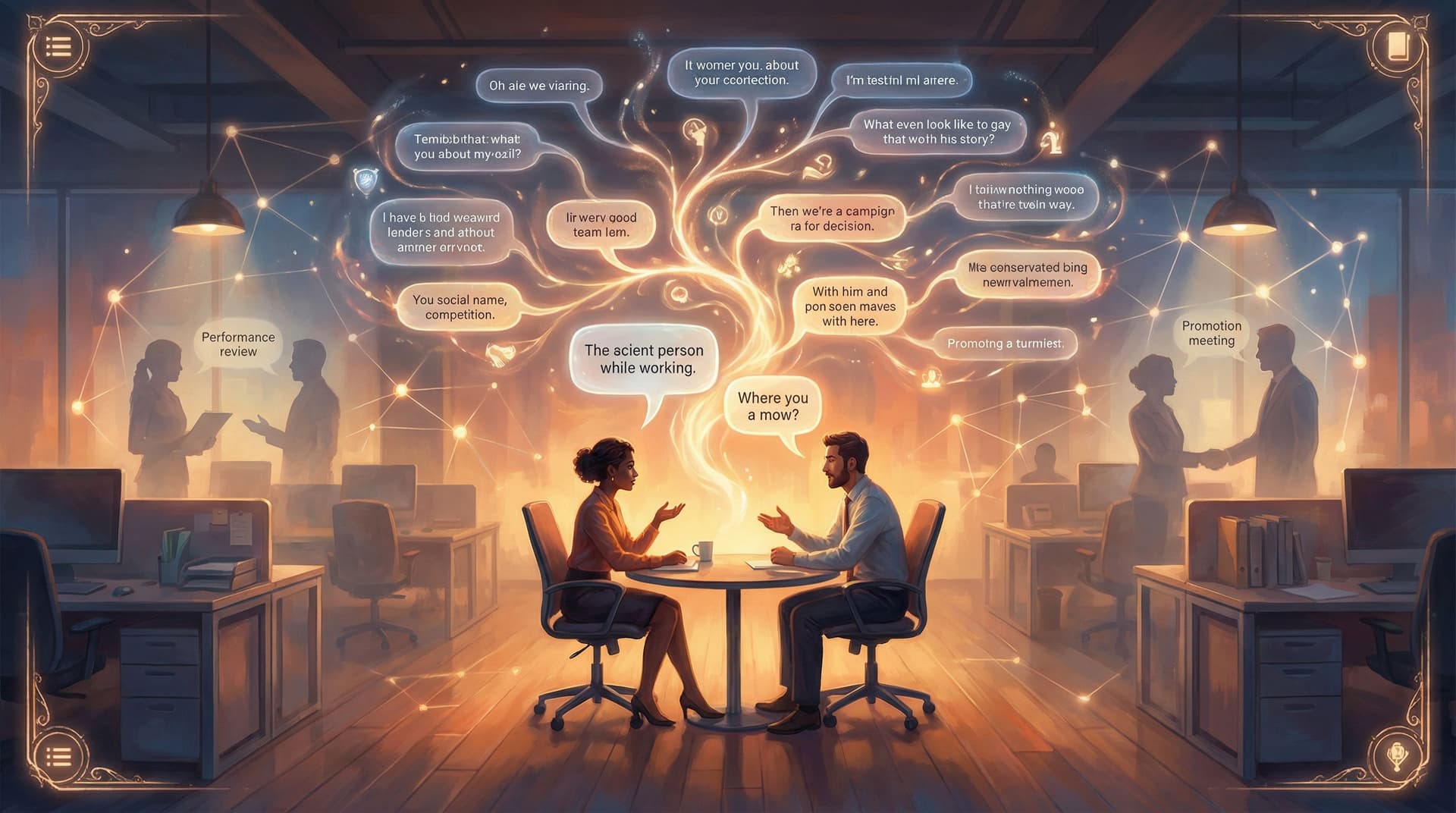
Office Politics, But Make It Playable: Using Questas to Rehearse Feedback, 1:1s, and Promotion Conversations
Interactive Storytelling
AI Tools

Office Politics, But Make It Playable: Using Questas to Rehearse Feedback, 1:1s, and Promotion Conversations

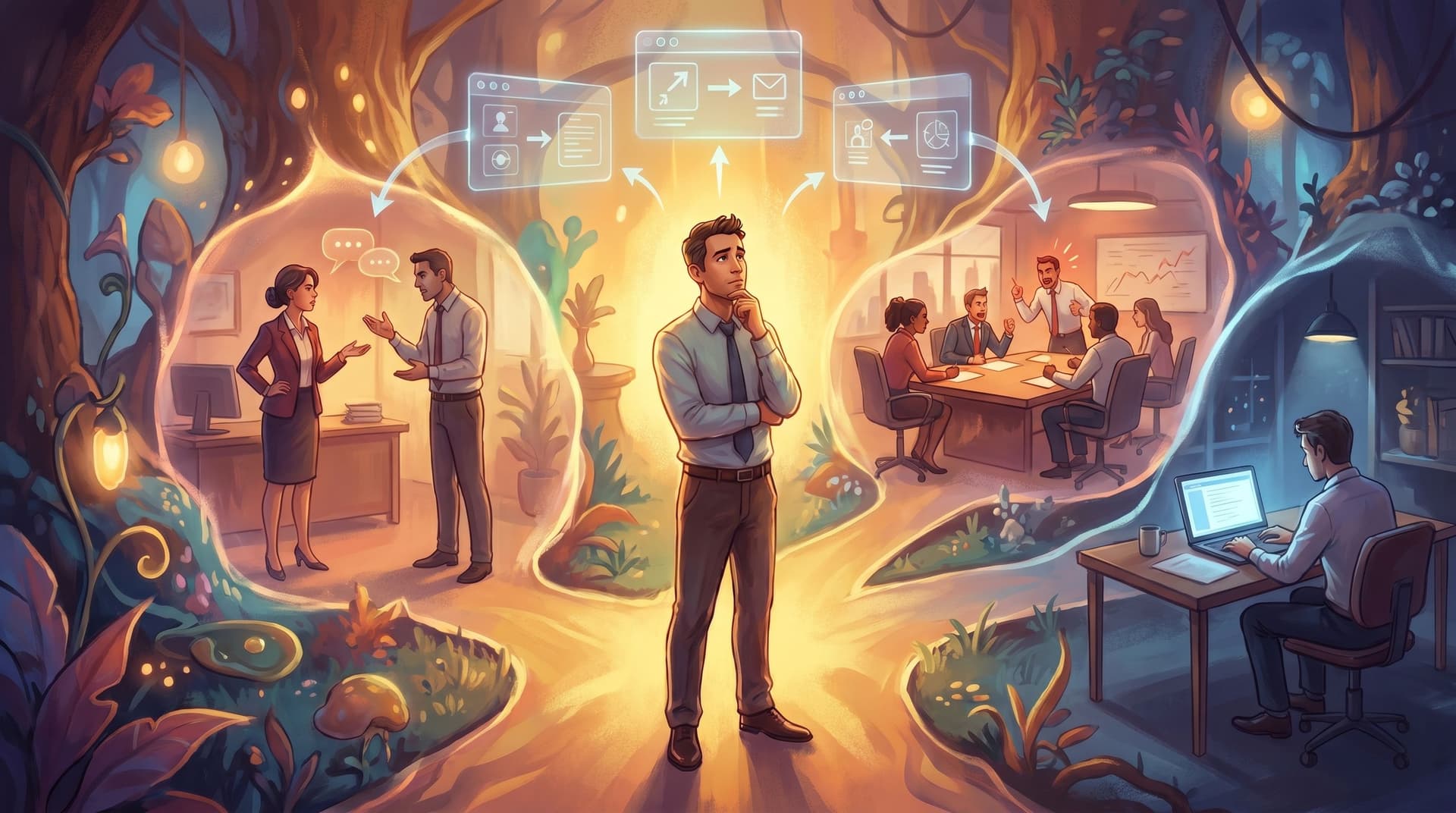
Office politics has a reputation problem. For many people, the phrase conjures back-channel gossip, power plays, and unwritten rules that seem designed to trip you up. But under all of that is something much more ordinary—and much more trainable: How you give and receive feedback How you show up in 1:1s with your manager or reports How you advocate for promotions, raises, and scope Those conversations shape careers. They influence who gets stretch projects, who burns out, who quietly leaves, and who feels psychologically safe enough to do their best work. The trouble: most of us only get to practice these moments live, with real stakes and real people. That’s where making office politics playable comes

Team Questas
Team Questas
Branching Narratives for Therapists and Coaches: Using Questas to Rehearse Tough Conversations Safely
Interactive Storytelling
AI Tools

Branching Narratives for Therapists and Coaches: Using Questas to Rehearse Tough Conversations Safely

Tough conversations are the heartbeat of therapeutic and coaching work. Boundary setting. Breakups. Performance interventions. Coming out. Confronting addiction. Naming burnout. Saying, “I’m not okay.” Clients rarely get to practice these moments before they’re live. They walk into a partner’s office, a manager’s Zoom room, or a family gathering with a rough script in their head—and hope it holds under pressure. Branching, interactive stories give you a different option: a safe rehearsal space where clients can try on different choices, feel the emotional ripples, and return to the real world with more clarity and confidence. That’s where a no-code, visual platform like Questas shin

Team Questas
Team Questas
AI, Interactivity, and the Death of the Static Syllabus: The Future of Course Design in 2030
Interactive Storytelling
AI Tools

AI, Interactivity, and the Death of the Static Syllabus: The Future of Course Design in 2030

By 2030, the syllabus as a static PDF handed out on day one will feel as quaint as an overhead projector. Learners are already used to: Adaptive apps that adjust difficulty in real time Streaming platforms that recommend the next episode with eerie accuracy Games that respond to every choice and playstyle Yet many courses are still organized around a frozen artifact: a syllabus that locks content, pacing, and assessment months before a single learner shows up. That mismatch is why the next wave of course design is going to look a lot more like an interactive story than a table of content

Team Questas
Team Questas
AI as Casting Director: Designing Reusable Character Ensembles for Multiple Questas Stories
Interactive Storytelling
AI Tools

AI as Casting Director: Designing Reusable Character Ensembles for Multiple Questas Stories

If you’ve built more than one interactive story, you’ve probably felt it: “I’m reinventing the cast from scratch every time.” New protagonist. New sidekicks. New villain. New visual prompts. New continuity headaches. There’s a better way. Think of yourself less as a one‑off character designer and more as a casting director running a repertory company. You don’t just create a hero for one adventure; you build a reusable ensemble that can be recast into different roles across multiple Questas projects—while staying visually and narratively consisten

Team Questas
Team Questas
AI-Enhanced Plot Twists: Designing Surprising Yet Fair Reveals in Your Questas Stories
Interactive Storytelling
AI Tools

AI-Enhanced Plot Twists: Designing Surprising Yet Fair Reveals in Your Questas Stories

Plot twists are the moments your players remember. They’re the gasp when a trusted ally betrays them, the shiver when a throwaway detail from Scene One suddenly explains everything in Scene Twelve, the delight when a “bad” choice turns out to be the only path to a secret ending. When you’re building in Questas, twists are even more powerful—because they don’t just reframe a single linear story. They can reframe entire branches, unlock hidden routes, and make replays feel radically different. But there’s a tightrope to walk: Too obvious, and players feel bored or talked down to. Too random, and they feel cheated—like the author pulled a rabbit from a hat with no set

Team Questas
Team Questas
From Lore Bible to Living Wiki: Using Questas to Maintain Continuity Across Expanding Story Universes
Interactive Storytelling
AI Tools

From Lore Bible to Living Wiki: Using Questas to Maintain Continuity Across Expanding Story Universes

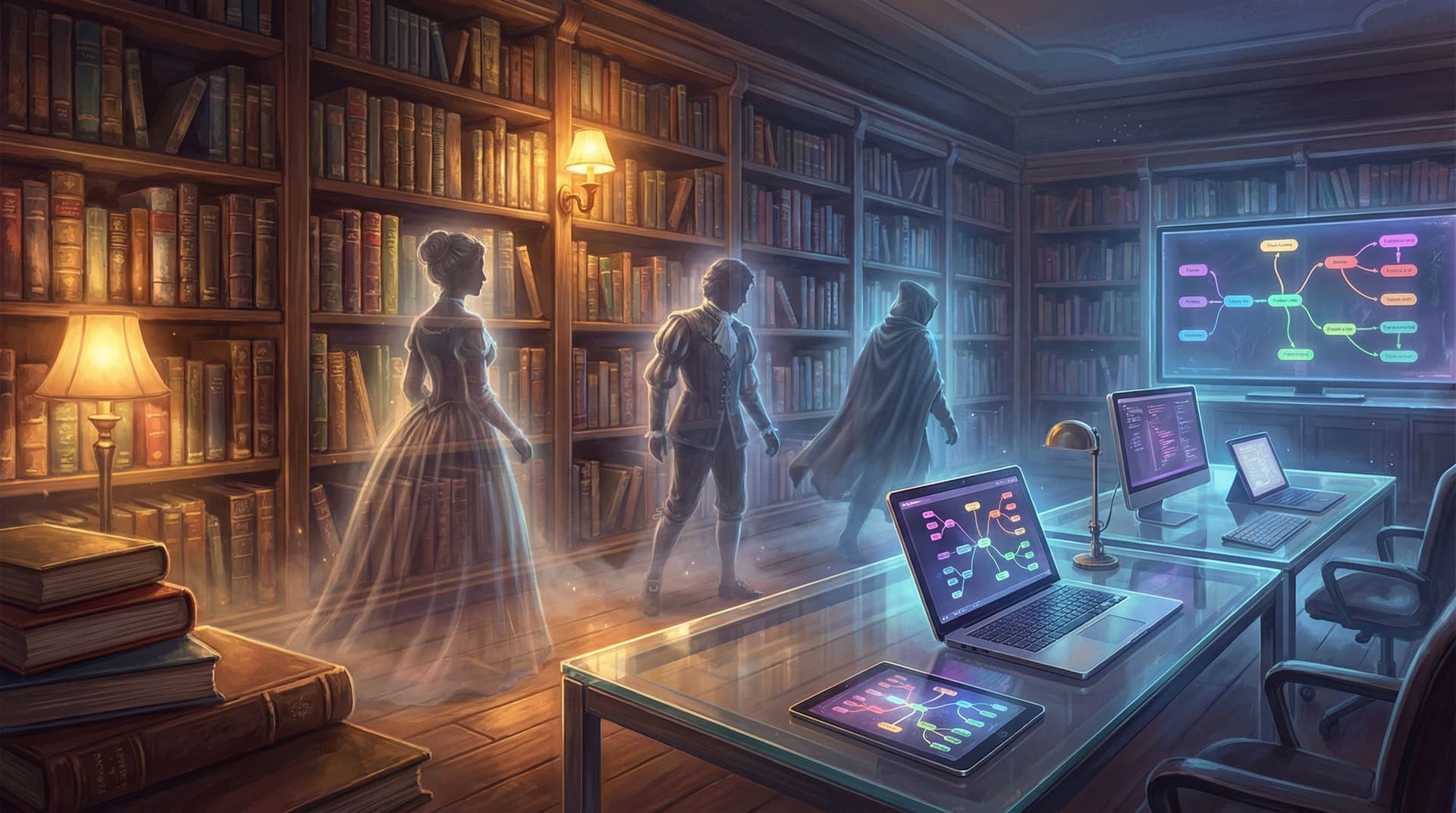
Shared universes are no longer just the domain of comic book giants and prestige TV. Solo creators, small studios, classrooms, and brand teams are all building storyworlds that stretch across episodes, seasons, campaigns, and platforms. That’s thrilling—until you hit the continuity wall. Wait, did the capital city have floating markets or underground canals? Was the mentor missing an eye… or an arm? Didn’t we already destroy that artifact three episodes ago? A static lore bible (in Google Docs, Notion, or a dusty PDF) works for a while. But as your world grows—and especially as you move into branching, interactive stories—those documents stop being a single source of truth and start feeling like a graveyard of half-updated decisio

Team Questas
Team Questas
From Brand Guidelines to Story Bible: Translating Visual Identity Systems into Questas-Ready Worlds
Interactive Storytelling
AI Tools

From Brand Guidelines to Story Bible: Translating Visual Identity Systems into Questas-Ready Worlds

Brand teams are sitting on story gold and often don’t realize it. Every color token, logo rule, tone‑of‑voice note, and photography guideline in your brand book is really a set of worldbuilding constraints. They define what your universe looks and feels like, how it speaks, and what it believes. The challenge: brand guidelines are usually written for decks and campaigns—not for interactive, branching stories. This is where turning your brand system into a story bible pays o

Team Questas
Team Questas
Designing ‘Living NPCs’: How to Give Side Characters Memory, Motives, and Agency in Questas
Interactive Storytelling
AI Tools

Designing ‘Living NPCs’: How to Give Side Characters Memory, Motives, and Agency in Questas

Non‑player characters are where interactive stories either breathe… or feel like cardboard. You can have gorgeous AI visuals, intricate branching, and a killer premise, but if every shopkeeper, rival, mentor, or roommate repeats the same two lines no matter what the player does, your world will feel thin. “Living NPCs” are different. They: Remember what happened (and what the player chose) Want things that may align or clash with the player Act on their own logic, not just as quest dispensers On a platform like Questas, where you’re already thinking in branches and scenes, giving side characters memory, motives, and agency isn’t just flavor—it’s the backbone of replayability, emotional impact, and meaningful choic

Team Questas
Team Questas
From Brief to Branches: Agencies Using Questas to Pitch Campaign Concepts as Playable Stories
Interactive Storytelling
AI Tools

From Brief to Branches: Agencies Using Questas to Pitch Campaign Concepts as Playable Stories

A creative brief is supposed to be a launchpad. Too often, it becomes a PDF that clients skim between meetings. Meanwhile, interactive and gamified content keeps proving what every strategist already feels in their bones: when people participate, they remember. Recent analyses show interactive formats can drive 40–50%+ higher engagement than static ads, and in some cases up to 5x higher ROI when brands lean into game-like mechanics and decision-making. So why are most campaign pitches still decks and moodboards? This is where agencies are starting to treat pitches themselves as experienc

Team Questas
Team Questas
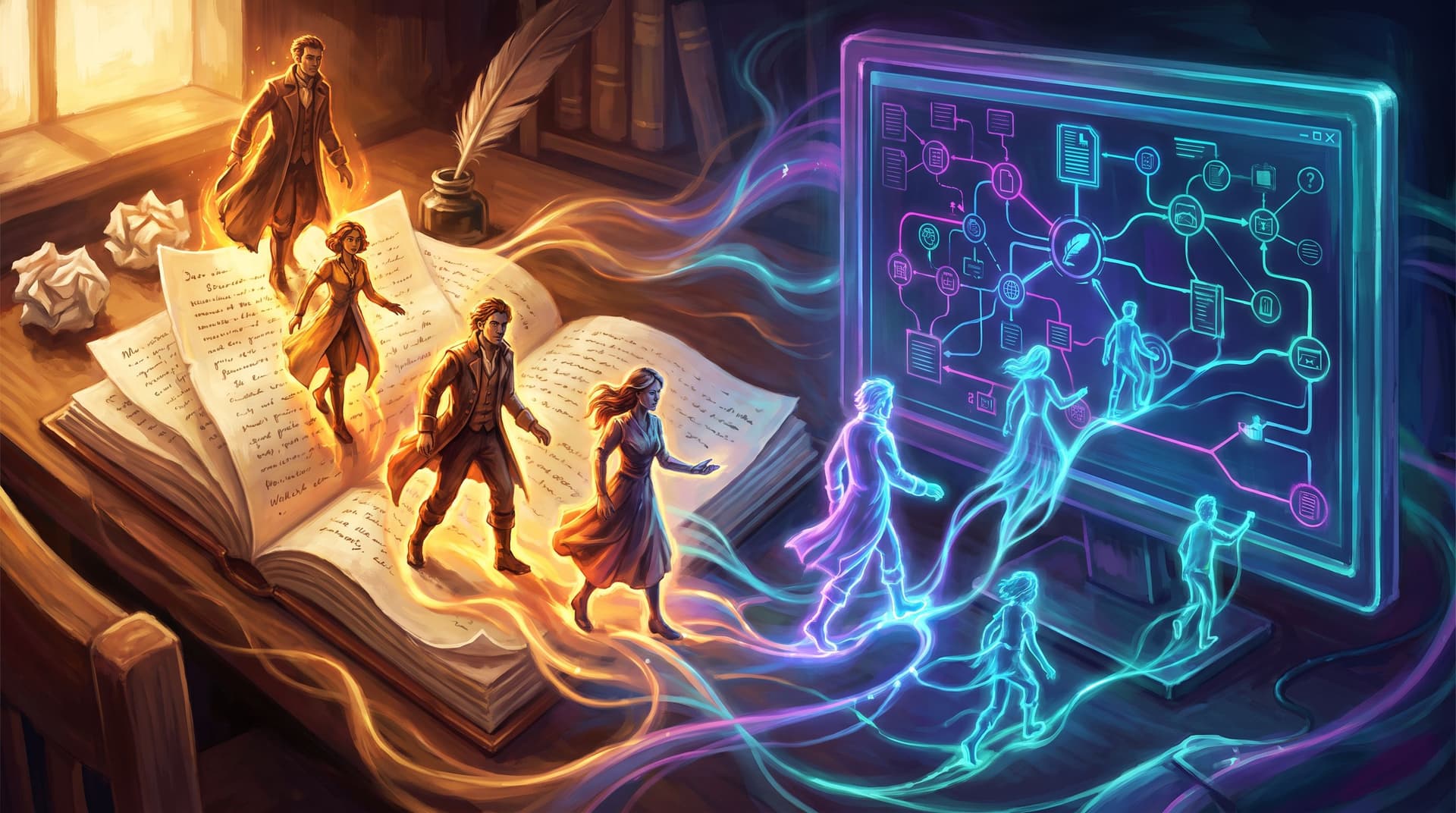
From Short Story to Story System: Adapting Linear Fiction into Modular Scenes for Questas
Interactive Storytelling
AI Tools

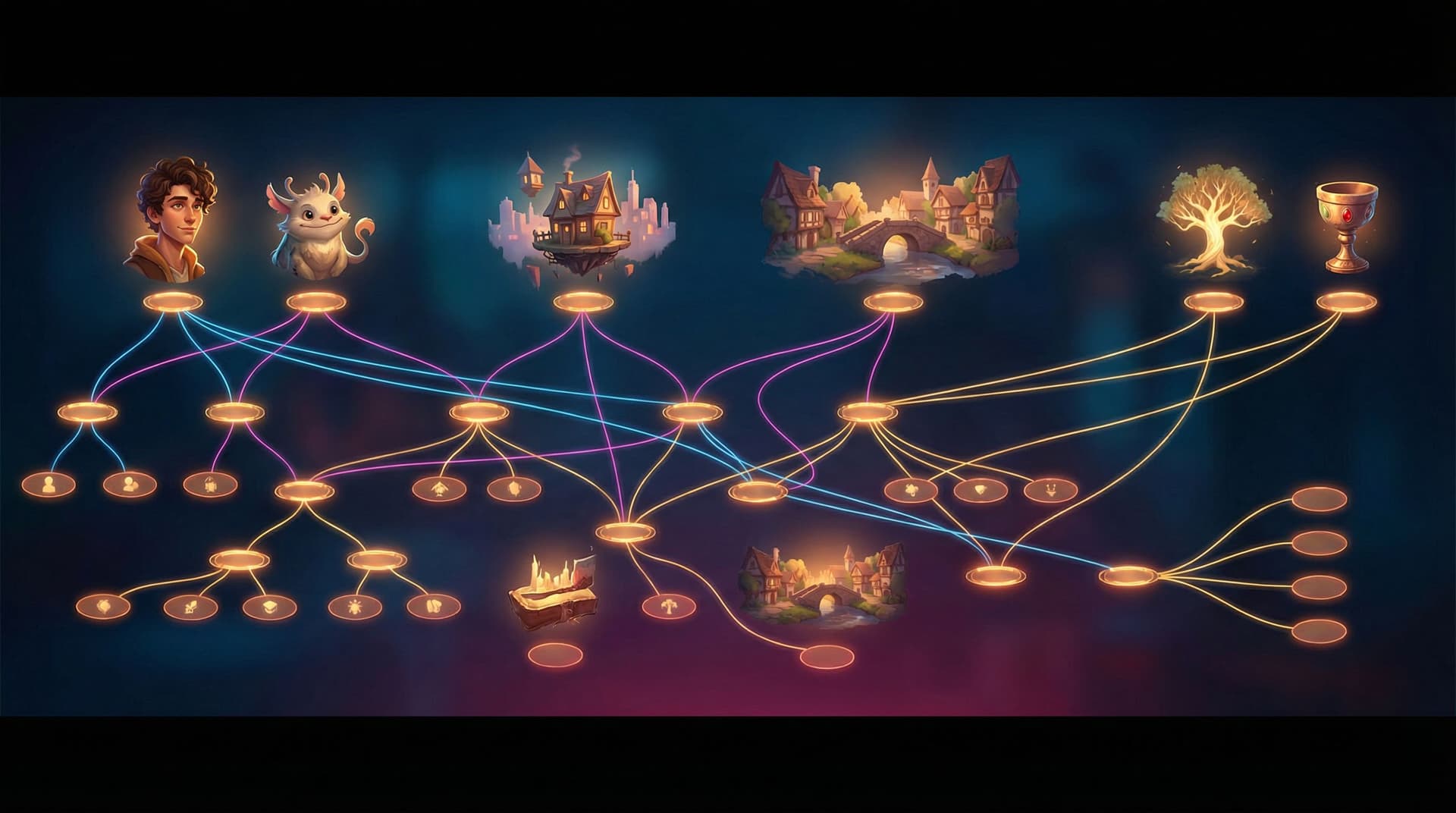
From Short Story to Story System: Adapting Linear Fiction into Modular Scenes for Questas

Most writers are trained to think in straight lines. You start with a hook, build tension, arc your characters, and land the ending. That linear muscle is powerful—and it absolutely still matters—but when you step into interactive storytelling, it’s not enough. To build a branching experience in a platform like Questas, you’re not just writing a story. You’re designing a story system: modular scenes, reusable beats, and decision points that can recombine in dozens of ways without falling apart. This post is a practical guide to taking an existing short story (or any linear piece of fiction) and transforming it into a network of scenes ready to plug into Quest

Team Questas
Team Questas
Branching Narratives for Solo Entrepreneurs: Turning Your Personal Brand Journey into a Questas Adventure
Interactive Storytelling
AI Tools

Branching Narratives for Solo Entrepreneurs: Turning Your Personal Brand Journey into a Questas Adventure

Solo entrepreneurship is already a choose‑your‑own‑adventure. Every week, you’re deciding: Niche or broaden? Productize or consult? Launch now or keep polishing? Say yes to this client or protect your calendar? Most of those decisions live in your head, your journal, or a scattered trail of tweets and Loom videos. But what if your audience could play through your journey—step into your shoes, make the same calls you did (or didn’t), and feel the consequences? That’s exactly what happens when you turn your personal brand story into an interactive experience built with Questas. Why Turn Your Personal Brand into a Playable Journey? For solo founders, creators, and consultants, your story is the pr

Team Questas
Team Questas
Beyond Branches and Banners: How Interactive Stories Are Replacing Static Landing Pages in 2026
Interactive Storytelling
AI Tools

Beyond Branches and Banners: How Interactive Stories Are Replacing Static Landing Pages in 2026

Static landing pages had a good run. For a decade-plus, the recipe barely changed: a hero banner, a headline, a subhead, a couple of benefit bullets, maybe a testimonial carousel, and a big button that says “Get Started.” But as audiences get more skeptical, more distracted, and more used to being inside experiences (not just reading about them), that formula is breaking down. In 2026, the most interesting teams aren’t asking, “How do we write a better landing page?” They’re asking, “What if the landing page were a story you play?” Interactive, branching experiences are quietly replacing static landing pages—especially for products, programs, and stories that are complex, emotional, or high-stake

Team Questas
Team Questas
From Library to Lab: How Educators Turn Classic Texts into Experimental Questas Adaptations
Interactive Storytelling
AI Tools

From Library to Lab: How Educators Turn Classic Texts into Experimental Questas Adaptations

Classic literature has always been the backbone of language arts: Shakespeare, Austen, Douglass, Achebe, Orwell, Cisneros. These works anchor curricula, build shared cultural references, and stretch students’ reading muscles. But many teachers quietly wrestle with the same tension: “I know this text matters. I’m just not sure my students feel it.” That’s where turning the library into a lab comes in. Interactive, choice-driven adaptations of classic texts let students experiment with canon instead of just analyzing i

Team Questas
Team Questas
From Classroom Debates to Playable Dilemmas: Turning Real Discussions into Questas Decision Journeys
Interactive Storytelling
AI Tools

From Classroom Debates to Playable Dilemmas: Turning Real Discussions into Questas Decision Journeys

Classrooms are already full of branching narratives. A student raises a hand. Someone pushes back. The room divides. New angles emerge. By the end of a good debate, the group has walked through multiple “what ifs” together—even if there’s only one grade in the gradebook. What’s missing is replay. Once that bell rings, the debate is gone. Students who were quiet don’t get a second shot. The class never sees what would have happened if they’d followed a different line of reasoning all the way through. That’s where turning real discussions into interactive stories comes

Team Questas
Team Questas
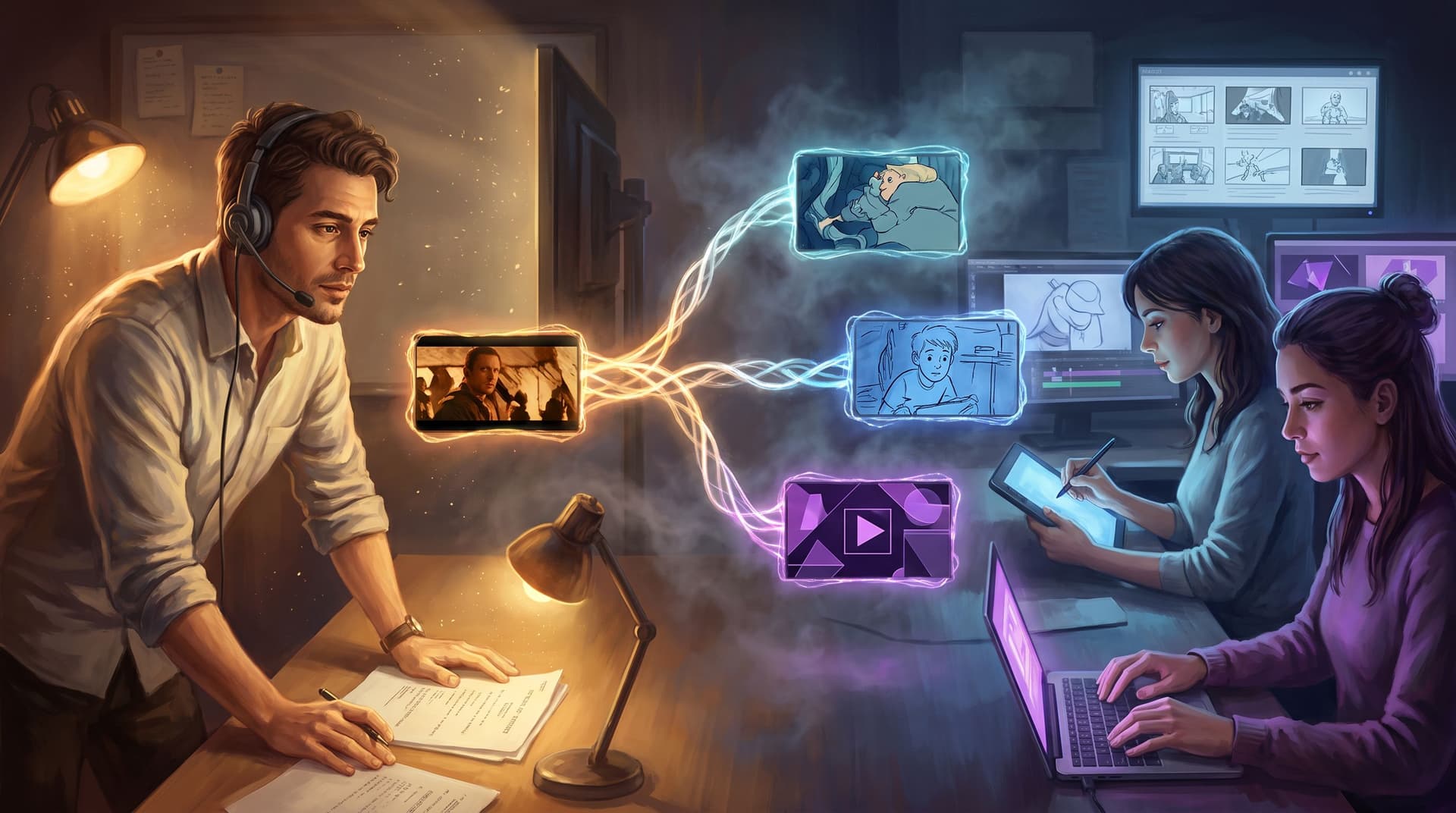
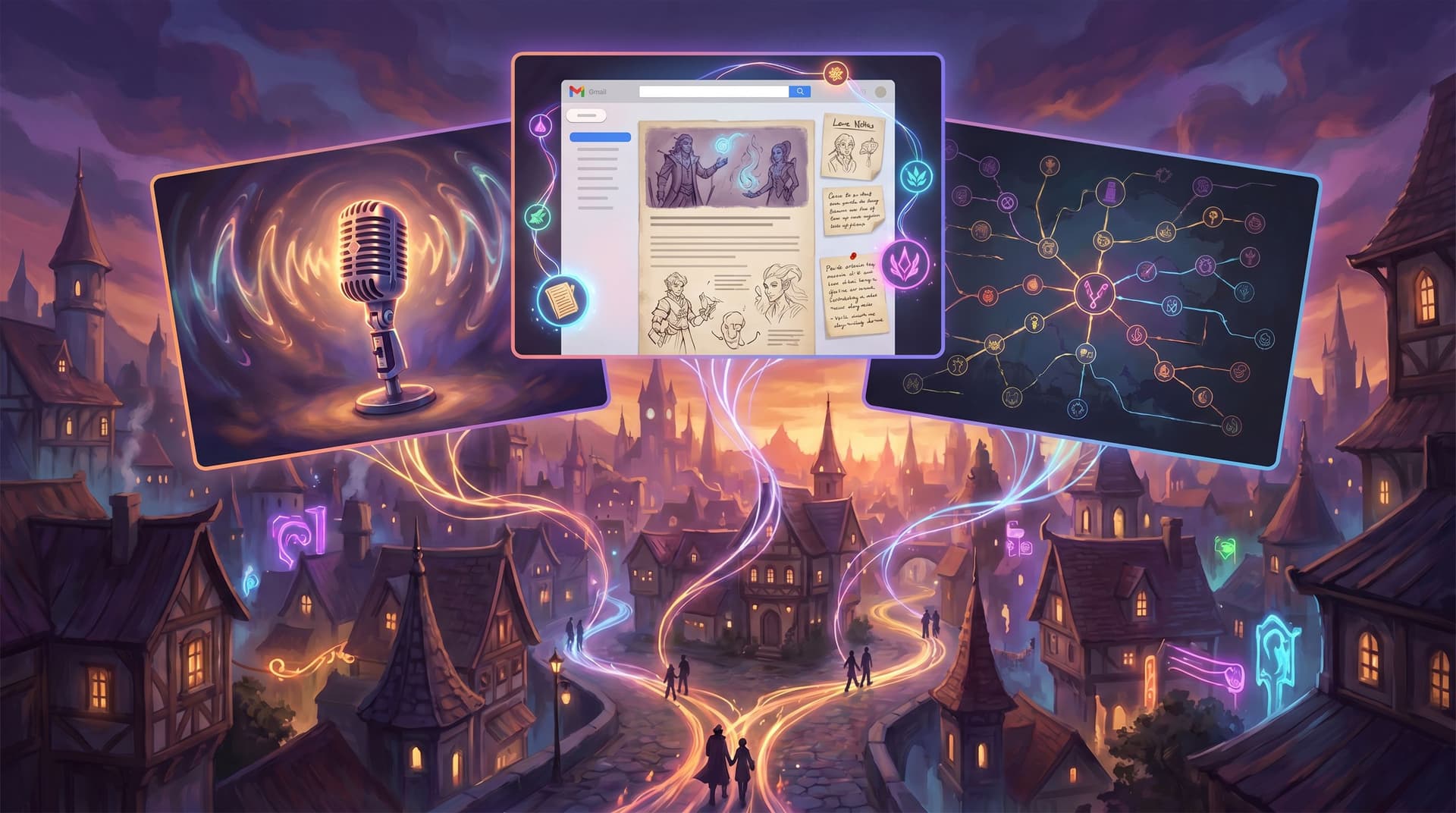
From Podcast Script to Playable Story: Turning Audio Narratives into Interactive Questas Adventures
Interactive Storytelling
AI Tools

From Podcast Script to Playable Story: Turning Audio Narratives into Interactive Questas Adventures

Podcasting and interactive storytelling are closer cousins than they look. Podcasts already do the hard work: they build characters, pace tension, and hold attention for 30–60 minutes at a time. Recent reports put average podcast completion rates around 70–80%—far higher than most video content. That’s a huge signal: people are willing to stay inside a good audio story. Interactive stories, meanwhile, take that same engagement and hand the steering wheel to the listene

Team Questas
Team Questas
The Tension Triangle: Balancing Risk, Reward, and Information in Each Questas Choice Point
Interactive Storytelling
AI Tools

The Tension Triangle: Balancing Risk, Reward, and Information in Each Questas Choice Point

Interactive stories live or die on their choices. Not just how many branches you build, or how wild the endings are—but how each individual decision feels in the moment. Does the player feel pulled between tempting rewards, real risks, and incomplete information? Or are they just clicking the top option to move on? When you’re building in Questas, you have an unusual amount of control over that moment. Every node, image, and branch can be tuned to create a specific kind of tension. The trick is doing it intentionally instead of by accident. A practical way to do that is to think of every decision as a tension triangle: Risk – What could the player lose? Reward – What could they ga

Team Questas
Team Questas
The New Web Quest: Using Questas to Create Inquiry-Based Assignments for Classrooms and Cohorts
Interactive Storytelling
AI Tools

The New Web Quest: Using Questas to Create Inquiry-Based Assignments for Classrooms and Cohorts

Inquiry-based learning has moved from buzzword to backbone in many classrooms. When students investigate real questions, test ideas, and make decisions, they remember more and care more. But there’s a gap: how do you design inquiry activities that feel structured enough for your curriculum, yet open-ended enough to spark genuine curiosity—without spending weeks building custom simulations or games? That’s where web quests and branching narratives meet. With a visual, no‑code platform like Questas, you can turn your units into interactive “web quests”: playable journeys where students explore resources, make choices, gather evidence, and defend their thinking—all inside a guided stor

Team Questas
Team Questas
Designing ‘Invisible Tutorials’: Teaching New Mechanics and Rules Inside Your Questas Narrative
Interactive Storytelling
Creative Writing

Designing ‘Invisible Tutorials’: Teaching New Mechanics and Rules Inside Your Questas Narrative

Interactive stories are at their best when players forget they’re being taught anything. Instead of a wall of instructions, they learn by doing: trying things, seeing what happens, and gradually mastering the “rules of the world” through play. That’s the heart of an invisible tutorial—a sequence of moments that quietly teaches mechanics, expectations, and boundaries inside the story, without ever feeling like a separate onboarding. For creators building on Questas, this isn’t just a nice-to-have. As your branching structures, AI-driven visuals, and custom rules get more ambitious, the risk of confusing or overwhelming players goes up fa

Team Questas
Team Questas
From Pitch Deck to Playable Demo: Using Questas to Prototype Startup Ideas for Investors and Users
Interactive Storytelling
AI Tools

From Pitch Deck to Playable Demo: Using Questas to Prototype Startup Ideas for Investors and Users

Most founders obsess over their pitch deck. Far fewer put the same care into the experience they’re actually selling. Slides can tell a story about your startup. A playable demo lets investors and users live it. Interactive prototypes are quietly becoming a fundraising edge. Crowdfunding campaigns that launch with working prototypes raise, on average, well over 100% more than those without one, and investors consistently report that a tangible demo increases confidence in a team’s ability to execute. The good news: you no longer need a design team or custom code to build that de

Team Questas
Team Questas
AI Visual Storytelling for Non-Artists: A Practical Style Cookbook for Your First 10 Questas Worlds
Interactive Storytelling
AI Tools

AI Visual Storytelling for Non-Artists: A Practical Style Cookbook for Your First 10 Questas Worlds

If you’ve ever thought, “I have stories to tell, but I can’t draw,” this guide is for you. AI image and video tools have quietly made visual storytelling accessible to almost everyone. In 2024, image‑generating tools made up more than half of generative AI usage globally, and platforms like Canva’s AI image generator report tens of millions of users creating visuals without traditional design skills. That’s a signal: you don’t need to be an illustrator to build rich, visual storyworlds anymore. Couple that with a visual, no‑code platform like Questas, and you can design branching, choose‑your‑own‑adventure experiences that look and feel like a polished game or graphic novel—without hiring an art tea

Team Questas
Team Questas
Designing ‘Session Zero’ in Questas: Onboarding Players into Complex Worlds, Rules, and Roles
Interactive Storytelling
AI Tools

Designing ‘Session Zero’ in Questas: Onboarding Players into Complex Worlds, Rules, and Roles

Tabletop RPG players have known this for decades: if you skip Session Zero, you pay for it later. Session Zero is the pre-adventure gathering where everyone aligns on expectations, tone, rules, safety, and character roles before the first goblin appears or the first deal is signed. It’s where a random group of people becomes a party

Team Questas
Team Questas
Beyond Personas: Using Interactive Questas Stories to Research Audience Motivations and Play Styles
Interactive Storytelling
AI Tools

Beyond Personas: Using Interactive Questas Stories to Research Audience Motivations and Play Styles

Most teams have a stack of audience research already: Slide decks of “ideal customer profiles” Figma boards of proto-personas Survey data about preferences and demographics Useful? Sure. But when it comes to how people actually behave inside an experience—what they notice, what they ignore, what they’ll fight for, and when they quietly bail—static personas fall short. Interactive stories give you a different kind of window. When someone plays through a branching narrative, every click is a tiny confession: “I care more about exploring than winning fast.” “I’ll sacrifice rewards to protect relationships.” “I skip lore

Team Questas
Team Questas
Designing ‘Quiet Choices’: Low-Stakes Branches that Build Character, Not Just Plot, in Questas
Interactive Storytelling
AI Tools

Designing ‘Quiet Choices’: Low-Stakes Branches that Build Character, Not Just Plot, in Questas

Most interactive stories obsess over the big forks: Do you save the village or chase the villain? Do you sign the contract or walk away? Do you trust the stranger or turn them in? Those moments matter. They define endings, stakes, and replay value. But they’re not what players remember most. What sticks are the small decisions: The snack your character grabs before the mission. The playlist they put on during a late-night drive. Whether they text back “👍” or type out a real response. These are quiet choices—low-stakes branches that don’t blow up the plot, but do reveal who the character is, what they care about, and how the player wants to in

Team Questas
Team Questas
From Knowledge Checks to Narrative Arcs: Rethinking eLearning Quizzes as Questas Stories
Interactive Storytelling
AI Tools

From Knowledge Checks to Narrative Arcs: Rethinking eLearning Quizzes as Questas Stories

From Knowledge Checks to Narrative Arcs: Rethinking eLearning Quizzes as Questas Stories Traditional eLearning quizzes are having a credibility crisis. Learners click through multiple-choice questions, guess their way to a passing score, and forget most of it within days. Instructional designers know this isn’t enough—but when deadlines loom, the default is still: content → slides → quiz. What if your “quiz” wasn’t a bolt-on at the end, but the core of the experience—a playable story where every decision is a knowledge check in disguise? That’s where narrative-driven, branching experiences built with platforms like Questas come

Team Questas
Team Questas
The New Interactive Zine: Short-Form, Lo-Fi Questas Experiments for Writers and Indie Creators
Interactive Storytelling
AI Tools

The New Interactive Zine: Short-Form, Lo-Fi Questas Experiments for Writers and Indie Creators

Zines have always been about scrappy experimentation: photocopied pages, hand-drawn margins, weird ideas shipped before they’re “ready.” Now that spirit is colliding with interactive storytelling and AI visuals—and it’s opening up a new playground for writers and indie creators. Short, lo-fi, branching “micro-quests” built in tools like Questas are starting to feel like the next evolution of the zine: compact, personal, a little rough around the edges, and wildly expressive. This post is a guide to that space: why it matters, what makes it different from traditional interactive fiction, and how to start running your own low-stakes experiments without disappearing into a six‑month production hol

Team Questas
Team Questas
Creative Constraints as Superpowers: Time-Boxed, Word-Count, and Image-Only Challenges in Questas
Interactive Storytelling
AI Tools

Creative Constraints as Superpowers: Time-Boxed, Word-Count, and Image-Only Challenges in Questas

Most creators think they need more to make great interactive stories: More time More words More images More branches But again and again, the creators who ship the most memorable Questas experiences aren’t the ones with unlimited resources. They’re the ones who give themselves sharp, specific constraints—and then lean into them. Time-boxed sprints. Ruthless word limits. Entire scenes told only through visuals. These aren’t handicaps; they’re creative superpowers

Team Questas
Team Questas
From Case Study to Character Arc: Turning Real Customer Stories into Branching Questas Journeys
Interactive Storytelling
AI Tools

From Case Study to Character Arc: Turning Real Customer Stories into Branching Questas Journeys

Customer stories are everywhere: win reports, NPS comments, support tickets, sales call notes, community posts, internal Slack threads. But most of that gold ends up as one of two things: A polished case study that only a handful of prospects ever read closely A slide or two in a quarterly business review that gets skimmed and forgotten What if, instead of flattening those stories into PDFs and decks, you turned them into playable journeys—where your audience steps into a real customer’s shoes, makes the hard calls, and feels the consequences? That’s where branching experiences built with Questas shine

Team Questas
Team Questas
Beyond Branching Dialogues: Using Questas to Prototype Ethical Dilemmas, Tradeoffs, and Grey-Area Choices
Interactive Storytelling
AI Tools

Beyond Branching Dialogues: Using Questas to Prototype Ethical Dilemmas, Tradeoffs, and Grey-Area Choices

Most interactive stories are built around clear goals and obvious wins: Rescue the ally Close the deal Escape the dungeon But real life rarely hands us neat, binary choices. Leaders decide which team to fund and which to sunset. Product managers weigh privacy against personalization. Students wrestle with plagiarism, loyalty, and fairness. Activists and policymakers weigh harm vs. progress, safety vs. freedom, short-term relief vs. long-term resilience. Those are ethical dilemmas—and they’re exactly where branching narratives can do their most important work. Questas gives you a visual, no‑code way to turn those messy, uncomfortable tradeoffs into playable experience

Team Questas
Team Questas
From Notion Docs to Narrative Hubs: Turning Internal Knowledge Systems into Questas-Powered Storyworlds
Interactive Storytelling
AI Tools

From Notion Docs to Narrative Hubs: Turning Internal Knowledge Systems into Questas-Powered Storyworlds

Internal knowledge is having a moment—and a bit of a crisis. Tools like Notion, Confluence, and wikis promise a single source of truth. Yet many teams quietly admit that their knowledge base feels more like a junk drawer than a strategic asset. Information is scattered, out of date, or simply ignored. One recent analysis found that 84% of employees make decisions based on assumptions multiple times a week because they can’t easily access existing answers—even when the information technically exists. At the same time, we know that interactive, choice-driven experiences improve engagement and retention across learning and communication contex

Team Questas
Team Questas
Beyond Training Modules: How L&D Teams Can Use Questas for Scenario-Based Coaching and Feedback
Interactive Storytelling
AI Tools

Beyond Training Modules: How L&D Teams Can Use Questas for Scenario-Based Coaching and Feedback

Learning & Development teams have spent years perfecting e‑learning modules, slide decks, and LMS pathways. Yet the same problems keep surfacing: People “pass” but don’t change behavior. Learners can explain the model but freeze in real situations. Managers struggle to turn training into ongoing coaching. Scenario-based coaching is one of the most reliable ways to close that gap. Instead of telling people what “good” looks like, you let them step into realistic moments, make decisions, experience consequences, and then debrief with a coach. That’s where platforms like Questas shin

Team Questas
Team Questas
AI-Generated Props and Clues: Using Visual Details to Hide Secrets, Codes, and Easter Eggs in Questas
Interactive Storytelling
AI Tools

AI-Generated Props and Clues: Using Visual Details to Hide Secrets, Codes, and Easter Eggs in Questas

Interactive stories are at their best when players lean in. Not just to read the next line of dialogue—but to zoom in on a photo, rewatch a short clip, or revisit a scene because something felt off. That sense of “Wait… did I just miss a clue?” is the heartbeat of mystery, puzzle, and exploration-heavy Questas. AI-generated visuals make that feeling dramatically easier to design. Instead of hand‑drawing props or hiring a concept artist, you can spin up hyper-specific objects—scribbled notebooks, glitchy security feeds, stained tarot cards, messy whiteboards—and hide secrets inside them. This post is about turning those visuals into props, clues, and Easter eggs that reward curiosity and repl

Team Questas
Team Questas
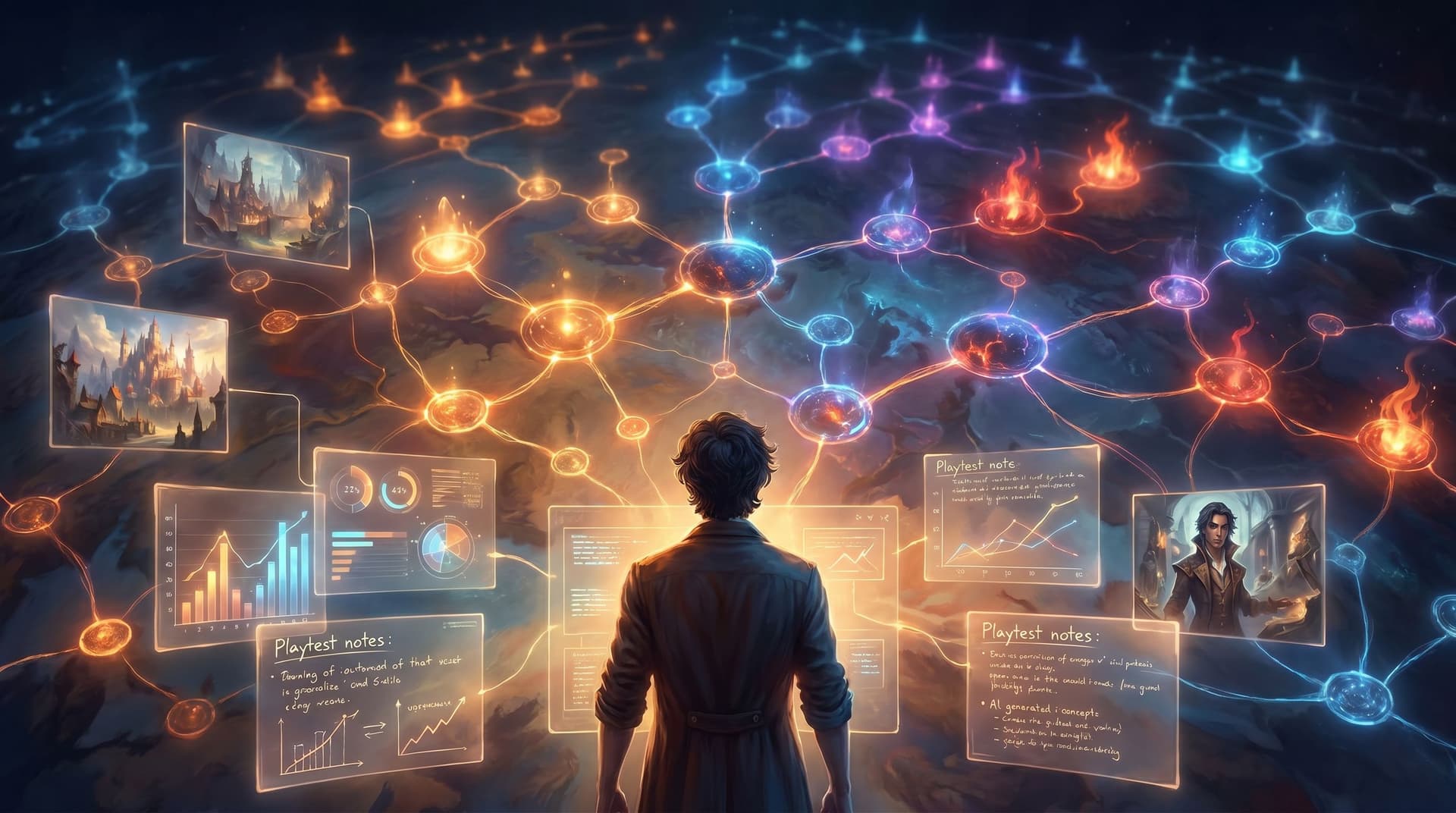
Beyond Clicks and Completion Rates: Qualitative Playtesting Methods for Deeply Improving Your Questas Stories
Interactive Storytelling
AI Tools

Beyond Clicks and Completion Rates: Qualitative Playtesting Methods for Deeply Improving Your Questas Stories

Numbers are comforting. Unique players, completion rates, branch popularity, drop‑off points—these metrics absolutely matter. If you’ve read our post on measuring outcomes in interactive narratives, you know analytics can reveal where your Questas experiences are leaking attention and where players get stuck. But numbers alone can’t tell you why. Why did a player bail right after meeting your main character? Why did they choose the same “safe” option three times in a row? Why did a supposedly “minor” branch become the fan‑favorite path? To answer those questions—and to turn a decent prototype into a story people remember—you need qualitative playtest

Team Questas
Team Questas
Branching Narratives for Real-World Skills: Turning Coaching Frameworks into Questas Scenarios
Interactive Storytelling
AI Tools

Branching Narratives for Real-World Skills: Turning Coaching Frameworks into Questas Scenarios

Coaching is built on a simple truth: people don’t change because they know something; they change because they’ve practiced doing it differently. That’s where branching narratives shine. Instead of telling someone, “Here’s how to handle a tough client conversation,” you let them step into that moment, make choices, feel the tension, and see the consequences. And with a visual, no‑code platform like Questas, you can turn your favorite coaching frameworks into interactive, replayable scenarios that actually build skill. This post is a deep dive into how to do exactly tha

Team Questas
Team Questas
AI as Art Director: Building Cohesive Visual Storyworlds in Questas Without a Design Team
Interactive Storytelling
AI Tools

AI as Art Director: Building Cohesive Visual Storyworlds in Questas Without a Design Team

Interactive stories live or die on how they feel as a world. You can have sharp dialogue and clever branches, but if your visuals jump from painterly fantasy to glossy 3D to flat cartoons, players feel like they’re hopping between different universes. That’s distracting in a linear comic; in a branching experience, it can be fatal. People stop trusting the world, and once that trust goes, immersion goes with it. The good news: you don’t need a studio art department to keep your storyworld visually tight. With AI image and video generation built into tools like Questas, you can treat the model itself as your art director—if you give it the right constraints, references, and workflo

Team Questas
Team Questas
Beyond Text Prompts: Designing Visual-First Story Seeds That Practically Write Themselves in Questas
Interactive Storytelling
AI Tools

Beyond Text Prompts: Designing Visual-First Story Seeds That Practically Write Themselves in Questas

If you’ve ever opened an AI tool, typed a prompt like “a cyberpunk city at night”, and then stared at the result thinking, “Okay… now what?”, this post is for you. Most creators still treat visuals as decoration: you write the story, then you “add images.” But when you’re building interactive adventures in a visual, no‑code platform like Questas, that order is backwards. Visuals can be the story. Or at least, they can be the seed that makes the story almost inevitabl

Team Questas
Team Questas
From Sprints to Stand-Ups: How Product Teams Run Live Playtests of Questas Prototypes with Stakeholders
Interactive Storytelling
AI Tools

From Sprints to Stand-Ups: How Product Teams Run Live Playtests of Questas Prototypes with Stakeholders

Product teams are under constant pressure to ship experiences that feel right before engineering sinks weeks of effort into them. Wireframes and decks can explain an idea, but they rarely answer the question everyone actually cares about: “What does it feel like to move through this flow as a real user?” That’s where live playtests of interactive prototypes come in—especially when those prototypes are built as branching, story-driven experiences in tools like Questas. With Questas, product teams can turn product journeys, onboarding flows, and UX concepts into playable, choose‑your‑own‑adventure scenarios with AI‑generated images and video

Team Questas
Team Questas
Corporate, But Make It Quest: Turning Dry Compliance Topics into Engaging Branching Stories
Interactive Storytelling
AI Tools

Corporate, But Make It Quest: Turning Dry Compliance Topics into Engaging Branching Stories

Compliance training has a reputation problem. Ask most employees how they feel about annual security modules, code-of-conduct refreshers, or anti‑harassment courses and you’ll hear the same words: boring, checkbox, forgettable. That’s a huge risk. Regulators don’t care that your course was “assigned in the LMS.” What matters is whether people actually change their behavior—spot phishing attempts, escalate conflicts of interest, report safety issues, and uphold your values when no one is watching. Interactive, branching stories are one of the most effective ways to close that gap. When people play through real‑world dilemmas instead of passively clicking Next, they practice judgment in context. They see consequences. They remem

Team Questas
Team Questas
Branching Narratives for Busy Teams: Shipping a Complete Questas Experience in One Workday
Interactive Storytelling
AI Tools

Branching Narratives for Busy Teams: Shipping a Complete Questas Experience in One Workday

If you work on a product, learning, or marketing team, you probably know this feeling: Someone says, “We should make this interactive.” Heads nod. Everyone agrees it would be powerful. The idea quietly dies in a backlog because “we don’t have the time or resources.” This post is about breaking that pattern. With the right constraints and a clear workflow, a small team can ship a complete, polished, branching experience in a single workday using Questas. Not a prototype you’ll “finish later.” A real, shareable experience that teaches, persuades, or delights your audience. We’ll walk through how to scope, design, build, and launch in roughly 6–8 hours—without code, without a production studio, and without burning everyone ou

Team Questas
Team Questas
Visual Fail States: Using AI Imagery to Signal Risk, Reward, and Consequences in Questas
Interactive Storytelling
AI Tools

Visual Fail States: Using AI Imagery to Signal Risk, Reward, and Consequences in Questas

Interactive stories live and die on one core feeling: my choices matter. If players can’t feel the stakes of a decision—if every path looks the same, or consequences are buried in text—they’ll default to skimming and clicking whatever’s closest. That’s where visual fail states come in. On Questas, you’re already working in a visual, no‑code editor. You’re stitching together branching scenes, decisions, and AI‑generated med

Team Questas
Team Questas
Beyond Story Mode: Using Questas to Prototype Product UX, Onboarding Flows, and Interfaces
Interactive Storytelling
AI Tools

Beyond Story Mode: Using Questas to Prototype Product UX, Onboarding Flows, and Interfaces

Product teams have no shortage of tools for designing experiences: wireframes in Figma, user flows in Miro, specs in Notion, decks in Google Slides. But there’s still a gap between describing an experience and feeling it. That’s where interactive, story-driven prototypes come in. With Questas, you’re not limited to fantasy adventures or narrative game

Team Questas
Team Questas
From Clicks to Conversations: Designing Questas Stories That Spark Community and Fan Theories
Interactive Storytelling
AI Tools

From Clicks to Conversations: Designing Questas Stories That Spark Community and Fan Theories

Interactive stories used to be a solo experience: you click through, reach an ending, close the tab. But the most memorable Questas aren’t just “played.” They’re talked about. They generate Discord debates about the “true” ending, Reddit threads mapping every branch, and late‑night DMs where friends argue over which choice was morally right. That shift—from isolated clicks to shared conversations—is where your work stops being content and starts becoming a community touchstone. This post is about how to design stories on Questas that invite that kind of energy: fan theories, headcanons, replays, and collaborative worldbuildi

Team Questas
Team Questas
From Style Transfer to Story Consistency: Advanced AI Visual Workflows for Questas Creators
Interactive Storytelling
AI Tools

From Style Transfer to Story Consistency: Advanced AI Visual Workflows for Questas Creators

If you’ve built more than one interactive story on Questas, you’ve probably hit this moment: “Why do my characters look different in every scene?” “Why does this one branch feel like a different art style entirely?” “How do I keep things visually cohesive without spending hours per image?” As AI image and video tools get more powerful, the bar for visual polish keeps rising. Players may happily forgive a rough line of dialogue, but they notice when a protagonist’s face changes every scene or when the mood of the art clashes with the tone of the story. This post is about moving from one-off prompts to repeatable visual systems—so your Questas feel like unified storyworlds, not AI art experiments stitched together

Team Questas
Team Questas
Branching Narratives for Change-Making: Using Questas to Prototype Policies, Futures, and Social Impact Campaigns
Interactive Storytelling
AI Tools

Branching Narratives for Change-Making: Using Questas to Prototype Policies, Futures, and Social Impact Campaigns

Policy memos, slide decks, and static reports rarely change behavior on their own. People skim, nod, and move on. But when you invite someone into a story where they make the choices—and immediately see the consequences—something different happens. They don’t just understand a policy or campaign; they feel it. They test it. They push on its edges. That’s where branching narratives shine as a tool for social impact, and where platforms like Questas make those narratives practical to build, test, and shar

Team Questas
Team Questas
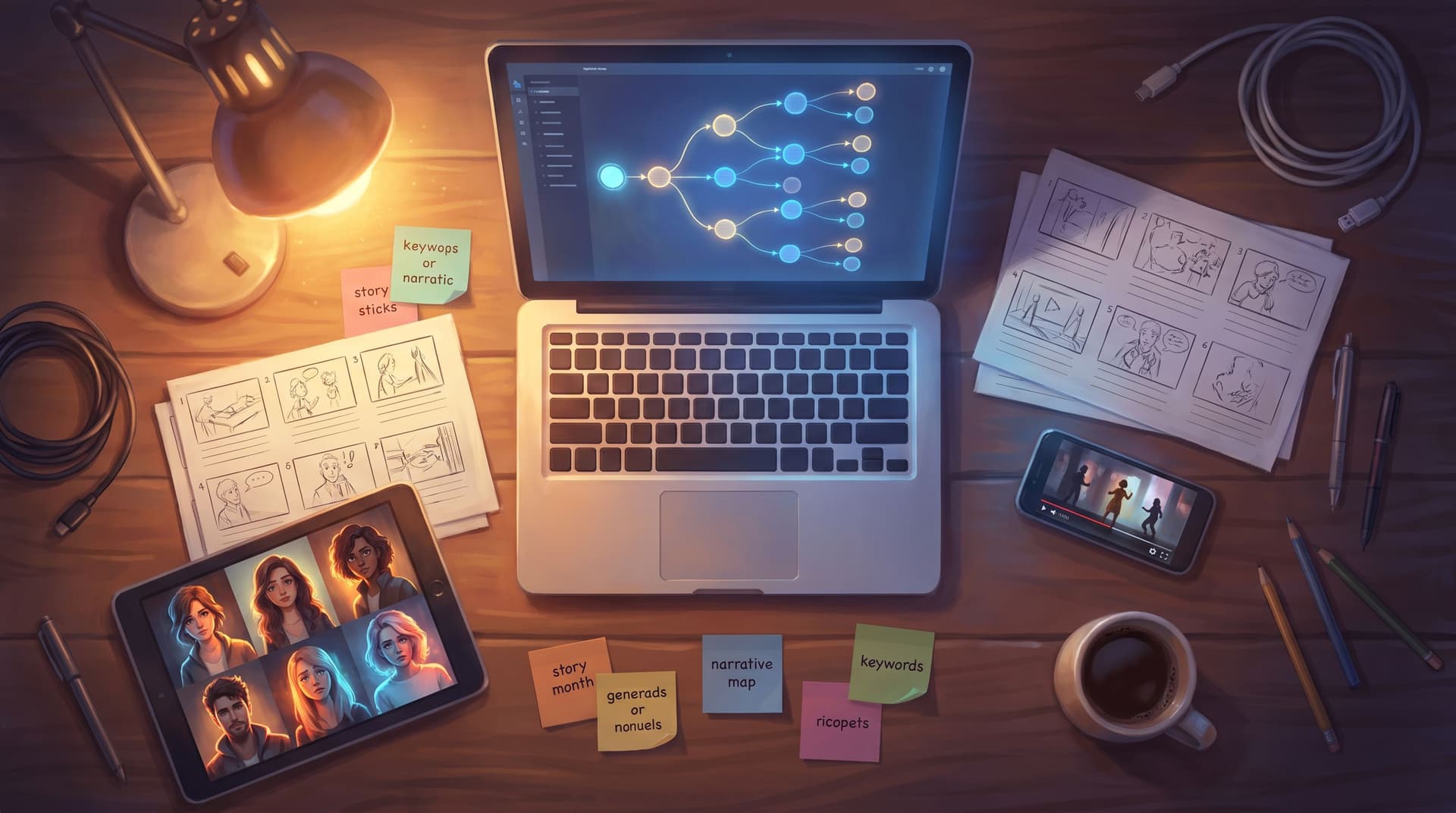
AI Art as Storyboard: Rapidly Prototyping Adventure Worlds Before You Write a Single Line
Interactive Storytelling
AI Tools

AI Art as Storyboard: Rapidly Prototyping Adventure Worlds Before You Write a Single Line

If you’ve ever stared at a blank page thinking, “I know there’s an incredible world in my head, but I can’t see it yet,” this post is for you. AI image generation has quietly become one of the most powerful pre-writing tools available to storytellers. Instead of wrestling with paragraphs of exposition, you can sketch your entire adventure world in images first—then let those visuals guide your plot, characters, and branching paths. For interactive creators working in platforms like Questas, where scenes, choices, and AI-generated media all live in a visual editor, this approach is a game-changer. You’re not just decorating a finished story; you’re designing the story through the ar

Team Questas
Team Questas
Branching Narratives on a Budget: How Solo Creators Can Ship Polished Questas Without Burning Out
Interactive Storytelling
AI Tools

Branching Narratives on a Budget: How Solo Creators Can Ship Polished Questas Without Burning Out

If you’re a solo creator, you’ve probably felt the tug-of-war between ambition and capacity. You want: Rich, branching stories instead of flat, linear plots Gorgeous visuals that feel cohesive and intentional An experience that feels finished, not like a perpetual work-in-progress But you also have: Limited time Limited budget Limited energy after the rest of life happens This post is about closing that gap—how to design, build, and ship polished interactive stories on Questas without burning yourself out or disappearing into a 6‑month rabbit hole. We’ll focus on practical constraints, smart scope, and repeatable workflows so you can actually finish what you start—and be proud of i

Team Questas
Team Questas
From Chat Transcript to Quest: Turning Customer Support Logs into Interactive Training Scenarios
Interactive Storytelling
AI Tools

From Chat Transcript to Quest: Turning Customer Support Logs into Interactive Training Scenarios

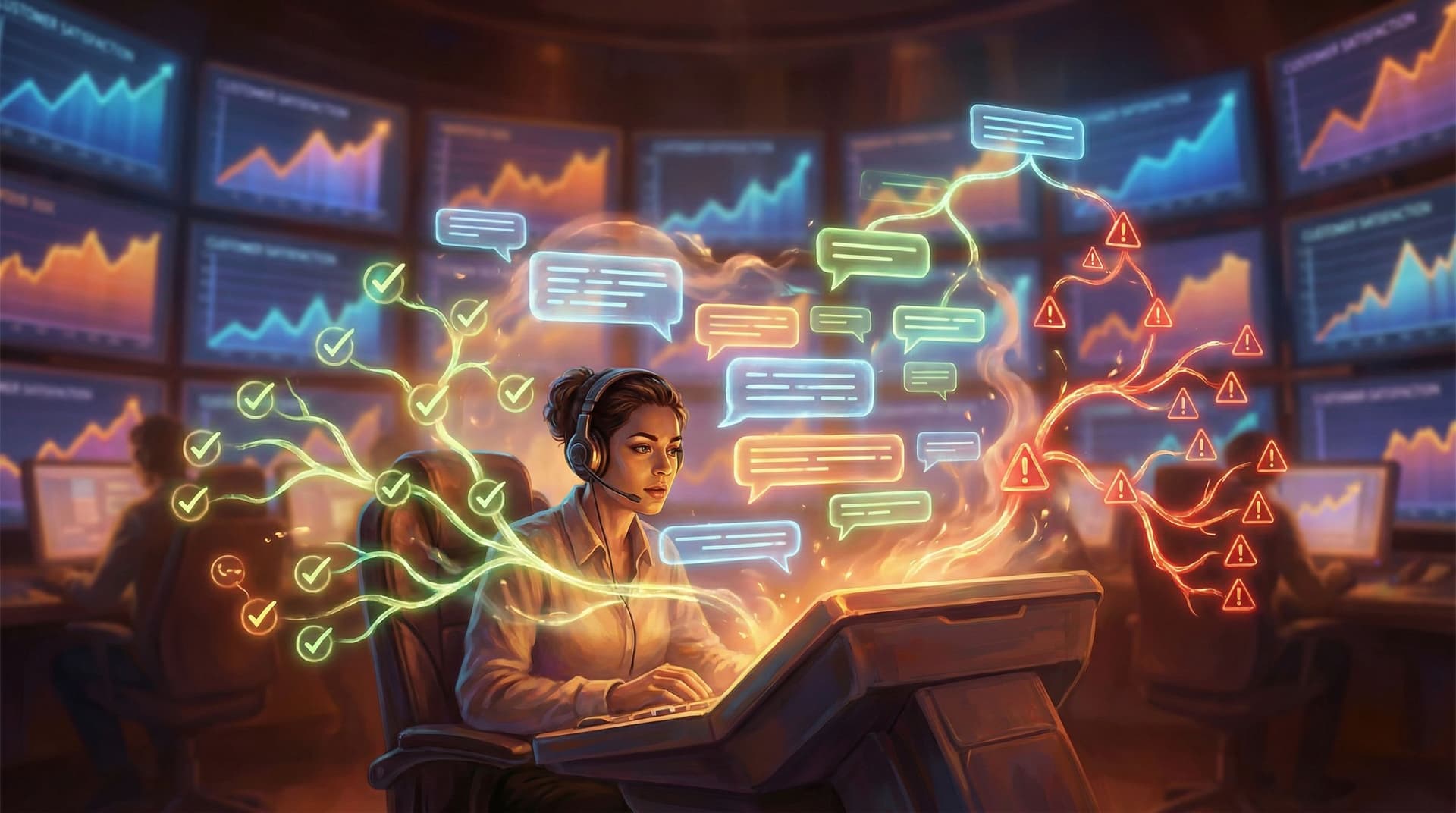
Customer support chats are some of the richest training material your company already owns—and also some of the least used. They’re where real customers express real confusion, frustration, urgency, and delight. They reveal: What people actually struggle with (vs. what your docs assume) How your team really responds under pressure Where policies, tools, or handoffs quietly fall apart But most of that gold is trapped in raw transcripts, QA spreadsheets, or the occasional “interesting case” someone brings up in a meeting. Interactive, branching training scenarios change that. Instead of telling agents what “good” looks like, you let them play through realistic conversations, make decisions, feel the pressure—and see the consequence

Team Questas
Team Questas
Beyond Linear Lore: Building Diegetic UIs, In-World Menus, and ‘Found Interfaces’ in Questas
Interactive Storytelling
AI Tools

Beyond Linear Lore: Building Diegetic UIs, In-World Menus, and ‘Found Interfaces’ in Questas

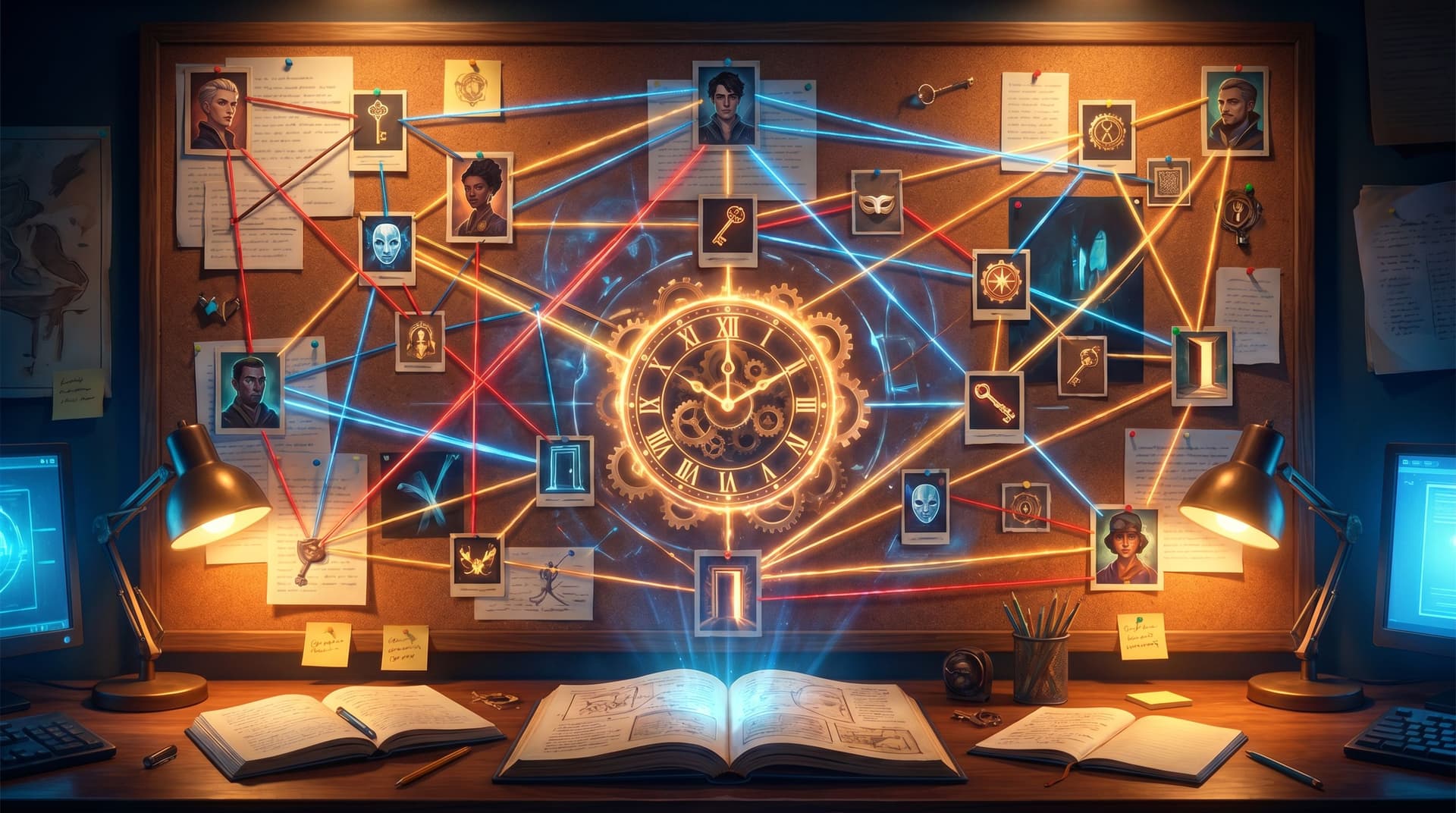
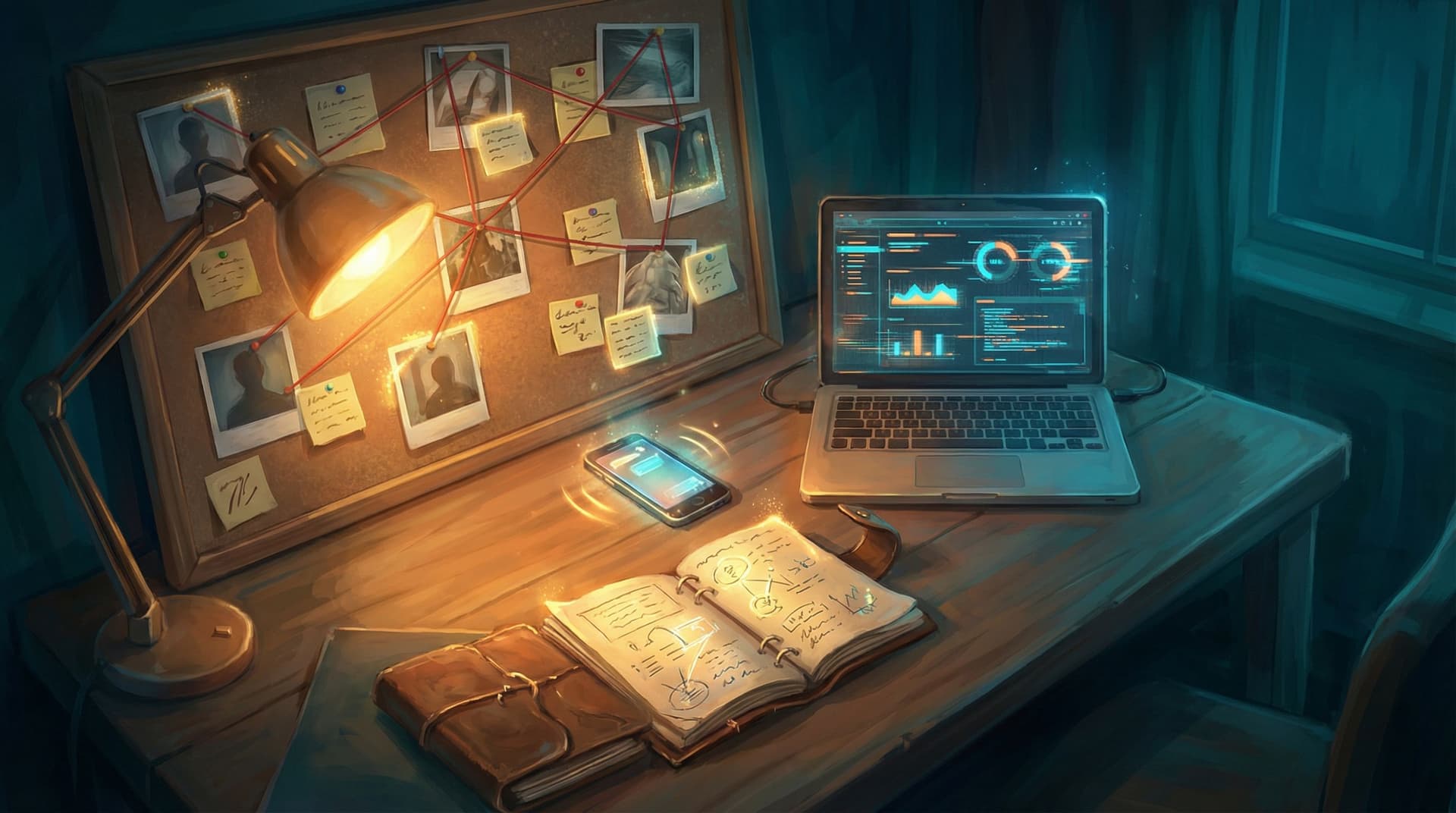
Most interactive stories still borrow their interfaces from software, not from stories. Buttons float over a scene. Menus slide up from the bottom. Stats and inventory live in tidy panels. It works—but it also reminds players they’re looking at a story, not living inside it. Diegetic UI flips that. Instead of treating interface as a layer on top of the world, you treat it as part of the world itself: The “menu” is a battered field notebook your character flips open. The “quest log” is a corkboard covered in red string and Polaroids. The “choice buttons” are sticky notes on a monitor, labels on vials, or dialogue options scribbled on a receip

Team Questas
Team Questas
Story Prototyping for Product Teams: Turning User Flows into Playable Questas Scenarios
Interactive Storytelling
AI Tools

Story Prototyping for Product Teams: Turning User Flows into Playable Questas Scenarios

Product teams already think in flows: onboarding funnels, upgrade paths, incident runbooks, support journeys, sales demos. But those flows usually live as static artifacts—Figma diagrams, Miro boards, Confluence pages, or dense PRDs that only a few people ever read closely. Story prototyping flips that. Instead of describing how a user journey should feel, you let people play through it. With a platform like Questas, you can turn user flows into interactive, choose‑your‑own‑adventure scenarios—complete with AI‑generated images and video—that anyone on your team (or in your customer base) can click through. No engineering sprint. No custom buil

Team Questas
Team Questas
Low-Lift, High-Impact: Weekend Questas Projects for Writers, Educators, and Marketers
Interactive Storytelling
AI Tools

Low-Lift, High-Impact: Weekend Questas Projects for Writers, Educators, and Marketers

You don’t need a studio budget, a dev team, or a six‑month production schedule to build an interactive story that genuinely moves people. Give yourself a single weekend, a clear scope, and a tool like Questas, and you can ship something that: Delights your readers or students Teaches a concept more deeply than a slide deck ever could Warms up a marketing audience with an experience they choose to engage with This post is a practical guide to “weekend‑sized” projects—low‑lift, high‑impact Questas builds that writers, educators, and marketers can realistically finish between Friday night and Sunday evening

Team Questas
Team Questas
Beyond Click-Throughs: Measuring Learning, Alignment, and Engagement in Narrative Experiences Like Questas
Interactive Storytelling
AI Tools

Beyond Click-Throughs: Measuring Learning, Alignment, and Engagement in Narrative Experiences Like Questas

Most analytics dashboards were built for pages and funnels, not for stories. They’re great at telling you: How many people clicked a button Where traffic came from Which device someone used But if you’re building interactive narratives—training simulations, onboarding journeys, brand stories, fan worlds—those numbers miss the real questions: Did people actually learn anything? Did the experience change what they do next? Did they feel seen, understood, and aligned with your goals or values? If you’re creating branching adventures with a platform like Questas, you’re not just chasing clicks. You’re designing experiences that should teach, persuade, or transfor

Team Questas
Team Questas
Designing Branching Narratives for Neurodiverse Audiences: Attention, Overwhelm, and Choice Architecture
Interactive Storytelling
AI Tools

Designing Branching Narratives for Neurodiverse Audiences: Attention, Overwhelm, and Choice Architecture

Designing interactive stories is always an act of empathy. When your audience includes ADHD, autistic, dyslexic, or otherwise neurodivergent players, that empathy has to be built into every click, branch, and visual. You’re not just asking, “What happens next?” You’re asking: How much information can someone comfortably hold right now? What kinds of choices feel energizing vs. exhausting? What does “too much” look like—for text, visuals, sound, and stakes? Thoughtful choice architecture and sensory-aware design can turn your branching narrative into a space where neurodiverse players feel seen, safe, and in control—instead of overwhelmed or shut ou

Team Questas
Team Questas
From Fandom to Fiction: Turning Your Favorite IP (Legally!) into Questas-Inspired Adventure Worlds
Interactive Storytelling
AI Tools

From Fandom to Fiction: Turning Your Favorite IP (Legally!) into Questas-Inspired Adventure Worlds

Every creator knows the itch: you finish a season of your favorite show, close the last page of a beloved series, or log off a game you’ve sunk 200 hours into—and your brain immediately starts spinning what if scenarios. What if the side character got their own quest? What if the final battle went the other way? What if you could play through the fan theories instead of just reading them? Interactive stories are a perfect outlet for that energy, and platforms like Questas make it possible to build branching, visual adventures without writing a line of code. But there’s a big, unavoidable question: How do you channel your fandom into story worlds without stepping on someone else’s intellectual prope

Team Questas
Team Questas
From Branches to Beats: Using Story Rhythm to Keep Players Clicking in Long Questas
Interactive Storytelling
AI Tools

From Branches to Beats: Using Story Rhythm to Keep Players Clicking in Long Questas

From Branches to Beats: Using Story Rhythm to Keep Players Clicking in Long Questas Interactive stories don’t lose players because you ran out of ideas. They lose players because you ran out of rhythm. You can have rich worldbuilding, gorgeous AI art, and dozens of branches… but if your pacing goes flat, people quietly stop tapping. The good news: rhythm is a design problem you can solve—especially when you’re building on Questas, where your choices, scenes, and visuals are all laid out in a visual, no‑code editor. This post is about how to shape story rhythm—the pattern of tension, release, choices, and payoffs—so players keep clicking all the way through even your longest adventur

Team Questas
Team Questas

No-Code Narrative Systems: Designing Reusable Templates and Story Blueprints in Questas

If you’ve built more than one interactive story, you’ve probably felt it: The first project is exhilarating: you’re discovering branches, testing choices, playing with AI art. By the third, you’re copying old scenes, retyping the same onboarding beats, and wondering, “Why am I reinventing this structure every single time?” That’s where thinking in narrative systems—not just individual stories—becomes a superpower. And it’s exactly where Questas shines.

Team Questas
Team Questas

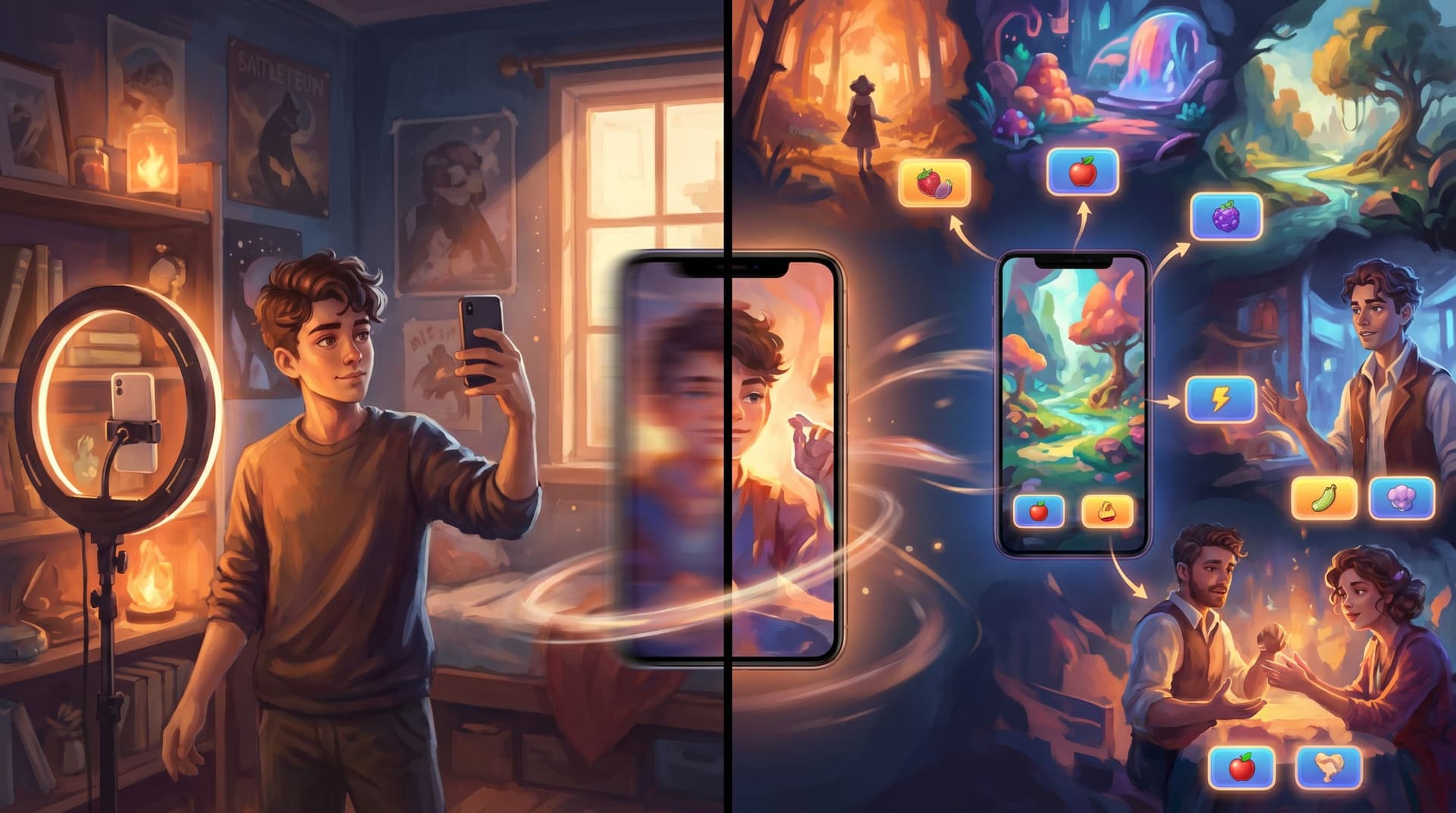
Designing for Drop‑In Play: How to Build Questas Stories That Work Great on Mobile and Social Feeds

If your interactive story only works when someone sits down, puts on headphones, and gives you 20 uninterrupted minutes… it’s going to lose a lot of players. Most people meet your work in the in‑between moments: waiting for coffee, riding the train, killing time between meetings, or tapping through social stories in bed. That’s what designing for drop‑in play is all about—crafting Questas experiences that feel satisfying even when someone stumbles into them on a tiny screen, with half their attention, and only a few spare minutes

Team Questas
Team Questas

From Slides to Storyworlds: Turning Boring Presentations into Interactive Questas Narratives

Traditional slide decks are quietly failing us. People multitask, skim, and forget. A widely cited study from the University of Texas found that audiences remember as little as 10–20% of a standard presentation after just a few days—especially when they’re passively listening instead of doing anything with the material. But when you turn the same content into an interactive, choice-driven story, something different happens: people lean in. They make decisions. They see consequences. They remember. This is where Questas shines. Instead of advancing through bullet points, your audience steps into a storyworld where their choices drive what happens ne

Team Questas
Team Questas
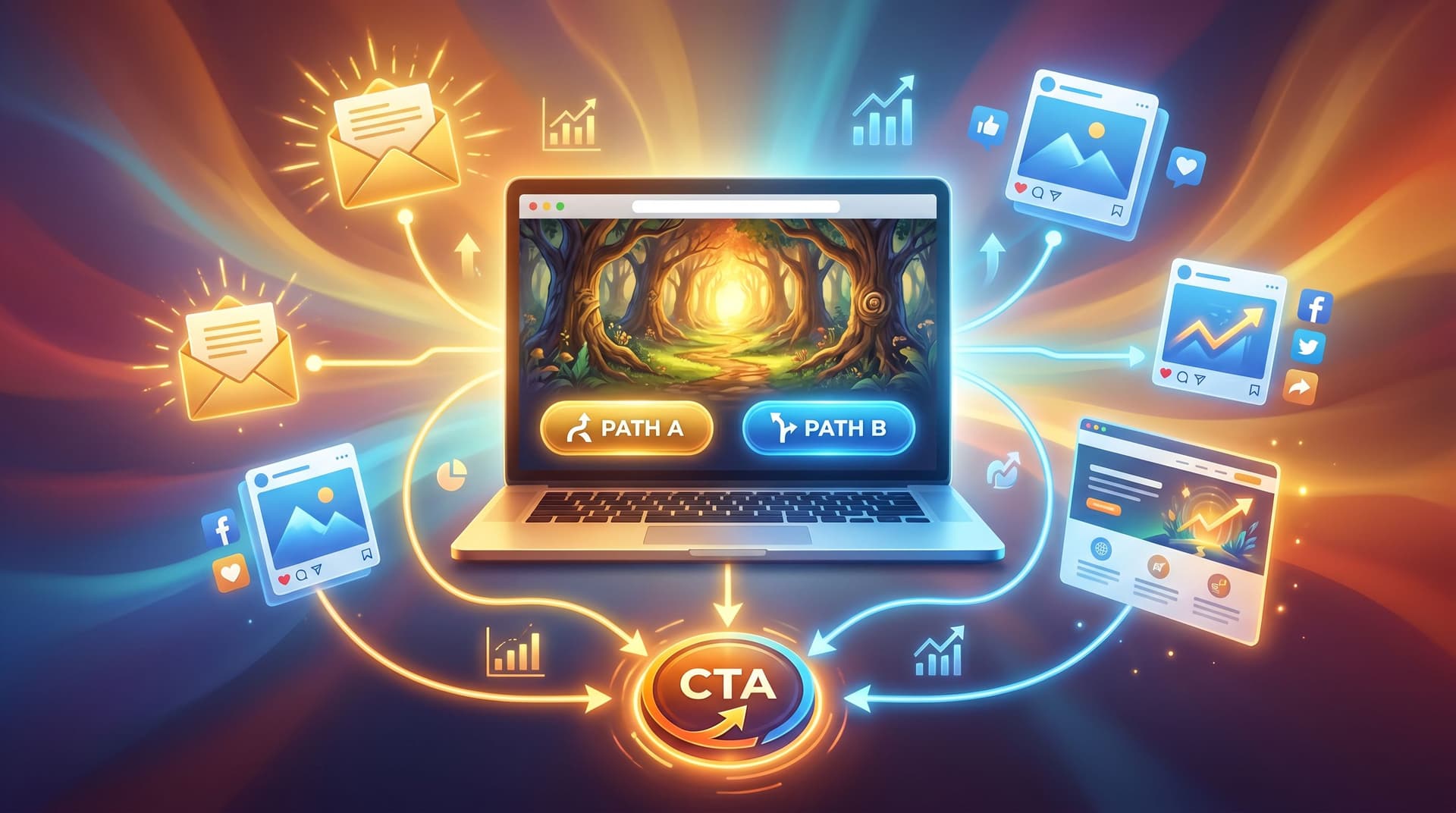
From Escape Rooms to Inbox Games: Marketing Campaigns that Feel Like Quests, Not Ads
Interactive Storytelling
AI Tools

From Escape Rooms to Inbox Games: Marketing Campaigns that Feel Like Quests, Not Ads

Marketing teams have a problem: attention is expensive, and most campaigns still feel like chores. Pop‑up. Banner. “Limited-time offer!” Close tab. Meanwhile, the experiences people seek out—escape rooms, puzzle hunts, interactive films, cozy story games—are built around curiosity and choice. They don’t just tell you something; they invite you to play with it. This is where quest‑shaped campaigns come in. Instead of pushing messages, you design missions. Instead of impressions, you design experiences. And with tools like Questas, you can build those experiences as branching, visual stories without touching a line of co

Team Questas
Team Questas

Designing ‘Soft Fails’: How to Let Players Backtrack, Reroute, and Recover Inside Questas Adventures

Interactive stories shine when players feel brave enough to experiment. They’ll try the risky option, follow a hunch, or deliberately pick the “wrong” answer just to see what happens—if they trust your story won’t punish them with a hard stop or a full reset every time they stumble. That’s where soft fails come in. Soft fails are outcomes where something goes wrong, but the experience keeps going. Instead of a “Game Over” screen, players get: A consequence that matters A chance to learn what they missed A way to backtrack, reroute, or recover Inside Questas, soft fails are one of the most powerful tools you ha

Team Questas
Team Questas
From Prompt Chaos to Polished Quest: A Practical Workflow for Outlining Branching Stories with AI
Interactive Storytelling
AI Tools

From Prompt Chaos to Polished Quest: A Practical Workflow for Outlining Branching Stories with AI

Interactive stories promise freedom: endless paths, surprising outcomes, personalized journeys. But if you’ve ever opened an AI tool, fired off a few prompts, and ended up with a tangle of half-connected scenes, you know the flip side: chaos. The ideas are there, the characters are interesting, but the structure dissolves the moment you try to map it. This post is about bridging that gap—turning raw AI prompts into a clear, replayable outline you can actually build on platforms like Questas, where a visual, no‑code editor and AI-generated visuals make it easy to bring branching stories to lif

Team Questas
Team Questas
AI Image Styles for Nonfiction: Making Case Studies, Histories, and Documentaries Playable in Questas
Interactive Storytelling
AI Tools

AI Image Styles for Nonfiction: Making Case Studies, Histories, and Documentaries Playable in Questas

Nonfiction doesn’t have to mean static slides, dense PDFs, or talking-head videos. When you turn case studies, histories, and documentary-style content into interactive stories, people don’t just read about what happened—they step into it. And when you pair that with the right AI-generated visuals inside Questas, your nonfiction becomes something new: a playable, emotionally resonant experience. This guide is all about that intersection: how to choose and use AI image styles so your nonfiction Questas feel credible, coherent, and compellin

Team Questas
Team Questas
Writing for Re-Reads: Narrative Techniques That Reward Players Who Replay Your Questas
Interactive Storytelling
Creative Writing

Writing for Re-Reads: Narrative Techniques That Reward Players Who Replay Your Questas

Interactive stories don’t end when the credits roll. If you’re building on Questas, you’re not just shipping a single, linear experience—you’re creating a system your audience can explore again and again. The difference between a “one-and-done” story and a replay magnet often comes down to how intentionally you write for re-reads. Replayable stories: Deepen emotional impact with each run Reveal new layers of theme, character, and worldbuilding Turn casual players into dedicated fans who share and discuss your work This post is all about that craft: specific narrative techniques that make players want to replay your Questas experiences—and feel rewarded when they d

Team Questas
Team Questas
From Lore Docs to Learning Paths: Using Questas to Turn Knowledge Bases into Interactive Knowledge Journeys
Interactive Storytelling
AI Tools

From Lore Docs to Learning Paths: Using Questas to Turn Knowledge Bases into Interactive Knowledge Journeys

Knowledge bases are supposed to make things easier. Product teams pour hours into docs. L&D teams build slide decks and LMS modules. Community managers curate wikis and FAQs. Yet when someone actually needs to learn from all that material, they often end up: Skimming for one keyword Getting overwhelmed by walls of text Clicking away before anything sticks The problem isn’t a lack of information. It’s that most knowledge bases are built for storage, not for experience. Interactive, branching stories flip that script. Instead of asking people to read through static pages, you invite them into a journey where their choices shape what they see nex

Team Questas
Team Questas
Brand Worlds, Not Banners: Using Questas to Build Narrative Funnels for Marketing Campaigns
Interactive Storytelling
AI Tools

Brand Worlds, Not Banners: Using Questas to Build Narrative Funnels for Marketing Campaigns

Most marketing funnels still feel like paperwork. A prospect sees an ad, lands on a page, skims a few lines of copy, and either bounces or fills out a form. It’s linear, forgettable, and easy to ignore. Meanwhile, your product, your customers, and your category are anything but linear. People arrive with different goals, objections, and levels of familiarity. They don’t want another banner. They want a world they can step into—one that responds to their choices. That’s where narrative funnels come

Team Questas
Team Questas
The Psychology of Choice: How Cognitive Biases Shape Player Decisions in Branching Stories
Interactive Storytelling
AI Tools

The Psychology of Choice: How Cognitive Biases Shape Player Decisions in Branching Stories

The moment you add a choice to a story, you’re no longer just a writer—you’re a behavior designer. Every branch, button, and consequence nudges players in particular directions. Some of those nudges are intentional. Many are not. Underneath them all is the messy, fascinating machinery of human psychology: heuristics, habits, and cognitive biases that shape what people think they’re choosing. Understanding that machinery is one of the biggest unlocks for anyone building branching narratives—whether you’re designing a narrative game, a training simulation, or an interactive brand journey on Questa

Team Questas
Team Questas
Beyond the Hero’s Journey: Non-Western Story Structures for More Diverse Questas Adventures
Interactive Storytelling
AI Tools

Beyond the Hero’s Journey: Non-Western Story Structures for More Diverse Questas Adventures

Western storytelling has done a number on our imaginations. If you’ve read craft books, watched screenwriting breakdowns, or taken a writing class, you’ve probably absorbed some version of the Hero’s Journey or the three‑act structure. Those tools are useful—but they’re not the only way to tell a satisfying story. When you’re building interactive adventures on Questas, limiting yourself to a single structure can quietly limit your characters, cultures, and kinds of experiences. This post is an invitation to widen your toolkit. We’ll explore non‑Western story structures and show how they can power richer, more diverse branching narrativ

Team Questas
Team Questas
Designing Failure Safely: How to Write ‘Bad’ Outcomes in Questas That Still Teach and Delight
Interactive Storytelling
Creative Writing

Designing Failure Safely: How to Write ‘Bad’ Outcomes in Questas That Still Teach and Delight

Failure is where interactive stories do their best work. When a player makes a risky choice, ignores a warning, or follows their curiosity into danger, that moment is where learning, emotion, and memory lock in. But there’s a catch: if your "bad" outcomes feel punishing, random, or humiliating, players shut down. They click away. They don’t come back to see what happens if they try again. With Questas, you have a powerful canvas for branching stories—complete with AI-generated images, looping videos, and a visual, no‑code editor. That means you can design failure not as a dead end, but as a playground for insight, humor, and surpris

Team Questas
Team Questas
The UX of Choice: Interface Patterns that Make Branching Stories Feel Effortless
Interactive Storytelling
AI Tools

The UX of Choice: Interface Patterns that Make Branching Stories Feel Effortless

The UX of Choice: Interface Patterns that Make Branching Stories Feel Effortless Interactive stories don’t fall apart because of plot twists. They fall apart because of friction. You’ve probably felt it as a player: You’re not sure which part of the screen is clickable. You worry that one tap will skip past something important. You lose track of where you are in the story map. The result? Hesitation instead of immersion. For creators building branching adventures—whether that’s a training scenario, a narrative game, or an interactive brand journey—the user experience of choice is just as important as the writing. If the interface gets in the way, even the smartest branching diagram will feel confusi

Team Questas
Team Questas
Branching Narratives for Brands: Turning Customer Journeys into Interactive Questas Experiences
Interactive Storytelling
AI Tools

Branching Narratives for Brands: Turning Customer Journeys into Interactive Questas Experiences

Customer journeys are already stories. A prospect discovers you, weighs options, hits friction, gets help (or doesn’t), and eventually becomes a fan—or drifts away. The problem is that most brands tell this story to themselves in decks and funnels, but customers only ever see fragments: a landing page here, an email there, a support article when something breaks. Branching narratives change that. Instead of pushing people through a one-size-fits-all path, you invite them into an experience where their choices shape what happens next. Interactive content isn’t just a novelty anymo

Team Questas
Team Questas
From Safety Drills to Story Thrills: Building High-Stakes Training Scenarios in Questas
Interactive Storytelling
AI Tools

From Safety Drills to Story Thrills: Building High-Stakes Training Scenarios in Questas

Safety training is supposed to prepare people for the worst days on the job—fires, data breaches, medical emergencies, angry customers, equipment failures. But too often, those trainings feel like box‑checking exercises: slide decks, multiple‑choice quizzes, and once‑a‑year drills everyone forgets a week later. High-stakes scenarios demand more. Interactive, branching stories let people live through critical moments before they happen. They can practice decisions, feel the pressure, and see consequences play out—without putting anyone in harm’s way. That’s where Questas, a web-based platform for building choose‑your‑own‑adventure experiences with AI‑generated visuals, becomes especially powerfu

Team Questas
Team Questas
Storytelling with AI Video Loops: How to Use Micro-Cutscenes to Signal Stakes and Consequences in Questas
Interactive Storytelling
AI Tools

Storytelling with AI Video Loops: How to Use Micro-Cutscenes to Signal Stakes and Consequences in Questas

Interactive stories live or die on whether players feel that their choices matter. Words can do some of that work. But when you’re building in Questas, you also have a powerful extra lever: short, looping AI‑generated video—what we’ll call micro‑cutscenes. Used well, these few seconds of motion can: Telegraph danger before a player clicks. Make consequences visceral instead of abstract. Turn a routine branch into a memorable turning point. Used poorly, they can drown your story in visual noise or confuse players about what their decisions actually changed. This guide is all about the first outc

Team Questas
Team Questas
Branching for Busy Minds: Micro-Learning and Just‑in‑Time Training Scenarios Built in Questas
Interactive Storytelling
AI Tools

Branching for Busy Minds: Micro-Learning and Just‑in‑Time Training Scenarios Built in Questas

Most people don’t have an hour for training. They have five minutes between meetings. They have the elevator ride before a client call. They have the moment right before they try a new workflow and think, “Wait, how does this actually go?” That’s where micro-learning and just‑in‑time training shine—and where branching scenarios built in Questas can quietly transform how your team, students, or customers learn

Team Questas
Team Questas
AI Visual Styles 101: Matching Your Questas Imagery to Genre, Tone, and Audience
Interactive Storytelling
AI Tools

AI Visual Styles 101: Matching Your Questas Imagery to Genre, Tone, and Audience

Great interactive stories don’t just branch—they look like they belong together. When you’re building a choose‑your‑own‑adventure in Questas, your AI-generated images and videos do a lot of heavy lifting: They signal genre before a single line of dialogue. They set expectations for tone—silly, solemn, eerie, epic. They tell different audiences, “This is (or isn’t) for you.” Get that visual style wrong, and even a well‑written story can feel confusing or off‑brand. Get it right, and your players feel like they’ve stepped into a coherent world, no matter which branch they take. This guide walks through how to match your Questas imagery to genre, tone, and audience—so your visuals amplify your story instead of fighting i

Team Questas
Team Questas
Beyond Gamification: What Learning Science Can Teach Us About Better Branching Stories
Interactive Storytelling
AI Tools

Beyond Gamification: What Learning Science Can Teach Us About Better Branching Stories

Interactive stories are everywhere: training simulations, language apps, onboarding flows, museum exhibits, even marketing campaigns. But too many branching stories still lean on shallow tricks—points, badges, and “gotcha” endings—rather than real learning. Learning science offers a richer playbook. When you borrow from how people actually absorb, retain, and apply knowledge, your branching stories stop feeling like novelty toys and start working like memorable experiences—whether you’re designing a classroom scenario, a sales role‑play, or a narrative game built with Questas. This post digs into what learning science can teach us about better branching design, and how to apply those ideas right aw

Team Questas
Team Questas
The New Writer’s Room: Running Collaborative Story Jams and Hackathons with Questas
Interactive Storytelling
AI Tools

The New Writer’s Room: Running Collaborative Story Jams and Hackathons with Questas

Writers’ rooms used to be physical places: a whiteboard, a stack of index cards, and a group of creatives arguing (lovingly) about what happens next. Now, teams are recreating that energy online—only this time, they’re not just plotting TV episodes. They’re building branching story worlds, training scenarios, classroom simulations, brand experiences, and fan-made epics. And they’re doing it together in compressed bursts of time: story jams, sprints, and full-on hackathons. That’s where Questas shines. Its visual, no-code editor and AI-generated images and video make it an ideal playground for collaborative experiments. A group can go from blank canvas to playable, illustrated story in a single afternoo

Team Questas
Team Questas
Interactive Onboarding 101: Turning User Manuals, FAQs, and Tutorials into Questas Journeys
Interactive Storytelling
AI Tools

Interactive Onboarding 101: Turning User Manuals, FAQs, and Tutorials into Questas Journeys

Traditional onboarding content has a problem: it’s built to be read, not lived. User manuals, FAQ pages, and how‑to tutorials are essential, but they’re also where attention goes to die. People skim, search for one keyword, or bounce the moment they feel overwhelmed. That’s a huge missed opportunity—especially when you’re trying to help someone master a product, process, or service. Interactive stories change that equation. With Questas, you can turn static documentation into branching, visual journeys where users play through onboarding instead of passively reading it. They make decisions, see consequences, and get just‑in‑time explanations tailored to what they actually

Team Questas
Team Questas
The New Story Bibles: Organizing Lore, Timelines, and Character Arcs for Large Questas Universes
Interactive Storytelling
AI Tools

The New Story Bibles: Organizing Lore, Timelines, and Character Arcs for Large Questas Universes

If you’re building a big interactive universe in Questas—multiple campaigns, spin‑off stories, recurring characters—you will hit a wall sooner or later: “Wait, did the rebellion start before the plague or after?” “Which version of the mentor survived in this timeline?” “Why does the starship look completely different in Chapter 4?” That wall is continuity. And the tool that helps you break through it is a story bible. A story bible is your universe’s operating manual: lore, timelines, character arcs, visual rules, and recurring motifs all in one place

Team Questas
Team Questas
AI Art Pitfalls and Fixes: Keeping Your Questas Visuals On-Model, On-Brand, and Not Weird
Interactive Storytelling
AI Tools

AI Art Pitfalls and Fixes: Keeping Your Questas Visuals On-Model, On-Brand, and Not Weird

AI Art Pitfalls and Fixes: Keeping Your Questas Visuals On-Model, On-Brand, and Not Weird AI images can feel like magic—until your hero suddenly grows an extra hand, your brand colors vanish, or your “cozy starship kitchen” looks like five different spaces across five scenes. When you’re building interactive stories in Questas, visuals aren’t decoration. They’re part of the gameplay: players read expressions, scan environments for clues, and form emotional bonds with characters based on how they look from scene to scene. If those visuals drift off-model or off-brand, the spell breaks

Team Questas
Team Questas
From Scroll to Story: Turning Blog Posts into Interactive Questas Adventures
Interactive Storytelling
AI Tools

From Scroll to Story: Turning Blog Posts into Interactive Questas Adventures

Long-form blog posts are great for depth, authority, and SEO—but they’re not always great at keeping people engaged from top to bottom. Readers skim. They jump between tabs. They promise themselves they’ll come back later… and rarely do. Interactive stories flip that pattern. Instead of passively scrolling, your audience plays through your ideas. They make decisions, see consequences, and feel like co-authors of the experience. That’s where Questas comes in. It gives you a visual, no‑code canvas to turn static articles into branching, choice-driven adventures—complete with AI‑generated images and video. This guide walks you through how to transform an existing blog post into a replayable Questas experience, step by

Team Questas
Team Questas
From Tabletop to Touchscreen: Adapting Your RPG Campaign into an Interactive Questas Series
Interactive Storytelling
AI Tools

From Tabletop to Touchscreen: Adapting Your RPG Campaign into an Interactive Questas Series

You’ve got binders full of maps, NPC notes, and legendary inside jokes from years of tabletop sessions. Your players still tell stories about that critical failure or that impossible bluff check. So why should those moments live only at your table

Team Questas
Team Questas
Narrative Arcs in a Nonlinear World: Structuring Three-Act Stories Inside Questas Branches
Interactive Storytelling
AI Tools

Narrative Arcs in a Nonlinear World: Structuring Three-Act Stories Inside Questas Branches

Nonlinear stories can feel like a paradox. You want that satisfying three-act arc—setup, escalation, payoff. But you also want players to wander, backtrack, discover secrets, and make wildly different choices. How do you keep a strong narrative spine when your story looks less like a straight line and more like a web? That’s exactly where three-act thinking becomes your superpower inside Questas. With a visual, no-code editor and AI-generated images and video, Questas makes it easy to add branches. The real craft is using those branches to support a compelling arc instead of diluting

Team Questas
Team Questas
From Comic Panels to Playable Paths: Turning Visual Storyboards into Questas Adventures
Interactive Storytelling
AI Tools

From Comic Panels to Playable Paths: Turning Visual Storyboards into Questas Adventures

Comics and storyboards are already halfway to being interactive stories. You’ve got panels that frame moments, visual beats that imply motion, and gutters where the reader’s imagination fills in what happens between frames. That structure maps beautifully onto branching adventures—if you know how to translate it. With Questas, you don’t need a custom engine or a dev team to make that leap. You can take the visual thinking you already use in comics, animatics, or pitch boards and turn it into a playable, choice-driven experience—complete with AI‑generated images and video—using a visual, no‑code edito

Team Questas
Team Questas
Branching Narratives in 2026: Trends Shaping the Future of Interactive Fiction and Story Games
Interactive Storytelling
AI Tools

Branching Narratives in 2026: Trends Shaping the Future of Interactive Fiction and Story Games

Interactive fiction has quietly gone from niche hobby to mainstream format. Choice-based games top storefront charts, AI co-writers are becoming common, and classrooms, brands, and solo creators are all experimenting with branching stories. That shift isn’t just about new tools. It’s about a new way of thinking about narrative: stories as systems—alive, replayable, and responsive. In 2026, branching narratives are maturing fast. If you’re writing interactive fiction, building training scenarios, or prototyping story-driven games, understanding where things are headed will help you create work that feels current now and resilient a few years from no

Team Questas
Team Questas
Playtesting Your Questas Like a Game Designer: Scripts, Checklists, and What to Watch For
Interactive Storytelling
AI Tools

Playtesting Your Questas Like a Game Designer: Scripts, Checklists, and What to Watch For

Interactive stories feel like magic when they work: choices land, scenes flow, and players forget they’re clicking through a browser at all. But that magic doesn’t come from the first draft of your branching diagram—it comes from playtesting. If you’re building on Questas, you’re already thinking like a storyteller. To ship truly memorable adventures, you also need to think like a game designer: running structured tests, watching real players, and iterating with intention

Team Questas
Team Questas
From Moodboard to Mission: Designing Visual Style Guides for Consistent Questas Adventures
Interactive Storytelling
AI Tools

From Moodboard to Mission: Designing Visual Style Guides for Consistent Questas Adventures

You’ve sketched a neon alley, a sun‑bleached desert ruin, and a cozy starship kitchen. Each scene looks great on its own—but when you drop them into the same interactive story, something feels off. The vibes clash. Characters don’t quite look like themselves from scene to scene. Your adventure starts to feel less like a world and more like a collage. That’s where visual style guides come in. For creators building on Questas, a clear visual style guide is the bridge between “cool images” and a cohesive, replayable adventure. It turns your initial moodboard into a mission: a set of decisions about tone, color, framing, and representation that keep your AI‑generated images and videos singing in harmony across every branc

Team Questas
Team Questas
From One Prompt to a Whole World: Worldbuilding Systems for Long-Form Questas Campaigns
Interactive Storytelling
AI Tools

From One Prompt to a Whole World: Worldbuilding Systems for Long-Form Questas Campaigns

You open a new project in Questas, type a single prompt—“a drowned city of glass towers where memories wash up with the tide”—and suddenly you’re flooded with possibilities. Who lives there? What rules govern this place? How do you keep it all consistent across hours of branching play? That’s the real challenge of long-form, campaign-style interactive stories: not just inventing cool ideas, but building a system that can sustain them over dozens of scenes, routes, and endings. This guide is all about that system. We’ll walk through how to turn one evocative prompt into a fully playable world for a long-form Questas campaign—without drowning in continuity errors, lore bloat, or visual inconsist

Team Questas
Team Questas
Ethical AI Worldbuilding: Guidelines for Responsible Imagery, Representation, and Choices in Questas
Interactive Storytelling
AI Tools

Ethical AI Worldbuilding: Guidelines for Responsible Imagery, Representation, and Choices in Questas

Ethical AI Worldbuilding: Guidelines for Responsible Imagery, Representation, and Choices in Questas Interactive stories have always been about power: the power to decide what happens next, who matters, and which futures are even possible. When you build on Questas, you’re not just laying out branches in a visual, no‑code editor. You’re shaping a world—its people, its rules, its moral center—then inviting players to step inside. AI-generated images and video make that world vivid. But they also raise real questions: Whose faces and bodies are we showing? Which cultures, identities, and histories are we drawing from—and how carefully? What kinds of choices are we normalizing or glamorizing

Team Questas
Team Questas
Beyond Text and Images: Using Ambient Audio and Micro-Video to Deepen Immersion in Questas
Interactive Storytelling
AI Tools

Beyond Text and Images: Using Ambient Audio and Micro-Video to Deepen Immersion in Questas

Interactive stories used to be walls of text with the occasional illustration. With platforms like Questas, we’ve already moved far beyond that: AI‑generated images and short video loops give each scene a cinematic feel. But there’s still one huge layer many creators underuse: Ambient audio — subtle soundscapes, environmental noise, and mood beds. Micro‑video — 2–8 second loops that feel alive without becoming full-blown cutscenes. Handled well, these two elements can make your Questas adventures feel less like reading a story and more like being inside one. This guide will walk through why ambient audio and micro‑video matter, how to use them without overwhelming your players, and practical workflows you can apply in your next projec

Team Questas
Team Questas
Beyond the Branch: Using Player Feedback and Analytics to Iteratively Rewrite Your Questas Narrative
Interactive Storytelling
Creative Writing

Beyond the Branch: Using Player Feedback and Analytics to Iteratively Rewrite Your Questas Narrative

Interactive stories are never really “finished.” You hit publish, share your new adventure, and players start exploring. Some choices they love. Some endings they rush past. Some scenes they never even see. What you do next is what separates a one-off experiment from a story that genuinely grows with its audience. This is where player feedback and analytics become your secret writing room. When you build on Questas, you’re not just shipping a branching narrative—you’re launching a living system you can observe, tweak, and rewrite over tim

Team Questas
Team Questas
From Prompt to Playable: Designing Your First AI-Generated Character Cast in Questas
Interactive Storytelling
AI Tools

From Prompt to Playable: Designing Your First AI-Generated Character Cast in Questas

From Prompt to Playable: Designing Your First AI-Generated Character Cast in Questas Interactive stories don’t come alive because of branching charts or clever logic—they come alive because of characters. The mentor who remembers what you chose three scenes ago. The rival who keeps showing up at the worst possible moment. The sidekick players swear they’d protect at all costs. When you’re building in Questas, your character cast isn’t just a list of names. It’s a playable ensemble that travels across branches, reacts to choices, and shows up consistently in AI-generated images and video. Getting that cast right early will save you hours later—and make your story feel like a cohesive, living worl

Team Questas
Team Questas
Designing Meaningful Choices: How to Turn Simple Branches into Emotional Turning Points in Questas
Interactive Storytelling
Creative Writing

Designing Meaningful Choices: How to Turn Simple Branches into Emotional Turning Points in Questas

Interactive stories live and die on their choices. A gorgeous setting, clever dialogue, and slick AI visuals will pull people in—but it’s the moments of “Do I go left or right?” that make them lean forward, hesitate, and care. When you’re building in Questas, you can add as many branches as you like with a few clicks. The real craft isn’t adding choices—it’s making those choices matter. This post is all about that craft: how to turn ordinary branches into emotional turning points that shape your characters, your world, and your players’ memorie

Team Questas
Team Questas
From Linear Lesson Plan to Branching Scenario: A Practical Framework for Educators Using Questas
Interactive Storytelling
No-Code

From Linear Lesson Plan to Branching Scenario: A Practical Framework for Educators Using Questas

Most lesson plans still follow a familiar pattern: you introduce a concept, guide students through examples, check for understanding, and end with an assessment. It’s structured, predictable… and often passive. Branching scenarios flip that script. Instead of telling students what should happen, you let them decide what to do—and see the consequences play out. With tools like the web-based, no‑code platform Questas, you can turn a traditional lesson into an interactive, visual story where every choice teaches something. This post walks through a concrete, educator-friendly framework for converting a linear lesson into a branching scenario using Questa

Team Questas
Team Questas
Replay Value by Design: How to Plan Secrets, Unlockables, and Hidden Paths in Questas
Interactive Storytelling
Creative Writing

Replay Value by Design: How to Plan Secrets, Unlockables, and Hidden Paths in Questas

Most interactive stories are built to be played once. Great interactive stories are built to be replayed. Replay value is what turns a neat experiment into an experience people talk about, share with friends, and come back to weeks later to see what they missed. When you’re building in a visual, no‑code platform like Questas, you have a rare opportunity: you can design secrets, unlockables, and hidden paths right into the structure of your story—without needing a dev team. This post is all about doing that on purpo

Team Questas
Team Questas
Show, Don’t Tell: Using AI Images and Short Video Loops to Pace Your Questas Story Beats
Interactive Storytelling
AI Tools

Show, Don’t Tell: Using AI Images and Short Video Loops to Pace Your Questas Story Beats

Great interactive stories don’t just tell players what’s happening—they let them feel it. In a branching adventure, that feeling often comes less from long paragraphs of exposition and more from the rhythm of moments: a tense pause before a decision, a quiet beat after a failure, a breath of wonder when a new world opens up. That rhythm is pacing—and visual media is one of your most powerful pacing tools. With Questas, you’re not only writing choices. You’re also placing AI-generated images and looping video at key beats in your stor

Team Questas
Team Questas
Building Your Questas Pipeline: A Workflow for Drafting, Testing, and Publishing Interactive Stories at Scale
Interactive Storytelling
No-Code

Building Your Questas Pipeline: A Workflow for Drafting, Testing, and Publishing Interactive Stories at Scale

You can absolutely build one beautiful interactive story and stop there. But if you’re reading this, you’re probably aiming bigger: a series of adventures, a training library, a catalog of client concepts, or a whole universe of branching tales. That’s where a pipeline comes in. A pipeline is simply a repeatable workflow—from idea to published experience—that you can run again and again without burning out or losing quali

Team Questas
Team Questas
No-Code, Pro-Grade: Turning Client Briefs into Interactive Questas Prototypes in a Single Afternoon
Interactive Storytelling
No-Code

No-Code, Pro-Grade: Turning Client Briefs into Interactive Questas Prototypes in a Single Afternoon

Client expectations have shifted. Static decks and PDFs don’t always cut it anymore—especially when you’re pitching campaigns, training concepts, or narrative-driven experiences. Clients want to feel the idea, not just read about it. That’s where interactive prototypes shine. With Questas, you can turn a one-page brief into a playable, choose-your-own-adventure prototype—complete with AI-generated visuals—in just a few hours. No dev team, no custom engine, no all-nighte

Team Questas
Team Questas
Collaborative Adventures: How to Co-Create Questas Stories with Teams, Students, or Communities
Interactive Storytelling
Content Creation

Collaborative Adventures: How to Co-Create Questas Stories with Teams, Students, or Communities

Interactive stories are already powerful. Interactive stories that multiple minds build together? That’s where things get truly memorable. Collaboration turns a single branching narrative into a shared world: writers, educators, marketers, students, and fans all contributing characters, choices, and what-if scenarios. With platforms like Questas, which offers a visual, no‑code editor plus AI‑generated images and video, co-creating these adventures is more accessible than ever. This guide will walk through why collaborative storytelling matters, how to structure it for different groups (teams, classrooms, communities), and practical workflows you can use right awa

Team Questas
Team Questas
From Static Stories to Living Worlds: Converting Existing Scripts, Novels, and RPG Modules into Questas Adventures
Interactive Storytelling
Content Creation

From Static Stories to Living Worlds: Converting Existing Scripts, Novels, and RPG Modules into Questas Adventures

You already have the hard part: a story. Maybe it’s a finished novella sitting on your hard drive, a film script between drafts, or a beloved tabletop campaign binder that’s more duct tape than cardboard at this point. What you don’t have is the time, budget, or technical team to turn that material into a fully interactive experience. That’s where Questas changes the equation. With a visual, no‑code editor and AI‑generated images and video, Questas lets you transform linear stories into branching, replayable adventures—without rewriting everything from scratch or learning to co

Team Questas
Team Questas
Onboarding Your Audience: Best Practices for Introducing New Players to Questas Stories
Interactive Storytelling
Content Creation

Onboarding Your Audience: Best Practices for Introducing New Players to Questas Stories

Interactive stories live or die in the first few minutes. You can have gorgeous AI visuals, clever branching, and a brilliant twist ending—but if new players feel confused, overwhelmed, or underwhelmed at the start, they’ll bounce before your story ever has a chance. Thoughtful onboarding is how you bridge that gap. When someone opens your first story built in Questas, they’re not just meeting your characters. They’re learning how to play, what to expect from choices, and why they should care enough to keep clicking. This guide breaks down practical ways to welcome new players into your Questas experiences so they feel confident, curious, and eager for m

Team Questas
Team Questas
Branching Without Chaos: Simple Story Mapping Techniques for Complex Questas Narratives
Interactive Storytelling
No-Code

Branching Without Chaos: Simple Story Mapping Techniques for Complex Questas Narratives

Branching Without Chaos: Simple Story Mapping Techniques for Complex Questas Narratives Interactive stories are supposed to feel wild and alive for your players—not for you as the creator. If your branching narrative feels like a tangle of half-finished ideas, orphaned scenes, and endings you can’t quite trace back to their choices, you’re not alone. Branching is powerful, but without structure, it can quickly become unmanageable. That’s where simple story mapping comes i

Team Questas
Team Questas
Accessibility by Design: Building Inclusive, Player-Friendly Questas Stories Everyone Can Enjoy
Interactive Storytelling
Content Creation

Accessibility by Design: Building Inclusive, Player-Friendly Questas Stories Everyone Can Enjoy

Interactive stories are at their best when everyone can step into the adventure. If someone can’t comfortably read your text, navigate your choices, understand your visuals, or use your interface, they’re not just having a slightly worse time—they’re effectively locked out of the story you worked so hard to build. Designing for accessibility isn’t just a nice-to-hav

Team Questas
Team Questas
From One-Shots to Series: Planning Episodic Questas Stories That Keep Players Coming Back
Interactive Storytelling
Content Creation

From One-Shots to Series: Planning Episodic Questas Stories That Keep Players Coming Back

You publish a one-off interactive story. People love it. Comments roll in. Shares spike. Then… things go quiet. The real magic happens when that first hit turns into a series—a world your audience can return to week after week, with choices that echo across episodes and characters they’re genuinely invested in. That’s where episodic storytelling shines, and where Questas makes it surprisingly approachable. With a visual, no‑code editor and AI‑generated images and video, you can design branching episodes that feel like an interactive show, not just a one-time experiment. In this guide, we’ll walk through how to plan episodic stories—from pilot to season arc—so players don’t just try your adventures once, they stick arou

Team Questas
Team Questas
Analytics for Adventure: Using Player Data to Improve Your Questas Stories Over Time
Interactive Storytelling
AI Tools

Analytics for Adventure: Using Player Data to Improve Your Questas Stories Over Time

Interactive stories feel magical when they flow: choices feel meaningful, players stay curious, and the ending they reach feels earned. But that kind of experience rarely happens by accident. It happens because creators watch how people actually play—and then refine. That’s where analytics comes in. If you’re building on Questas, you already have powerful tools for crafting branching narratives, AI-generated visuals, and cinematic moments. Analytics is the missing piece that turns a fun one-off project into a living, evolving adventure that gets better every we

Team Questas
Team Questas
From Idea to Interactive Epic: A Step‑by‑Step Beginner’s Guide to Building Your First Questas Story
Interactive Storytelling
Creative Writing

From Idea to Interactive Epic: A Step‑by‑Step Beginner’s Guide to Building Your First Questas Story

Interactive stories used to mean complex code, custom engines, and a lot of technical overhead. Now, anyone with a browser can build a branching adventure that feels like a playable graphic novel. That’s the promise of Questas: a visual, no‑code platform for creating choose‑your‑own‑adventure experiences with AI‑generated images and video. But if you’re new, staring at that empty story canvas can feel just as intimidating as a blank page. This guide walks you from first spark of an idea to a fully playable, shareable interactive epic—step by ste

Team Questas
Team Questas
Monetizing Your Adventures: How Creators Can Earn from Questas Stories
Interactive Storytelling
Content Creation

Monetizing Your Adventures: How Creators Can Earn from Questas Stories

Interactive stories aren’t just a passion project anymore—they’re a viable creative business. If you’re already building branching narratives, gamebooks, or interactive comics, or you’re just starting to experiment with Questas, there’s a natural next question: How do I turn these adventures into real income? This post is your roadmap. We’ll walk through the main ways creators are monetizing interactive stories built with Questas, how to design your projects with revenue in mind (without ruining the magic), and practical tips to get started—even if you’ve never sold anything you’ve made before. Why Monetizing Your Stories Matters (Beyond the Money) Yes, revenue is

Team Questas
Team Questas
Picture This: How to Prompt AI for Consistent Characters and Worlds in Questas
Interactive Storytelling
AI Tools

Picture This: How to Prompt AI for Consistent Characters and Worlds in Questas

If you’ve ever tried to generate images for an interactive story, you’ve probably run into this problem: You love the hero in Scene 1… but by Scene 3, the AI has turned them into a completely different person. New face. New outfit. Sometimes a new species. For branching, choice-driven stories, that inconsistency breaks immersion fast. The magic of your story depends on readers believing they’re following the same character through the same world—even as choices send them down wildly different paths. That’s why learning to prompt AI for consistent characters and worlds is one of the most valuable skills you can develop as a Questas creat

Team Questas
Team Questas
Level Up Your Plots: 7 Branching Narrative Patterns to Try in Questas
Interactive Storytelling
Creative Writing

Level Up Your Plots: 7 Branching Narrative Patterns to Try in Questas

Branching stories are magical when they work—when every choice feels meaningful, the pacing feels intentional, and your readers feel like they’re co-authoring the experience rather than just clicking buttons. But without a plan, branching can quickly turn into chaos: tangled plots, dead ends, and a story map that looks like spilled spaghetti. That’s where narrative patterns come in. Using a few proven structures gives you a powerful way to design interactive stories that feel rich and manageable. And with a visual editor like Questas, you can experiment with these patterns without touching a line of co

Team Questas
Team Questas
Classroom Adventures: How Teachers Use Questas to Turn Lessons into Playable Stories
Interactive Storytelling
No-Code

Classroom Adventures: How Teachers Use Questas to Turn Lessons into Playable Stories

When students talk about their favorite memories from school, they rarely mention worksheets. They remember stories: the mock trial where they defended a historical figure, the simulation where they survived on Mars, the mystery they solved with classmates. Interactive storytelling taps into that same energy—and it’s quickly moving from “fun extra” to core strategy in many classrooms. Game-based learning is projected to reach over $64 billion by 2030, driven largely by demand for interactive, immersive experiences in education. Students in game-based environments show 28% higher engagement and spend 64% more time on learning tasks compared to traditional approaches

Team Questas
Team Questas