Designing Failure Safely: How to Write ‘Bad’ Outcomes in Questas That Still Teach and Delight

Failure is where interactive stories do their best work.
When a player makes a risky choice, ignores a warning, or follows their curiosity into danger, that moment is where learning, emotion, and memory lock in. But there’s a catch: if your "bad" outcomes feel punishing, random, or humiliating, players shut down. They click away. They don’t come back to see what happens if they try again.
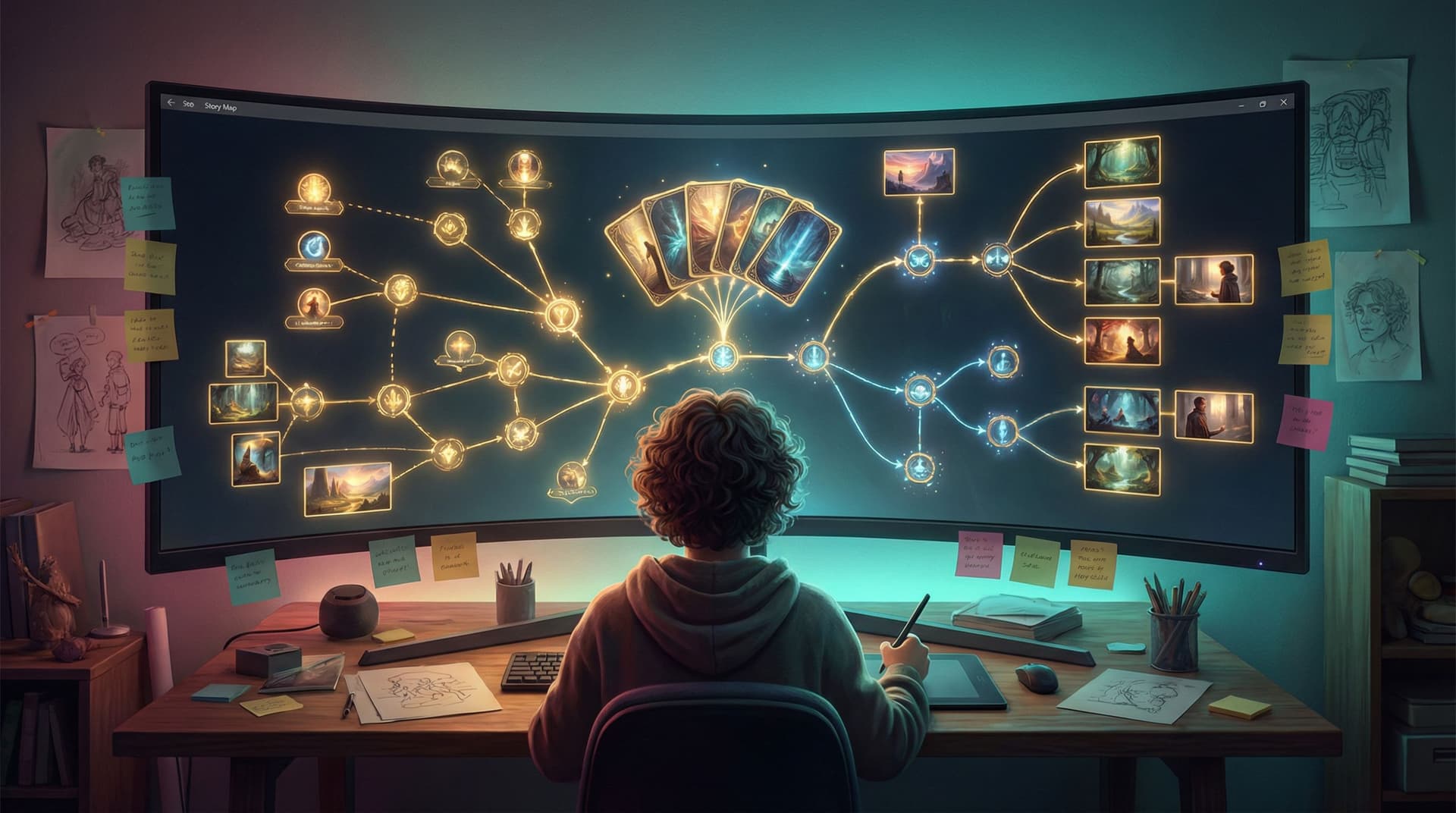
With Questas, you have a powerful canvas for branching stories—complete with AI-generated images, looping videos, and a visual, no‑code editor. That means you can design failure not as a dead end, but as a playground for insight, humor, and surprise.
This guide walks through how to write “bad” outcomes in a way that’s:
- Safe for your audience
- Aligned with your learning or narrative goals
- Emotionally satisfying (even when things go wrong)
- Visually memorable
Whether you’re building a safety simulation, a brand journey, or a narrative game, thoughtful failure design is one of the biggest upgrades you can make to your Questas projects.
Why "Bad" Outcomes Are Secretly Your Best Scenes
If you only write “correct” or “successful” paths, your story becomes a guided tour, not an adventure. Failure branches do at least four important jobs:
-
They reveal the rules of your world.
A character gets injured because they skipped the safety harness; a customer abandons a cart because support never replied. Suddenly, the stakes are clear. -
They make success feel earned.
When players see what could have gone wrong, reaching a good ending feels like real achievement. -
They deepen emotional investment.
A bittersweet loss, a near-miss, or a comic disaster can make players care more about characters and outcomes. -
They are prime learning moments.
Learning science consistently shows that errorful learning—where people make mistakes and then see feedback—can improve retention when done safely and supportively.
Well-designed failure in Questas isn’t about punishing players. It’s about letting them test hypotheses in a low-risk sandbox, then reflecting those choices back in vivid, memorable ways.
Start with Guardrails: What Counts as a Safe Failure?
Before you write a single “you messed up” scene, decide what kind of failure is appropriate for your audience and purpose.
Ask yourself:
-
What’s the emotional tone of this project?
Slapstick fantasy? Serious workplace training? Reflective drama? Your failures should match. -
What’s off-limits?
Are there topics (e.g., self-harm, real-world trauma, discrimination) that should never be used as consequences? Write these down. -
How intense should consequences be?
For a micro-learning module, maybe “You lose the sale” is enough. For a high-stakes safety simulation, you might depict serious harm—but with care and clear educational framing. If you’re working in that space, you’ll find deeper guidance in posts like “From Safety Drills to Story Thrills: Building High-Stakes Training Scenarios in Questas”. -
What’s the recovery path?
Even in harsh outcomes, can players retry, rewind, or see how to do better next time?
Codifying these guardrails keeps your “bad” outcomes from drifting into shock value or unintentional harm—especially if you’re collaborating with others or running a story jam, as we discuss in “The New Writer’s Room: Running Collaborative Story Jams and Hackathons with Questas”.
Classifying Your Failure Types (So You Don’t Overuse Any One)
Not all bad outcomes are created equal. Mixing types keeps your branches fresh and lets you tune how hard each consequence hits.
Here are five failure archetypes that work especially well in Questas:
-
Soft Stumbles (Low Stakes)
- Embarrassing but harmless moments
- Minor delays or detours
- A character rolling their eyes and saying, “Let’s not try that again.”
Use for: onboarding, early scenes, younger audiences.
-
Informational Misses (Learning-Focused)
- You missed a clue, so you get a weaker outcome later.
- You picked an option that reveals a misconception, then see a short explanation.
Use for: training, education, onboarding flows.
-
Reversible Setbacks (Medium Stakes)
- You lose a resource (time, money, trust) but can regain it.
- A character gets injured but can recover if you make better choices.
Use for: roleplay, customer journeys, strategy scenarios.
-
Branch-Defining Breaks (High Stakes)
- A relationship is permanently altered.
- A faction turns against you.
- You’re locked out of a path and into a different storyline.
Use for: narrative games, long-form campaigns.
-
Terminal Endings (Story Over)
- The mission fails.
- The company collapses.
- The character dies or is removed from play.
Use sparingly, and always with a clear way to restart or explore other branches.
When you map your story in the Questas editor, label nodes with these archetypes (even just in your own notes). You’ll quickly see if your adventure is overloaded with harsh endings or too timid to be interesting.

Turning Failure into Feedback: The Anatomy of a Good "Bad" Outcome
A well-crafted failure scene usually has four ingredients:
- Clear Causality – Players should understand why this happened.
- Emotional Acknowledgment – The story recognizes how the player might feel.
- Actionable Insight – There’s a hint, explanation, or reflection to learn from.
- Inviting Next Step – It’s obvious what to try next or how to continue.
Here’s a simple template you can adapt for Questas scenes:
1. Mirror the choice
“You decide to send the angry customer a generic reply instead of addressing their specific complaint.”2. Show the consequence
“Within minutes, they post a screenshot of your message on social media. Comments pile up. Your inbox fills with refund requests.”3. Name the lesson
“When emotions are high, canned responses can make people feel ignored rather than heard.”4. Offer a way forward
Choice A: Rewind and craft a personalized response.
Choice B: Jump ahead to see how your team manages the fallout.
In Questas, you can:
- Use branch labels or node names like
Failure – Missed Empathyto keep your structure organized. - Add short, AI-generated video loops to emphasize the consequence—a notification feed blowing up, a character’s disappointed face, a machine alarm flashing. For more on using micro-cutscenes well, see “Storytelling with AI Video Loops: How to Use Micro-Cutscenes to Signal Stakes and Consequences in Questas”.
Writing Tone That Stings Just Enough (But Never Shames)
Tone is where many failure scenes go wrong. Sarcastic, mocking, or moralizing language can make players feel attacked rather than curious.
Aim for supportive, specific, and sometimes gently humorous.
Phrases to Lean On
- “This seemed like a reasonable choice because…”
- “At first, nothing feels wrong. Then…”
- “You realize too late that…”
- “Here’s what you didn’t see coming…”
- “Next time, you might try…”
Phrases to Avoid
- “Obviously, that was a bad idea.”
- “What were you thinking?”
- “Only an idiot would…”
- “You failed.” (without any context or nuance)
When in doubt, write as if you’re a coach or mentor, not a judge. You’re on the player’s side, helping them explore the space of possible decisions.
Using Visuals to Make Failure Memorable, Not Traumatic
One of the advantages of Questas is that your failure scenes don’t have to be walls of text. AI-generated images and videos can:
- Telegraph danger before a choice is made (a flickering warning light, a storm gathering on the horizon).
- Make consequences feel concrete without being graphic (a closed sign on a shop, a character’s disappointed expression, a dimmed control room).
- Reinforce tone—light, comic visuals for soft stumbles; more grounded, sober visuals for serious training scenarios.
To keep things safe and cohesive:
-
Match visual style to tone and audience. A cartoony style can soften failure for younger players or lighthearted games; a realistic style can make workplace training feel grounded. For a deeper dive into style choices, check out “AI Visual Styles 101: Matching Your Questas Imagery to Genre, Tone, and Audience”.
-
Avoid sensationalized harm. You can imply serious consequences through environment and reaction shots rather than graphic imagery.
-
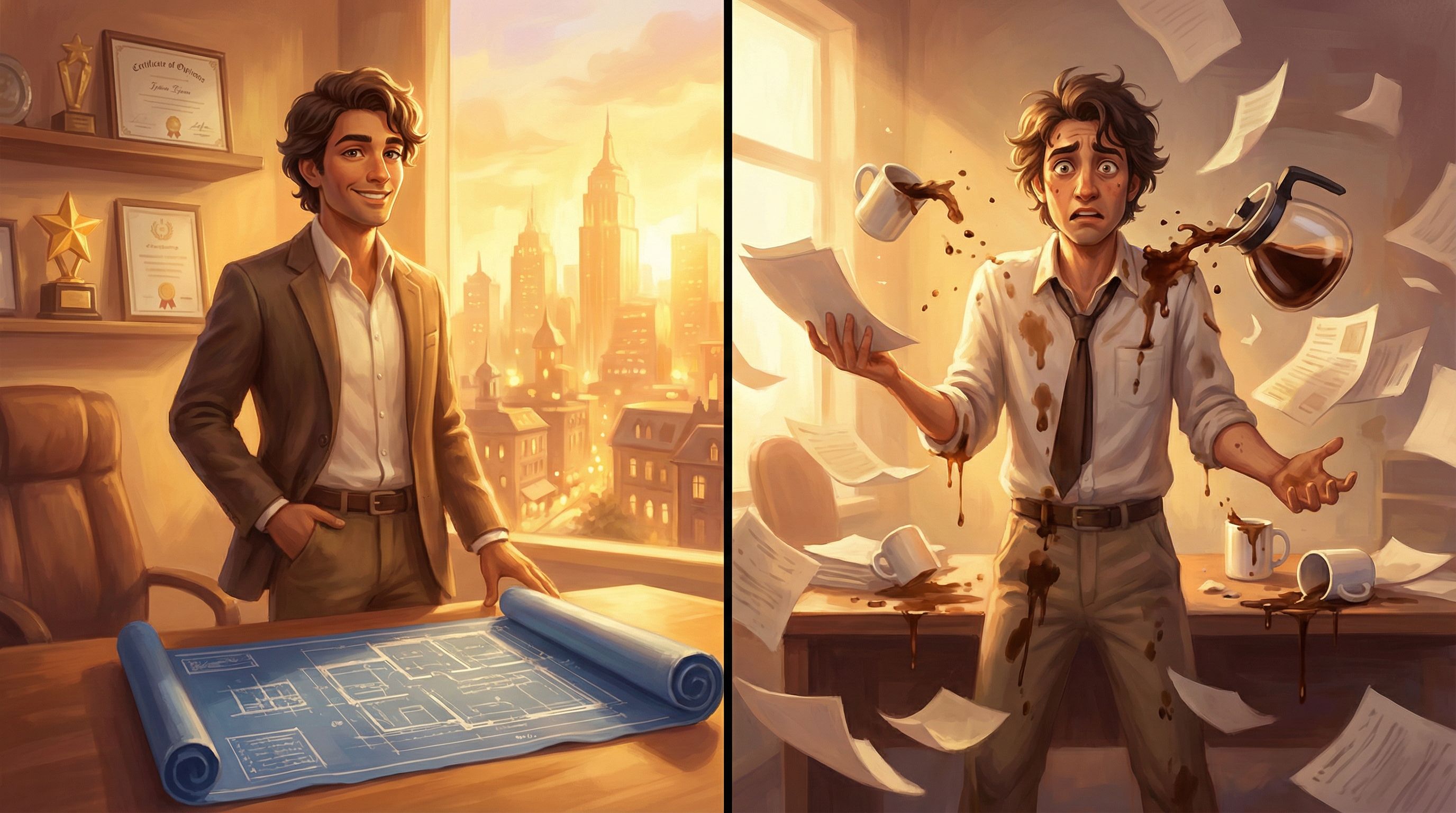
Use contrast wisely. If success scenes are bright and open, failure scenes might be cooler-toned or more cluttered—but still readable and on-model.
Structuring Branches So Failure Feels Like a Detour, Not a Dead End
You don’t need to turn every mistake into a game over. In fact, many of the most satisfying “bad” outcomes are side roads that loop back into the main story with new knowledge.
Three Structural Patterns That Work Well
-
Fork and Return
- Player makes a risky choice.
- Short failure sequence plays out.
- They’re offered a chance to try again with extra information or a new tool.
-
Scarred but Wiser
- A failure costs the player something (time, trust, resources).
- That cost is referenced in later scenes.
- The story continues, but the player sees that earlier decision echo.
-
Branch Swap
- A failure closes one path but opens another.
- The player doesn’t restart; they slide into a different storyline.
Inside Questas, your visual editor makes these patterns easy to see:
- Use color-coding or naming conventions (even just in your own workflow) to distinguish soft detours from hard endings.
- Keep your main “spine” of the story intact and let failures orbit around it, as we explore in “Narrative Arcs in a Nonlinear World: Structuring Three-Act Stories Inside Questas Branches”.
This approach keeps players exploring without feeling like they’re constantly being kicked back to the start.
Making Failure Pedagogical: Designing for Real Learning
If you’re building training, onboarding, or educational content, your “bad” outcomes are where the real teaching happens.
Here’s how to make them count:
-
Tie every failure to a specific misconception.
Don’t just say “You chose wrong.” Clarify what belief led to that choice—e.g., “You assumed the machine would shut itself off automatically.” -
Deliver just-in-time explanations.
Right after the consequence, add a short explanation, diagram, or comparison. This is where Questas shines for micro-learning, as we cover in “Branching for Busy Minds: Micro-Learning and Just‑in‑Time Training Scenarios Built in Questas”. -
Let players test the corrected behavior.
Immediately offer a branch where they can apply what they just learned. -
Use repetition with variation.
Revisit the same concept in a new context later. If they learned to verify an email sender in a phishing simulation, show a similar decision at a higher stake later in the story. -
Track patterns and iterate.
If you notice (via analytics or playtests) that most players hit the same failure, ask: Is this a teaching opportunity or a sign that my prompt is unclear? Then adjust your copy, visuals, or options. For more on this feedback loop, see “Beyond the Branch: Using Player Feedback and Analytics to Iteratively Rewrite Your Questas Narrative”.
Interface Matters: Signaling Stakes Before Players Click
Even the best-written failure scenes will frustrate people if they feel blindsided. Your interface can hint at stakes before the decision is made.
In Questas, consider:
- Choice labeling: Use subtle labels like “risky,” “conservative,” or “creative” in your button text or subtitles.
- Micro-copy: Add a one-line hint under a choice: “Might escalate the situation” or “Takes more time but builds trust.”
- Visual cues: Darker or more chaotic imagery near a choice can imply danger; calm, ordered visuals can imply safety.
If you want to go deeper on how UI and choice design affect player perception, you’ll find a full breakdown in “The UX of Choice: Interface Patterns that Make Branching Stories Feel Effortless”.
The goal isn’t to spoil the outcome—it’s to make players feel that when things go wrong, they understand why.
Quick Checklist: Are Your "Bad" Outcomes Doing Their Job?
Before you publish your next Questas story, run your failure branches through this lens:
- [ ] Does each failure type (soft stumble, informational miss, setback, branch break, terminal) show up where appropriate?
- [ ] Is the cause of each failure clear and connected to the player’s choice?
- [ ] Does the tone feel supportive, not shaming?
- [ ] Is there at least one actionable insight in every bad outcome?
- [ ] Do visuals reinforce the consequence without being gratuitous or confusing?
- [ ] Do most failures lead to detours or new paths, not constant hard stops?
- [ ] Is it always obvious how to continue or retry after something goes wrong?
If you can check these boxes, your “bad” outcomes are likely doing exactly what they should: teaching, delighting, and inviting another run.
Wrapping Up: Failure as a Feature, Not a Bug
When you design failure thoughtfully, your Questas adventures become:
- Safer for players to explore tough topics and high-stakes decisions
- More engaging, because curiosity about “what if I mess up?” drives replays
- More effective, especially for learning and behavior change
- More memorable, as players recall not just what worked, but what didn’t—and why
Bad outcomes don’t have to be brutal. They can be funny, poignant, surprising, or quietly insightful. Most important, they can be kind.
Your Next Step: Build One Great Failure Path
You don’t need to overhaul an entire project to start designing failure better.
- Open an existing Questas story—or start a new one.
- Pick one key decision that currently leads straight to success or a bland dead end.
- Turn the “wrong” choice into a rich failure branch:
- Add 2–3 short scenes showing the consequence.
- Write a clear, supportive explanation of what went wrong.
- Offer a way to retry or continue with a scar but new insight.
- Drop in one evocative image or micro-video to make it stick.
Play it through yourself. Then share it with a friend, teammate, or learner and watch their reactions.
Ready to turn failure into your secret storytelling superpower? Head over to Questas, open your next adventure, and give your “bad” outcomes the care they deserve. That’s where your stories—and your players—will grow the most.