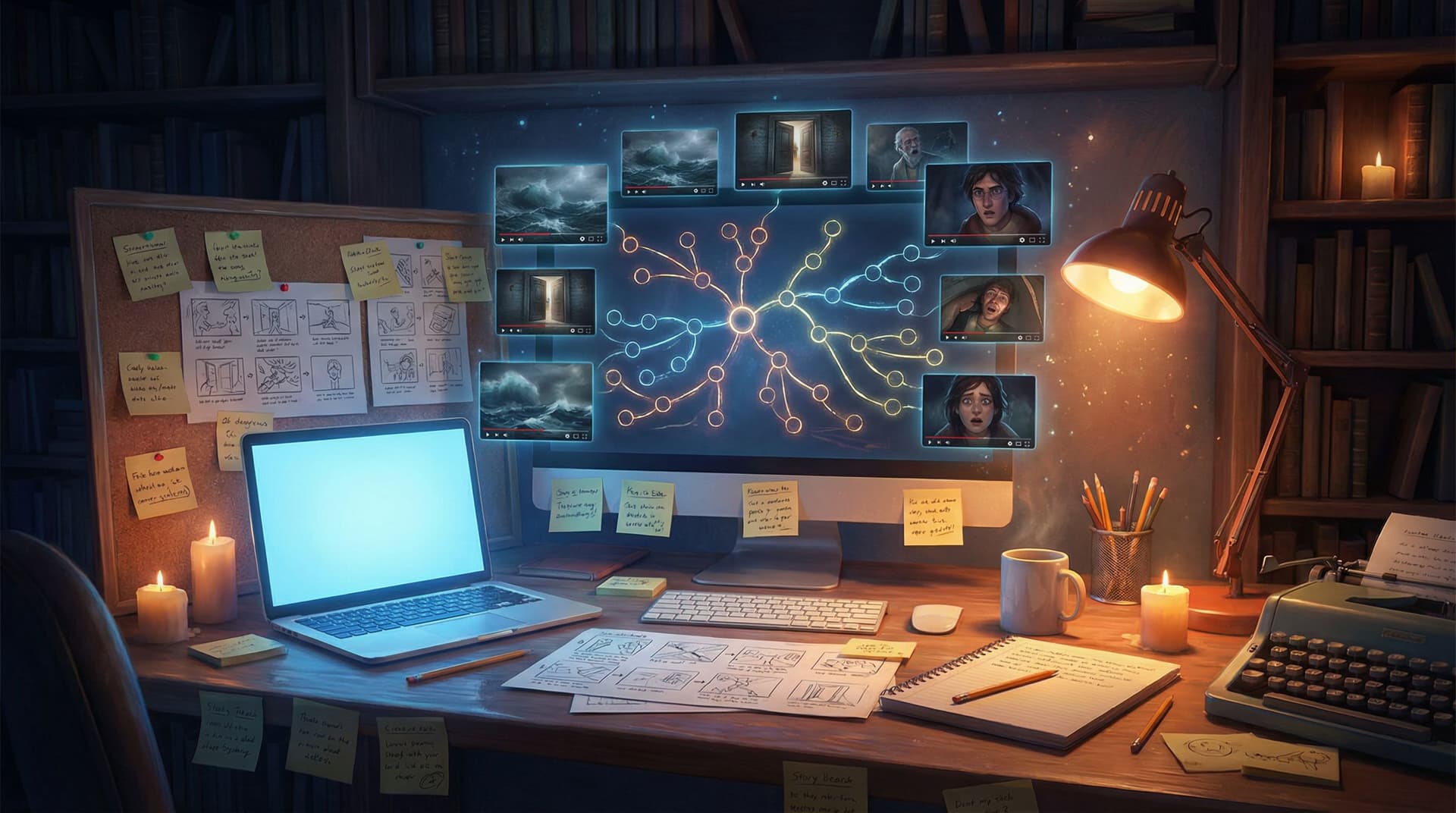
Branching Narratives for Brands: Turning Customer Journeys into Interactive Questas Experiences


Customer journeys are already stories.
A prospect discovers you, weighs options, hits friction, gets help (or doesn’t), and eventually becomes a fan—or drifts away. The problem is that most brands tell this story to themselves in decks and funnels, but customers only ever see fragments: a landing page here, an email there, a support article when something breaks.
Branching narratives change that. Instead of pushing people through a one-size-fits-all path, you invite them into an experience where their choices shape what happens next.
Interactive content isn’t just a novelty anymore. Studies show that interactive formats generate roughly 2x more engagement and conversions than static content, with 81% of marketers saying they capture attention more effectively and 70% of B2B buyers finding them more helpful for learning.¹ Interactive journeys keep people on-page longer, help them make better decisions, and are more likely to be remembered and shared.
That’s exactly where a no-code platform like Questas shines: it lets marketers, CX teams, and brand storytellers build choose-your-own-adventure experiences—complete with AI-generated images and video—without needing a dev team.
In this guide, we’ll walk through how to turn your customer journeys into interactive Questas experiences that:
- Clarify complex offerings
- Capture rich zero-party data
- Educate and qualify buyers
- Strengthen brand affinity through story
Why Branching Narratives Belong in Your Customer Journey
Before we get tactical, it helps to be clear on why this matters for brands.
1. Customers want to steer, not just scroll
Interactive content consistently outperforms static assets on key metrics:
- 2x engagement vs. passive content
- Longer dwell time (often 30–40% higher)
- Higher conversion rates—some studies show up to 2x more conversions when journeys are interactive
- Better recall: over 70% of consumers say they remember brands that use interactive experiences²
When you let people make choices—“What problem are you trying to solve?” “What kind of team are you on?”—you’re not just collecting data. You’re giving them control. That sense of agency is the beating heart of both good storytelling and good customer experience.
2. Branching journeys make complexity feel simple
If you sell anything more nuanced than a single SKU, your buyers are already dealing with branching:
- Different use cases (enterprise vs. startup, teacher vs. student, agency vs. in-house)
- Different levels of expertise
- Different decision-makers and influencers
Static pages either oversimplify (and leave questions unanswered) or overload (and drive people away). A branching narrative lets you say:
“Tell us who you are and what you care about, and we’ll show you only what matters.”
With Questas, that promise becomes literal: each choice can reveal a tailored path with scenes, visuals, and explanations that match that persona’s journey.
3. You get richer data without creepy vibes
Interactive journeys are a natural way to collect zero-party data—preferences and context that customers freely share because it helps them get a better experience.
Instead of a generic form, you might ask:
- “What’s your top priority right now?”
- “How hands-on do you want to be with implementation?”
- “Which of these scenarios feels most like your day-to-day?”
Each answer can both personalize the next step and feed your CRM or analytics. Compared to third-party tracking, this feels transparent and useful, not invasive.
If you’re curious how this logic plays out in training and learning contexts, check out how we use branching for high-pressure situations in From Safety Drills to Story Thrills: Building High-Stakes Training Scenarios in Questas.

From Funnel Diagram to Playable Story: A Step-by-Step Approach
Let’s walk through how to turn your existing customer journey into an interactive Questas experience.
Step 1: Pick one journey, not your entire ecosystem
The fastest way to stall is to “Questas-ify” everything at once.
Start with a single, high-leverage journey, such as:
- First-time buyer discovery (top-of-funnel education)
- Product comparison (helping people choose between plans or SKUs)
- Onboarding for a flagship product
- Renewal / expansion for existing customers
Ask:
- Where are people confused or overwhelmed?
- Where does your sales/support team repeat the same explanations?
- Where would a “try it as a story” option feel exciting, not gimmicky?
If you’re working on post-purchase education, our guide Interactive Onboarding 101: Turning User Manuals, FAQs, and Tutorials into Questas Journeys pairs perfectly with this article.
Step 2: Map the key decisions, not every micro-step
You don’t need a node for every email open or page view. Focus on the meaningful forks in the road—moments where different choices lead to different experiences.
Examples for a SaaS brand:
- “Are you evaluating for yourself or for a team?”
- “Do you care more about speed or customization?”
- “Are you migrating from another tool or starting from scratch?”
Examples for an e‑commerce brand:
- “Who are you shopping for?”
- “What’s your budget range?”
- “Is sustainability a must-have, nice-to-have, or not a factor?”
Turn those into a simple decision tree on a whiteboard or Miro board:
- Start state (the customer’s situation)
- Choice A vs. B (or A/B/C)
- Consequence scenes (what they see next)
- Where paths converge again (e.g., recommended products, demo request, tailored guide)
When you move into Questas, this map becomes your blueprint for scenes and branches.
Step 3: Choose your narrative frame
You’re not just building a quiz; you’re crafting a story that happens to be useful.
Three brand-friendly frames:
-
Guided consultation
The user meets a virtual guide—maybe a stylized version of your brand mascot or a friendly expert—who walks them through a series of choices. -
Scenario simulation
The user steps into a role (“You’re the marketing lead at a growing startup…”) and plays through realistic situations that mirror their real decisions. -
Exploration journey
The user navigates a world—rooms in a studio, stations in a factory, chapters in a day-in-the-life—unlocking information as they go.
For brands, guided consultation and scenario simulation tend to convert best because they feel close to real buying decisions while still being playful.
If you want to go deeper on structuring arcs inside branches, Narrative Arcs in a Nonlinear World: Structuring Three-Act Stories Inside Questas Branches dives into exactly that craft.
Step 4: Turn scenes into Questas nodes
Inside Questas, each step in your journey becomes a scene:
- A short block of copy that sets context
- One or more choices (buttons) that branch to other scenes
- AI-generated images or micro-video that set mood and clarify what’s happening
For a “Choose your perfect plan” experience, your opening scenes might look like:
-
Scene: Welcome
- Copy: “Let’s find the plan that actually fits how you work.”
- Choices: “I’m a solo creator”, “I run a small team”, “I’m part of a larger org”
-
Scene: Solo creator path
- Copy: “You wear all the hats. Let’s prioritize speed and simplicity.”
- Choices: “I care most about cost”, “I care most about features”
-
Scene: Small team path
- Copy: “You need something your team can adopt quickly—without chaos.”
- Choices: “We’re switching tools”, “This is our first system”
Each scene ends with either:
- Another decision, or
- A payoff (a recommendation, a tailored resource, a CTA like “Book a demo that focuses on X”)
Step 5: Use visuals to do emotional and explanatory work
This is where brands can really differentiate.
With AI-generated images and video inside Questas, you can:
- Personify your personas: Show a scrappy founder in a cramped studio vs. an ops lead in a sleek office.
- Visualize outcomes: Before/after scenes of a messy process vs. a streamlined dashboard.
- Signal tone and positioning: Playful, premium, technical, cozy—your visuals should match your brand and audience.
A few guidelines:
- Keep a consistent visual style (color, framing, character design) so the journey feels cohesive.
- Use micro-cutscenes (short loops) at big decision points to make stakes feel real—a frustrated customer vs. a delighted one, a cluttered warehouse vs. an optimized layout. Our post Storytelling with AI Video Loops: How to Use Micro-Cutscenes to Signal Stakes and Consequences in Questas is a great companion here.
- Avoid overloading every scene with motion; let the most important beats stand out.
If you’re unsure how to dial in a style that’s both on-brand and readable at a glance, AI Visual Styles 101: Matching Your Questas Imagery to Genre, Tone, and Audience is another useful reference point.
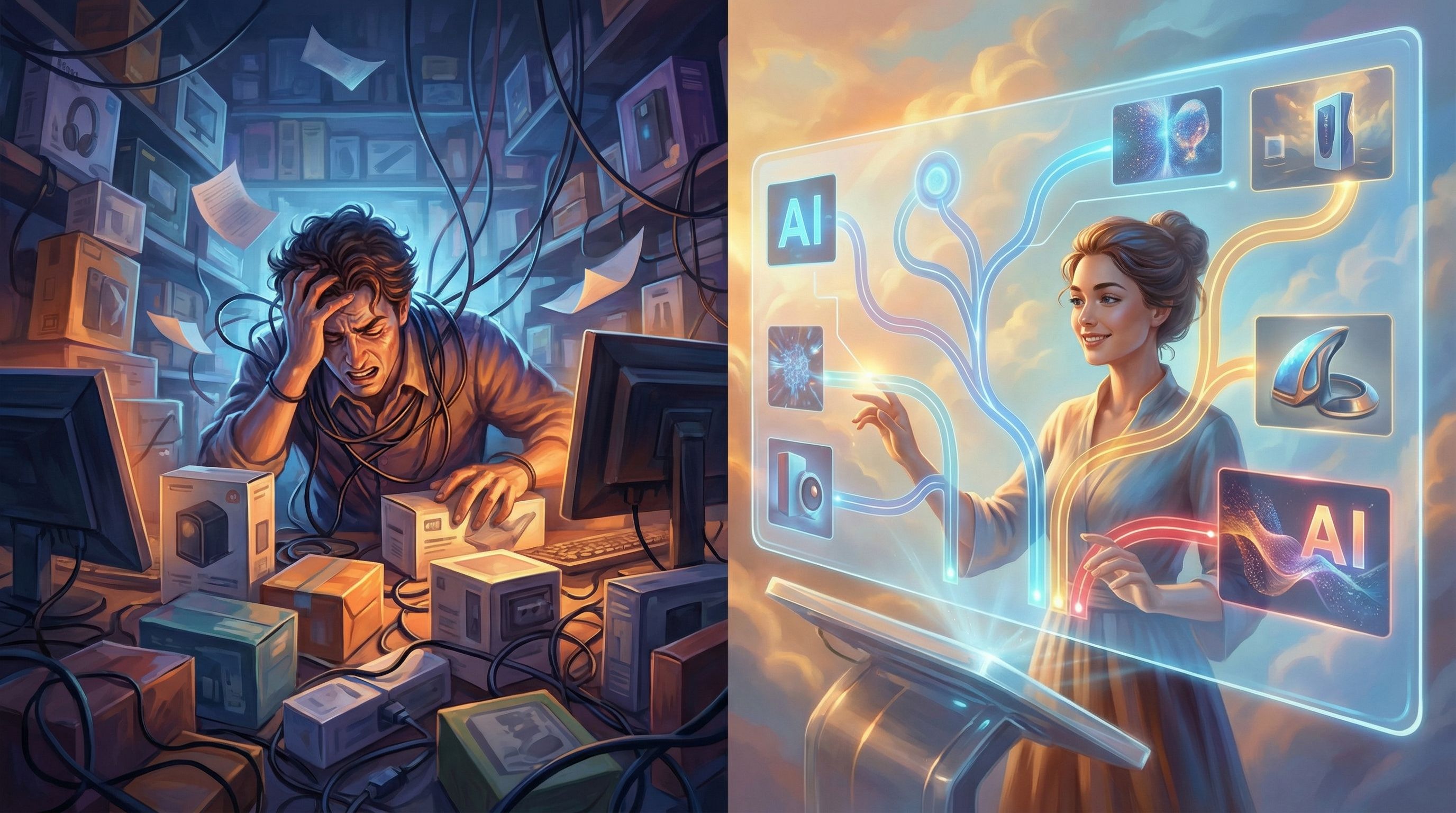
Designing Choices That Serve Both the Player and the Brand
Not all branches are created equal. Done poorly, branching feels like a quiz with no payoff. Done well, it becomes a consultation in story form.
Make every choice meaningful
A good rule of thumb: each choice should either reveal something about the user or change what they see next. Ideally both.
Avoid:
- Redundant forks (“Do you want to continue? Yes/No”) unless they genuinely change the path
- Trick questions or “gotcha” endings that punish curiosity
Aim for:
- Values and priorities: “What matters most right now—price, flexibility, or support?”
- Context: “How many people will use this in the next 6 months?”
- Constraints: “Do you need this live by next week, next month, or later this quarter?”
Tie branches to real outcomes
For each major branch, define:
- What the user gets: tailored recommendations, a customized checklist, a relevant case study, a particular CTA
- What the brand learns: segment, intent, urgency, objections
Examples:
- Users who prioritize speed might land on a “Quick Start” package and be routed to a shorter, self-serve onboarding.
- Users who emphasize security and compliance might branch into scenes that highlight certifications, audits, and governance features, with a CTA to talk to a specialist.
This is where integrating your Questas experience with marketing automation or CRM pays off: branches can map directly to segments and follow-up sequences.
Keep paths focused, but allow exploration
You don’t need infinite branches for an experience to feel personal.
A practical pattern:
- 2–3 primary paths (e.g., solo, team, enterprise)
- 2–3 key decisions per path
- 1–2 optional side explorations (e.g., “See a real customer story like yours”, “Peek at advanced features”) that loop back into the main flow
This keeps scope manageable while still giving users a feeling of agency and discovery.
For more on making those forks emotionally resonant, see Designing Meaningful Choices: How to Turn Simple Branches into Emotional Turning Points in Questas.
Measuring Success and Iterating Like a Game Designer
Once your interactive journey is live, treat it like a living product, not a one-off campaign.
Metrics that matter for branching brand journeys
Beyond the usual views and clicks, track:
- Completion rate: What percentage of users reach an ending or payoff?
- Drop-off scenes: Where do people bounce most often?
- Choice distribution: Which options are most/least selected?
- Downstream actions: Demo requests, add-to-cart, trial signups, or content downloads that follow specific paths
Interactive experiences often:
- Double or more the time on page vs. static content
- Improve lead qualification (with some studies showing 40–50% better scores)
- Lower cost per lead by 30–50% when used as part of acquisition funnels
Use these numbers to refine copy, rebalance branches, or add new scenes where interest is highest.
Playtest your experience
Before you ship widely, put your Questas journey in front of:
- Internal teams (sales, support, customer success)
- A handful of real customers or prospects
Ask them to think aloud as they click:
- “What do you expect to happen when you choose this?”
- “Where do you feel stuck or confused?”
- “Does this feel like your real-world decision process?”
Then iterate:
- Clarify confusing choices
- Shorten or split long scenes
- Add missing answer options you hear repeatedly
If you want a deeper framework for this process, Playtesting Your Questas Like a Game Designer: Scripts, Checklists, and What to Watch For walks through detailed testing workflows.
Putting It All Together: A Simple Blueprint You Can Start This Week
To recap, here’s a practical blueprint for turning a customer journey into a branching Questas experience:
-
Choose a single, high-impact journey
Discovery, comparison, onboarding, or renewal. -
Identify 3–7 meaningful decisions
Focus on moments that reveal priorities, context, or constraints. -
Pick a narrative frame
Guided consultation, scenario simulation, or exploration journey. -
Draft scenes in plain language
One scene per decision or payoff; keep copy tight and conversational. -
Build the flow in Questas
- Create scenes and connect branches visually.
- Add AI-generated images or micro-video where they clarify or heighten emotion.
-
Define outcomes for each path
Recommendations, tailored resources, or CTAs that match the user’s choices. -
Launch, measure, iterate
Watch completion rates, drop-off points, and downstream conversions. Refine like a product, not a one-off asset.
Summary
Branching narratives let brands turn abstract funnels into lived experiences.
By translating your customer journeys into interactive Questas adventures, you:
- Give customers real agency in how they learn about you
- Make complex offerings feel simple and tailored
- Collect rich, consent-based data that improves both marketing and product
- Create memorable, shareable experiences that stand out from static content
You don’t need a game studio or a custom engine. You need a clear understanding of your customers’ key decisions—and a visual, no-code tool that turns those decisions into playable stories.
Your Next Step
If this sparked ideas, don’t let them stay abstract.
- Pick one journey you wish felt more guided and more human.
- Sketch 3–5 key decisions your customer makes along that path.
- Open Questas and turn that sketch into a small, testable interactive experience.
Start small. Ship something. Watch how real customers move through your story. Then grow it, branch by branch, into a signature brand experience that no static page could match.
Adventure—and better customer journeys—await.