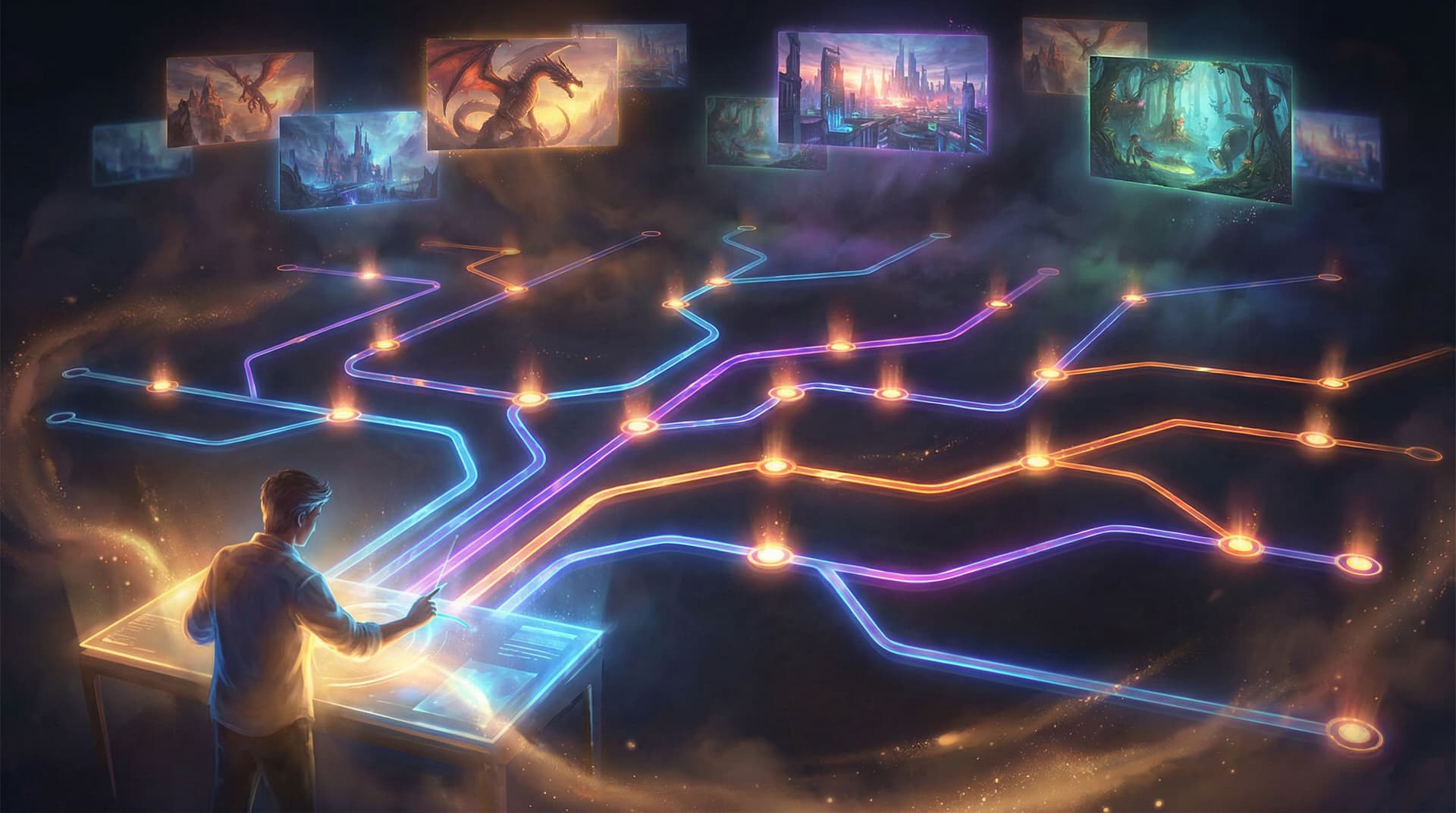
Designing Branching Narratives for Neurodiverse Audiences: Attention, Overwhelm, and Choice Architecture

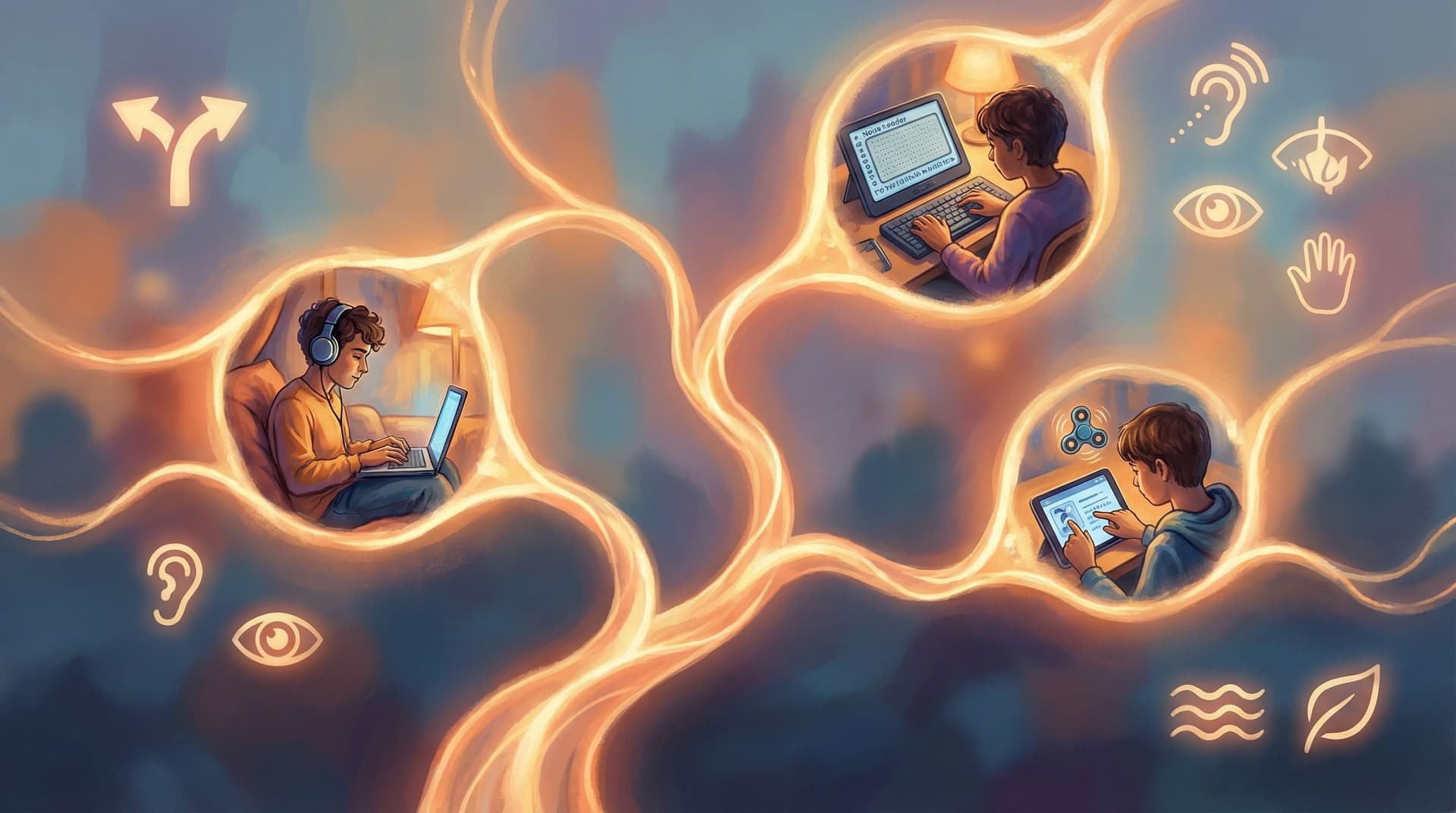
Designing interactive stories is always an act of empathy. When your audience includes ADHD, autistic, dyslexic, or otherwise neurodivergent players, that empathy has to be built into every click, branch, and visual.
You’re not just asking, “What happens next?” You’re asking:
- How much information can someone comfortably hold right now?
- What kinds of choices feel energizing vs. exhausting?
- What does “too much” look like—for text, visuals, sound, and stakes?
Thoughtful choice architecture and sensory-aware design can turn your branching narrative into a space where neurodiverse players feel seen, safe, and in control—instead of overwhelmed or shut out.
This post breaks down how to design those experiences, with practical patterns you can apply immediately in platforms like Questas, where a visual, no‑code editor and AI-generated visuals make it easier to shape both structure and sensory load.
Why Designing for Neurodiverse Minds Matters
Neurodiversity isn’t a niche. Estimates suggest:
- Around 15–20% of the population is neurodivergent (including ADHD, autism, dyslexia, dyspraxia, and more).
- ADHD alone is estimated at roughly 4–5% of adults and 5–7% of children globally.
- Autistic people are often 2–3x more likely to experience sensory overwhelm and anxiety in environments not designed for their needs.
When you design branching stories that work well for neurodiverse players, you’re not just being inclusive—you’re improving clarity, pacing, and usability for everyone.
Some specific benefits:
- Reduced cognitive overload → fewer drop‑offs mid‑story.
- More meaningful choices → players feel agency instead of decision fatigue.
- Higher replay value → clear structure makes it easier (and more fun) to explore alternate paths.
- Better accessibility → your stories become usable in classrooms, training programs, and workplaces that serve diverse learners.
If you’re already thinking about story rhythm and player attention (for example, as explored in From Branches to Beats: Using Story Rhythm to Keep Players Clicking in Long Questas), designing for neurodiversity is the next logical layer: it’s rhythm tuned to more kinds of minds.
Three Core Challenges: Attention, Overwhelm, and Choice
1. Attention Isn’t Just “Focus”
For many neurodivergent players, attention is less about having focus and more about directing it:
- ADHD players may hyperfocus on specific details and struggle with long, uninterrupted text blocks.
- Autistic players may focus deeply on patterns, rules, or specific characters and get frustrated when the story feels inconsistent or unpredictable.
- Dyslexic players may be fully engaged by your world but slowed down by dense paragraphs or small, low-contrast text.
Design question: How can I help players know what matters on this screen, right now?
2. Overwhelm Comes in Many Flavors
Overwhelm can be:
- Cognitive: too many new concepts, characters, or options at once.
- Sensory: flashing visuals, busy backgrounds, or harsh audio.
- Emotional: high-stakes choices without enough context or safety.
Neurodivergent players often hit these thresholds sooner. That doesn’t mean you need to “simplify” your story—it means you need to stage information and intensity more intentionally.
3. Choice Architecture Can Help or Hurt
The way you present choices can:
- Reduce anxiety (“I understand my options and what they mean.”)
- Or trigger shutdown (“I have no idea what this does and I’m afraid to click.”)
Good choice architecture:
- Limits the number of options at once.
- Describes outcomes clearly.
- Makes it easy to backtrack or try again.
If you’ve explored cognitive biases and player decisions in The Psychology of Choice: How Cognitive Biases Shape Player Decisions in Branching Stories, you already know how powerful framing and defaults can be. For neurodiverse audiences, that power needs to be used gently and transparently.
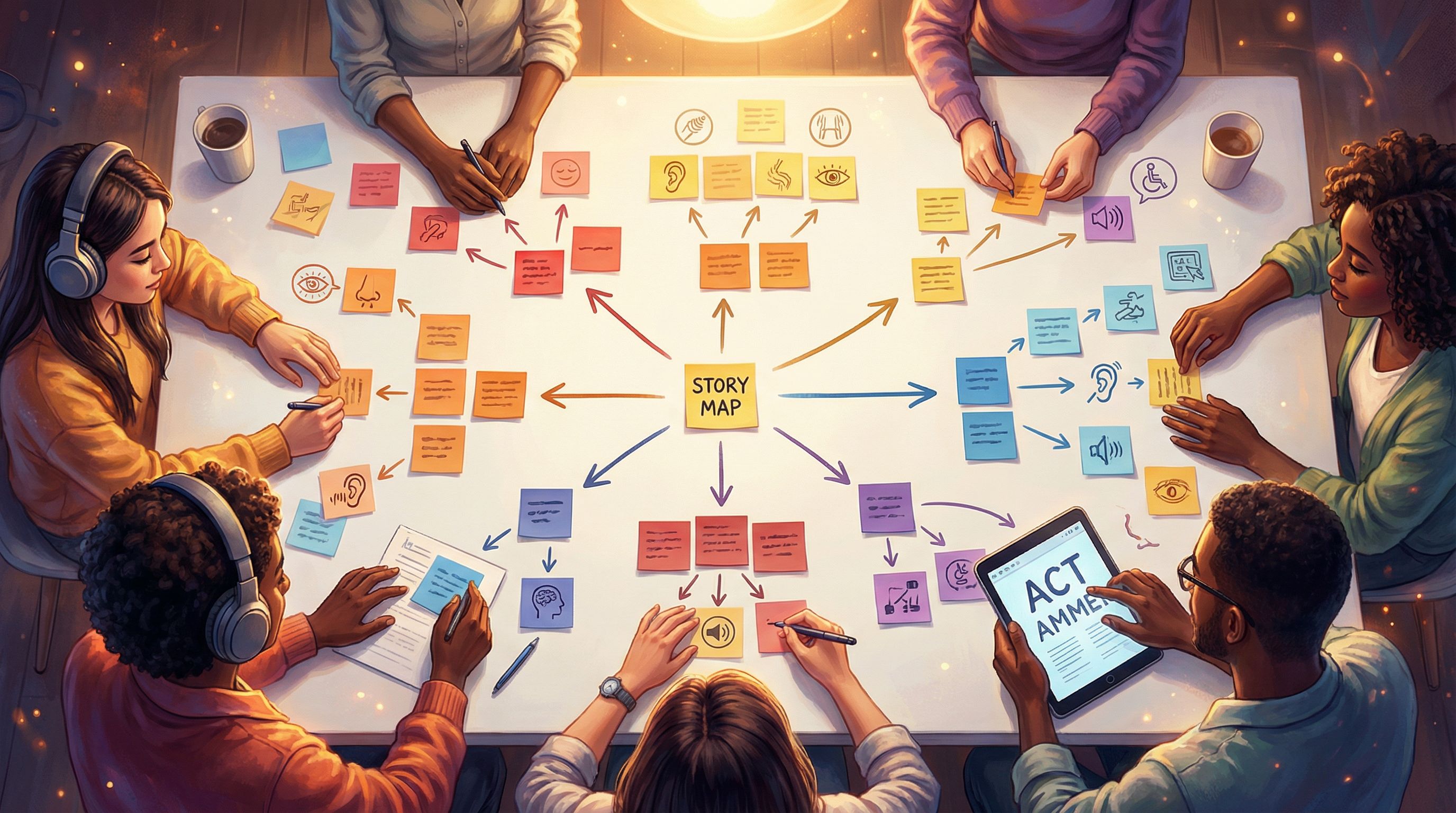
Structuring Branches for Brains That Tire Quickly
Keep Branch Density Manageable
A giant branching diagram might be fun for you as the creator. For many players, it’s exhausting.
Guidelines:
- 2–3 choices per node is a good default. Rarely go above 4.
- Use “nested” decisions: a simple choice now, with deeper choices later, instead of 6 complex options at once.
- Group related options together and label them clearly (e.g., Ask more questions, Act now, Step away).
In Questas, you can literally see your branches. Use that visual map to spot “decision clusters” that might be too dense and break them into smaller beats.
Use Clear, Predictable Patterns
Neurodivergent players often thrive on pattern and predictability:
- Use consistent scene structures (e.g., short recap → new info → choice).
- Repeat UI patterns for similar actions (e.g., “Ask” choices always on the left, “Act” choices on the right).
- Keep your branch depth balanced so one path doesn’t suddenly become twice as complex as another.
This is where reusable frameworks from posts like No-Code Narrative Systems: Designing Reusable Templates and Story Blueprints in Questas really shine. A stable template gives neurodivergent players a sense of “I know how this works, so I can focus on the story.”
Build In Safe On-Ramps
The first few scenes teach players how to read your story:
- Start with low-stakes choices that mostly affect flavor, not survival.
- Use short scenes at the beginning so players get used to your rhythm.
- Offer a “guided path” option early on (e.g., “Play with fewer choices and more guidance” vs. “Explore all branches freely”).
You can implement this guided path in Questas as a top-level branch that simply hides some optional detours and side quests.
Managing Cognitive Load: Text, Timing, and Transitions
Write for Working Memory, Not Just Style
Neurodivergent players may have more difficulty holding multiple new details in mind at once. Support them by:
- Chunking text into short paragraphs and bullet points.
- Using descriptive subheadings inside scenes when they’re longer.
- Adding micro-recaps:
- Before a major decision: “So far, you’ve…”
- After a branch: “Because you chose X, Y is now true.”
When you’re writing in Questas, consider a pattern like:
- One‑sentence summary at the top of the scene.
- 2–4 short paragraphs of detail.
- A recap sentence right before the choices.
Pace Information Releases
Instead of dropping all your lore, rules, or instructions at once:
- Introduce one new concept per scene when possible.
- Use tooltips or optional branches for deeper explanations (e.g., “Ask what that term means”).
- Gate complex mechanics behind earlier, simpler decisions so players feel prepared.
This kind of pacing is especially important in educational or training scenarios. For more on that angle, you might enjoy Beyond Gamification: What Learning Science Can Teach Us About Better Branching Stories.
Design Gentle Transitions Between Emotional States
Sudden tonal whiplash can be especially jarring for neurodivergent players.
- Use content warnings at the start or before intense scenes.
- Signal tone changes with visuals, music, or color shifts.
- Let players opt out of certain themes via a branch (e.g., “Skip scenes involving medical emergencies”).
In Questas, you can:
- Tag scenes that involve specific triggers.
- Provide alternate branches that summarize key plot points without the intense content.
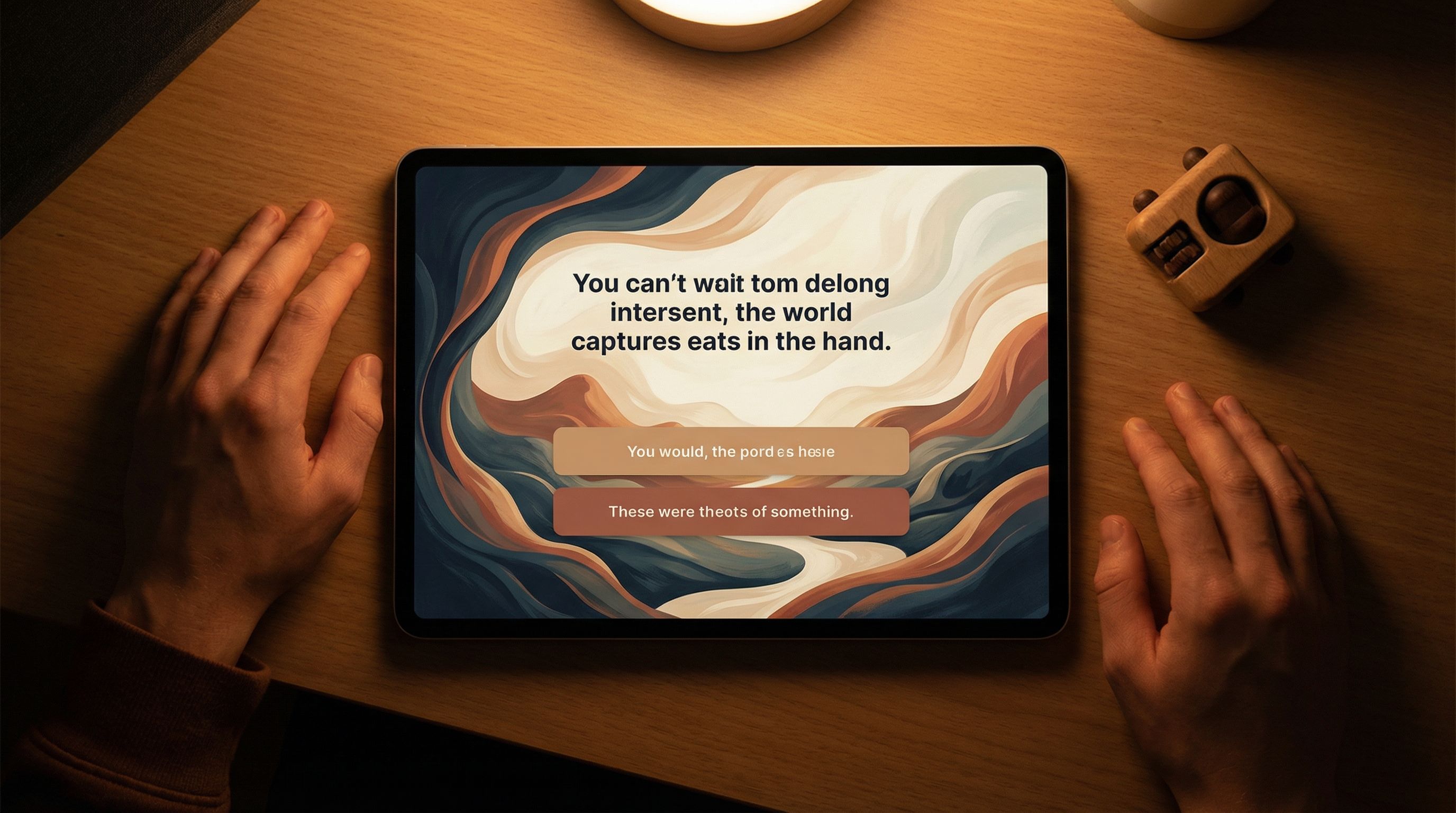
Sensory Design: Images, Audio, and Motion
Neurodivergent players often experience sensory sensitivity or sensory seeking—and sometimes both, depending on context. Your visuals and audio can either support focus or completely derail it.
Calibrate Visual Intensity
When using AI-generated images and video:
- Prefer clean compositions over cluttered scenes.
- Avoid rapid flicker, heavy grain, or aggressive glitch effects.
- Use muted or limited color palettes for calm scenes; save saturated color for key moments.
- Keep a consistent visual style so players aren’t constantly re-orienting.
If you’re experimenting with styles, AI Visual Styles 101: Matching Your Questas Imagery to Genre, Tone, and Audience offers a deeper dive on coherence.
Make Motion Optional, Not Mandatory
Micro‑cutscenes and looping video can be powerful, but for some neurodivergent players they’re distracting or even nauseating.
- Allow players to disable or reduce motion where possible.
- Use motion to highlight cause and effect, not as background noise.
- Keep loops short and subtle; avoid large objects swinging across the frame.
Inside Questas, you can create alternate scenes that swap video loops for static images when a player chooses a “low motion” mode at the start.
Use Audio Sparingly and Intentionally
If your story includes sound:
- Provide volume controls and a mute option.
- Avoid sudden loud sounds, especially after quiet scenes.
- Use audio to reinforce clarity (e.g., a soft chime when a new choice appears) rather than constant background tracks.
For many neurodivergent players, silence is not empty—it’s a relief. Let them choose it.
Building Kinder Choice Architecture
Choice architecture is the invisible structure that shapes how players make decisions. For neurodiverse audiences, your goal is to make that structure legible, forgiving, and empowering.
Limit Choices, Expand Clarity
Instead of offering five slightly different options:
- Offer 2–3 clearly distinct choices.
- Describe intent and likely direction, not just flavor text.
- Vague: “Take a risk”
- Better: “Take a risky shortcut that might save time but could trigger security alarms.”
You’re not spoiling the story by doing this—you’re reducing anxiety about hidden, catastrophic outcomes.
Label Choices by Type
Neurodivergent players often appreciate categorization:
- Use prefixes like [Ask], [Act], [Reflect], [Explore] before choice text.
- Color-code or icon-code consistent categories (e.g., a question mark icon for information‑seeking choices).
This helps players quickly scan for the kind of action they feel ready for.
Design Soft Landings, Not Hard Fails
Failure and missteps are part of interactive stories—but they don’t have to be punishing.
- Use soft fails where something goes wrong but the story continues.
- Offer clear ways to backtrack, reroute, or try again without losing all progress.
- Frame outcomes as learning moments, not judgments on the player.
For a deeper exploration of this, check out Designing ‘Soft Fails’: How to Let Players Backtrack, Reroute, and Recover Inside Questas Adventures.
In Questas, you can:
- Create loops that bring players back to a previous decision with new information.
- Use small badges, notes, or character reactions to acknowledge what they learned, even when things “go wrong.”
Offer Meta-Choices About the Experience Itself
One of the most powerful tools for neurodiverse accessibility is letting players customize how they engage:
At or near the start of your story, consider a brief “setup scene” where players can choose:
- Reading mode: standard vs. concise summaries.
- Choice density: full branches vs. guided path.
- Sensory level: full visuals and motion vs. low-stimulation mode.
- Content boundaries: opt out of specific themes.
These meta-choices can toggle tags or branches in Questas that adjust what scenes and assets players see, without requiring you to build entirely separate stories.
Example Patterns You Can Steal
Here are some ready-to-use patterns you can adapt directly into your next interactive project:
-
The Three-Beat Decision
- Beat 1: One-sentence recap of what just happened.
- Beat 2: New information, limited to one main idea.
- Beat 3: 2–3 choices, labeled by type (e.g., [Ask], [Act], [Pause]).
-
The Calm Corner Branch
- At any intense moment, include an option like “Step away and regroup”.
- That branch leads to a short, low-stimulation scene: quiet visuals, recap, maybe a supportive NPC.
- From there, players can return to the main path with slightly more context or reduced stakes.
-
The Guided Replay
- After a full run, offer a “Replay with highlights” mode.
- This version shows only key scenes, with summaries of skipped content.
- Great for neurodivergent players who want to explore alternatives without re-reading everything.
-
The Transparent Consequence Preview
- Before a big decision, show a brief note like: “This choice affects: who trusts you later / how much time you have / which location you visit next.”
- You’re not spoiling the twist; you’re helping players decide what they care about.
Bringing It All Together
Designing branching narratives for neurodiverse audiences isn’t about diluting your story. It’s about making the structure, stakes, and sensory experience legible to more kinds of minds.
Key principles to keep in view:
- Focus the moment. Make it obvious what matters on each screen.
- Respect thresholds. Stage complexity, intensity, and sensory load.
- Be transparent. Label choice types and hint at consequences.
- Stay forgiving. Use soft fails, backtracking, and guided paths.
- Offer control. Let players set preferences for text, choices, and sensory levels.
Tools like Questas give you the scaffolding—visual maps, AI visuals, and no‑code branching—to implement these ideas without wrestling with custom code.
Where You Can Start This Week
If you’re feeling inspired but a bit overwhelmed, here’s a simple starting checklist:
- Pick one existing or planned story.
- Do a quick audit:
- Any scenes with more than 4 choices?
- Any long text blocks without recaps?
- Any sudden tonal or sensory shifts?
- Apply just three improvements:
- Reduce choice count in one dense scene.
- Add a one-sentence recap before a major decision.
- Create a “calm corner” branch in your most intense moment.
- Playtest with a neurodivergent friend or colleague (if they’re comfortable) and ask specific questions:
- “Where did you feel tired?”
- “Where did you feel unsure what to click?”
- “Where did the visuals or audio feel like too much?”
- Iterate once based on that feedback—then move on to the next story.
Over time, these patterns will become second nature. Your default way of building will naturally include more people.
Summary
Branching narratives are uniquely powerful for neurodiverse audiences because they offer agency, personalization, and multiple ways through a world. But that power only lands when attention, overwhelm, and choice architecture are designed with care.
By:
- Limiting and clarifying choices,
- Managing cognitive and sensory load,
- Using soft fails and guided paths,
- And giving players meta-control over how they experience your story,
…you can create interactive adventures where more people feel welcome, capable, and curious enough to keep exploring.
Your Next Step
If you’re ready to put these ideas into practice, open up a new project in Questas and design one small, neurodiversity-aware vignette:
- 5–10 scenes.
- 2–3 choices per node.
- A calm corner branch.
- A simple setup scene where players choose between a guided path and full exploration.
Then share it with a few players and watch how they move through it. You’ll learn more from one thoughtful playtest than from a dozen theoretical diagrams.
Adventure awaits—not just for your players, but for you as a designer learning to build worlds that truly fit more kinds of minds.