From Branches to Beats: Using Story Rhythm to Keep Players Clicking in Long Questas

From Branches to Beats: Using Story Rhythm to Keep Players Clicking in Long Questas
Interactive stories don’t lose players because you ran out of ideas.
They lose players because you ran out of rhythm.
You can have rich worldbuilding, gorgeous AI art, and dozens of branches… but if your pacing goes flat, people quietly stop tapping. The good news: rhythm is a design problem you can solve—especially when you’re building on Questas, where your choices, scenes, and visuals are all laid out in a visual, no‑code editor.
This post is about how to shape story rhythm—the pattern of tension, release, choices, and payoffs—so players keep clicking all the way through even your longest adventures.
Why Rhythm Matters More as Your Quests Get Longer
Short Questas can get away with chaos. A few big choices, some punchy art, a twist ending—done.
Longer stories are different. Once you pass 15–20 scenes or multiple major branches, you’re asking players for real time and attention. Rhythm becomes the difference between:
- “Whoa, I didn’t realize I’d been playing for 20 minutes.”
- “I’ll come back to this later.” (They won’t.)
Thoughtful rhythm helps you:
- Reduce drop‑off: Well‑timed choices and reveals give players a reason to take “just one more step.”
- Make complexity feel manageable: Alternating high-intensity decision points with calmer, clarifying beats keeps big branching maps from feeling overwhelming.
- Highlight what matters: Not every moment should shout. Rhythm lets you spotlight key decisions and let others glide by.
- Support replayability: When beats are intentional, repeat runs feel like variations on a song, not random noise. (If you’re designing for replays, pair this post with Writing for Re-Reads: Narrative Techniques That Reward Players Who Replay Your Questas.)
If structure is what happens, rhythm is when and how often it happens.
Thinking in Beats, Not Just Branches
When you’re building in Questas, it’s tempting to think scene‑by‑scene: What happens next? What choice comes after that?
Instead, zoom out and think in beats:
- A beat is a unit of experience: a reveal, a decision, a moment of reflection, a short burst of action.
- A sequence is a cluster of beats that accomplish something: introduce a problem, escalate stakes, deliver a payoff, open a new question.
For long Questas, a useful mental model is:
Every 3–5 beats, something needs to noticeably shift
(stakes, information, location, relationship, or goal).
That shift is what keeps players from feeling like they’re stuck in a loop.
Try tagging each scene in your outline with one of these beat types:
- Hook – pulls the player in (mystery, promise, vivid image)
- Choice – the player must decide something meaningful
- Consequence – they see the impact of a previous choice
- Breather – lower intensity, reflection, or light interaction
- Escalation – tension rises; new risk or complication
- Reorientation – recap, clarify goals, or show the map of what’s at stake
- Payoff – a reward, reveal, or emotional closure
Once you label beats, you’ll start to see where your rhythm clumps or stalls.
Mapping Rhythm Across Branches
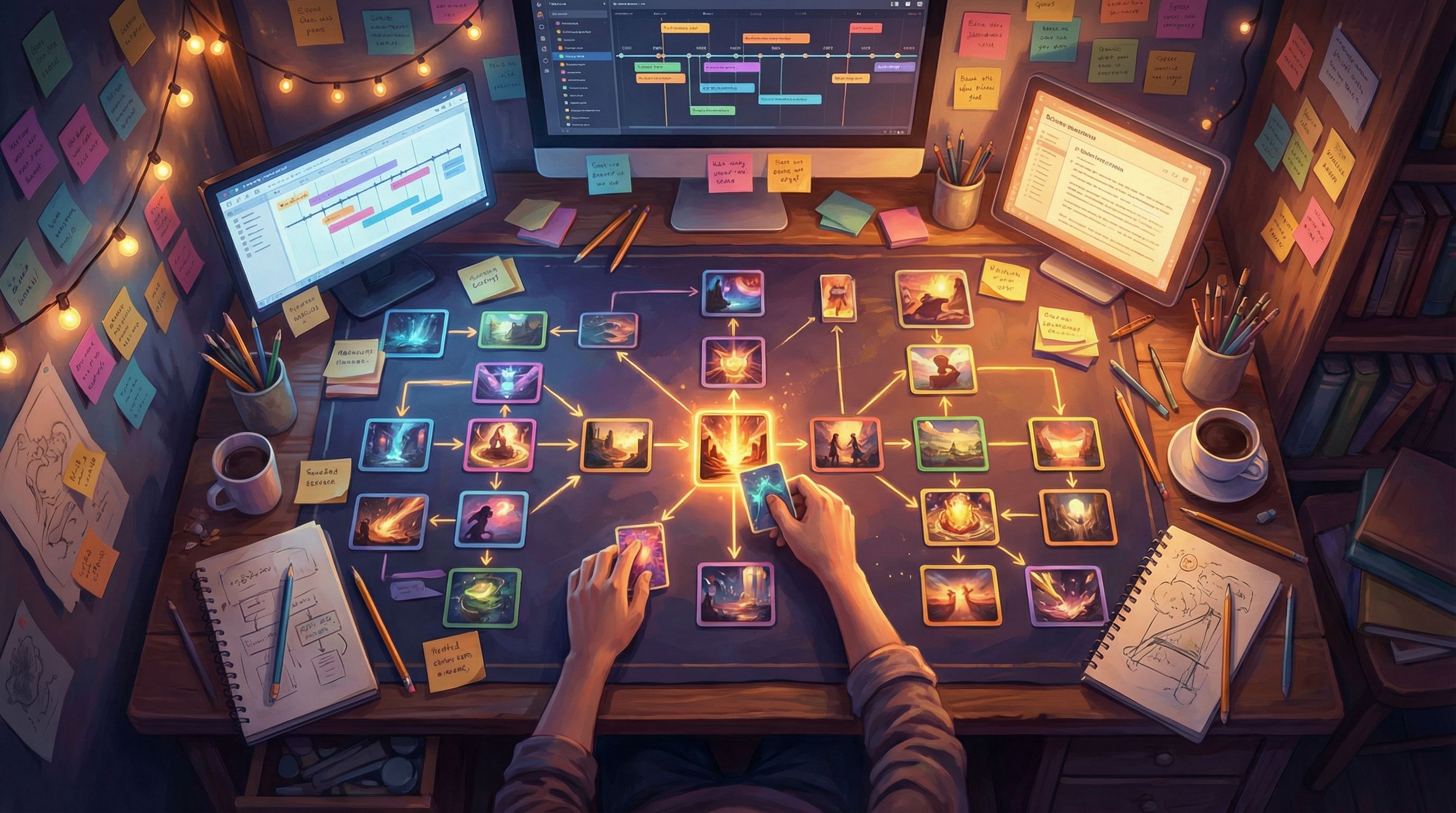
Rhythm gets tricky once your story branches. One path might be full of action, another more contemplative. That’s fine—but you don’t want one branch to feel like a thrilling album and another like a single droning note.
1. Set a Target “Beat Density”
For a long Quest, pick a simple rule of thumb, like:
- At least one meaningful choice every 3 scenes on any path.
- A noticeable shift (reveal, escalation, payoff) every 4–6 scenes.
Then, in your Questas project:
- Open your story map.
- Trace each major path from entry to exit.
- Count how many scenes between:
- Choices
- Major reveals or payoffs
- Mark any stretches that feel like “dead zones” (too many similar beats in a row).
If one branch goes 6–8 scenes with no real decisions or shifts, that’s a rhythm problem—no matter how good the writing is.
2. Use “Anchor Beats” Across Paths
Anchor beats are shared moments that echo across multiple branches:
- A recurring character confrontation
- A checkpoint where the player reviews what they’ve learned
- A mid‑story twist everyone eventually reaches, though from different angles
These anchors help you:
- Keep pacing consistent even when details differ
- Reinforce themes and core conflicts
- Give returning players familiar “choruses” that feel satisfying when revisited
If you’re building big universes with recurring characters, this idea pairs well with the organizing techniques in The New Story Bibles: Organizing Lore, Timelines, and Character Arcs for Large Questas Universes.
3. Design “Tempo Changes” Intentionally
Not every sequence should run at the same speed. Great long-form Questas often:
- Speed up near pivotal decisions (shorter scenes, more frequent choices)
- Slow down right after big consequences (space for reflection or exploration)
Ask yourself for each chapter or act:
- Where do I want players to feel rushed or pressured?
- Where do I want them to feel safe to explore?
Then adjust:
- Scene length – shorter for urgency, slightly longer for reflection
- Number of choices – more frequent for intensity, fewer for calm
- Visuals – sharper contrasts and motion for high tempo; softer, static images for low tempo
Micro-Rhythm: Keeping Each Scene Snappy
Macro-rhythm is the big picture. Micro-rhythm is what players feel right now in a single scene.
For each scene, aim for a tight internal flow:
- Orient – One or two lines that say where we are and what’s happening.
- Focus – What is the immediate tension or question?
- Turn – Something shifts: new info, a reaction, a surprise.
- Invite – A choice, a prompt, or a clear next click.
Some practical tips:
- Cut preambles: Move the interesting part to the top third of the scene.
- Front‑load stakes: Let players know early why this moment matters.
- Use short paragraphs and scannable text: Especially important if you’re targeting mobile and social entry points (see Designing for Drop‑In Play: How to Build Questas Stories That Work Great on Mobile and Social Feeds).
- End on a hook: Even if there’s no explicit choice, end with a question, a hint of danger, or a promise.
In Questas, it’s easy to test micro-rhythm: play through a path and notice where your eyes start to skim. That’s a sign the beat has gone on too long without a turn.
Using Visuals and Audio as Rhythm Instruments
Because Questas supports AI‑generated images and looping video, your rhythm isn’t just in the words—it’s in the visuals.
Visual Rhythm
Use imagery to signal when the “beat” changes:
- Consistent style, shifting composition: Same art style, but tighter close‑ups for intense moments and wider shots for breathers.
- Color and contrast:
- High contrast, saturated colors for high‑stakes scenes.
- Softer palettes for reflective or expository beats.
- Recurrent visual motifs: A symbol, color, or object that appears whenever stakes rise (e.g., warning lights, storm clouds, a specific sigil).
If you’re refining your visual language, the guidance in AI Visual Styles 101: Matching Your Questas Imagery to Genre, Tone, and Audience can help you keep everything coherent while still using visuals to modulate pace.
Motion and Micro‑Cutscenes
Short AI video loops—what we’ve called micro‑cutscenes in another post—can act like drum fills between verses:
- A quick loop when a door slams shut on a choice
- A flicker of glitching UI when a system fails
- A subtle, looping background animation to keep calm scenes from feeling static
Use them sparingly. Too many moving pieces flatten the rhythm into constant noise. Save motion for:
- Branch points
- Major reveals
- Moments of failure or transformation
Designing Loops, Detours, and “Soft Fails” Without Killing Momentum
Long Questas often include:
- Optional side paths
- Exploration hubs
- Failure states and recoveries
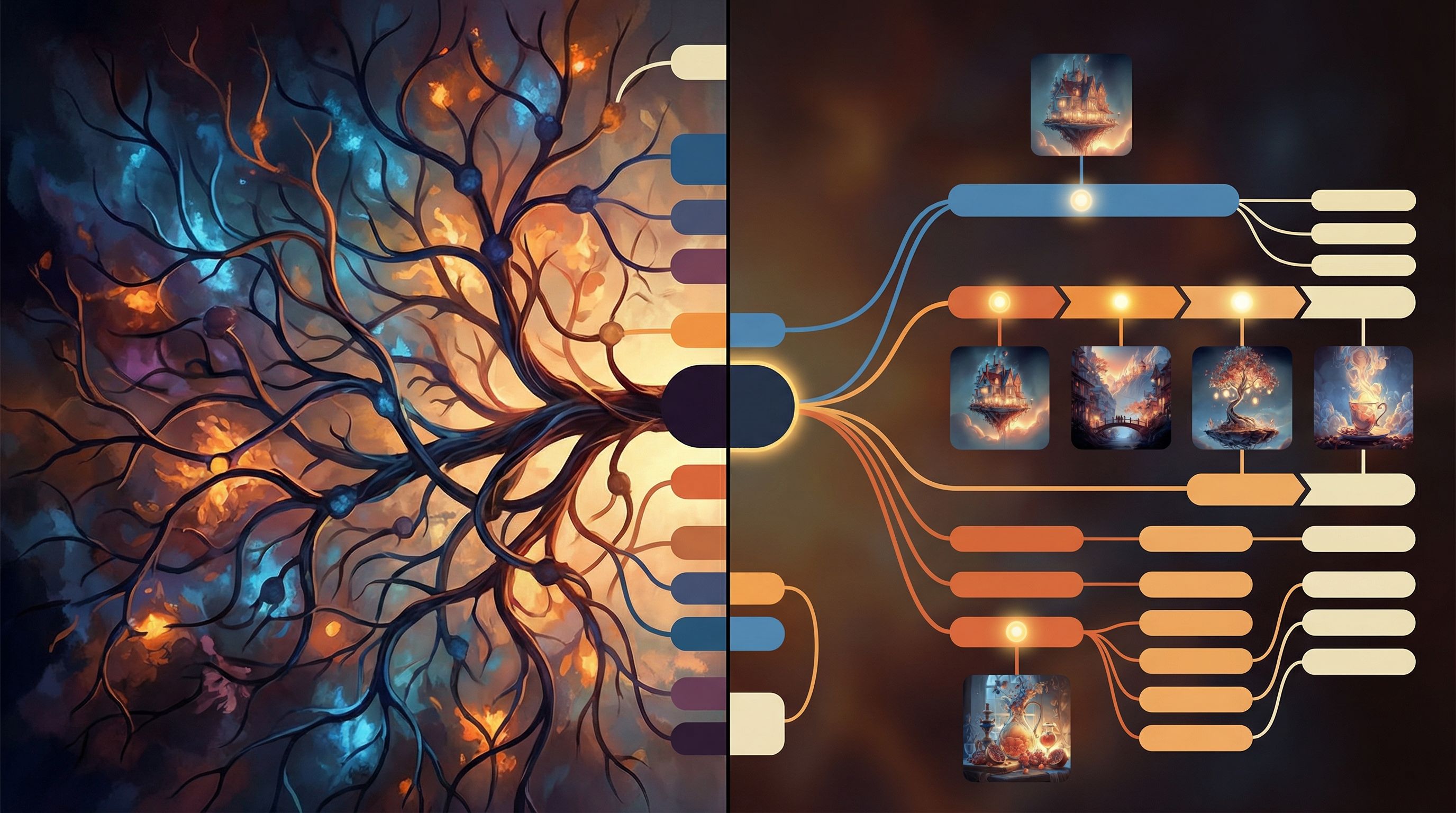
These are great for depth—but they can wreck rhythm if they feel like stalls.
Loops and Hubs
Exploration hubs (like a base camp, starship, or office) work best when they:
- Offer clear goals: e.g., “Gather three clues before confronting the suspect.”
- Provide varied beat types: one comedic interaction, one tense conversation, one puzzle.
- Advance something each time you return: new NPCs, changed scenery, higher stakes.
If players loop back to a hub and nothing has changed, the rhythm flatlines.
Soft Fails That Propel the Story
When players “fail”—pick the risky option, overlook a clue, or misjudge a character—use that moment as a beat accelerator, not a brake.
Good soft fails:
- Deliver a memorable consequence (loss, damage, social fallout)
- Reveal new information they wouldn’t otherwise see
- Offer a clear path forward (reroute, backtrack, or try again with a twist)
If you want a deeper dive on this, check out Designing ‘Soft Fails’: How to Let Players Backtrack, Reroute, and Recover Inside Questas Adventures.
Rhythm rule of thumb:
A failure state should change the tempo, not stop the song.
Practical Workflow: Building Rhythm into Your Questas from the Start
You don’t have to bolt rhythm on at the end. You can design it into your process.
Step 1: Outline with Beat Labels
Before you build scenes in Questas:
- Sketch your main path(s) as a simple list.
- Mark each planned scene with a beat type (Hook, Choice, Consequence, etc.).
- Add a note every 3–5 beats: “Something must shift here.”
If you’re already using AI to help outline, you can adapt the workflow from From Prompt Chaos to Polished Quest: A Practical Workflow for Outlining Branching Stories with AI and simply add beat tags to your prompts.
Step 2: Block Out “Rhythm Landmarks” in the Editor
Inside Questas:
- Create placeholder scenes for your anchor beats (midpoint twist, major reveal, climactic choice).
- Use colors, naming conventions, or tags to mark:
- High‑intensity sequences
- Breather zones
- Hubs/loops
This gives you a visual rhythm map before you write detailed prose.
Step 3: Draft in Passes, Not Perfect Paths
Instead of perfecting one path at a time:
- Do a “choice pass”: Make sure each path has decisions at your target frequency.
- Do a “shift pass”: Ensure every 3–5 scenes something meaningful changes.
- Do a “hook pass”: Sharpen the first and last 2–3 lines of each scene.
- Do a “visual pass”: Add or adjust images/videos to emphasize tempo changes.
This layered approach keeps you from over‑polishing one branch while others lag.
Step 4: Playtest for Feel, Not Just Bugs
When you or your testers run through the story, ask:
- Where did you almost stop?
- Where did you want more time before moving on?
- Which branches felt too short or too long?
Have them mark timestamps or scene IDs. Then look for patterns:
- Many players slow down in the same exposition-heavy stretch? Add a choice or a reveal.
- Everyone races through a high‑stakes section? Consider adding a brief breather to let tension land.
Summary: Turning Branches into a Beat You Can Dance To
Long Questas live or die on rhythm. To keep players clicking all the way through:
- Think in beats, not just branches: Label scenes by their function (hook, choice, consequence, breather, escalation, payoff).
- Balance beat density across paths: Avoid long stretches with no decisions or meaningful shifts.
- Use anchors and tempo changes: Shared key moments and intentional speed‑ups/slow‑downs make the experience feel composed, not chaotic.
- Shape micro-rhythm inside each scene: Orient, focus, turn, invite.
- Let visuals carry some of the rhythm: Composition, color, and motion can signal when the story’s tempo rises or falls.
- Design loops and soft fails to move things forward: Failure and exploration should accelerate or deepen the story, not stall it.
- Build rhythm into your workflow: Outline with beat tags, block rhythm landmarks, draft in passes, and playtest for feel.
Do this, and your players won’t just follow branches—they’ll feel like they’re riding a song they don’t want to pause.
Your Next Step: Compose Your First Rhythmic Quest
You don’t need a giant universe to start experimenting with rhythm.
Here’s a simple challenge you can tackle this week:
- Open Questas and start a new story.
- Plan three sequences of 5–7 scenes each: a beginning, a middle, and an ending.
- Tag every scene with a beat type and make sure something shifts at least every 3–5 beats.
- Add AI-generated visuals that emphasize tempo changes—close‑ups for intensity, wide shots for breathers.
- Share the link with a friend or colleague and ask one question: “Where did you almost stop?” Then tweak your beats.
You’ll be surprised how quickly your stories feel more alive when you start designing with rhythm in mind.
Adventure awaits—go give your branches a beat.