Writing for Re-Reads: Narrative Techniques That Reward Players Who Replay Your Questas

Interactive stories don’t end when the credits roll.
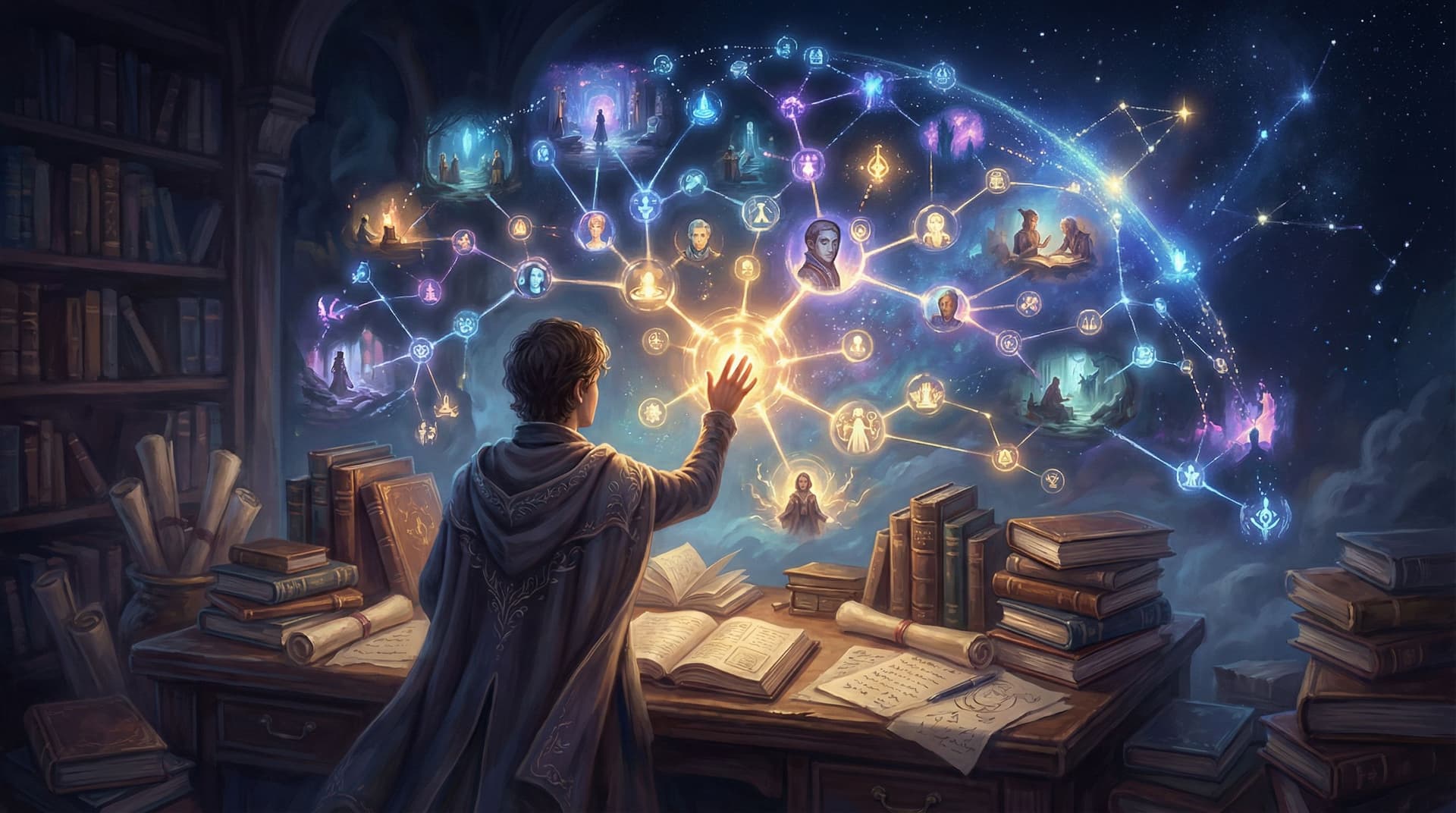
If you’re building on Questas, you’re not just shipping a single, linear experience—you’re creating a system your audience can explore again and again. The difference between a “one-and-done” story and a replay magnet often comes down to how intentionally you write for re-reads.
Replayable stories:
- Deepen emotional impact with each run
- Reveal new layers of theme, character, and worldbuilding
- Turn casual players into dedicated fans who share and discuss your work
This post is all about that craft: specific narrative techniques that make players want to replay your Questas experiences—and feel rewarded when they do.
Why Replay Value Matters for Your Questas
When someone finishes your story and instantly thinks, “Okay, but what if I choose differently next time?”, three powerful things happen:
- Engagement compounds. Each replay means more time with your world, your ideas, or your training content.
- Learning sticks. In educational or onboarding scenarios, revisiting branches reinforces concepts from different angles.
- Word-of-mouth grows. People naturally talk about “hidden” content, surprise endings, and clever callbacks.
Replay value isn’t just for games. It’s just as important if you’re:
- Turning knowledge bases into interactive journeys (see how in From Lore Docs to Learning Paths)
- Designing narrative funnels for marketing campaigns (Brand Worlds, Not Banners)
- Building training simulations or safety scenarios (From Safety Drills to Story Thrills)
Replay-friendly writing transforms your Questas projects from “content” into experiences.
Principle #1: Design Secrets, Not Just Branches
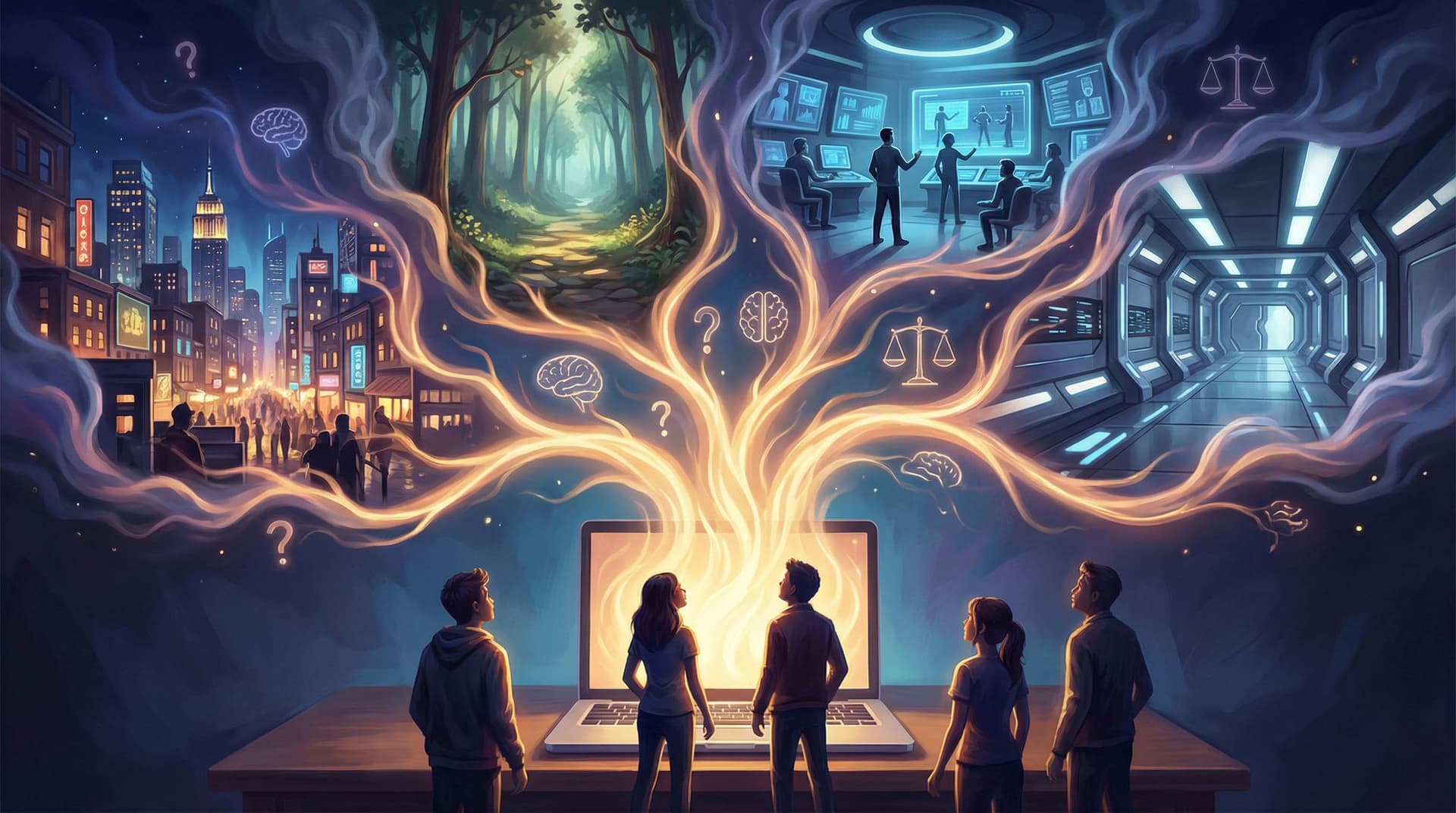
A lot of creators equate replay value with “more endings.” But endings alone don’t guarantee replays. What keeps people coming back is the feeling that there’s more to discover.
Think in terms of secrets:
- Hidden scenes
- Alternate perspectives
- Optional lore
- Variant outcomes to the same choice
Techniques to Try
1. Seed unobtrusive hints on the first run.
Drop small, intriguing details that don’t fully pay off—yet.
- A side character who seems oddly informed
- A symbol that shows up in multiple locations
- A line of dialogue that feels like foreshadowing but never resolves
On replay, players notice these details earlier and feel clever for connecting the dots.
2. Gate content behind knowledge.
Let certain branches only unlock if the player has seen something before.
On Questas, you can:
- Use variables/flags in your narrative logic (e.g.,
hasSeenLibrarySecret = true) to unlock new choices - Write scenes that explicitly acknowledge prior knowledge: “You remember the warning from the librarian…”
3. Create “echo scenes.”
Design a scene that appears in multiple routes, but with subtle differences based on previous choices.
For example:
- The same marketplace appears in two timelines—but in one, a protest is brewing; in another, it’s eerily calm.
- The same mentor character gives different advice depending on whether you trusted them earlier.
Echo scenes make replays feel familiar and fresh.
Principle #2: Write for Multiple Perspectives
One of the strongest replay hooks is: “What was really going on with that other character?”
Instead of writing a single protagonist, design your Questas project so different playthroughs feel like different camera angles on the same events.
Ways to Use Perspective for Replays
1. Character-swapping runs.
On first playthrough, players control Character A. On subsequent runs, they can:
- Play as Character B, whose earlier “mysterious” actions now make sense
- Experience the same key scenes from the other side of a conflict
2. Asymmetric information.
Give each perspective different knowledge and blind spots.
- The detective knows the official case file but not the victim’s secrets.
- The victim’s friend knows emotional context but not the timeline.
When players replay, they’re not just seeing new text—they’re re-evaluating everything they thought they knew.
3. Reframed choices.
A choice that seemed selfish from one angle might look selfless from another. Use this to:
- Challenge assumptions about “good” and “bad” endings
- Explore themes like bias, loyalty, or incomplete information
If you’re interested in how players actually make those choices, The Psychology of Choice is a great companion read.
Principle #3: Layer Foreshadowing and Payoffs Across Runs
Replayable stories reward pattern recognition. You can design for that by layering foreshadowing in a way that:
- Feels subtle on the first run
- Feels obvious (and satisfying) on the second or third
A Practical Foreshadowing Framework
Use this three-layer approach:
- Surface hints (first-run friendly)
- Visual motifs in your AI-generated images (e.g., a recurring crow, a color shift before danger)
- Repeated phrases or metaphors
- Mid-layer clues (for attentive players)
- Optional dialogue choices that reveal partial truths
- Side scenes that suggest alternate explanations
- Deep confirmations (for replayers)
- Branches that only unlock if a player has seen key scenes before
- Endings that explicitly reframe earlier events (“This was never about the artifact—it was about who chose to pursue it.”)
On Questas, you can reinforce these layers visually:
- Use consistent visual motifs with prompts (e.g., “a faint red thread visible in the background of each scene where the curse is active”)
- Introduce micro-cutscenes or AI video loops at pivotal payoffs (for more on that, see Storytelling with AI Video Loops).
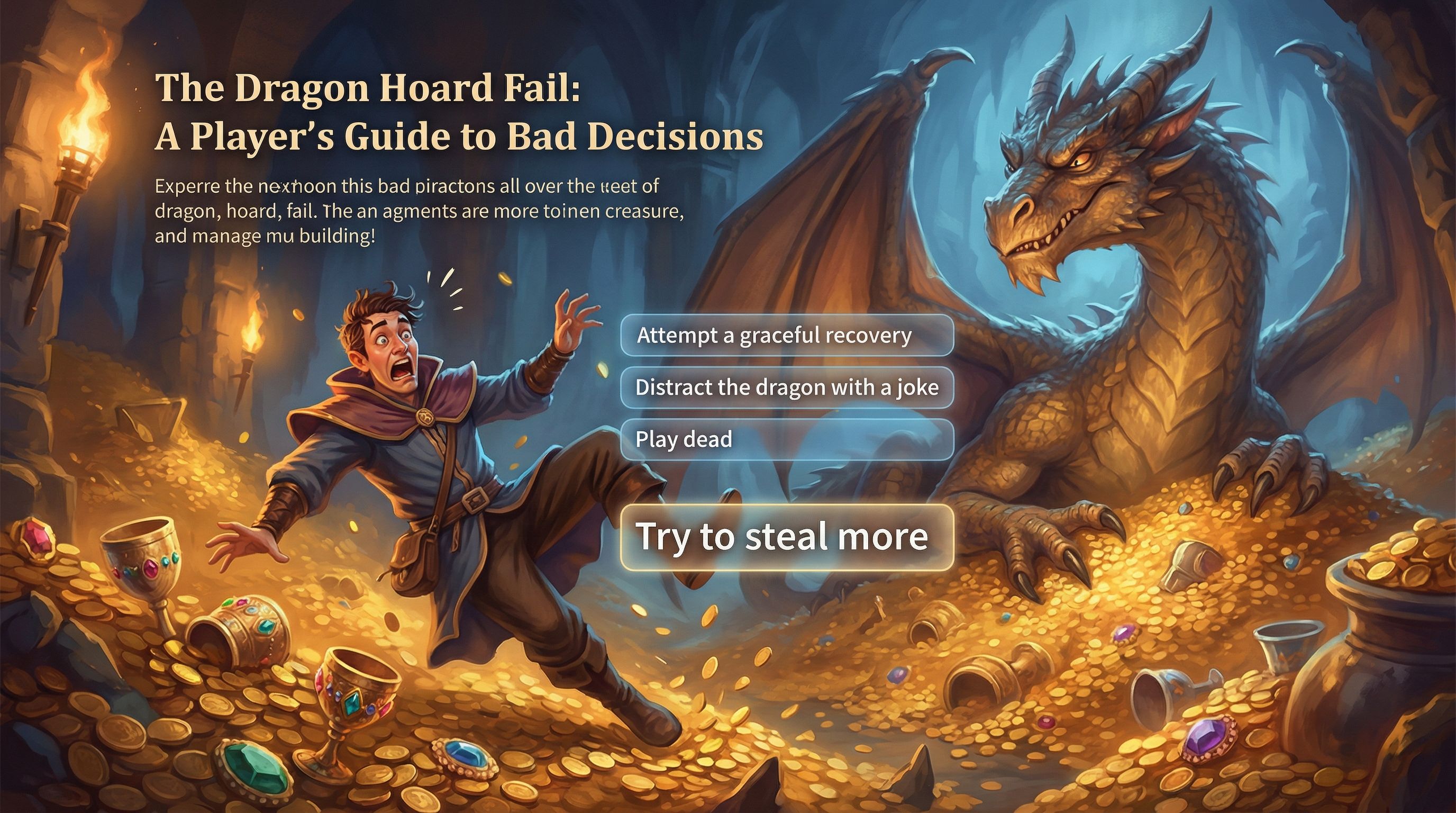
Principle #4: Make Failure Routes Worth the Trip
If every “wrong” choice leads to a boring dead end, players quickly learn not to experiment. But if failure paths are:
- Funny
- Insightful
- Packed with unique scenes
…then players will seek them out on replays.
How to Design Delicious Failures
1. Give failure its own story.
Don’t just say “Game over.” Instead:
- Show consequences in a vivid, specific way
- Reveal information that’s only accessible through that failure
2. Use failure as a hint system.
Treat some failures as “what not to do” tutorials that unlock better play later.
- A failed negotiation reveals your opponent’s true motives
- A disastrous heist shows you the security layout
3. Let failure transform future runs.
In long-form Questas campaigns, you can:
- Track failures with flags and subtly alter future scenes (“You still remember the last time you trusted a stranger in a red coat.”)
- Offer new options like “Avoid the mistake you made last time” or “Try the risky path again, but smarter.”
For a deeper dive into crafting satisfying “bad” outcomes, check out Designing Failure Safely.
Principle #5: Structure Your World for Loops and Returns
Replay-friendly writing is much easier when your story structure supports it.
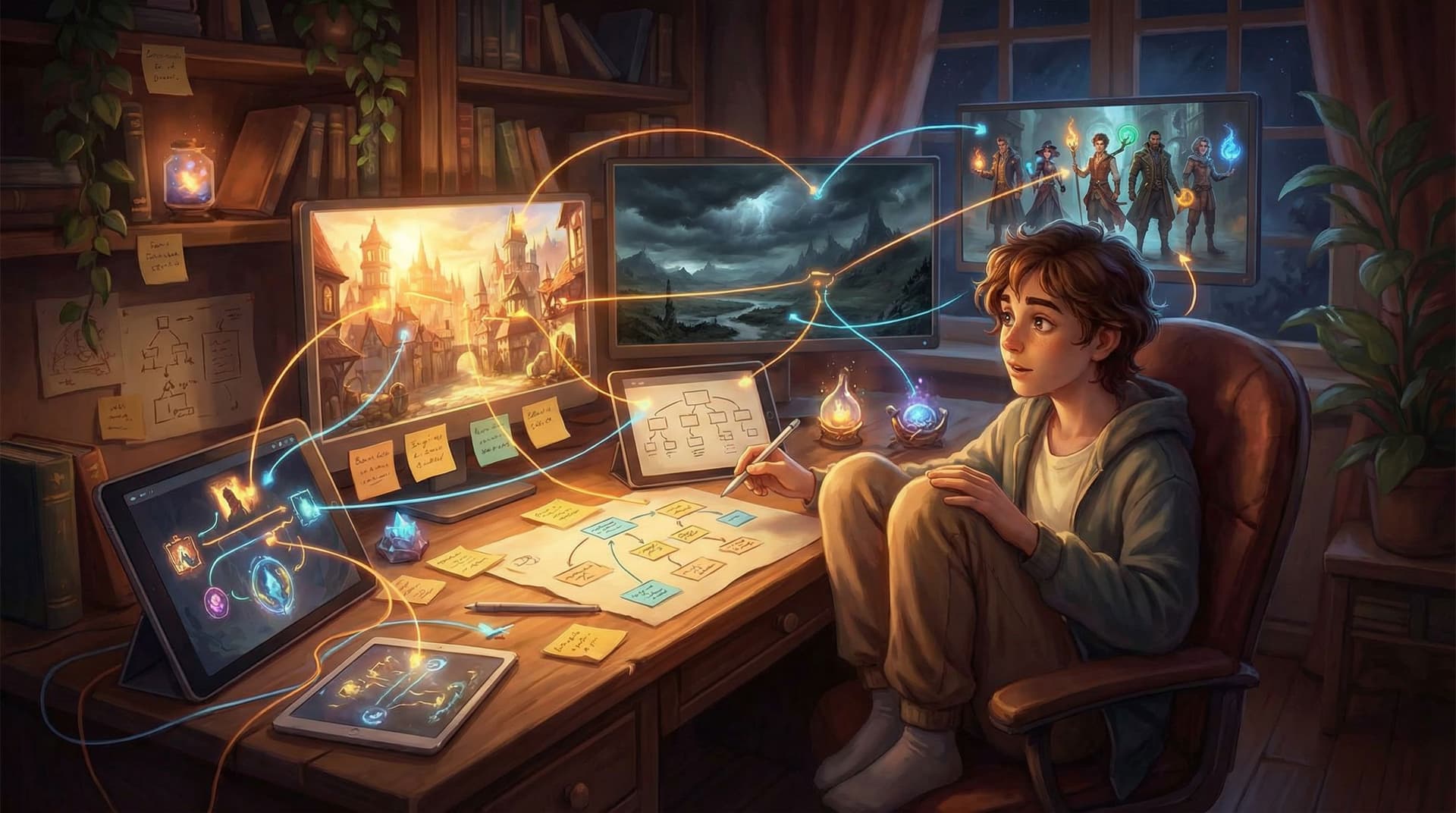
Instead of a pure tree (where every branch diverges forever), think about loops and hubs:
- Hubs: recurring locations or situations players revisit with new context
- Loops: structures that bring players back to earlier scenes, but changed
Practical Structures That Encourage Replays
1. The evolving hub.
Create a central location—like a base, a home village, or a control room—that players return to between branches.
Each time they come back:
- NPC dialogue updates based on what they’ve seen
- Visuals shift to reflect consequences (damaged walls, new allies, missing characters)
2. Time loops and rewinds.
Design a loop narrative where the point is to replay.
- Each loop reveals new information about the mystery
- New choices appear only after certain revelations
3. Converging branches.
Let wildly different paths converge on a handful of major turning points.
- Players arrive with different allies, resources, or knowledge
- The same climax plays out in dramatically different ways based on prior choices
The post Narrative Arcs in a Nonlinear World goes deeper into how to keep strong story structure even when your branches look like a web.
Principle #6: Use Visuals as Replay Clues
Because Questas gives you AI-generated images and video, your visuals can do more than decorate—they can signal secrets.
Visual Techniques That Reward Replays
1. Consistent motifs.
Pick a few recurring visual elements that hint at deeper truths:
- A specific flower that only appears near characters connected to an ancient order
- A color shift (e.g., teal highlights) whenever a hidden AI is influencing events
On first playthrough, these are just “cool details.” On replays, they become a code.
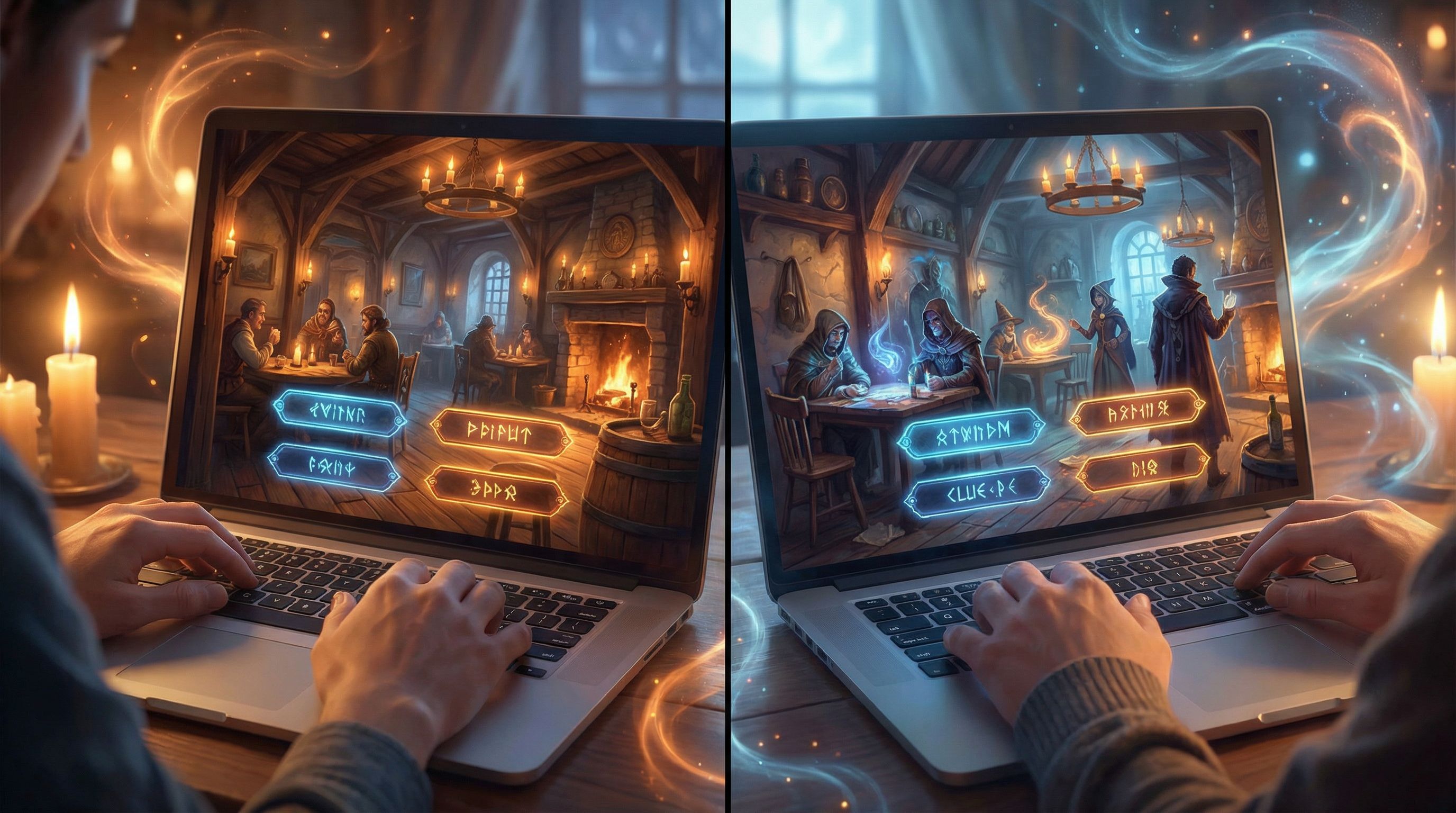
2. Variant art for the same scene.
Render the same location differently across runs to reflect subtle changes:
- The lab looks pristine if you arrived early; cluttered and chaotic if you delayed
- The city skyline at dusk vs. midnight, signaling how long your choices took
3. Micro-cutscenes as milestones.
Short AI video loops can mark key discoveries:
- A quick flash of an ominous door whenever the player is close to unlocking a major secret
- A looping shot of a character’s reaction that changes based on trust level
For help keeping your imagery coherent across branches, see AI Visual Styles 101 and From Moodboard to Mission.
Principle #7: Signal Replays in Your UX and Copy
Even the best-designed secrets won’t get discovered if players don’t realize there is more to see.
You can gently nudge them toward replays through:
- Interface patterns
- End-of-run messaging
- In-world framing
Gentle, In-Character Prompts
At the end of a run, instead of a blunt “Play again,” try:
- “You’ve glimpsed one version of events. What might have changed if you’d trusted the stranger?”
- “The archives show three other possible outcomes to this incident. Would you like to review another?”
You can also:
- Highlight unvisited branches in a subtle progress map
- Show a “discovery percentage” to suggest more content without feeling grindy
If you want to refine how choices are presented and how replays feel in the interface, The UX of Choice is packed with UI patterns that pair nicely with the narrative ideas here.
Turning These Ideas into Your Next Questas Project
Here’s a simple workflow to bake replay value into your next Questas build:
- Start with a secret map, not just a plot.
- List 3–5 things players won’t see on their first run.
- Decide which choices or flags unlock each secret.
- Plan at least one alternate perspective.
- Even if it’s just a short epilogue from another character’s POV.
- Design one “delicious failure” route.
- Make it funny, revealing, or surprisingly heartfelt.
- Choose 2–3 visual motifs.
- Work them into your image prompts across branches.
- Write end-of-run copy that invites a replay.
- Reference specific choices and hint at what might have happened.
- Playtest specifically for replays.
- Ask testers to run through at least twice.
- Watch where their curiosity drops off—and add secrets or hints there.
For more on testing, Playtesting Your Questas Like a Game Designer offers scripts and checklists you can adapt.
Summary: What Makes a Questas Worth Replaying?
To write for re-reads, design your Questas stories so that each run:
- Reveals new information (hidden scenes, alternate perspectives, deeper lore)
- Reframes old information (echo scenes, layered foreshadowing, asymmetric knowledge)
- Feels meaningfully different (evolving hubs, converging branches with varied states)
- Rewards curiosity and risk (delightful failure paths, visual clues, unlockable routes)
- Explicitly invites another run (thoughtful end-of-run copy, subtle progress indicators)
When you combine these narrative techniques with the visual power and no-code flexibility of Questas, you’re not just building stories—you’re building worlds people want to revisit.
Ready to Build Something People Replay on Purpose?
Open a new project in Questas and try this:
- Sketch a small scenario—5–10 scenes, 3–4 choices.
- Decide on one secret, one alternate perspective, and one delicious failure you’ll hide beyond the first run.
- Use AI-generated images or video loops to plant at least one recurring visual motif.
Ship it. Share it. Watch how players talk about the branches they didn’t see yet.
Your next great adventure isn’t just the one players finish—it’s the one they can’t wait to replay.
Adventure awaits.