From Tabletop to Touchscreen: Adapting Your RPG Campaign into an Interactive Questas Series

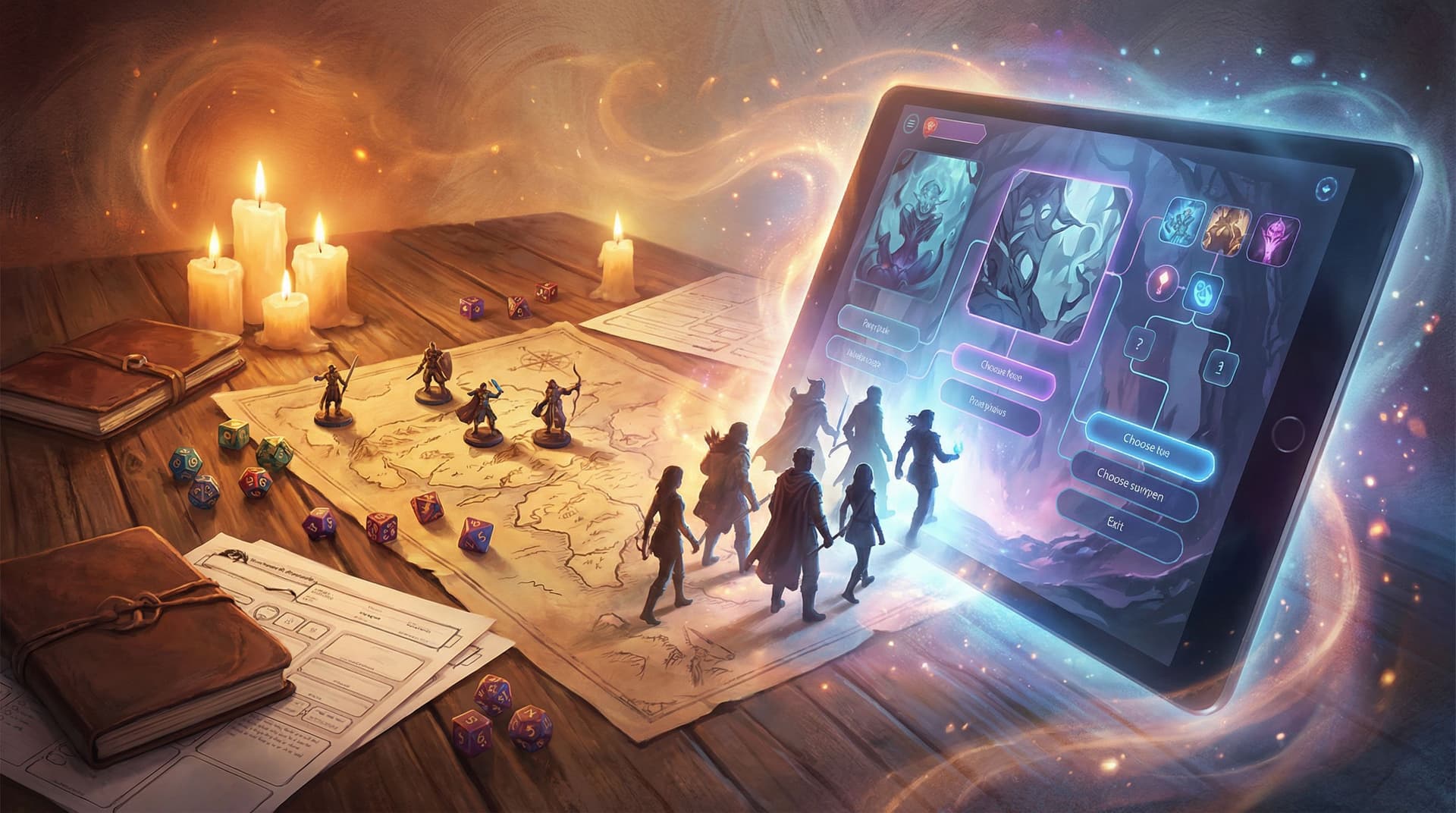
You’ve got binders full of maps, NPC notes, and legendary inside jokes from years of tabletop sessions. Your players still tell stories about that critical failure or that impossible bluff check.
So why should those moments live only at your table?
Adapting your RPG campaign into an interactive series with Questas lets you:
- Preserve your favorite arcs as replayable stories
- Invite new players into a world you’ve already built
- Experiment with choices and outcomes your original group never tried
- Add AI-generated images and short videos to scenes that used to be theater-of-the-mind
This guide walks through how to take a tabletop campaign—whether it’s D&D, Pathfinder, Blades in the Dark, or a homebrew system—and turn it into a polished, episodic Questas adventure that feels faithful and fresh.
Why your tabletop campaign is perfect Questas material
Tabletop RPGs already have the core ingredients of an interactive story:
- Meaningful choices: Players constantly decide who to trust, which path to take, and what risks to accept.
- Consequences that echo: A decision in session two can reshape the finale.
- A living world: NPCs, factions, locations, and lore that grow over time.
The challenge is that at the table, a lot of this lives in:
- Your memory and notes
- Off-the-cuff rulings
- Player improvisation
When you move to Questas, you’re not just transcribing sessions; you’re designing a story system that:
- Makes your best moments accessible to anyone, anytime
- Lets players explore branches your original group skipped
- Uses AI visuals and video to make iconic scenes instantly recognizable
If you’re curious about how long-form, campaign-style experiences hold together, you may also want to read From One Prompt to a Whole World: Worldbuilding Systems for Long-Form Questas Campaigns.
Step 1: Choose the right slice of your campaign
You don’t need (or want) to convert your entire five-year campaign at once. Instead, start by choosing a contained arc that can stand on its own.
Look for:
-
A clear premise
Examples:- “Escort the relic through the haunted forest before the eclipse.”
- “Solve the murder in the sky-city before the council votes.”
- “Break into the tyrant’s vault during the masquerade ball.”
-
A strong beginning, middle, and end
Even if your sessions sprawled, identify:- Inciting incident – What pulls the party into the situation?
- Rising tension – What complications stack up?
- Climax and resolution – What’s the big decision or showdown?
-
Multiple viable approaches
- Did your group argue over whether to sneak, negotiate, or fight?
- Were there missed clues, unused allies, or unexplored locations?
These are fertile ground for branching.
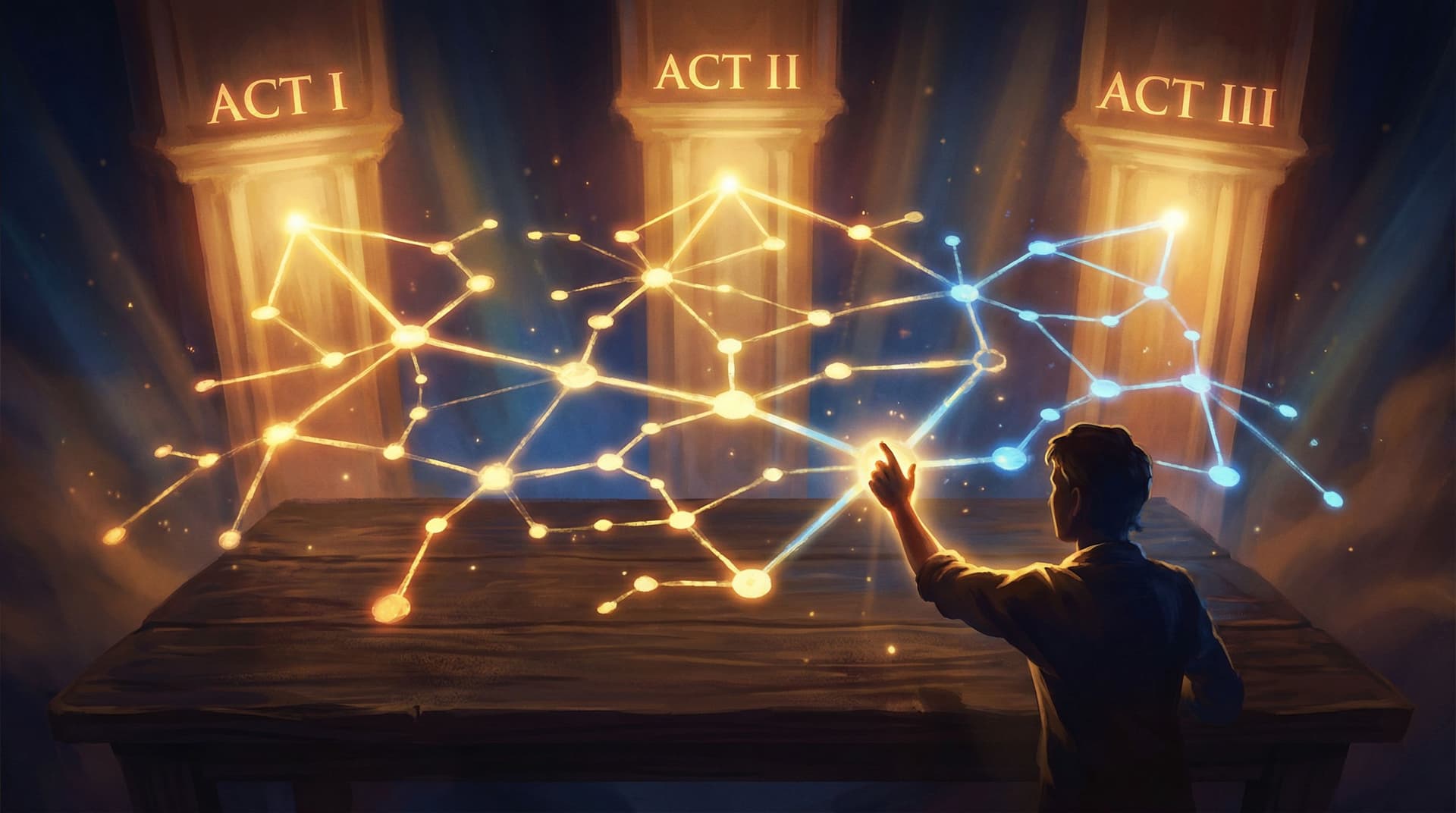
If you want a deeper dive on keeping a solid three-act structure inside branching paths, check out Narrative Arcs in a Nonlinear World: Structuring Three-Act Stories Inside Questas Branches.
Step 2: Turn messy session notes into a clean spine
Your actual session logs probably look like:
“Session 12: everyone argued for 45 minutes about the bridge, then set it on fire, then adopted the goblin?”
Fun—but hard to build from.
Instead, extract a clean narrative spine:
-
List the major beats in order, ignoring tangents:
- The party is hired to guard the relic.
- They learn a rival cult is tracking them.
- They must choose between the safe road and the haunted shortcut.
- The relic reacts strangely at the forest shrine.
- Final confrontation at the eclipse altar.
-
Mark where real choices existed (even if players didn’t see them):
- Could they have refused the job?
- Could they have sided with the rival cult?
- Could they have destroyed or used the relic early?
-
Separate “table chaos” from “story logic”
- Keep the decisions that changed stakes or relationships.
- Drop the side jokes, minor misreads of rules, and one-off detours.
This spine becomes the core flow of your Questas project. Branches will grow from it, but you always know where “center” is.
Step 3: Decide what stays interactive (and what becomes backstory)
Not every dice roll needs to become a branching choice.
Use this rule of thumb:
- If a moment changed the situation, stakes, or relationships, it’s a candidate for a choice.
- If it just colored the scene, keep it as flavor text or a single outcome.
Great candidates for player choices
-
Alliances and loyalties
- Support the rebels or the crown?
- Accept a devil’s bargain or refuse?
-
Risk vs. caution
- Take a dangerous shortcut for a big advantage.
- Play it safe but lose time or resources.
-
Moral dilemmas
- Save the village or pursue the villain?
- Reveal a painful truth or protect someone with a lie?
-
Strategic approaches
- Infiltrate, negotiate, or assault?
- Focus on stealth, magic, or social engineering?
Better handled as flavor or linear moments
- Minor skill checks that didn’t change the plan
- Random encounters that didn’t affect the main story
- Shopping, travel montages, and small talk (unless they hide secrets)
In Questas, you can still mention those moments, but you don’t have to branch on all of them. Save your branches for decisions that feel like turning points.
For more on this, you might enjoy Designing Meaningful Choices: How to Turn Simple Branches into Emotional Turning Points in Questas.
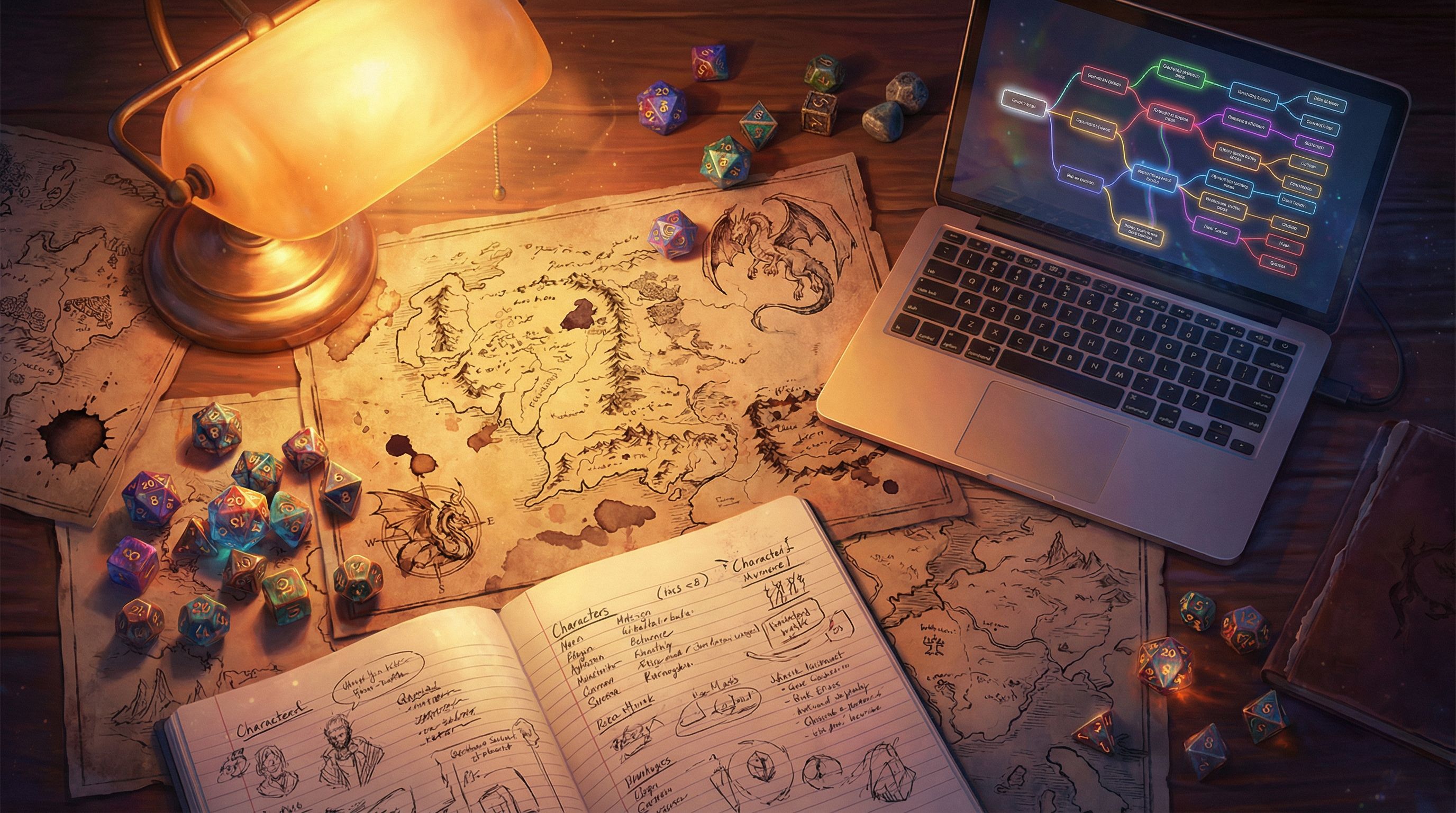
Step 4: Map your episode like a dungeon—then simplify
RPG GMs are already good at drawing maps. Use that instinct.
-
Sketch your episode as a node map
- Circles = scenes (encounters, conversations, reveals)
- Arrows = how you can move between them
- Diamonds = big decisions
-
Identify bottlenecks and optional paths
- Bottlenecks = scenes most routes pass through (great for key reveals).
- Optional = side quests, secret rooms, hidden NPCs.
-
Trim “choice clutter”
If a decision doesn’t:- Change information the player has,
- Change relationships, or
- Change future options, then it probably doesn’t need its own branch.
-
Plan 2–4 endings per episode
For a campaign-style Questas series, think in terms of episode endings like a TV show:- A “win” with a twist
- A costly victory
- A failure that opens a new path
- A secret or hidden ending for explorers
You can refine this later with structured testing—see the post Playtesting Your Questas Like a Game Designer: Scripts, Checklists, and What to Watch For for a deeper process.
Step 5: Translate characters and mechanics into story terms
Your tabletop system has:
- Classes, stats, skills
- Hit points, spell slots, conditions
- Feats, advantages, special abilities
Questas doesn’t need that rules overhead. Instead, translate mechanics into narrative levers.
Replace numbers with narrative tags
Instead of tracking exact Strength 18 or Persuasion +9, think in terms like:
- “Physically imposing”
- “Silver-tongued diplomat”
- “Arcane prodigy with unstable power”
Use these tags to:
- Unlock special choices (“Because you’re a silver-tongued diplomat, you may attempt to sway the council…”)
- Change outcomes (“Your arcane power surges out of control, transforming the ritual…”)
Turn rolls into branching outcomes
Where you once rolled dice, you now offer:
-
Risky success vs. safe compromise
- “Attempt a daring leap across the chasm” vs. “Take the longer, safer path.”
-
Success with a cost vs. failure with information
- “You pick the lock but leave obvious signs of tampering…”
- “You fail to pick the lock, but you overhear the guards’ schedule.”
You can still evoke the feeling of a roll:
“This is a long shot. Try to leap the gap anyway?”
- Yes, go for it. (High reward, high risk)
- No, find another way. (Lower reward, safer)
The point isn’t simulating the exact math—it’s preserving the tension of uncertainty that your players loved.
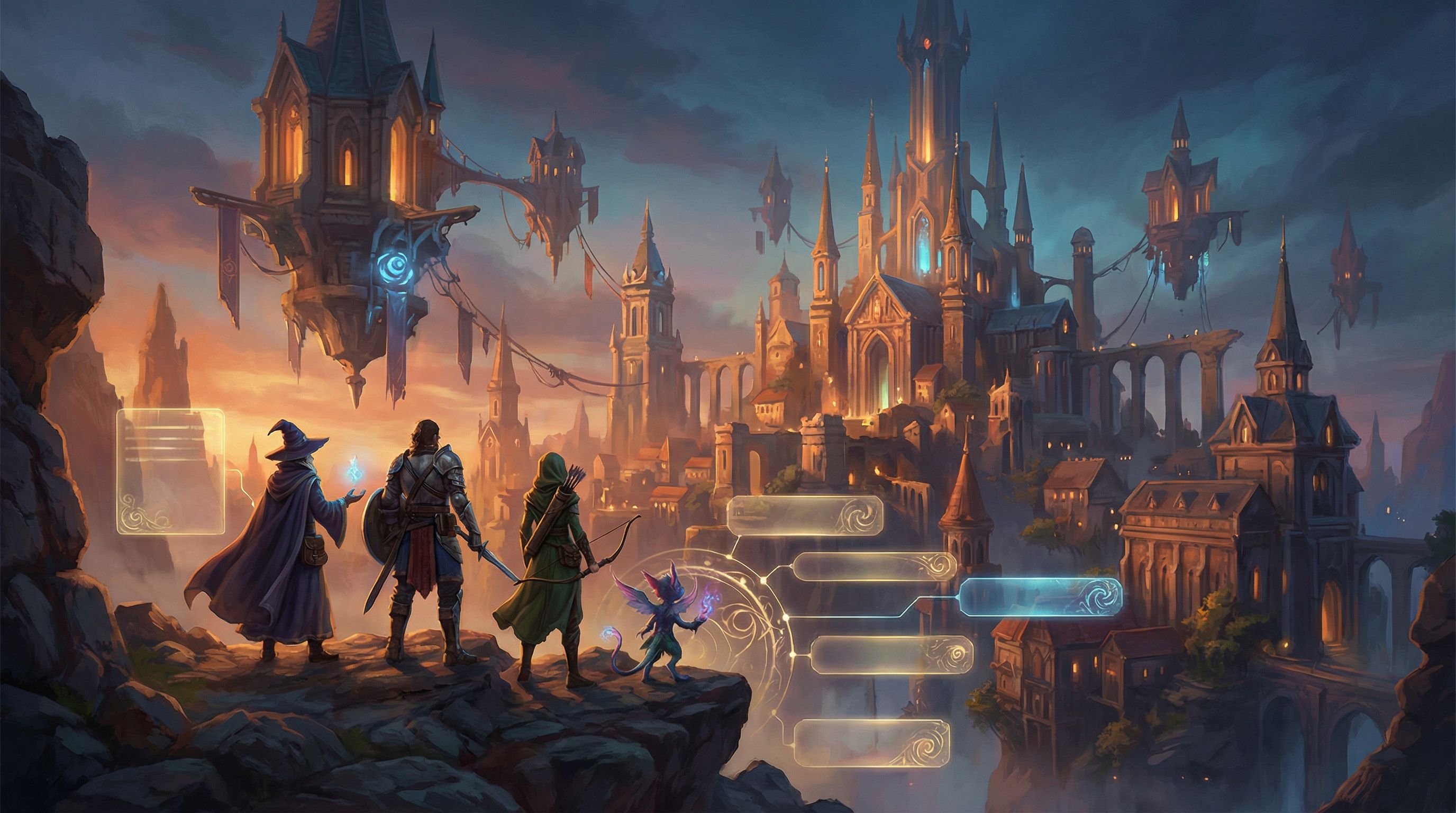
Step 6: Use AI visuals to reimagine your world, not just illustrate it
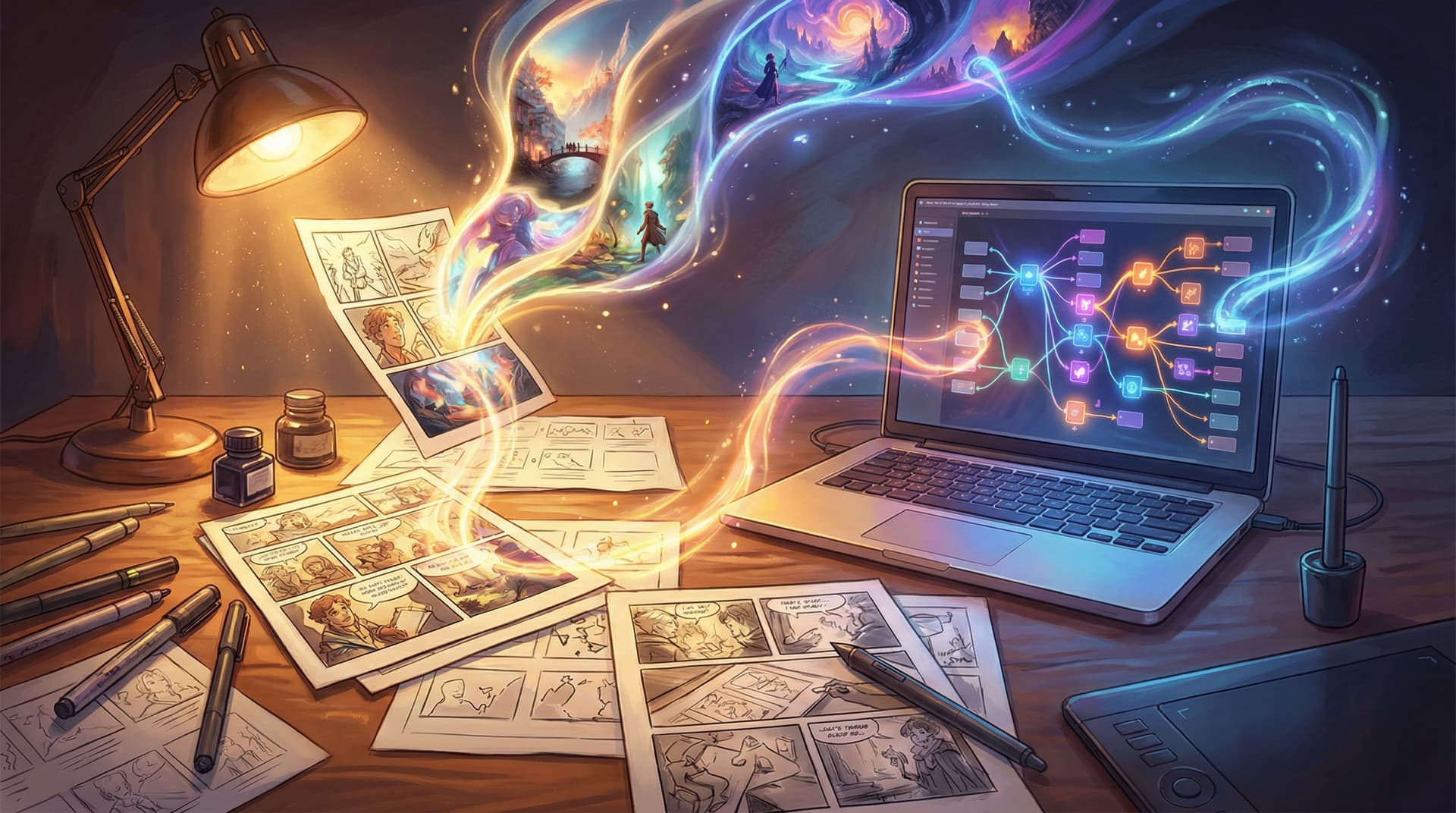
One of the biggest upgrades when moving from table to Questas is the ability to attach AI-generated images and micro-videos to scenes.
To avoid visual chaos and keep your world consistent:
-
Define a visual style guide first
Decide on:- Overall art style (painterly, cel-shaded, realistic, pixel, etc.)
- Color palette (muted, neon, earthy, high contrast)
- Character design rules (silhouettes, outfits, recurring motifs)
For a detailed walkthrough, see From Moodboard to Mission: Designing Visual Style Guides for Consistent Questas Adventures.
-
Prioritize key scenes for rich visuals
Start with:- The first moment players enter a new major location
- Big reveals (the relic awakening, the villain unmasked)
- Emotional turning points (a betrayal, a sacrifice, a homecoming)
-
Use micro-video to show, not tell
Short loops are perfect for:- A ritual circle’s runes pulsing with light
- Rain on the sky-city’s glass streets
- A dragon’s breath slowly heating the air
-
Let visuals carry some exposition
Instead of describing every detail in text, use imagery to suggest:- Faction symbols and colors
- Tech level or magic style
- Cultural cues and architecture
Step 7: Structure your campaign as a series, not a monolith
A full tabletop campaign is huge. Breaking it into episodes makes it easier to build and easier to play.
Think of each Questas episode as:
- 20–40 minutes of playtime (depending on your audience)
- 2–4 major choices that meaningfully diverge
- 2–4 endings that all move the larger story forward
Plan your season arc
-
Pilot episode
- Introduce the core conflict and world.
- Focus on a strong hook and clear stakes.
-
Middle episodes
- Explore different regions, factions, or mysteries.
- Let choices from earlier episodes echo forward.
-
Finale
- Pay off long-running threads.
- Offer dramatically different climaxes based on past decisions.
For more on episodic planning, you’ll find helpful patterns in From One-Shots to Series: Planning Episodic Questas Stories That Keep Players Coming Back.
Step 8: Preserve your table’s personality
One risk of adaptation is sanding off the weird, specific flavor that made your campaign special.
Keep that personality alive by:
-
Preserving signature NPC voices
- Keep their verbal tics, favorite phrases, and odd habits.
- Use consistent visual prompts so they look recognizable across scenes.
-
Honoring legendary moments as unlockables
- Hide a secret path that recreates “the goblin adoption.”
- Add an achievement for pulling off the same wild plan your players once tried.
-
Letting humor coexist with drama
- Don’t be afraid of light-hearted branches, as long as they don’t derail the main stakes.
-
Embedding your group’s lore as discoverable secrets
- In-jokes can become easter eggs for dedicated players.
The goal isn’t to reproduce every joke; it’s to capture the tone of your original table.
Step 9: Playtest like a GM, iterate like a designer
When you first ran the campaign, you adjusted on the fly based on your players’ reactions. You’ll do a version of that again.
-
Recruit a few testers
- Ideally, a mix of people who played the original campaign and people who didn’t.
-
Watch where they hesitate or skim
- Are any choices confusing or too similar?
- Do they feel railroaded, or lost in options?
-
Ask what they thought their choices meant
- If their expectations don’t match outcomes, clarify your wording.
-
Iterate in small passes
- Tighten text, clarify stakes, add or remove branches where needed.
- Consider adding small callbacks so choices feel remembered.
Over time, your Questas series becomes what your tabletop campaign never could: a refined, replayable version of your best ideas.
Quick checklist: From binder to Questas series
Use this as a high-level roadmap:
- Pick a self-contained arc from your campaign.
- Extract a clean narrative spine (beginning, middle, end).
- Decide which decisions truly deserve branches.
- Map scenes and paths; trim clutter.
- Translate stats and rolls into narrative tags and outcomes.
- Define a visual style and plan key images/micro-videos.
- Break the campaign into episodes with their own mini-arcs.
- Keep your table’s personality alive through NPCs, jokes, and easter eggs.
- Playtest, observe, and iterate.
Bringing it all together
Adapting your RPG campaign into an interactive Questas series isn’t about copying every session log. It’s about:
- Distilling your best arcs into clear, replayable episodes
- Turning rules and dice into story-driven choices and consequences
- Using AI-generated images and video to make familiar scenes feel newly cinematic
- Preserving the soul of your table—its tone, characters, and wild ideas—while opening the door to new players
You already did the hard creative work once. Now you have a chance to let that world live again in a form that’s easier to share, easier to revisit, and endlessly explorable.
Your next move
If you’re ready to see your campaign on a screen instead of just in a notebook:
- Pick one memorable arc from your sessions.
- Open a new project in Questas.
- Sketch your core scenes as nodes, then add just one branching decision.
You don’t have to convert everything at once. Build a single episode, playtest it, and watch how your world changes when anyone—not just your original party—can step inside.
Adventure awaits. The next player to roll initiative in your world might be halfway across the planet—and they’re just one click away from your first Questas episode.