From One-Shots to Series: Planning Episodic Questas Stories That Keep Players Coming Back

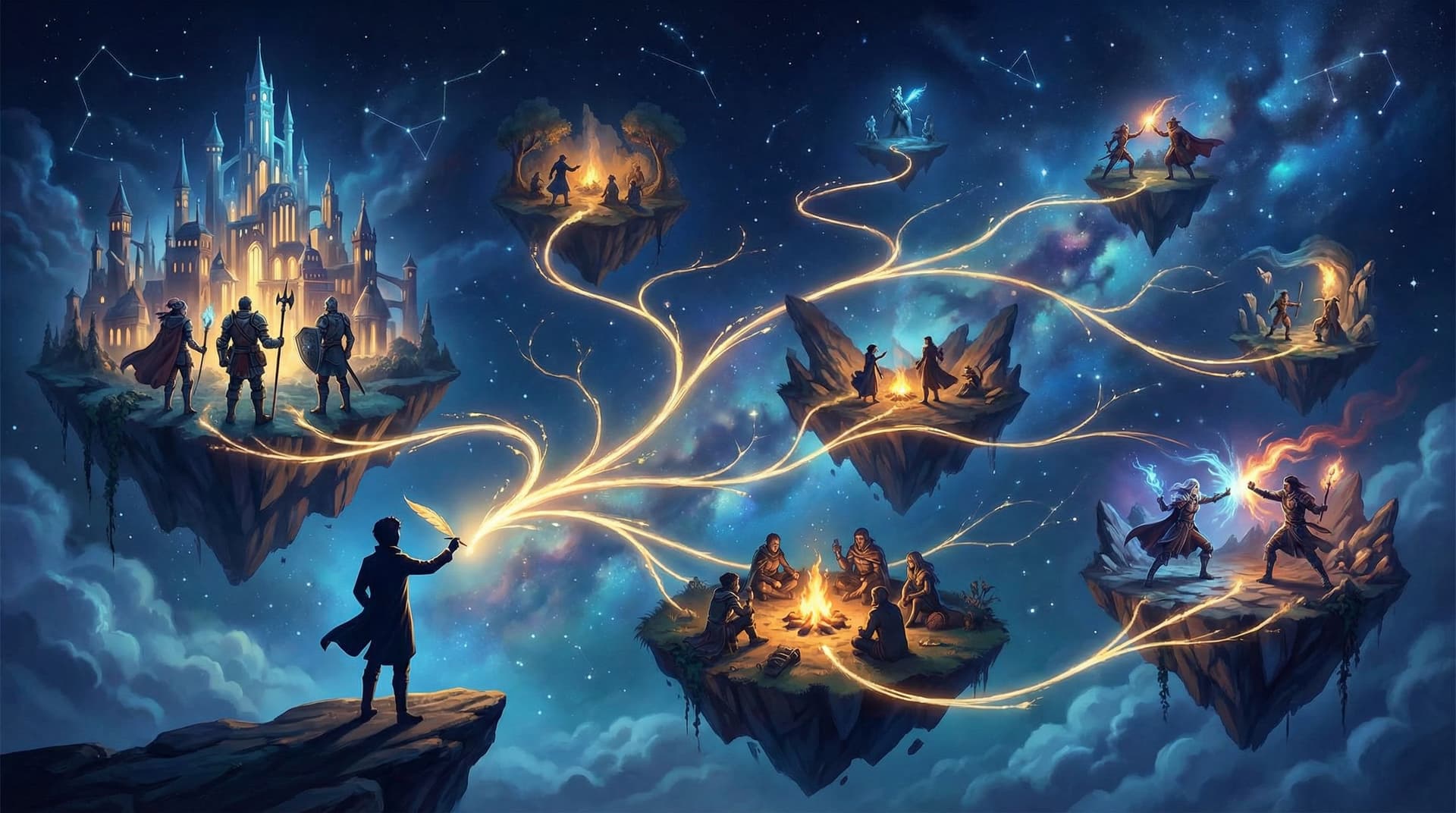
You publish a one-off interactive story. People love it. Comments roll in. Shares spike. Then… things go quiet.
The real magic happens when that first hit turns into a series—a world your audience can return to week after week, with choices that echo across episodes and characters they’re genuinely invested in.
That’s where episodic storytelling shines, and where Questas makes it surprisingly approachable. With a visual, no‑code editor and AI‑generated images and video, you can design branching episodes that feel like an interactive show, not just a one-time experiment.
In this guide, we’ll walk through how to plan episodic stories—from pilot to season arc—so players don’t just try your adventures once, they stick around.
Why Episodic Stories Are Worth the Effort
Before you start sketching season arcs, it helps to understand what you’re aiming for.
Episodic Questas stories can help you:
- Build long-term engagement. When players know another episode is coming, they’re more likely to subscribe, follow, or join your community.
- Turn casual players into fans. A single good experience earns attention. A consistent series earns trust and loyalty.
- Experiment safely. Each episode is a chance to try new branching patterns, tones, and mechanics without rebuilding everything from scratch.
- Monetize more effectively. Series open the door to memberships, bundles, sponsorships, and other recurring revenue models. (If that’s on your radar, you’ll want to explore Monetizing Your Adventures: How Creators Can Earn from Questas Stories.)
- Grow your skills quickly. Every episode is a feedback loop; you see what worked, refine, and apply those lessons to the next release.
Think of your first one-shot as a pilot episode. The goal of planning is to turn that pilot into a season that feels cohesive, rewarding, and replayable.
Start with the Season, Not the Episode
When you’re excited about a new idea, it’s tempting to jump straight into building Episode 1 in Questas. Instead, zoom out.
1. Define the core promise of your series
Ask yourself:
- What experience are players coming back for?
- Moral dilemmas in a political thriller?
- Cozy, low-stakes choices in a slice‑of‑life story?
- High-tension survival in a sci‑fi horror setting?
- What’s the emotional throughline?
- Hope vs. despair
- Freedom vs. control
- Belonging vs. isolation
Write a one-sentence series promise:
“In this series, players lead a ragtag crew of smugglers making impossible choices at the edge of a collapsing empire.”
That sentence becomes your filter. Any episode idea that doesn’t serve it goes into a different project.
2. Map a loose season arc
You don’t need every twist nailed down, but you do need a sense of shape.
Try this simple 5‑episode arc template:
- Episode 1 – The Hook
Introduce the world, core conflict, and one or two key characters. End with a strong, surprising turn. - Episode 2 – Deeper Trouble
Show consequences from Episode 1 choices. Reveal a bigger threat or opportunity. - Episode 3 – The Pivot
Force a major decision that splits the season’s possible futures. - Episode 4 – The Fallout
Pay off earlier choices, raise the stakes, and close some branches. - Episode 5 – The Payoff
Deliver satisfying endings that feel earned, while leaving a thread for a new season if you want one.
In Level Up Your Plots: 7 Branching Narrative Patterns to Try in Questas, we dig into structures like hub‑and‑spoke and converging branches that are especially effective for episodic arcs.

Design Episodes as Self-Contained, Yet Connected
The best episodic stories feel satisfying on their own and richer when played in order. That balance is easier to hit if you plan with a few constraints.
Give each episode its own mini-arc
Every episode should have:
- A clear question.
“Will the crew escape the blockade?” - Rising complications.
New obstacles, reveals, or moral pressure. - A climax.
A high-stakes choice or confrontation. - A resolution.
Immediate consequences, even if long-term effects are deferred.
In Questas, you can visualize this as a spine of key scenes, with optional branches that loop back into the main path or unlock special variations.
Use “soft continuity” between episodes
Not every choice needs to explode into a totally different episode. Instead, think in terms of:
- Flags and variables. Track key decisions (e.g.,
saved_captain = true/false) and let them:- Change dialogue in later episodes
- Unlock or lock specific scenes
- Alter AI-generated visuals (e.g., scars, outfits, locations)
- Persistent relationships.
Characters remember how they were treated. A betrayed ally might still join you later—but with different conditions. - Evolving world states.
Did players side with the rebels or the council? Show the city’s visuals and background events shifting accordingly.
This approach keeps your story map manageable while still making players feel their past choices matter.
Plan entry points for new players
Not everyone will start at Episode 1. Make it easy to jump in:
- Add a “Previously on…” recap at the start of each episode.
- Offer a default world state for players who haven’t imported a save.
- Use optional flashback scenes where players can make “retroactive” choices that set flags for the current episode.
On Questas, you can create a short recap branch with key scenes and decisions that quickly configure the current episode for newcomers.
Building a Reusable Story Bible
If you’re serious about turning your one‑shot into a series, a simple story bible will save you from continuity headaches.
What to include in your bible
You don’t need a 100‑page document. A lean, focused set of references is enough:
- World rules.
Magic systems, tech limits, political structures—anything that keeps your logic consistent. - Character sheets.
Motivations, fears, arcs, and how they respond to different player archetypes. - Visual style guide.
Color palettes, lighting moods, and prompt templates you’ll reuse for AI images and video. - Choice canon.
A list of “anchor choices” that define the series (e.g., who’s in the crew, which faction you serve).
If you haven’t already, check out Picture This: How to Prompt AI for Consistent Characters and Worlds in Questas for practical ways to keep your visuals coherent across episodes.
Turn your bible into Questas building blocks
Within Questas, you can:
- Create template scenes for common beats (interrogations, council meetings, dream sequences).
- Reuse prompt snippets for recurring locations and characters.
- Standardize choice formats, like:
- “Risky but rewarding” vs. “Safe but limiting”
- “Empathy” vs. “Pragmatism” vs. “Self-interest”
This reduces cognitive load when building new episodes—you’re assembling from a familiar toolkit instead of reinventing everything.

Pacing Choices Across a Season
One of the biggest challenges in episodic storytelling is choice fatigue. If every scene explodes into three new branches, both you and your players will burn out.
Think in “choice rhythms”
Across a season, alternate between:
- Heavy choice episodes
Major forks, big reveals, new mechanics. - Reflection or consolidation episodes
Fewer branches, more consequences and character development.
Within an episode, try this pattern:
- Early on: Low‑stakes choices that teach the “rules” of this episode.
- Midway: 1–2 medium‑stakes decisions that shape how you approach the climax.
- End: 1 major decision that affects future episodes.
Use converging branches strategically
To avoid story sprawl:
- Let side branches rejoin a main path after delivering unique scenes or rewards.
- Use “soft endings” where different branches converge on the same event with different context.
- Reserve hard divergences (completely different paths) for your biggest moments—season midpoints and finales.
This is where Questas’s visual editor shines; you can literally see where your story is ballooning and where you can smartly reconnect threads.
Carrying Progress Between Episodes
If you want players to feel like they’re living in the same story from episode to episode, you’ll need a plan for continuity.
Decide what persists
Not everything needs to carry over. Focus on:
- Key relationships (allies, rivals, love interests)
- Major world states (who holds power, which factions survived)
- Player identity (class, role, reputation, or alignment)
You can represent these as variables or tags in Questas and check them at key decision points in new episodes.
Design graceful failure states
Players will miss content. That’s a feature, not a bug.
- If they didn’t save a character earlier, show the gap in later episodes—an empty seat, a missing skill, a different tension.
- If they failed a mission, let the world adapt, not reset—extra security, different NPC attitudes, altered routes.
The goal is to make every path feel like a valid story, not a “wrong” one.
Using Data to Shape Future Episodes
Once you have players moving through your episodes, you’re not guessing anymore—you have real behavior to learn from.
If you’re using Questas, you can track how players move through your branches. Paired with the ideas from Analytics for Adventure: Using Player Data to Improve Your Questas Stories Over Time, this becomes a powerful feedback loop.
Watch for patterns like:
- Drop-off points.
Where do players quit an episode? Is the pacing off, or is a choice unclear? - Overwhelming favorites.
Are most players picking the same option? Maybe the alternative needs to be more tempting—or the “default” needs more friction. - Underplayed branches.
Are some paths rarely seen? Consider surfacing them via recaps, achievements, or marketing copy.
Use this data to:
- Adjust difficulty and clarity in upcoming episodes.
- Spotlight underused characters or factions that players respond well to.
- Decide which plotlines deserve more screen time in Season 2.
Production Planning: Actually Shipping a Season
A brilliant season outline doesn’t matter if Episode 2 drops six months after Episode 1. Consistency builds trust.
Choose your release cadence
Be honest about your capacity. Some sustainable options:
- Biweekly episodes for solo creators with a day job.
- Monthly “feature-length” episodes that feel like mini-movies.
- Season drops (all episodes at once) if you prefer batch production.
Whatever you choose, communicate it clearly to your audience—and pad your schedule so you can handle surprises.
Build a repeatable workflow
For each episode, define a checklist, such as:
- Outline episode beats and key choices.
- Draft scenes in Questas with placeholder text.
- Generate and refine AI visuals and video.
- Playtest internally or with a small group.
- Polish dialogue, pacing, and UX.
- Publish and announce.
- Review analytics and player feedback.
If you’re new to the platform, From Idea to Interactive Epic: A Step‑by‑Step Beginner’s Guide to Building Your First Questas Story is a great companion for setting up a smooth production pipeline.
Reuse smartly to save time
- Repurpose locations with new lighting, weather, or time of day.
- Revisit key scenes from different perspectives.
- Promote branch-exclusive content in your marketing to encourage replays.
Your players don’t need a completely new asset pack every time—they want meaningful evolution.
Growing Beyond Entertainment
Episodic structure isn’t just for sci‑fi sagas or fantasy epics. Creators are using Questas series for:
- Education: Multi-episode course adventures where each module is an episode.
- Client work: Ongoing interactive case studies that evolve with new projects (see ideas in Build an Interactive Portfolio: Using Questas to Showcase Your Skills, Case Studies, and Client Work).
- Community storytelling: Collaborative series where your audience votes on what should happen next.
Once you have a solid episodic framework, you can remix it for different goals—learning, marketing, worldbuilding, or pure storytelling.
Bringing It All Together
Let’s recap the key ideas:
- Start with the season. Define a clear series promise and a loose arc before you build Episode 1.
- Make episodes self-contained but connected. Each one should have its own question and resolution, with soft continuity through flags, relationships, and world states.
- Create a story bible. Keep your world rules, characters, and visual style consistent across episodes.
- Pace your choices. Use rhythms and converging branches to avoid choice fatigue and story sprawl.
- Carry meaningful progress forward. Decide what persists and design failure states that feel like valid stories.
- Let data guide you. Use player behavior and analytics to refine future episodes.
- Plan for production. Choose a sustainable release cadence and build a repeatable workflow.
Do this well, and your one-shot becomes more than a cool experiment—it becomes a living series players are eager to return to.
Your Next Step
You don’t need a perfect “Season 1” mapped out to begin. You just need a solid pilot and a rough sense of where the story could go.
Here’s a simple way to start this week:
- Open Questas and sketch a pilot episode with a clear hook and one big end‑of‑episode choice.
- Jot down 3–5 bullet points for how that choice might affect future episodes.
- Turn those into a loose season outline, even if it’s just one sentence per episode.
From there, you can refine, expand, and iterate—but you’ll already be on the path from one‑shot to series.
Adventure awaits. Your players are ready for Episode 1. Now it’s your turn to give them a Season 1 they’ll want to binge—and replay.