Branching Narratives for Change-Making: Using Questas to Prototype Policies, Futures, and Social Impact Campaigns

Policy memos, slide decks, and static reports rarely change behavior on their own. People skim, nod, and move on.
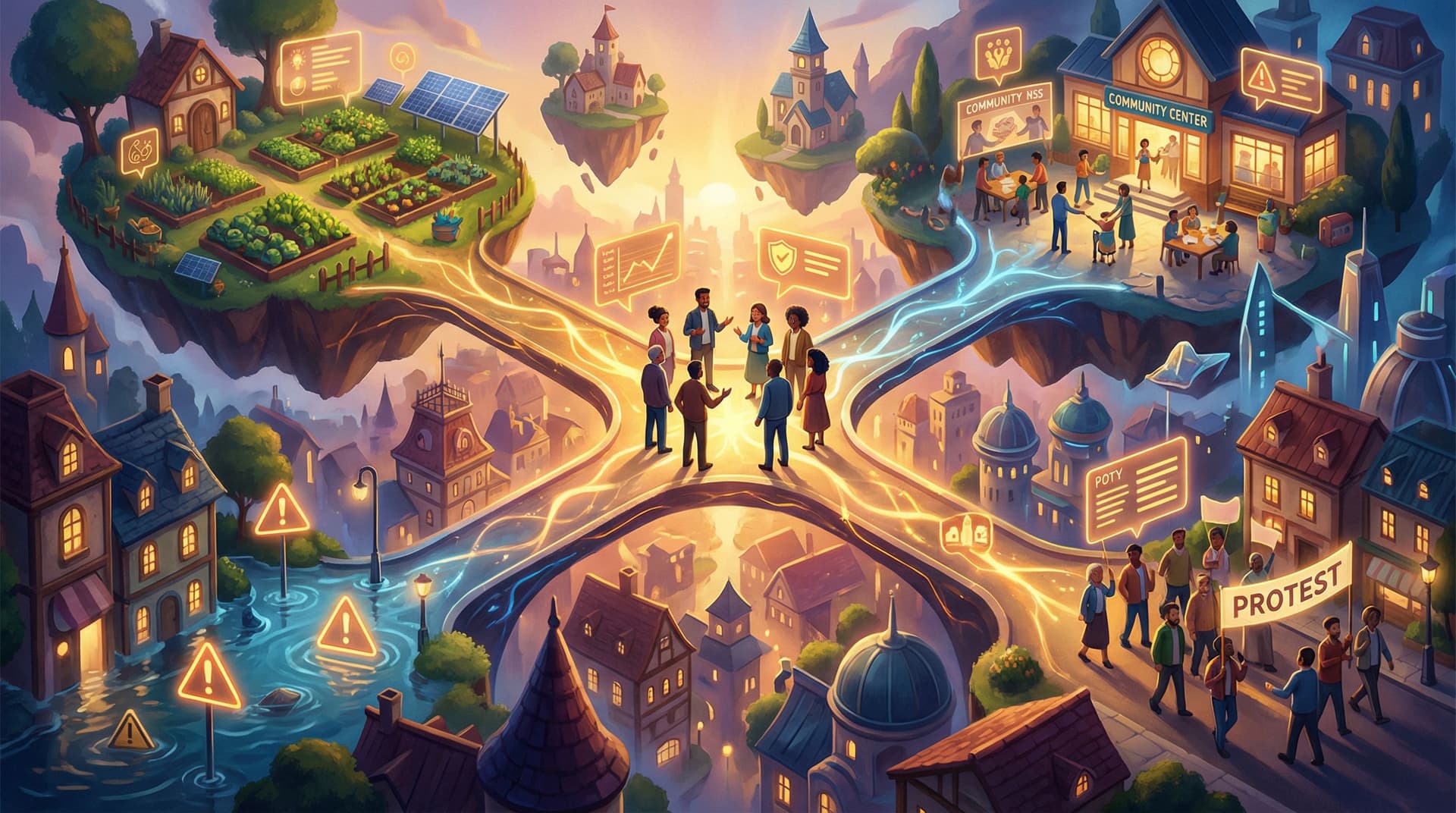
But when you invite someone into a story where they make the choices—and immediately see the consequences—something different happens. They don’t just understand a policy or campaign; they feel it. They test it. They push on its edges.
That’s where branching narratives shine as a tool for social impact, and where platforms like Questas make those narratives practical to build, test, and share.
In this post, we’ll explore how you can use interactive, choice-driven stories to:
- Prototype new policies before rollout
- Explore alternative futures with communities and stakeholders
- Turn social impact campaigns into playable journeys instead of passive messaging
…and how to do all of that without writing a line of code.
Why Branching Narratives Belong in Policy and Social Impact Work
Most change-making work wrestles with three persistent problems:
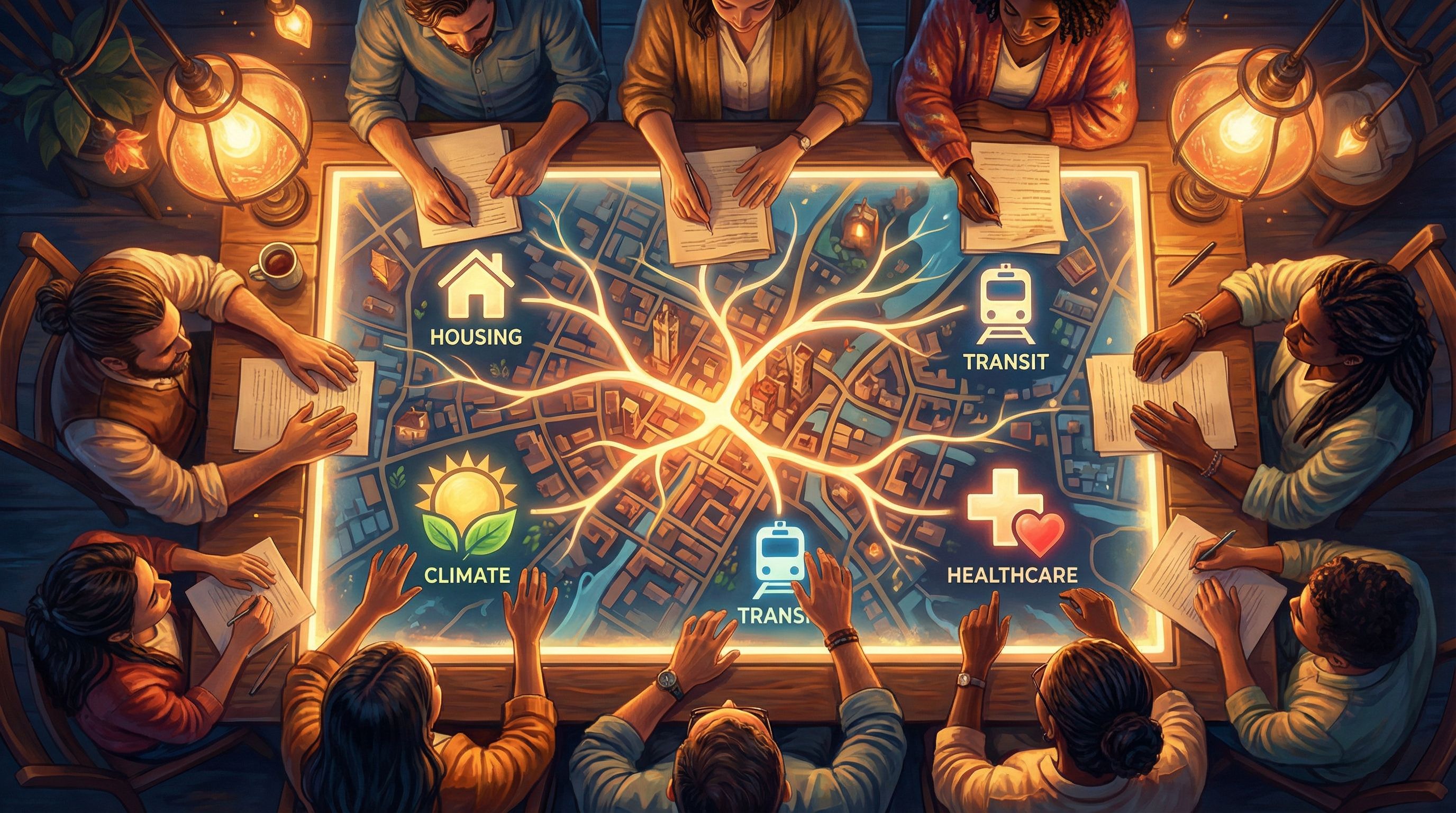
- Complexity is hard to communicate. Real-world systems (housing, climate, transit, healthcare, justice) are messy and interdependent.
- Stakeholders experience the same policy differently. A rule that helps one group can harm another.
- Engagement is shallow. Town halls, PDFs, and campaigns often attract the already-convinced and lose everyone else.
Branching narratives address all three by turning abstract ideas into lived, navigable experiences.
From “explaining” to “experiencing”
When someone clicks through an interactive scenario, they:
- Make decisions under constraints (limited budget, legal restrictions, political pressure)
- See trade-offs play out in concrete situations
- Encounter multiple perspectives (resident, policymaker, frontline worker, organizer)
Instead of saying, “Policy A improves X but worsens Y,” you can:
Drop players into a neighborhood council meeting, let them choose a zoning change, and then show how that decision affects rent, transit access, and small businesses over time.
That shift—from explanation to experience—is where learning, empathy, and alignment deepen.
Why Use Questas for Change-Making Scenarios?
You could sketch branching narratives on whiteboards or in tools like Miro and FigJam. But actually letting people play those branches usually requires developers, custom builds, and long timelines.
Questas removes that barrier by combining:
- A visual, no-code editor for mapping scenes and branches
- AI-generated images and video to quickly visualize policies, futures, and personas
- Shareable, web-based experiences that run in a browser on desktop or mobile
If you’re curious about using AI visuals specifically to explore worlds and systems before you write, you might also enjoy our post on using AI art as a pre-writing tool: AI Art as Storyboard: Rapidly Prototyping Adventure Worlds Before You Write a Single Line.
Three Powerful Use Cases for Branching Narratives in Change Work
1. Prototyping Policies Before They Hit the Real World
Who this is for: policy labs, city governments, nonprofits, advocacy orgs, foundations.
Instead of unveiling a fully-baked policy and bracing for backlash, you can:
- Build a playable prototype of how the policy might work
- Invite stakeholders to step into roles (e.g., tenant, landlord, caseworker, council member)
- Collect qualitative feedback and behavioral data from how people navigate the story
Example scenarios:
- A city exploring a new eviction diversion program
- A university testing different campus safety protocols
- A health department modeling vaccine outreach strategies in underserved neighborhoods
Within Questas, each of these becomes a branching scenario where choices correspond to policy levers, and outcomes visualize potential downstream effects.
2. Exploring Alternative Futures With Communities
Who this is for: futurists, civic designers, climate coalitions, youth organizations, researchers.
Futures work often lives in dense reports or abstract workshops. Branching narratives let people try on futures instead:
- Near-future climate scenarios where a coastal city chooses between different adaptation strategies
- Labor futures where gig workers organize, negotiate, or pivot into new sectors
- Education futures where students, parents, and teachers co-design learning paths
By letting players move through multiple timelines and outcomes, you:
- Make uncertainty tangible but not paralyzing
- Show that choices—policy, cultural, personal—matter
- Surface values and priorities that might not emerge in a survey
If you’re interested in structuring these experiences for replay, so people can explore many futures in one build, you’ll find practical techniques in Writing for Re-Reads: Narrative Techniques That Reward Players Who Replay Your Questas.
3. Turning Social Impact Campaigns into Playable Journeys
Who this is for: advocacy campaigns, marketing teams at mission-driven orgs, public awareness initiatives.
Most campaigns still revolve around:
- One key message
- A handful of static assets
- A call to donate, sign, or share
Branching campaigns, by contrast, invite people into:
- Personalized journeys where choices reveal different stories, resources, or calls to action
- Quest-shaped missions that unfold over email, social, or on-site kiosks
- Experiences that teach and persuade, not just inform
If this excites your marketing brain, you’ll likely get more ideas from From Escape Rooms to Inbox Games: Marketing Campaigns that Feel Like Quests, Not Ads.
Questas is well-suited for these campaigns because you can:
- Spin up weekend-sized prototypes (see also: Low-Lift, High-Impact: Weekend Questas Projects for Writers, Educators, and Marketers)
- Quickly A/B test different narrative paths
- Embed or link experiences from landing pages, newsletters, or QR codes in physical spaces
Designing Your First Change-Making Scenario in Questas
Let’s walk through a practical workflow you can adapt for policies, futures, or campaigns.
Step 1: Clarify the Decision Space
Start by defining what choices you want people to grapple with, not what message you want to push.
Ask:
- What real-world decision or tension should this story simulate?
- Who are the key actors in that decision?
- What constraints or pressures shape their options?
Write down 3–5 core decisions you want the scenario to revolve around. For example, in a housing policy prototype:
- How aggressively to enforce short-term rental regulations
- Whether to prioritize new construction, preservation, or tenant protections
- How to allocate a limited housing budget across neighborhoods
These become the backbone of your branching structure.
Step 2: Choose Your Player Perspective(s)
One of the strengths of interactive stories is perspective-shifting.
Decide:
- Will players inhabit one role (e.g., city council member) or multiple roles (e.g., rotating between resident, planner, organizer)?
- Do you want them to identify strongly with a single character, or compare perspectives across runs?
Tip: For policy and futures work, multiple perspectives often reveal blind spots. You might:
- Run one scenario as a policymaker
- Then unlock a second run as someone affected by those decisions
This is a powerful way to surface equity considerations without a lecture.
Step 3: Map a Minimal Branching Structure
Resist the urge to build a giant decision tree. Start with a small, replayable structure:
- 1 opening scene that sets context and stakes
- 3–4 key decision points
- 3–6 distinct outcomes (not all “good” or “bad,” but meaningfully different)
In Questas:
- Create a new project and sketch scenes as nodes in the visual editor.
- Label each node with its role (setup, decision, consequence, reflection).
- Draw connections between scenes to represent choices.
If you want more guidance on keeping scope manageable—especially if you’re a solo practitioner or small team—check out Branching Narratives on a Budget: How Solo Creators Can Ship Polished Questas Without Burning Out.
Step 4: Use AI Visuals to Ground Abstract Ideas
Policies and futures can feel vague. Visuals make them concrete.
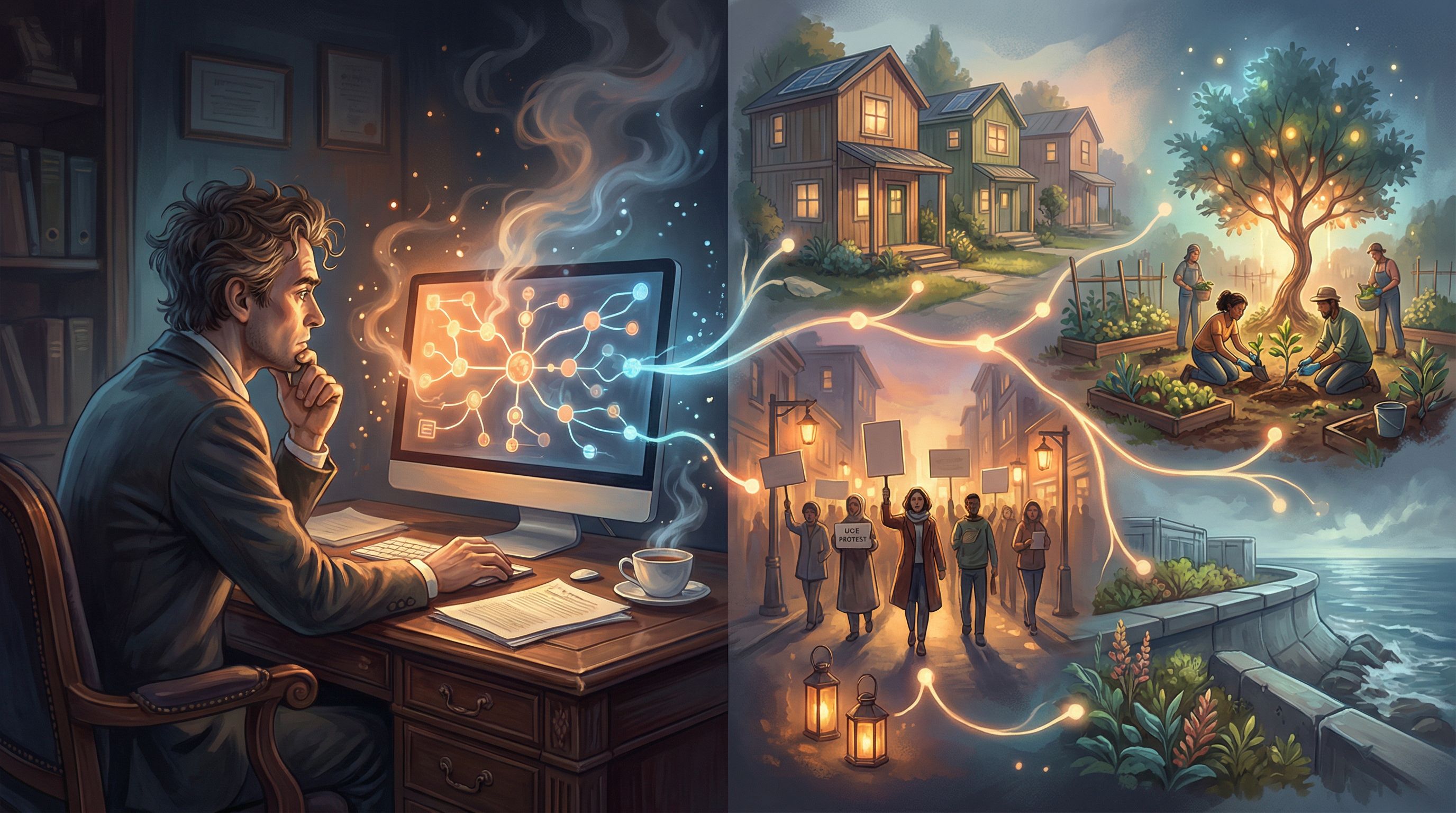
Inside Questas, you can generate images or looping videos for each scene. Use them to:
- Represent places (a flooded street, a crowded clinic, a community garden)
- Humanize stakeholders (families, workers, council members, organizers)
- Visualize data in-world (posters, dashboards, news segments inside the story)
A few practical tips:
- Stay consistent with style. Pick a visual style (e.g., semi-realistic illustration, documentary photo, minimalist infographic) and stick to it.
- Use visuals as cues, not walls of info. Let images suggest context; keep text focused on choices and consequences.
- Lean on metaphor when needed. For futures work, metaphorical visuals (e.g., branching rivers, shifting city skylines) can express uncertainty and possibility.
For a deeper dive into using AI visuals strategically—especially for nonfiction and case-based scenarios—see AI Image Styles for Nonfiction: Making Case Studies, Histories, and Documentaries Playable in Questas.
Step 5: Write Consequences That Teach, Not Punish
In change-making scenarios, outcomes aren’t about “winning” or “losing.” They’re about revealing trade-offs.
When you write consequences:
- Show who is helped and who is harmed. Name groups, neighborhoods, or personas.
- Surface short-term vs. long-term effects. A decision might look successful at first, then create issues down the line.
- Avoid binary moralizing. Let outcomes be complex; invite reflection.
You can also design soft failures—paths where something goes wrong, but players can:
- Backtrack with new information
- Try alternative strategies
- See how small tweaks change outcomes
If you want to go deeper on this design pattern, you’ll find a dedicated exploration in Designing ‘Soft Fails’: How to Let Players Backtrack, Reroute, and Recover Inside Questas Adventures.
Step 6: Add Reflection Moments and Debriefs
Reflection is where insight crystallizes.
Build in:
- In-story reflections: characters reacting to outcomes, asking, “Was this worth it?”
- End-of-run debriefs: a final scene summarizing:
- Key decisions made
- Groups most positively and negatively affected
- Alternative paths the player might explore next time
You can also include:
- Links to real-world resources (reports, community orgs, policy briefs)
- Prompts for group discussion if the scenario is used in a workshop
Step 7: Test With Real Stakeholders
Even a polished scenario is still a prototype until people use it.
Run small tests with:
- Community members
- Policymakers and staff
- Partners or funders
Ask them to:
- Think aloud as they play
- Share where they felt confused or constrained
- Note where the story misrepresented their reality
Then use Questas’s visual editor to quickly adjust branches, copy, and media based on feedback. Because you’re not touching code, iteration cycles can be measured in hours or days, not months.
Measuring Impact Beyond Click-Throughs
If you’re using branching narratives for change work, vanity metrics aren’t enough. You care about:
- Learning: Did people understand the system or policy better?
- Alignment: Did the experience surface shared values or reveal misalignment?
- Behavior: Did it influence decisions, priorities, or advocacy actions?
Some practical ways to measure this:
- Pre/post micro-quizzes embedded in the story
- Short reflection surveys at the end of a run
- Choice analytics: which branches do people favor, and where do they hesitate or drop off?
For a deeper dive on designing and interpreting these kinds of signals, you may want to read Beyond Click-Throughs: Measuring Learning, Alignment, and Engagement in Narrative Experiences Like Questas.
Keeping Scope Sustainable
Many teams hesitate to build branching experiences because they fear runaway complexity. A few principles will keep you grounded:
- Start with one tight scenario, not an entire policy portfolio.
- Limit branches up front. It’s better to have 4 strong decision points than 12 shallow ones.
- Design for replay instead of bloat. Encourage multiple runs with different roles or constraints.
- Reuse patterns. Once you build one solid “decision → consequence → reflection” loop, duplicate and adapt it.
Remember: your goal is not to simulate the entire world. It’s to create a focused playground where people can safely explore a specific tension.
Summary: Why This Approach Matters
Branching narratives built in tools like Questas give change-makers a new kind of instrument:
- For policy: a way to prototype, test, and communicate trade-offs before they harden into law.
- For futures: a way to explore multiple timelines, values, and strategies in a felt, embodied way.
- For campaigns: a way to invite people into journeys that teach, persuade, and mobilize—without treating them as passive audiences.
By combining no-code story building with AI-generated visuals, you can:
- Move from static PDFs to playable prototypes
- Bring more voices into the design process
- Learn faster and design braver, more equitable interventions
Your Next Move
If you’re working on policies, futures, or social impact campaigns, your ideas deserve more than another slide deck.
Here’s a simple way to start:
- Pick one decision you wish more people understood deeply.
- Draft three scenes: a setup, a hard choice, and a consequence.
- Open Questas and turn those three scenes into a tiny, playable prototype.
Share it with a colleague, a community partner, or a stakeholder. Watch how they move through the story. Listen to what they notice.
That’s the first branch. From there, the path to meaningful change is something you can build—choice by choice, scene by scene.