Ethical AI Worldbuilding: Guidelines for Responsible Imagery, Representation, and Choices in Questas

Ethical AI Worldbuilding: Guidelines for Responsible Imagery, Representation, and Choices in Questas
Interactive stories have always been about power: the power to decide what happens next, who matters, and which futures are even possible.
When you build on Questas, you’re not just laying out branches in a visual, no‑code editor. You’re shaping a world—its people, its rules, its moral center—then inviting players to step inside. AI-generated images and video make that world vivid. But they also raise real questions:
- Whose faces and bodies are we showing?
- Which cultures, identities, and histories are we drawing from—and how carefully?
- What kinds of choices are we normalizing or glamorizing?
Ethical AI worldbuilding isn’t about making your story bland or “safe.” It’s about using this power deliberately so your adventures feel expansive, respectful, and meaningful—rather than careless or harmful.
This guide walks through concrete practices for building responsible imagery, representation, and choices in Questas, whether you’re crafting a fantasy epic, a corporate training module, or a 3‑minute social micro‑adventure.
Why Ethical Worldbuilding Matters (and How It Helps Your Stories)
Ethics can sound abstract, but in interactive storytelling it shows up in very practical ways.
1. Immersion Depends on Trust
Players engage more deeply when they feel:
- Respected – They aren’t mocked, stereotyped, or erased.
- Safe enough to explore – They can face intense themes without being blindsided or retraumatized.
- Seen – They recognize pieces of their own experiences, or at least feel that unfamiliar ones are handled with care.
Break that trust—through a racist caricature in an AI-generated image or a choice that trivializes trauma—and the spell shatters.
2. Interactive Stories Amplify Impact
Branching narratives don’t just show events; they let players enact them.
- Choosing whether to betray a friend hits differently than reading about it.
- Deciding whether to escalate a conflict in a training simulation can shape real‑world behavior.
That agency is powerful. It’s also why your choice design carries ethical weight. If you want help turning those branches into emotionally resonant moments (without veering into manipulation), pair this article with Designing Meaningful Choices: How to Turn Simple Branches into Emotional Turning Points in Questas.
3. AI Images Come With Hidden Defaults
AI models are trained on massive datasets that often reflect biased patterns:
- Who gets shown as a leader, scientist, or hero
- How certain cultures, genders, or bodies are depicted
- Which aesthetics are treated as “standard” vs. “exotic”
If you don’t steer the system, it will happily reproduce those defaults. Ethical worldbuilding is your counterweight.
Start With an Ethical Story Bible
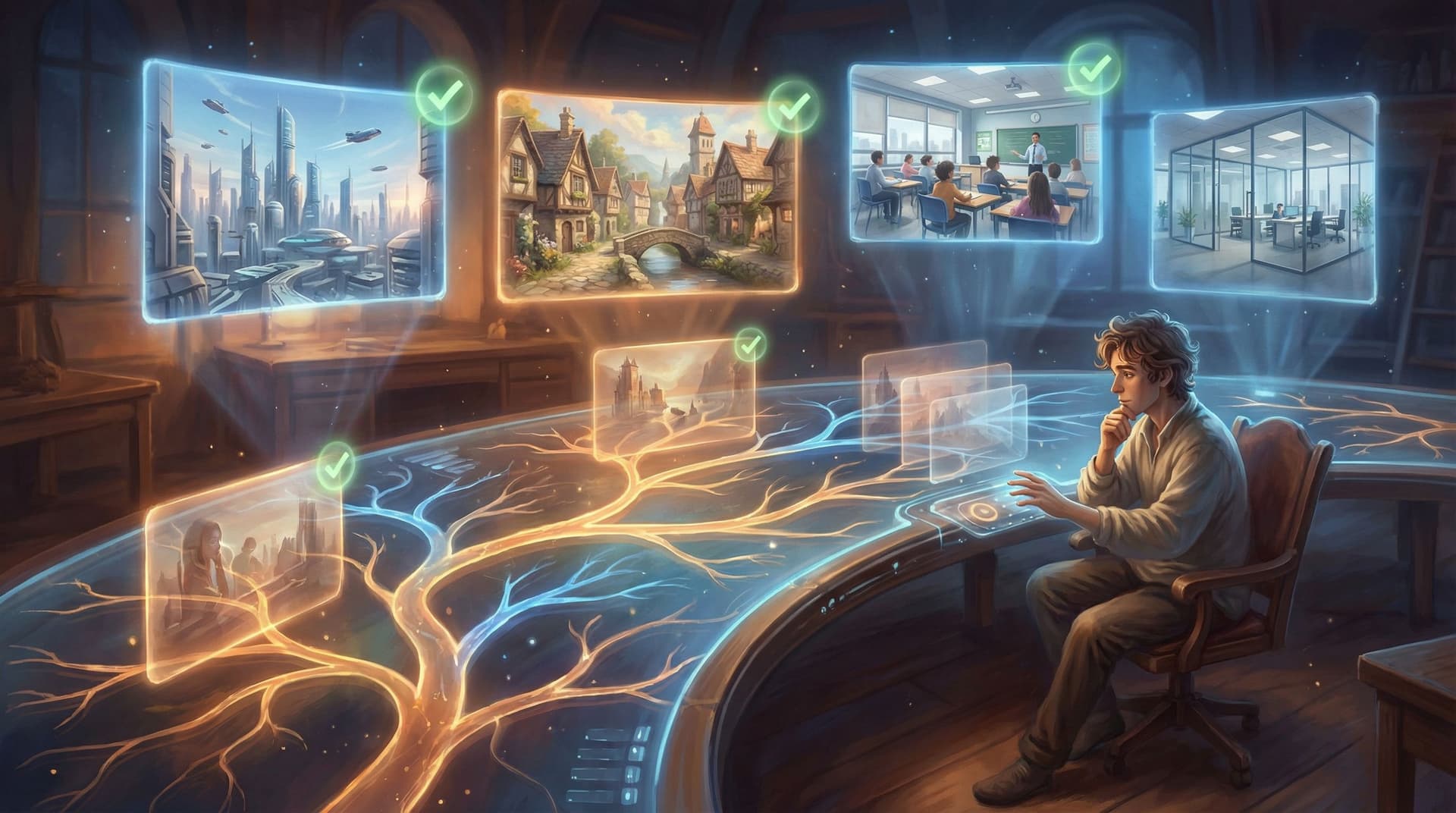
Before you generate a single image or branch, define the ethical boundaries of your world. Treat this like a short “story bible” that lives alongside your plot outline.
Include at least:
-
Themes You’ll Explore
- e.g., forgiveness, systemic injustice, survival, community care, corruption.
- Be specific: “war” is broad; “the moral cost of following orders in a military chain of command” is clearer.
-
Topics You’ll Avoid or Handle With Extreme Care
- For example: sexual violence, self‑harm, child abuse, real‑world hate symbols, slurs.
- Decide: Is this necessary to the story? Can the same stakes be achieved another way?
-
Representation Goals
- Which cultures, identities, or time periods are you drawing from?
- Are you including:
- Multiple genders and orientations?
- A range of body types and abilities?
- Diversity across roles (heroes, villains, mentors, everyday citizens)?
-
Consent and Safety Rules
- Will you include content warnings on your story’s intro scene?
- Are there lines you simply won’t cross in choices or imagery?
Once you’ve written this down, you can use it as a checklist while you build scenes in Questas. It also becomes a shared reference if you’re co‑creating with others—something we dive deeper into in Collaborative Adventures: How to Co-Create Questas Stories with Teams, Students, or Communities.
Building Respectful Visual Worlds With AI
AI visuals are one of your most powerful tools in Questas—and one of the easiest places to go wrong. Here’s how to generate imagery that supports ethical, immersive worldbuilding.
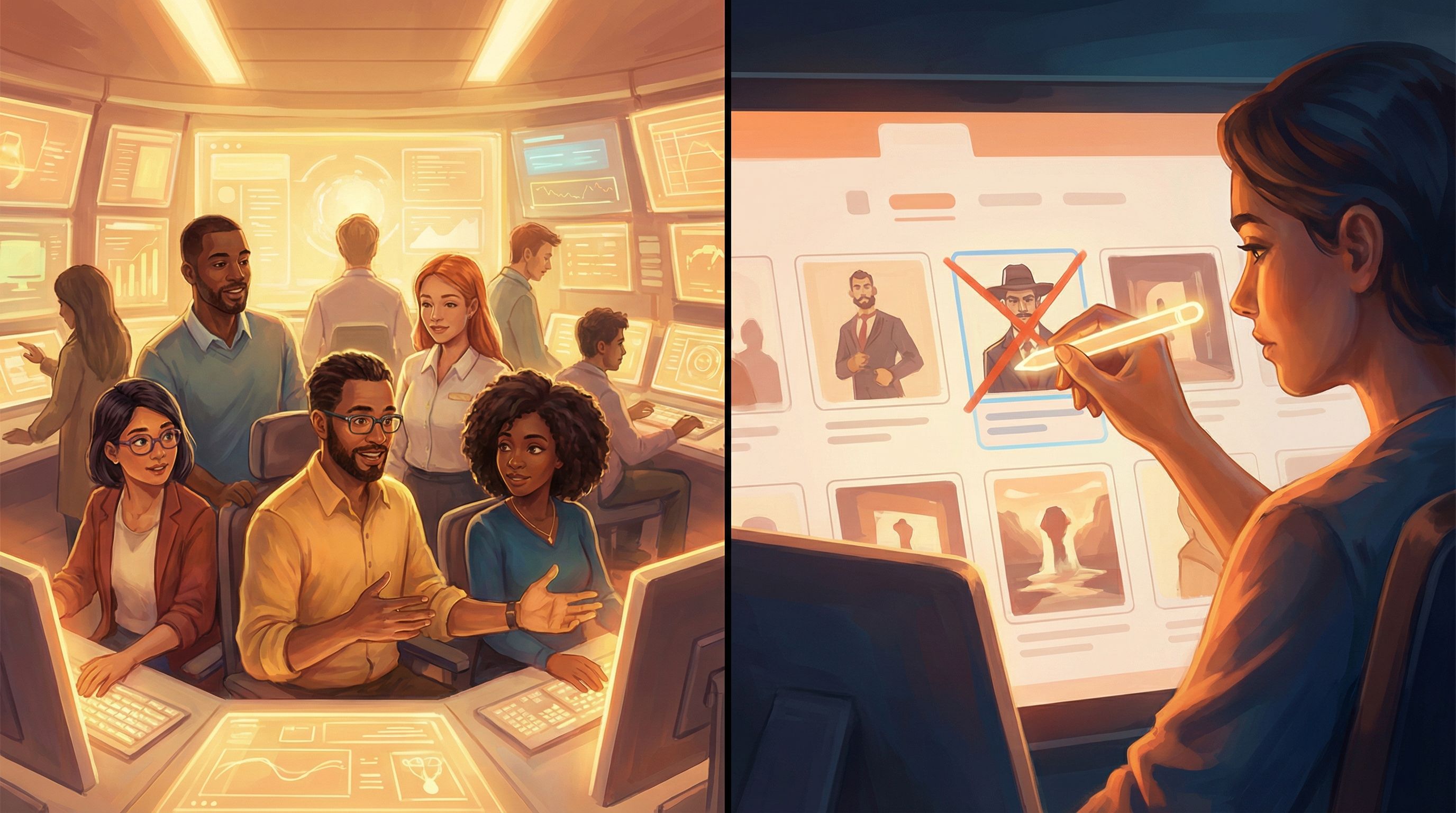
1. Audit Your Cast and Crowd
Before you finalize your visuals, zoom out and look at your entire character set:
- Who appears most often? Are they mostly one gender, body type, or ethnicity?
- Who gets authority roles? Leaders, experts, mentors, bosses.
- Who is background only? Are certain groups only ever shown as crowds, servants, or victims?
Aim for:
- Role diversity – Marginalized characters should be more than sidekicks or symbolic sacrifices.
- Visual diversity – Skin tones, hair textures, body types, ages, assistive devices (wheelchairs, canes, hearing aids, prosthetics), etc.
A simple technique:
Create a one‑page “cast collage” of your AI images in Questas or your design tool of choice and scan it for patterns. If it looks like a monoculture, revise.
2. Prompt for Inclusion (Not Stereotypes)
When you write prompts for AI images or video, be intentional about the details you include.
Do:
- Specify diversity in neutral terms: “a group of engineers of varied ages, genders, and ethnicities collaborating around a table.”
- Highlight roles, not clichés: “a Black woman in a lab coat presenting research findings,” instead of “sassy Black sidekick.”
- Include context that avoids fetishization: “a respectful, grounded portrait of a Muslim family in everyday clothing at home.”
Avoid:
- Reducing characters to stereotypes (e.g., “mystical Asian monk,” “fiery Latina,” “thug,” “exotic dancer”).
- Oversexualizing characters by default, especially women and femme characters.
- Treating cultural or religious dress purely as aesthetic flair.
For more on getting consistent, respectful visuals across a whole story, check out Picture This: How to Prompt AI for Consistent Characters and Worlds in Questas.
3. Be Careful With Real-World Symbols and Settings
If your story touches real cultures, histories, or conflicts:
- Avoid real hate symbols, extremist insignia, or real‑world mass tragedies. Use fictional equivalents if you must explore similar themes.
- Research before you remix. If you draw from specific traditions (e.g., Indigenous regalia, religious rituals), take time to understand what’s sacred or restricted rather than freely aestheticizing it.
- Don’t collapse cultures. “Generic tribal outfit” or “African village” flattens countless distinct cultures into a single trope.
When in doubt, shift your worldbuilding slightly:
- Invent a fictional culture inspired by, but not copying, real elements.
- Mix influences thoughtfully and avoid one‑to‑one stand‑ins for real marginalized groups.
4. Use Mood and Composition Ethically
The way you frame scenes influences how players feel about groups and events.
Ask yourself:
- Are certain groups always shown in shadows, chaos, or decay while others get warm, heroic lighting?
- Do you only ever show a particular neighborhood or planet as dangerous or dirty?
Try to:
- Show multiple facets of each place or group (joy, struggle, everyday life, celebration).
- Avoid visual shorthand that equates “poor” with “bad” or “foreign” with “threatening.”
Designing Choices With Moral Weight (Without Harm)
Choices are where ethics and design collide. You want tension, stakes, and real consequences—without exploiting trauma or pushing players into harmful identification.
1. Map the Moral Landscape
Before you script branches in Questas:
- List your core values for this story: e.g., empathy, accountability, community, courage.
- Decide how those values will be rewarded or challenged in gameplay.
Then, for each major decision point, ask:
- What virtue or flaw does this choice express?
- What will the player learn about the world’s values from the outcome?
This keeps you from accidentally:
- Rewarding cruelty with the “best” ending.
- Punishing marginalized identities for simply existing.
2. Avoid False or Exploitative Dilemmas
Some dilemmas sound dramatic but are ethically shallow or harmful, such as:
- “Out your friend’s queer identity or lose the mission.”
- “Exploit a vulnerable community for profit or fail the level.”
You can still explore hard topics, but:
- Provide third options that reflect ethical creativity (e.g., whistleblowing, coalition‑building, negotiation).
- Let players refuse harmful premises and still progress, even if it’s the “hard mode” path.
3. Use Content Warnings and Framing
When your story includes heavy material (violence, discrimination, grief):
- Add a brief content note on your opening scene or a preface scene.
- Use tone setting in your first few choices and visuals so players know what they’re stepping into.
- Consider optional “gentler path” branches where key themes are present but less graphically depicted.
Thoughtful onboarding is part of ethics too—see Onboarding Your Audience: Best Practices for Introducing New Players to Questas Stories for ways to do this without killing the mystery.
4. Reflect Consequences Beyond the Individual
Ethical storytelling looks beyond “Did the hero win?”
Where possible, show how choices affect:
- Communities
- Environments
- Future generations
For example:
- A quick profit choice might lead to visible environmental damage a few scenes later.
- A decision to protect a marginalized group might inspire a later uprising or alliance.
This doesn’t mean every good deed yields a perfect outcome—but it does mean your world acknowledges systemic effects, not just personal drama.

Inclusive Sensory Design: Audio, Micro-Video, and Accessibility
Ethical worldbuilding isn’t only about visuals and text. The way you use sound, motion, and interface affects who can comfortably play.
1. Use Audio and Micro-Video Thoughtfully
Ambient audio and short looping video can deepen immersion—but they can also overwhelm or distress players if misused.
Good practices:
- Keep volume moderate by default; avoid sudden loud stings.
- Use ambient soundscapes (rain, distant chatter, soft music) rather than constant jump scares or sirens.
- Offer clear controls to mute or pause media.
If you want to go deeper on this layer, read Beyond Text and Images: Using Ambient Audio and Micro-Video to Deepen Immersion in Questas.
2. Design With Accessibility in Mind
Accessible design is an ethical commitment. A few high‑impact moves:
- Text clarity: high contrast, readable font sizes, minimal text over busy images.
- Motion sensitivity: avoid rapid flickers or intense motion loops; let players pause or skip.
- Alternative cues: don’t rely solely on color or sound to convey critical information.
For a deeper dive, bookmark Accessibility by Design: Building Inclusive, Player-Friendly Questas Stories Everyone Can Enjoy.
Iterating Responsibly With Player Feedback
Ethical worldbuilding is not a one‑and‑done checklist. It’s an iterative practice.
1. Invite Feedback on Comfort and Representation
When you share your Questas story:
- Ask specific questions:
- Were there any scenes or images that felt off, stereotypical, or uncomfortable?
- Did you feel represented—or noticeably absent?
- Provide anonymous channels for feedback so people can speak honestly.
2. Watch the Data, Not Just the Comments
Analytics can reveal ethical friction points:
- Spikes in drop‑off at certain scenes may signal discomfort or confusion.
- Branches almost no one chooses might be poorly framed or feel morally repugnant.
Combine this with qualitative feedback to decide what to revise. If you want a structured approach, pair this with Analytics for Adventure: Using Player Data to Improve Your Questas Stories Over Time or Beyond the Branch: Using Player Feedback and Analytics to Iteratively Rewrite Your Questas Narrative.
3. Be Willing to Patch and Publicly Improve
If players point out harm or misrepresentation:
- Acknowledge it. A short note in your story description or update log goes a long way.
- Fix what you can. Update images, rewrite scenes, add content warnings, or adjust outcomes.
- Share what changed. Transparency builds trust and models good practice for other creators.
Bringing It All Together
Ethical AI worldbuilding on Questas isn’t about perfection. It’s about intention.
When you:
- Define your ethical story bible
- Prompt AI visuals with care for representation and context
- Design choices that respect player agency and lived experience
- Layer in inclusive sensory design and accessibility
- Iterate based on real player feedback
…you create worlds that feel richer, more human, and more memorable. Players don’t just click through; they carry your story with them.
Where to Go From Here
If you’re ready to put this into practice, here’s a simple first step you can take this week:
- Pick one story—either a new idea or an existing Questas project.
- Write a one‑page ethical story bible covering themes, red lines, representation goals, and consent/safety rules.
- Audit three things:
- Your main character images
- One pivotal choice
- One scene with strong audio or visual effects
- Make at least one ethical improvement in each area—rewrite a prompt, rebalance a choice, add a content note, or tweak your media.
- Share it with a trusted tester and ask specifically for feedback on comfort, representation, and clarity.
Ready to build worlds that are not only stunning but also responsible and inclusive?
Head over to Questas, open your next adventure, and let ethics be part of your creative superpower—not an afterthought. Adventure awaits, and you have the chance to make it a better one for everyone who steps inside.