From Linear Fan Zines to Playable ‘What Ifs’: Designing Community-Driven Questas Anthologies

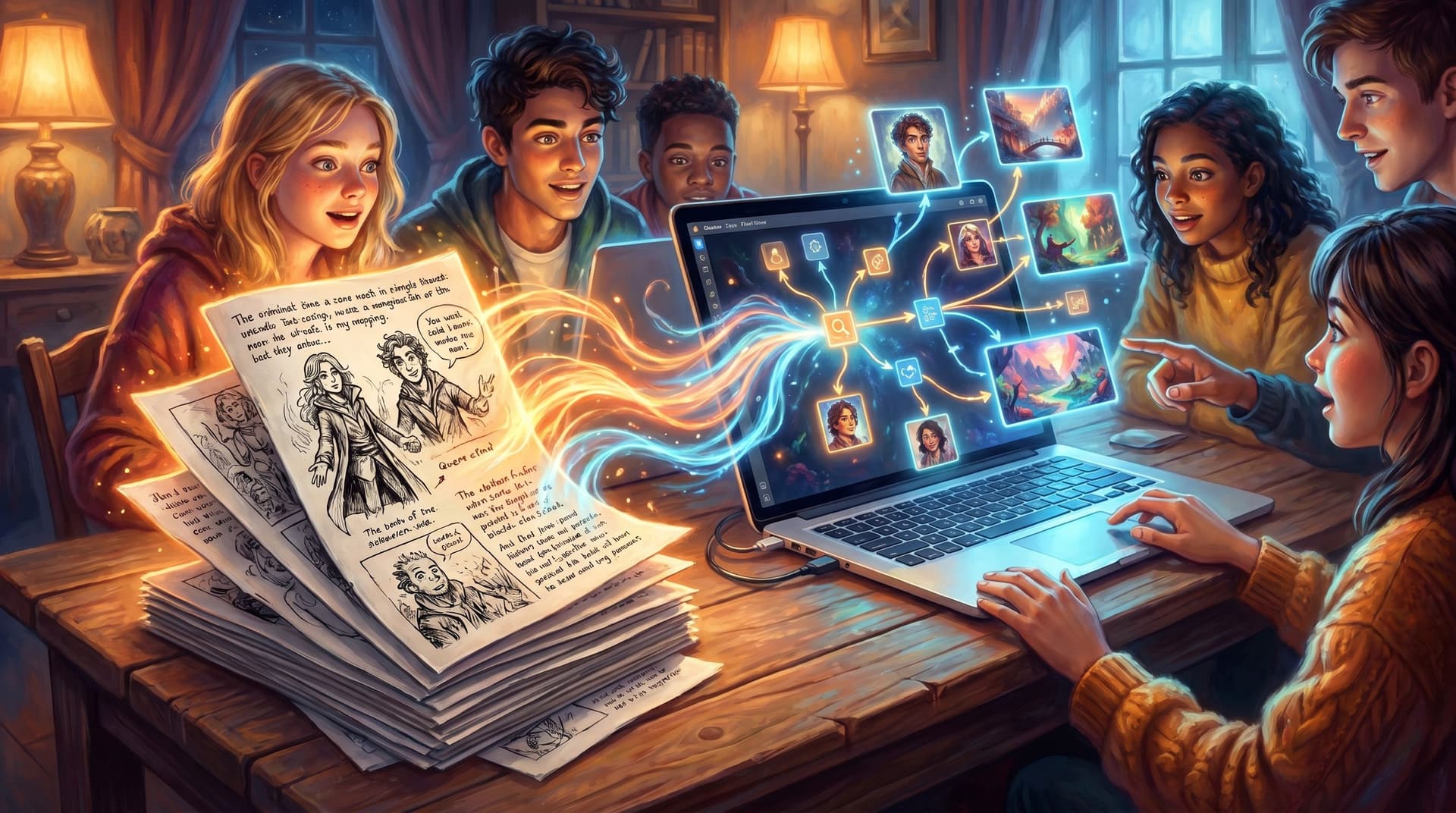
Fan zines have always been about one thing: sharing a universe you love with people who care just as much. But where zines once meant stapled pages, fixed timelines, and one “canon” per issue, communities now want something more participatory:
What if readers could literally play through everyone’s favorite headcanons, AUs, and fix-it endings?
That’s where community-driven anthologies built in Questas come in.
Instead of a static collection of stories, you’re curating a playable library of branching “what if” routes—each contributed by different creators, all living in a shared storyworld, all wrapped in AI-generated visuals and micro‑videos.
This post walks through how to design those anthologies so they feel coherent, replayable, and genuinely collaborative—without needing to write a single line of code.
Why Playable Anthologies Are Worth Building
Community-driven Questas anthologies sit at the intersection of fan zines, fic exchanges, and visual novels. They’re powerful because they:
1. Turn passive readers into co-pilots
Instead of skimming a PDF or scrolling a thread, players:
- Make choices that steer the story
- Compare routes and endings with friends
- Screenshot their favorite scenes and share them back into the community
This creates a loop: creators publish → players explore → community reacts → creators iterate.
2. Give every contributor a spotlight—inside one shared universe
A good anthology structure lets you:
- Host multiple short quests that all riff on the same characters, AU, or theme
- Let each creator own a branch, episode, or “route” while still feeling part of a bigger whole
- Make it easy for new contributors to join later seasons or volumes
If you’re thinking about consistency of tone and visuals across many contributors, you’ll want to pair this with a shared visual language. The ideas in AI as Art Director: Building Cohesive, On-Brand Visual Languages for Your Questas Series are especially useful once you move beyond a single solo quest.
3. Build replay value into the format
Anthologies are naturally replayable:
- Different routes emphasize different ships, themes, or “what if” pivots
- Players can choose which contributor’s route to try next
- Seasonal or event-based drops (Halloween, Pride, fix‑it specials) keep the world alive
To go deeper on making people actually come back for second and third runs, see Designing Replay Value on Purpose: Structuring Questas Stories So Players Actually Want a Second Run.
4. Lower the barrier to entry for new creators
Because Questas is a visual, no‑code editor with AI-generated images and video, your contributors don’t need:
- Coding skills
- A full art pipeline
- Huge blocks of free time
They can claim a small “tile” in the shared universe—say 5–10 scenes—and still meaningfully shape the anthology.
Step 1: Decide What Kind of Anthology You’re Making
Before you invite contributors, define the shape of your anthology. A few patterns work especially well in Questas:
A. Multi-Route “Core Scenario”
Everyone writes their own route through a single shared inciting incident.
- Example: The fandom’s favorite character wakes up in a new AU. Each contributor designs one possible path: crime heist AU, coffee shop AU, space opera AU, etc.
- Structure in Questas:
- One shared opening sequence (a “hub” quest or shared template)
- Branches that jump into each contributor’s route
- Optional “epilogue” scenes that reference which route the player just took
B. Shared World, Standalone Episodes
Each creator builds a short story that’s canonically in the same universe, but players can start anywhere.
- Example: A magical city anthology—each quest follows a different resident on the same festival night.
- Structure in Questas:
- A menu or map scene where players pick an episode
- Light references between episodes (cameos, recurring locations)
- Optional meta‑achievements for playing multiple quests
C. Forked Canon Anthology
The anthology explores alternate timelines from a single key decision.
- Example: “What if the villain won?” “What if the mentor never died?” “What if the portal never closed?”
- Structure in Questas:
- A single pivotal choice scene
- Each contributor owns one timeline that flows from that choice
- A shared “timeline archive” or codex quest that catalogs the different outcomes
When you announce the project, be explicit about which pattern you’re using. It helps contributors scope their ideas and keeps the final anthology understandable for players.
Step 2: Build a Shared Canon Starter Kit
If you’ve ever watched a fandom project fall apart over continuity arguments, you know this step matters.
For a community-driven Questas anthology, create a lightweight “canon starter kit” that includes:
1. World + character basics
- Short bios for key characters (including pronouns, core traits, non‑negotiables)
- A timeline of major events everyone agrees are canon (unless you’re explicitly writing AUs)
- A glossary of important terms, locations, factions, and rules of magic/tech
2. Visual guidelines
- A shared description and prompt for each recurring character
- 2–3 agreed‑upon art styles (e.g., painterly fantasy, cel‑shaded comic, cozy slice‑of‑life)
- Reference images generated in Questas that everyone can reuse or remix
If you haven’t done this before, the practices in The New Visual Writer’s Room: Building a Shared Prompt, Style, and Canon Bible for Questas Teams map almost perfectly onto fandom anthologies.
3. Tone and rating guardrails
- What’s the content rating? (PG, T, explicit?)
- Are there themes you want to spotlight (hopepunk, horror, comedy)?
- Are there topics or tropes that are off‑limits for this anthology?
This is also where you can borrow from Ethical AI Worldbuilding practices to keep your shared universe safe and fair, especially if younger fans will be playing.
Step 3: Design the Player’s Journey Through the Anthology
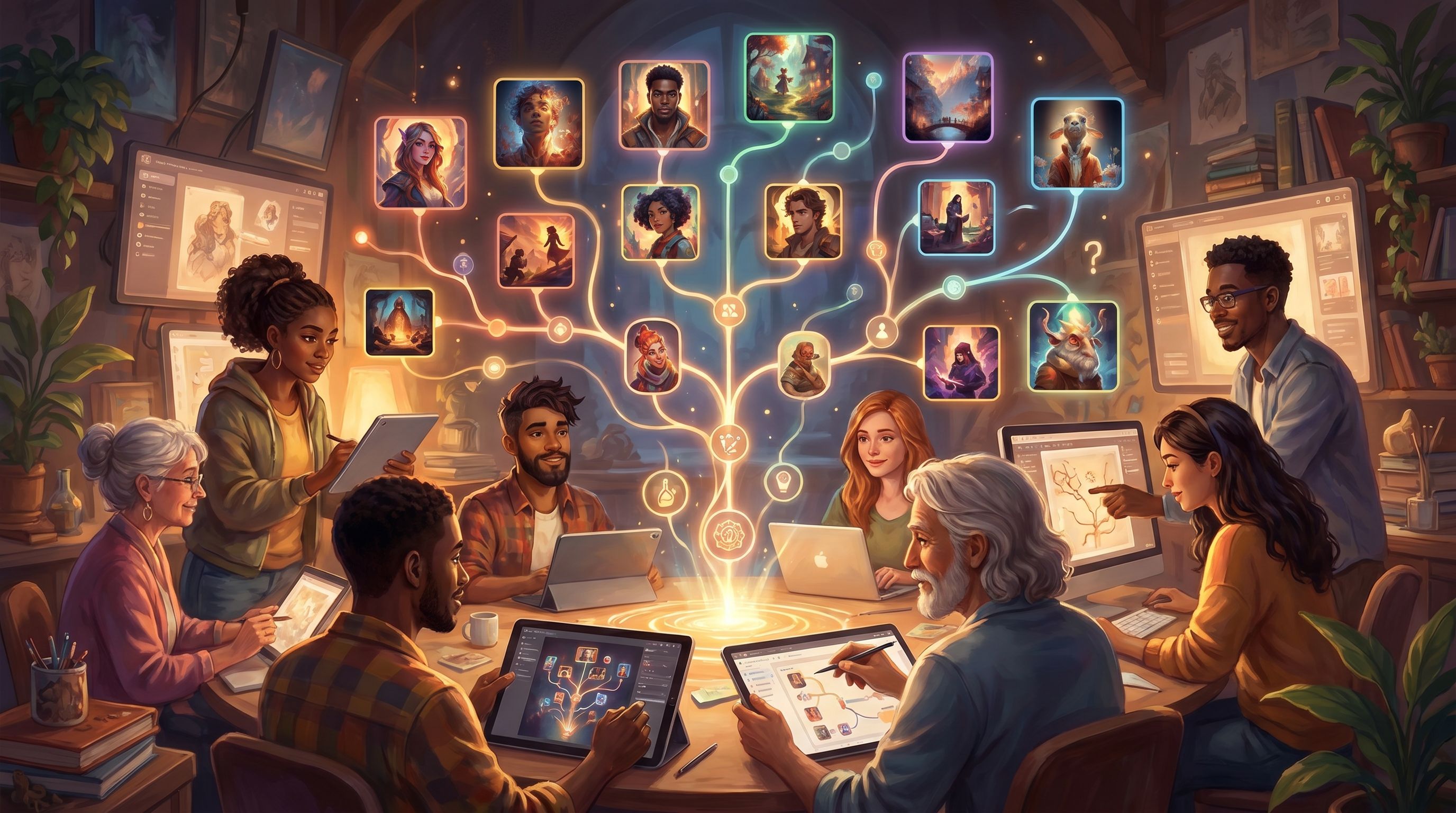
You’re not just designing stories; you’re designing how players move between stories.
Think about:
Entry Points
How do players first encounter the anthology?
Options that work well:
- A map or hub scene – players click on locations, characters, or artifacts to jump into different quests.
- A “librarian” or archivist character – they introduce the anthology and recommend routes based on mood.
- A seasonal gate – e.g., a festival gate, a convention hall, a starship docking bay with doors labeled by quest.
Progression and Completion
How do players know they’re “done” or where to go next?
Consider adding:
- Badges or endings catalogues – a simple scene that unlocks as players finish routes, summarizing endings they’ve seen.
- Soft meta‑goals – “See three versions of the Festival Night,” “Play all routes where Character X survives.”
- Gentle nudges – after credits, offer a choice: “Try another creator’s route” vs. “Exit anthology.”
Replay Hooks
Design the anthology so that replays feel baked in, not like homework:
- Telegraph when a big fork is coming: “This is the choice that changes everything…”
- Use small callbacks between quests (a poster in the background, a side character referencing another route).
- In meta scenes, have characters hint at unseen possibilities: “Somewhere out there, I made a very different choice.”
If you want to go deep on these techniques, Designing ‘Soft Fails’ in Questas: Letting Players Mess Up Without Breaking the Story is a great companion read. Soft fails are especially useful in anthologies, where you want players to explore without fear of “ruining” the experience.
Step 4: Set Contributor Scopes and Templates
The fastest way to burn out a volunteer anthology is to make everything open‑ended. Constraints are your friend.
Define a Standard “Episode Shape”
For example:
- 6–10 scenes total
- 3–5 meaningful choice points
- 2–4 distinct endings
- At least 1 visual of each key character in that route
Create a starter quest template inside Questas that includes:
- A pre‑built intro scene with anthology branding
- Placeholder nodes for key beats (Inciting Incident, Midpoint Shift, Climax, Epilogue)
- Pre‑wired logic for tracking a few shared variables (e.g.,
trust_with_A,city_corruption_level)
Contributors duplicate the template and fill in their version of the story.
Offer Clear Role Options
Not everyone wants to do everything. You might:
- Pair writers with visual leads who enjoy prompt‑crafting
- Invite lore keepers who maintain the canon doc and answer continuity questions
- Recruit a small editorial team to do light QA on branches and tone
Spell out expectations upfront: word counts, deadlines, number of images, and whether you’ll have a final editorial pass before publishing.
Step 5: Coordinate Visual Consistency Without Killing Creativity
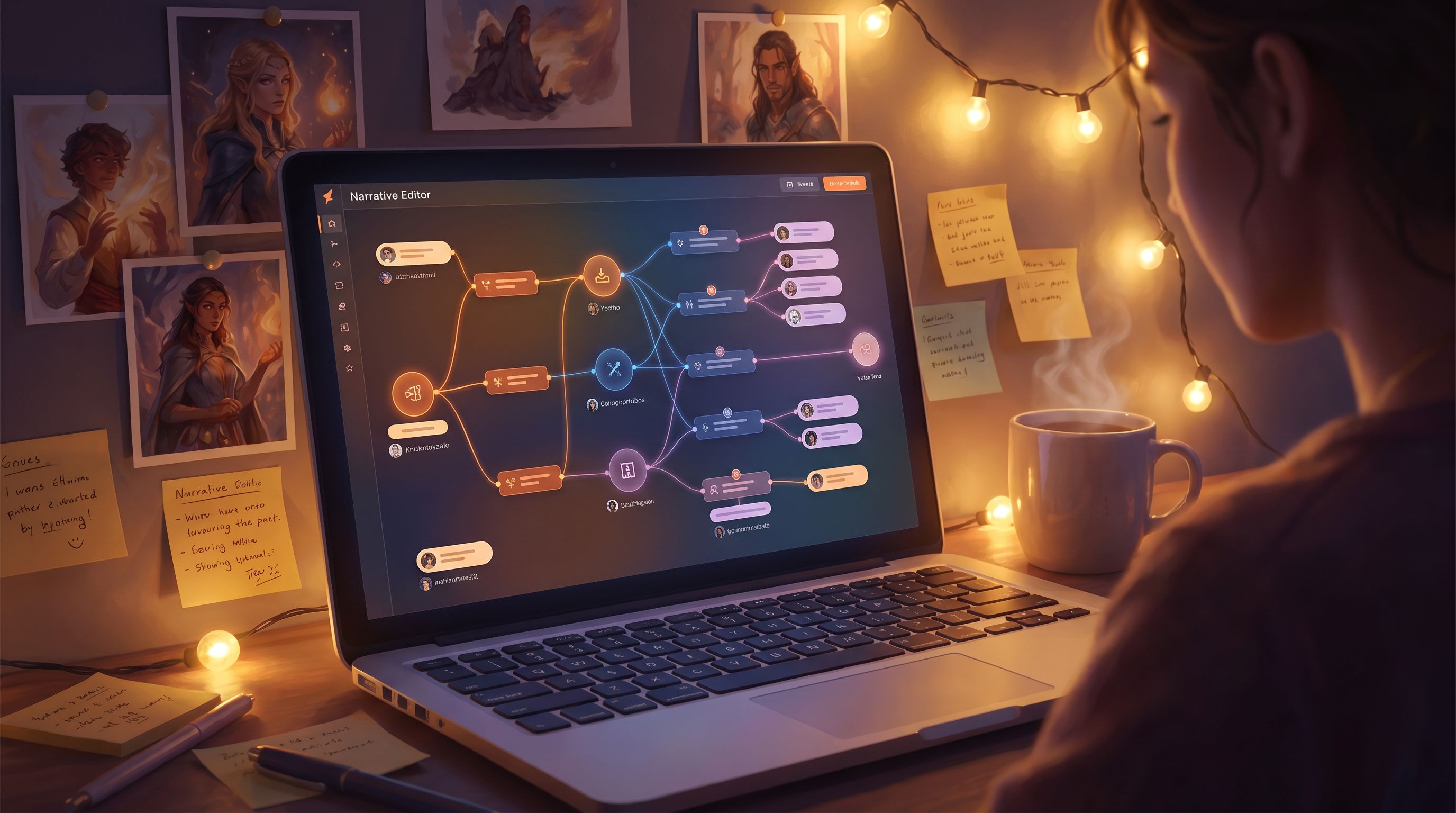
One of the delights of an anthology is seeing different styles. One of the risks is visual whiplash.
Use a “rails and playground” approach:
Rails (shared constraints):
- Consistent character designs: same hair color, key outfit elements, visible traits.
- A narrow style band: e.g., all semi‑realistic or all cel‑shaded; no mixing photoreal with chibi.
- A small palette of recurring colors or motifs (the blue festival lanterns, the red sigil, the neon skyline).
Playground (where creators can vary):
- Camera angles and composition
- Lighting and mood (cozy, ominous, romantic) within agreed rating boundaries
- How abstract or detailed backgrounds are, as long as key landmarks are recognizable
Inside Questas, encourage contributors to:
- Reuse shared image assets for recurring locations
- Start from a shared prompt and tweak rather than reinvent
- Save their best prompts and settings into a shared doc or “visual bible” quest
If you want a deep dive on turning AI from a chaos gremlin into a reliable collaborator, send contributors to AI as Art Director: Building Cohesive, On-Brand Visual Languages for Your Questas Series. The same principles apply here—just spread across more people.
Step 6: Establish a Lightweight Review and Safety Process
Community projects thrive on trust. A simple, transparent review process helps:
1. Pre‑build pitch check
Have contributors submit a short pitch:
- Their route’s premise
- Key choices and themes
- Any potentially sensitive content
You can catch major canon clashes or content issues before time is spent building.
2. Pre‑publish playtest
Before a quest joins the anthology hub:
- At least 2–3 people from the community play through it
- They check for broken branches, confusing choices, and tone misalignments
- They flag any content that might need warnings or adjustments
3. Clear content warnings and tagging
At the anthology hub and per route, include:
- Content tags (e.g., angst, hurt/comfort, horror elements)
- Safety warnings for topics like violence, self‑harm, or phobia triggers
- Approximate play time and route difficulty (light, medium, heavy)
This doesn’t need to be heavy bureaucracy—just enough structure to keep contributors and players feeling respected.
Step 7: Launch as an Event, Not Just a Link Drop
You’ve built something special; give the launch the energy it deserves.
Ideas that work well for community-driven Questas anthologies:
- Premiere stream or watch party – one or more hosts screen‑share and play through a few routes live, with creators in chat.
- “Route bingo” or achievement cards – give players playful challenges like “Find the secret cat cameo” or “Reach three different festival endings.”
- Creator Q&A threads – each contributor posts a short behind‑the‑scenes note: what choices they obsessed over, favorite images, hidden details.
- Post‑launch jam – invite micro‑quests that respond to player reactions: spin‑off routes, joke endings, or epilogues.
Because Questas makes it easy to update and extend stories, you can treat the anthology as a living project:
- Seasonal updates (new routes for holidays or fandom events)
- “Director’s cut” versions of popular quests
- Crossovers with other communities or IP (where allowed)
Step 8: Keep the Feedback Loop Alive
The anthology doesn’t end at launch. Use it as a feedback engine for your community’s creativity.
Ways to collect and use feedback:
- Player surveys embedded at the end of the hub quest: ask which routes they played, favorite moments, confusing branches.
- Screenshot threads where players share their favorite visuals and endings.
- Replay analytics (if you’re tracking) to see which branches get the most traffic and where players tend to drop off.
These insights can:
- Inform which creators you invite back for future volumes
- Highlight which themes or AUs resonate most
- Reveal where your canon docs or visual guidelines need tightening
For more on using real player behavior to refine your worlds, you can borrow techniques from The Visual Feedback Loop: Using Player Screenshots and Replays to Iteratively Refine Your Questas Worlds. Even if your anthology is small, that mindset pays off quickly.
Bringing It All Together
Community-driven Questas anthologies are a natural evolution of fan zines and fic exchanges:
- From linear to branching: Players don’t just read your takes—they navigate them.
- From isolated stories to shared universes: Contributors build on each other’s ideas, visuals, and canon.
- From one‑and‑done to replayable worlds: Routes, timelines, and AUs invite multiple visits and group play.
By:
- Choosing a clear anthology pattern
- Creating a simple canon starter kit
- Standardizing episode shapes and templates
- Coordinating visuals with shared prompts and assets
- Building a lightweight review and safety process
- Launching as a community event and sustaining a feedback loop
…you can turn a Discord server’s worth of headcanons into a polished, playable library of “what ifs” that anyone can jump into.
Ready to Start Your Own Anthology?
You don’t need a full editorial staff or a dev team to pull this off. You need:
- A fandom or community that loves exploring alternate possibilities
- A few organizers willing to set guardrails and templates
- A platform like Questas that lets everyone build interactive, visual stories without code
If you’ve been sitting on a zine idea, a fic exchange concept, or a “what if we all wrote our own versions of this scene?” thread, this is your sign:
- Pick your anthology pattern.
- Draft a one‑page canon starter kit.
- Spin up a shared template in Questas and invite your first three contributors.
Your community’s next anthology doesn’t have to be a PDF. It can be a universe people play together.


