AI-Enhanced Plot Twists: Designing Surprising Yet Fair Reveals in Your Questas Stories

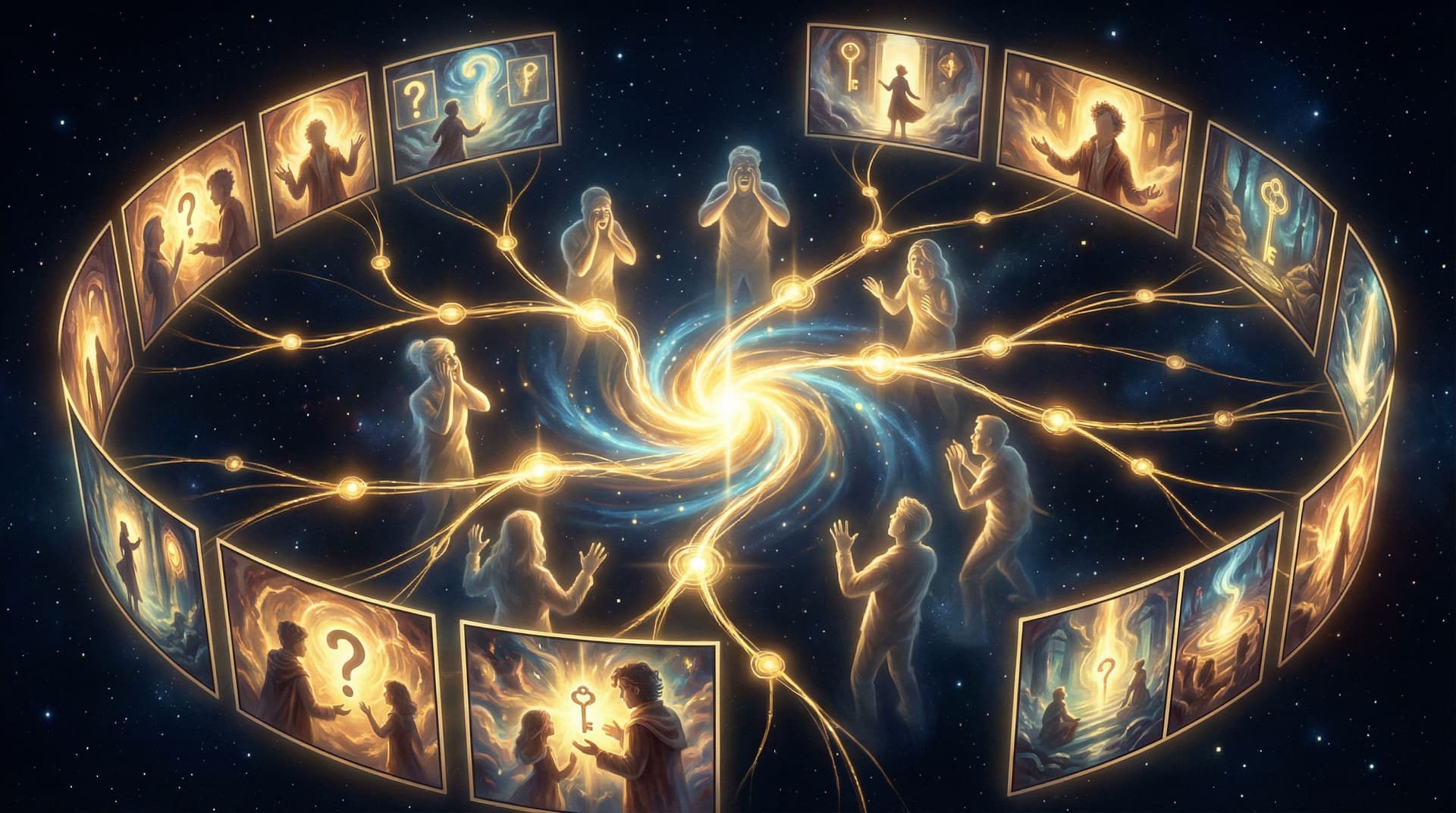
Plot twists are the moments your players remember.
They’re the gasp when a trusted ally betrays them, the shiver when a throwaway detail from Scene One suddenly explains everything in Scene Twelve, the delight when a “bad” choice turns out to be the only path to a secret ending.
When you’re building in Questas, twists are even more powerful—because they don’t just reframe a single linear story. They can reframe entire branches, unlock hidden routes, and make replays feel radically different.
But there’s a tightrope to walk:
- Too obvious, and players feel bored or talked down to.
- Too random, and they feel cheated—like the author pulled a rabbit from a hat with no setup.
The sweet spot is the surprising yet fair twist: a reveal that shocks players in the moment, but feels inevitable in hindsight. This post is a deep dive into how to design those twists specifically for interactive, AI-visual stories on Questas.
Why Twists Matter More in Branching Stories
Twists do a lot of heavy lifting in any narrative, but in branching, choice-driven stories they’re doing triple duty.
1. They supercharge replay value.
When players realize, “Oh, if I’d taken that other route, I would’ve learned the truth way earlier,” they’re far more likely to dive back in. Twists become incentives to explore your story graph.
2. They make choices feel meaningful.
A reveal that only exists on one branch tells players, “Your path matters.” Even small decisions—like whether to talk to an NPC or inspect a background object—can unlock or delay key information.
3. They help your world feel coherent, not chaotic.
A well-set-up twist proves that your universe runs on rules, even if they’re hidden at first. That sense of underlying logic is core to building continuity across bigger storyworlds (see how creators tackle this in From Lore Bible to Living Wiki: Using Questas to Maintain Continuity Across Expanding Story Universes).
4. They pair beautifully with AI visuals.
Because Questas lets you generate images and video per scene, you can plant visual clues early—then pay them off later. A recurring symbol, a background character, a slightly “off” reflection: all of these can foreshadow your twist without a single extra line of text.
The Anatomy of a “Surprising Yet Fair” Twist
Before we get tactical inside Questas, let’s define what we’re aiming for.
A strong twist in an interactive story usually has four ingredients:
- Expectation – The player thinks they understand what’s going on. You’ve established a pattern: who’s trustworthy, what the rules are, what the stakes look like.
- Subversion – The twist breaks that pattern in a sharp, memorable way.
- Evidence – Once revealed, the player can look back and spot clues you planted earlier. These might have been ambiguous or innocuous at the time, but they now “click” into place.
- Agency – In a branching story, the twist lands best when the player’s own choices influenced how and when they discovered it.
If you’re missing any of these, you risk either predictability (no subversion) or frustration (no evidence, no agency).
A useful litmus test as you design:
Could a very attentive player have reasonably suspected this twist before it happened—without you outright telling them?
If the answer is yes, you’re in fair territory.
Step 1: Decide What Kind of Twist You’re Building
Not all twists are created equal. In Questas, different twist types work better for different structures.
Here are four common categories and how they show up in interactive stories:
1. Identity Twists
The classic “X was Y all along” reveal.
- The mentor is the villain.
- The player character is actually a clone.
- That background NPC is a future version of the protagonist.
Where they shine in Questas:
Identity twists are perfect for branches where players can choose how deeply to engage with certain characters. Optional conversations and side scenes can seed different levels of suspicion.
Design tip: Use character memory and consistency techniques from Designing ‘Living NPCs’: How to Give Side Characters Memory, Motives, and Agency in Questas so your “secret identity” character feels coherent before and after the reveal.
2. Causality Twists
The “you caused the thing you were trying to prevent” twist.
- The attempt to destroy the artifact actually activates it.
- The warning message you sent in Chapter 1 is the very message that triggers the crackdown in Chapter 6.
Where they shine in Questas:
These work beautifully when you want choices to have long-tail consequences. Nodes that look like small decisions early on can be referenced much later.
3. Perspective Twists
Reveals that change how you interpret earlier scenes.
- You’ve been playing the villain’s point of view.
- The “antagonist” was actually trying to save you from a bigger threat.
Where they shine in Questas:
Perspective twists pair well with multiple playable characters or “New Game+” style replays. On a second run, you can unlock scenes that show the same events from another angle.
4. Rule-of-the-World Twists
The underlying rules aren’t what you thought.
- Magic is actually advanced tech.
- Death is reversible—but only if certain social rules are followed.
- The “game” is being watched by in-universe spectators.
Where they shine in Questas:
These are great anchors for entire campaigns or series. They can also justify new mechanics introduced mid-story (for example, time loops, memory wipes, or meta commentary).
Pick one primary twist type per major arc. You can absolutely layer them, but knowing the core twist helps you avoid muddy, unfocused reveals.
Step 2: Map the Reveal Across Branches
In linear fiction, you decide when the twist hits. In a branching story, you’re really deciding where it can hit.
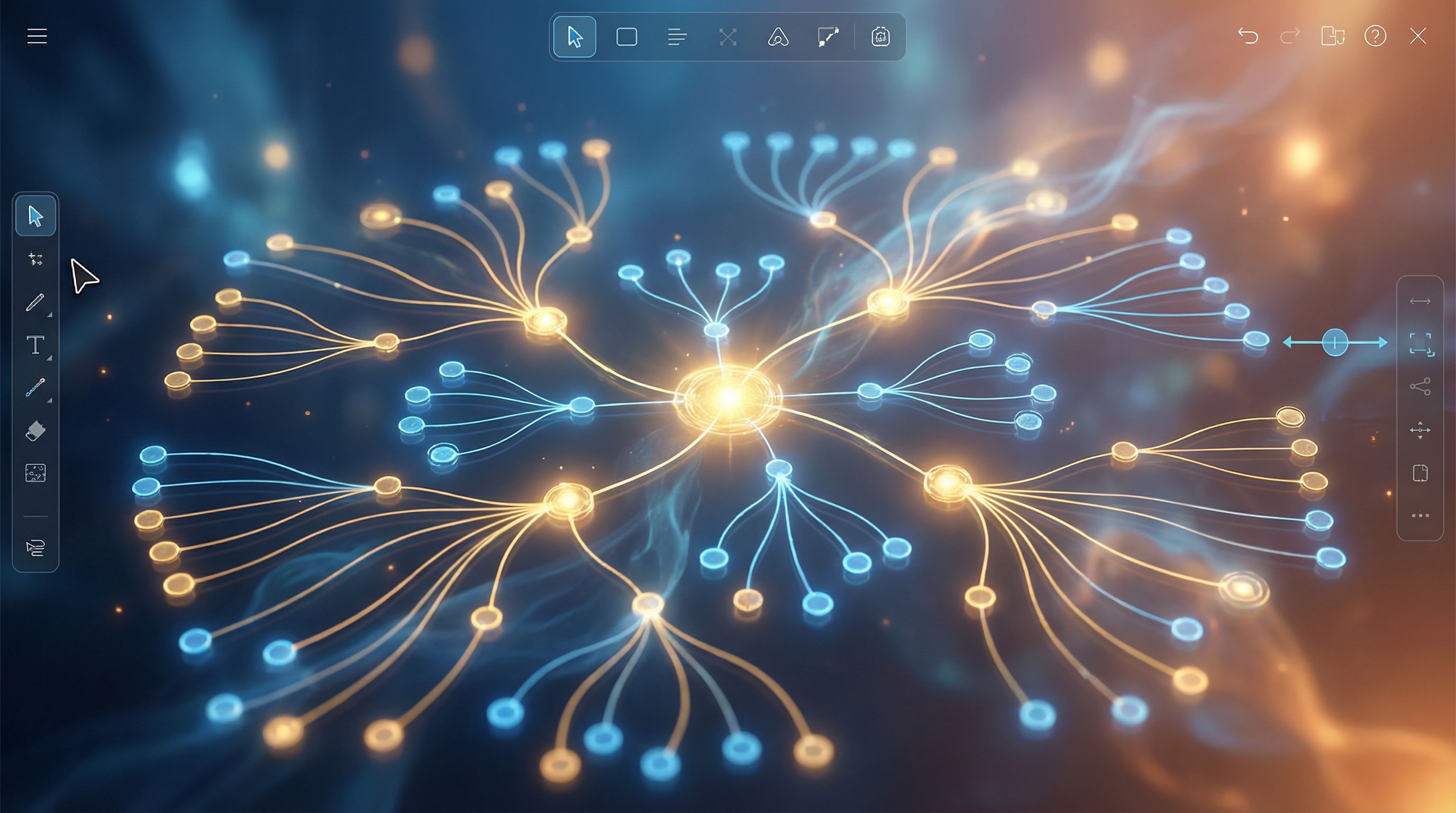
Inside Questas, open your story map and locate:
- The earliest plausible reveal point – When could a sharp player reasonably uncover the truth if they make very investigative choices?
- The default reveal point – When will most players likely hit the twist, assuming “normal” curiosity?
- The latest fail-safe reveal point – If they somehow miss every hint, where must you reveal it so the story still makes sense?
Then, design your branches so:
- Curious, risk-taking players can earn an early reveal (maybe via a hard-to-reach scene or a costly choice).
- Most players hit the default reveal in a satisfying, paced way.
- No one finishes the story confused because you’ve placed a fail-safe reveal on every critical path.
A simple way to represent this in your planning:
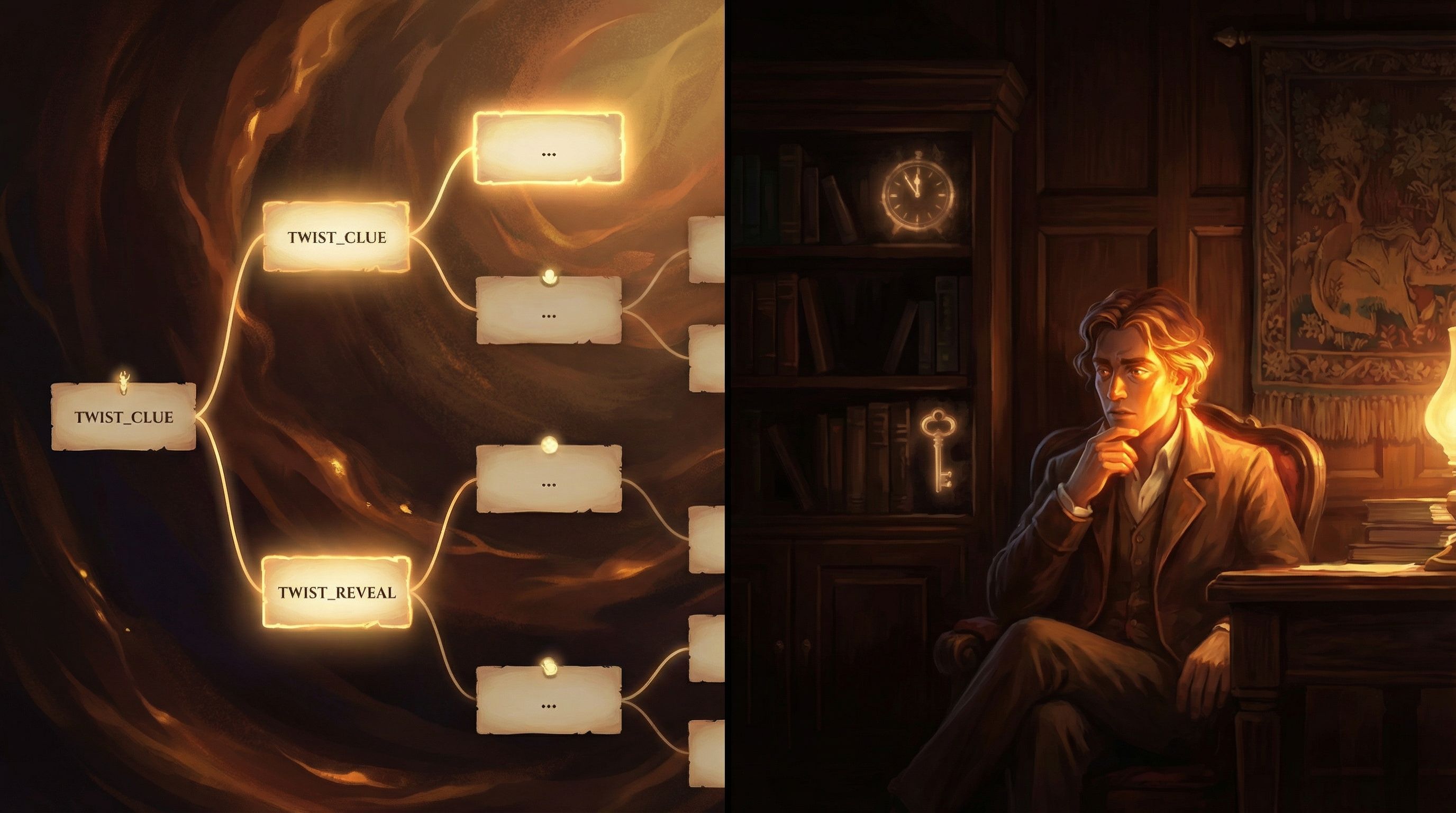
- Mark nodes with tags like
TWIST_CLUE,TWIST_SOFT_REVEAL,TWIST_FULL_REVEAL. - Use color coding in your visual editor notes or external planning doc.
This is where skills from turning linear stories into modular systems come in handy—if you’re new to that, check out From Short Story to Story System: Adapting Linear Fiction into Modular Scenes for Questas for a practical primer.
Step 3: Plant Multi-Channel Clues (Text + Visuals)
AI-enhanced stories give you more than dialogue and narration. You also control:
- Environment art
- Character design and expressions
- UI elements and overlays
- Short AI-generated video beats
Use these channels as layers of foreshadowing.
Textual Clues
These are the classic hints:
- Odd word choices or metaphors a character repeats.
- Inconsistent details in someone’s backstory.
- An object that keeps getting mentioned but never explained.
Guideline:
Aim for 3–5 textual clues before a major twist, scattered across different branches. Some can be optional; others should be on critical paths.
Visual Clues
This is where Questas’s AI visuals shine.
Ideas:
- A sigil, logo, or color motif that appears on both the “hero” faction and the “villain” faction, hinting at a shared origin.
- A character whose reflection in a window looks slightly different—perhaps older, injured, or wearing different insignia.
- Background monitors or posters that quietly reference the true nature of the world.
Guideline:
Decide on 1–2 visual motifs tied to your twist and reuse them deliberately. Keep a short style note so your prompts stay consistent across scenes.
Structural Clues
Even the shape of your branches can foreshadow a twist:
- Routes that look like dead ends but secretly loop back with new context.
- A side path that seems “too generous,” hinting that something is off.
- A recurring choice type (e.g., “Trust / Verify / Ignore”) that mirrors the theme of the twist.
When all three channels—text, visuals, structure—are working together, your twist feels deeply earned.
Step 4: Use Player Choices to Shape the Twist
A twist feels especially satisfying when players sense, “I didn’t just witness that reveal—I shaped it.”
Here are concrete ways to weave agency into your twists in Questas:
Branch the Information, Not Just the Outcome
Instead of only branching what happens, branch what the player knows when it happens.
Examples:
- In one branch, the player discovers the villain’s motive early, so the final confrontation is tragic rather than shocking.
- In another, they misinterpret clues and think an ally is guilty, so the same twist lands as a betrayal.
Practically, this means:
- Storing “knowledge flags” (even if just conceptually in your planning) like
KNOWS_SECRET_ORIGINorSUSPECTS_MENTOR. - Writing variations of key scenes that reference those flags.
Let Players Choose How They Find Out
Offer different investigative routes:
- Confrontation path – Directly question the suspicious NPC.
- Snooping path – Search their quarters or hack their device.
- Observation path – Notice inconsistencies over time.
All three can converge on the same core reveal, but the flavor and emotional tone will differ.
Tie the Twist to the Tension Triangle
If you’ve read The Tension Triangle: Balancing Risk, Reward, and Information in Each Questas Choice Point, you know that interesting decisions juggle:
- Risk
- Reward
- Information
Your twist is a perfect place to cash in on that design:
- Players who took high-risk, high-information paths might get a clearer, earlier reveal.
- Players who played it safe might encounter a later, more chaotic version of the twist.
This doesn’t require complex logic systems; even a few alternate scenes or lines of dialogue can make the reveal feel tailored.
Step 5: Make the Twist Emotionally Honest
A clever twist is fun. An emotionally honest twist is unforgettable.
Ask yourself:
-
Whose world does this twist shatter?
- The protagonist’s? A side character’s? The player’s assumptions about the setting?
-
What belief or relationship does it challenge?
- “Authority figures can be trusted.”
- “Sacrifice will be rewarded.”
- “I’m the hero of this story.”
-
What emotional arc follows the reveal?
- Denial → Anger → Bargaining → Acceptance?
- Shock → Dark humor → Determination?
In Questas, you can let players roleplay through that arc with post-reveal choices:
- Do they lash out or go quiet?
- Do they protect the betrayer’s secret or expose it?
- Do they double down on the mission or walk away?
These branches don’t all need wildly different endings. Even small variations in dialogue, tone, or who accompanies the player into the finale can make the emotional fallout feel rich.
Step 6: Use AI to Prototype and Refine Twists Quickly
One of the biggest advantages of working in Questas is how quickly you can iterate.
Here’s a lightweight workflow for prototyping twists:
-
Rough in the core path first.
- Write the “default” version of your twist: setup → reveal → immediate aftermath.
-
Generate placeholder visuals.
- Use simple prompts to get early images that hint at your motifs. Don’t worry about perfection yet.
-
Play through as if you’re three different players:
- The speedrunner (always picks the top option, skips side content).
- The completionist (clicks every optional branch).
- The chaos gremlin (chooses the least “sensible” option every time).
-
Note when each discovers (or should discover) the twist.
- If the speedrunner never sees it, add a fail-safe reveal on their path.
- If the completionist sees five near-identical clues, consolidate.
- If the chaos gremlin accidentally breaks the logic, add guardrails.
-
Regenerate or refine key visuals once the structure is solid.
- Now that you know exactly what your twist is doing, you can upgrade those early images into more intentional foreshadowing.
Because your visuals are AI-generated, you can afford to experiment. Try a more on-the-nose symbol in one version, a subtler palette shift in another, and see which lands better with test players.
Step 7: Playtest for “That Makes Sense… Ugh!” Reactions
The final test of a great twist is player reaction.
You’re aiming for comments like:
- “I knew something was up with her, but I couldn’t put my finger on it.”
- “Wait, that symbol was on the lab door and the amulet? I totally missed that.”
- “I feel betrayed, but in a good way.”
To get there:
-
Ask players to keep a suspicion log.
- While they play, have them jot down: “I suspect X because Y.”
- After the twist, compare their notes to your planned clues.
-
Debrief with two key questions:
- “What made you feel surprised?”
- “What made the twist feel fair or unfair?”
-
Adjust clue density and placement.
- If no one saw it coming, add a couple more concrete hints.
- If everyone guessed it by the midpoint, either move the reveal earlier or make your clues more ambiguous.
-
Check for branch parity.
- Make sure players on different major routes still get a satisfying version of the twist—even if the details differ.
Because Questas is a no-code platform, you can implement these tweaks without refactoring an entire codebase. Small node additions or dialogue variations can dramatically improve the perceived fairness of your reveal.
Bringing It All Together
Designing AI-enhanced plot twists in Questas is less about clever tricks and more about disciplined craft:
- Choose a clear twist type (identity, causality, perspective, or rule-of-the-world).
- Map reveal points across branches so curiosity and risk-taking are rewarded, but no one is left confused.
- Plant multi-channel clues in text, visuals, and structure.
- Let choices shape the twist, especially what players know and how they find out.
- Honor the emotional fallout, not just the “gotcha” moment.
- Prototype rapidly with AI, then refine based on real player reactions.
Do this well, and your stories stop feeling like a series of disconnected scenes and start feeling like living, breathing worlds where everything—every symbol, every side path, every quiet choice—might matter.
Where to Go Next
If you’re excited to start weaving smarter twists into your own projects, here’s a simple next move:
- Pick one existing or planned Questas story.
- Decide on one major twist you want to add or strengthen.
- Sketch:
- 3–5 clues (textual + visual).
- 1 early reveal route, 1 default route, 1 fail-safe route.
- 2–3 post-reveal choices that let players respond emotionally.
- Build just that arc in Questas and share it with a friend, student, teammate, or collaborator.
You don’t need a 50-node epic to practice this craft. A tight, 10–15 node micro-story with a single excellent twist will teach you more than a sprawling graph with none.
When you’re ready, log into Questas, open a new project, and give yourself a challenge:
“By the end of this story, I want players to say: ‘I should have seen that coming.’”
Then start building the clues that will make that moment land.