From Escape Rooms to Escape Routes: Turning Crisis Playbooks into Questas Simulations


Every crisis team has some version of a playbook.
A binder on a shelf. A SharePoint folder of PDFs. A lovingly color‑coded incident response doc that only one person ever reads.
And then the real incident hits.
Phones light up. Slack melts down. Leaders are double‑booked on three bridges at once. The playbook that looked so clean in a tabletop exercise suddenly feels like a maze: Who owns this decision? What do we tell customers? When do we escalate to legal?
That gap—between what’s written and how people actually behave under pressure—is exactly where interactive simulations shine.
Escape rooms have already proven how powerful it is to put people inside a timed, puzzle‑driven challenge. Corporate versions are everywhere, from cyber incident rooms to values‑driven virtual games that reinforce culture and teamwork.
Now imagine taking that same energy and focus, and pointing it at your actual crisis playbooks.
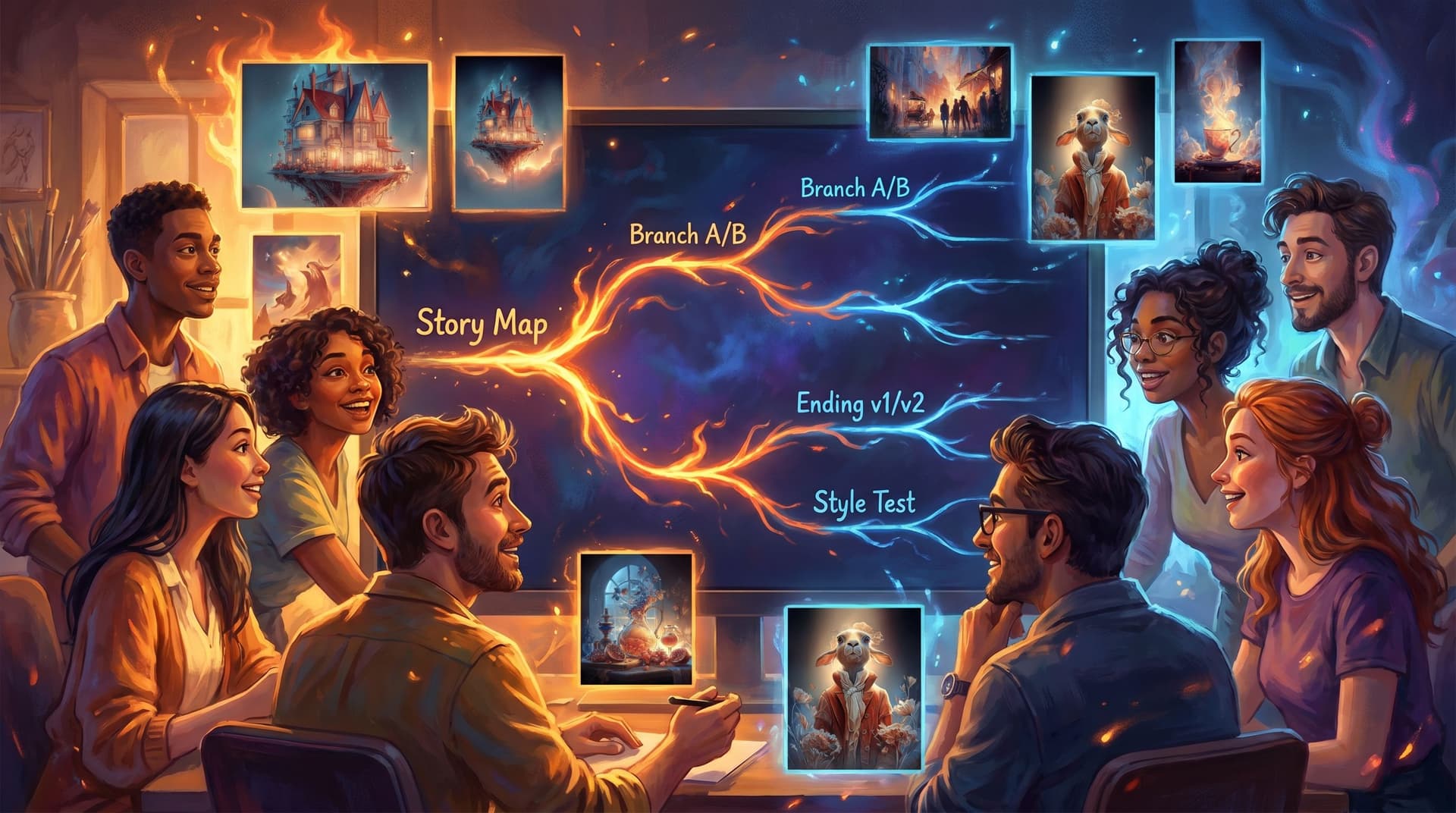
With Questas, you can turn static procedures into replayable, branching simulations that feel less like a compliance checkbox and more like an escape route your team discovers together.
Why Crisis Simulations Need to Feel More Like Escape Rooms
Organizations already invest heavily in scenario‑based training:
- Emergency management teams run tabletop exercises built around storms, wildfires, pandemics, and active threats, often using FEMA or CISA templates as a starting point.
- Security and IT leaders run cyber incident tabletops to walk through ransomware, data breaches, and business email compromise.
- Operations teams rehearse supply chain shocks, plant outages, or safety incidents.
These efforts matter. Studies on simulation‑supported emergency response training have shown that realistic, scenario‑based practice improves coordination, decision‑making, and after‑action learning compared to purely classroom‑style training.
But traditional formats have some persistent weaknesses:
- They’re one‑off events. You do the big tabletop once or twice a year. New hires and rotations miss the moment.
- They’re hard to scale. A good facilitator can only be in one room at a time.
- They’re linear. Even when you add “injects,” most tabletops follow a single storyline, so you never really see what happens if a team makes a different call.
- They under‑simulate emotion. People know it’s a drill. The stakes feel abstract.
Escape‑room style experiences, on the other hand, are built to:
- Create time pressure and a clear mission.
- Force collaboration under constraint.
- Make every choice feel consequential and visible.
- Deliver memorable, story‑driven experiences people talk about afterward.
When you combine those design principles with your existing crisis playbooks—using a platform like Questas to build branching, visual stories—you get something new:
A reusable, self‑guided crisis “escape route” your teams can practice again and again, exploring both good and bad paths before the real incident ever happens.
If you’re curious how other teams are already using branching narratives for high‑stakes business decisions, you might like our post on letting teams test‑drive futures with playable scenarios: Playable Forecasts: Using Questas to Let Teams ‘Test-Drive’ Future Market Scenarios Before They Bet Big.
Step 1: Choose the Right Crisis to Turn into a Simulation
You probably have more potential crises than you can realistically simulate. Start with one that:
- Happens often enough to be plausible (e.g., ransomware, regional outage, social media firestorm).
- Requires cross‑functional coordination (security + comms + legal + HR, etc.).
- Has real ambiguity in your playbook—places where “it depends” shows up.
Good candidates:
- A major customer‑facing outage
- A data breach involving regulated data
- A product safety incident or recall
- A reputational crisis triggered by a viral post
- A physical security incident at a key site
Pro tip: Ask, “What’s the scenario that keeps our leadership team up at night?” Start there.
Step 2: Mine Your Existing Playbooks for Real Decision Points
Don’t start from scratch. Your crisis and continuity plans are full of raw material.
Instead of copying whole sections into your simulation, pull out the moments of choice—especially where human judgment matters more than checklists.
Look for:
- Escalation thresholds
- Do we declare a major incident now or wait for more data?
- Do we notify regulators within 24 hours or 72?
- Communication forks
- Do we go public now with partial information or wait until we can give a fuller picture?
- Do we email all customers or just the affected segment?
- Trade‑offs under pressure
- Do we prioritize restoring service quickly or preserving forensic evidence?
- Do we shut down a plant pre‑emptively or keep running while we investigate?
- Governance gray zones
- Who actually has authority to approve this statement?
- Who owns the customer make‑good budget?
Each of these becomes a branching choice in your Questas simulation.
If you want a compact way to prototype these branches before you build a full scenario, check out the "small but mighty" patterns in The Minimal Viable Quest: Tiny, Three-Choice Questas Formats That Still Deliver Big Insight.
Step 3: Frame the Scenario Like an Escape Room Mission
Now you have your crisis and your key decisions. The next move is to wrap them in a mission that feels like an escape room.
You’re aiming for:
- A clear objective
“Keep customer trust above X while restoring core services within Y hours.” - A visible timer
Even if it’s fictional, time pressure changes how people behave. - A contained setting
The story plays out over a defined window—say, the first 48 hours of the incident. - A sense of mystery
Players don’t have perfect information; they have to decide under uncertainty.
In Questas, that might look like:
- Opening scene:
A pre‑dawn screenshot of your NOC dashboard lit up in red, or a phone on a conference table vibrating with urgent alerts. A short intro text sets the stakes and the win condition. - Onboarding choice:
Players choose which role they’re stepping into (e.g., Incident Commander, CISO, Comms Lead). This can lightly change what information they see first. - Early branching:
Within the first 2–3 scenes, they’re already making a meaningful choice—declare major incident, start customer comms, call external counsel, etc.
This structure borrows from escape room design: give players a quick hook, a clear goal, and an early win or loss signal so they feel the game is on.

Step 4: Turn Each Decision into a Branching Path (Not a Quiz)
The biggest mistake in crisis simulations is treating them like multiple‑choice tests: one right answer, three obviously wrong ones.
Real crises don’t work that way.
Instead, design trade‑offs, where each option has:
- A benefit (what you gain)
- A cost (what you risk or delay)
- A signal (what others will infer from your move)
For each key decision:
-
List 2–4 plausible options your real team might debate.
Example: Do we pay the ransom?- Engage law enforcement and refuse payment.
- Quietly negotiate to buy time.
- Immediately pay to restore operations.
-
Map consequences across several dimensions:
- Operational: downtime, data loss, safety impact
- Legal/regulatory: reporting obligations, fines
- Reputational: media coverage, social sentiment
- Human: staff burnout, decision fatigue, morale
-
Translate those into scenes in Questas:
- Each choice jumps to a new scene where players see the consequences unfold through text, visuals, and maybe short AI‑generated micro‑video.
- Some branches can converge again later, but the path taken leaves a trace (e.g., a regulator is now “watching closely,” or a key customer is angry).
If you want a deeper dive on how different types of choices shape player experience—risky vs. reflective vs. routine—From Mood to Mechanic: Designing Choice Types (Risky, Reflective, Routine) in Your Questas Stories is a helpful companion.
Step 5: Use AI Visuals to Make the Crisis Tangible
One of the quiet superpowers of Questas is the ability to attach AI‑generated images and video to each scene.
For crisis simulations, visuals do a few important things:
- Anchor abstraction in concrete detail.
A “major outage” becomes a darkened call center with agents on headsets and wallboards full of red alerts. - Convey emotional temperature.
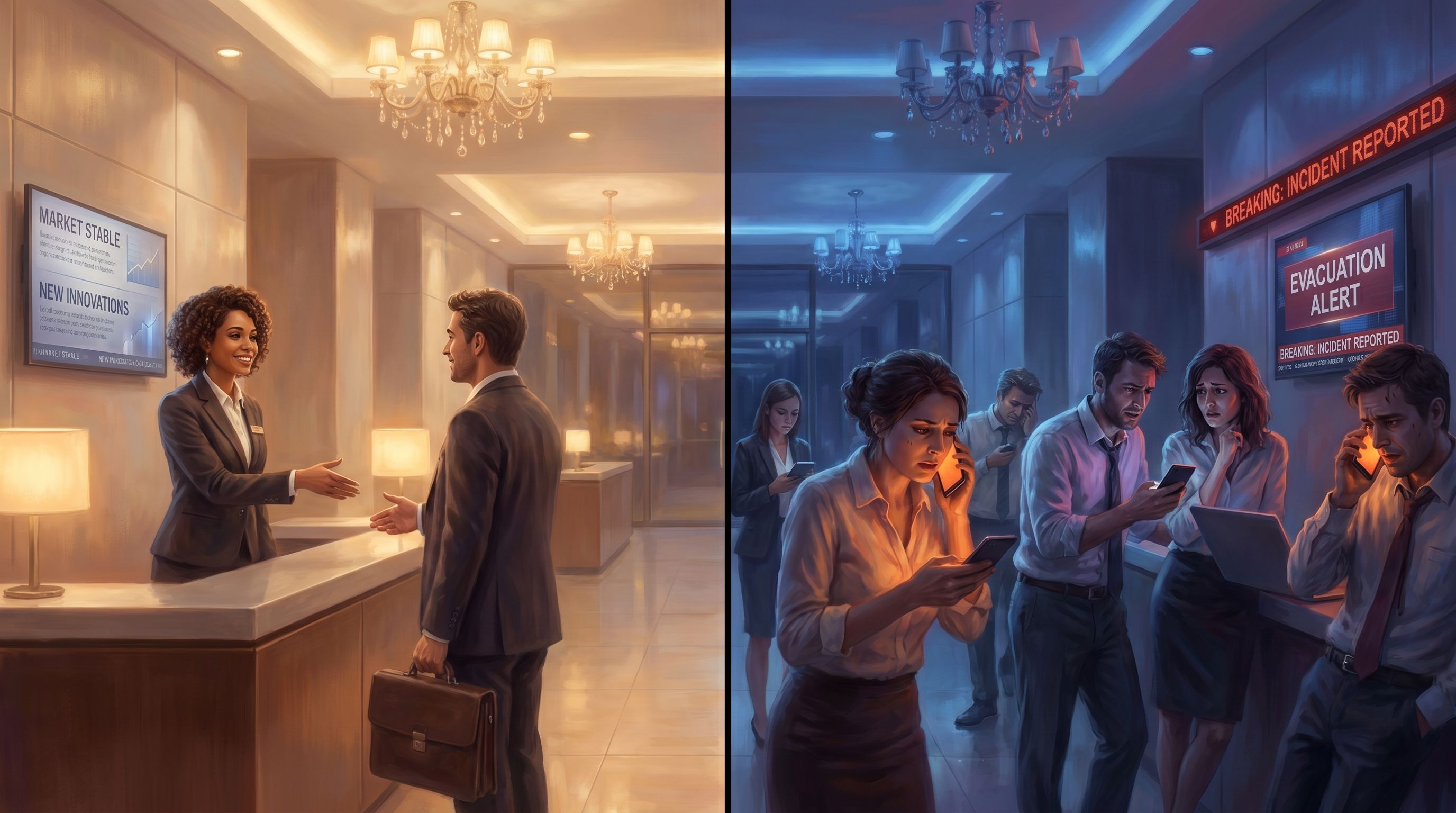
The same conference room can look calm and focused in one branch, chaotic and exhausted in another. - Help non‑experts understand stakes.
A visualization of flooded streets or backed‑up hospital corridors tells a story faster than bullet points.
You don’t need Hollywood‑level production. Focus on:
- A consistent visual style across the simulation (photoreal, illustrated, minimal, etc.).
- Key moments where a new image or short video beat marks a turning point: the first media headline, the regulator’s email, the customer escalation.
Over time, you can build a reusable visual system for your crisis scenarios—characters, locations, recurring imagery—so each new simulation feels like part of the same world. If that idea intrigues you, we go deep on it in From Style Guide to Shot List: Building Reusable Visual Systems for Ongoing Questas Series.
Step 6: Build for Teams, Not Solo Heroes
Crises are team sports. Your simulation should reflect that.
When you design your Questas scenario, think about:
- Multiple roles per playthrough.
Let players pick roles at the start (e.g., Operations Lead, Comms Lead, Legal Counsel). You can:- Give each role slightly different information (“role‑specific intel” scenes).
- Ask teams to pause and discuss before making a shared choice.
- Facilitated vs. self‑guided modes.
- Self‑guided: small teams play through on their own, then debrief using built‑in reflection questions.
- Facilitated: a trainer screenshares the quest, the group votes or discusses each choice, and the facilitator adds context.
- Replay paths.
Encourage teams to run the same scenario twice: once “as themselves,” once “as the regulator,” “as the customer,” or “as the front‑line team.” This builds empathy and surfaces blind spots.
Because Questas is web‑based and no‑code, you can easily:
- Duplicate a scenario and customize it for different regions or business units.
- Share a link for asynchronous practice ahead of a live tabletop.
- Capture which branches people actually take, so your debrief is grounded in behavior, not just opinions.
Step 7: Debrief with Evidence, Not Just Vibes
The magic of any simulation is in the debrief.
Instead of asking, “How did that feel?” and hoping someone speaks up, you can:
-
Review the path taken.
Questas lets you see which scenes and branches players visited. Use that as a visual map of their decision journey. -
Compare alternate runs.
- How did Team A’s path differ from Team B’s?
- Did leaders and front‑line staff make different calls at the same fork?
-
Tie back to the real playbook.
For each major decision, ask:- What does our current plan say?
- Is that realistic given what we just saw?
- What would we change in the next version?
-
Capture concrete follow‑ups.
- Gaps in contact trees or escalation paths
- Ambiguous approval workflows
- Missing templates (e.g., customer emails, regulator notifications)
Because your simulation is reusable, you can update it as your playbook evolves and re‑run it with new cohorts, treating each cycle as an iterative upgrade—not a one‑off event.
If you’re curious how to get the most out of those early runs, including what to measure and what to ignore, From Playtest Notes to Narrative Analytics: What to Measure (and Ignore) in Your Early Questas Builds offers a practical framework.
Step 8: Start Small, Then Grow Your Crisis Simulation Library
You don’t need a giant, 40‑scene epic to get value.
In fact, for your first crisis quest, aim for:
- 10–15 scenes total
- 3–4 major decision points
- 2–3 distinct endings, such as:
- “Operationally recovered, reputationally bruised”
- “Slow recovery, strong trust”
- “Regulatory investigation triggered”
Once you’ve shipped and play‑tested that first scenario, you can:
- Clone it and reskin for a different crisis type (e.g., swap cyber details for supply chain).
- Add optional branches that explore edge cases or rare but high‑impact decisions.
- Build a series of linked quests that follow the same organization across multiple incidents.
Over time, your crisis playbooks stop being static documents and become a living library of interactive escape routes that new hires, leaders, and cross‑functional partners can all step into.
Bringing It All Together
Turning crisis playbooks into Questas simulations is about more than “gamifying” training.
It’s about:
- Rehearsing real behavior instead of just reviewing slides.
- Surfacing hidden assumptions before they’re tested by reality.
- Building shared mental models across functions that rarely sit in the same room until something goes wrong.
- Creating muscle memory under pressure, so the first time your team feels that adrenaline spike isn’t during the real incident.
By borrowing the best parts of escape rooms—time pressure, puzzles, narrative stakes—and fusing them with your actual crisis procedures, you give your teams something that’s been missing:
A safe place to make risky decisions, see the consequences, and try again.
Your Next Move
You don’t have to redesign your entire crisis program to get started.
Here’s a simple first step you can take this week:
- Pick one high‑priority crisis scenario.
- Highlight 3–5 decision points in your existing playbook.
- Sketch how those decisions could branch into different outcomes.
- Open Questas and build a minimal, 10‑scene prototype your team can play through in under 20 minutes.
Run that prototype with a single cross‑functional group. Listen. Watch where they hesitate, argue, or improvise.
That’s your signal you’re on the right track—and that your “escape room” is quietly becoming a set of escape routes your organization can trust when it matters.
Adventure awaits. Your crisis playbooks are ready to level up from paper to playable. The only question is: which scenario will you turn into your first quest?