From Short Story to Story System: Adapting Existing Fiction into a Multi-Season Questas Narrative

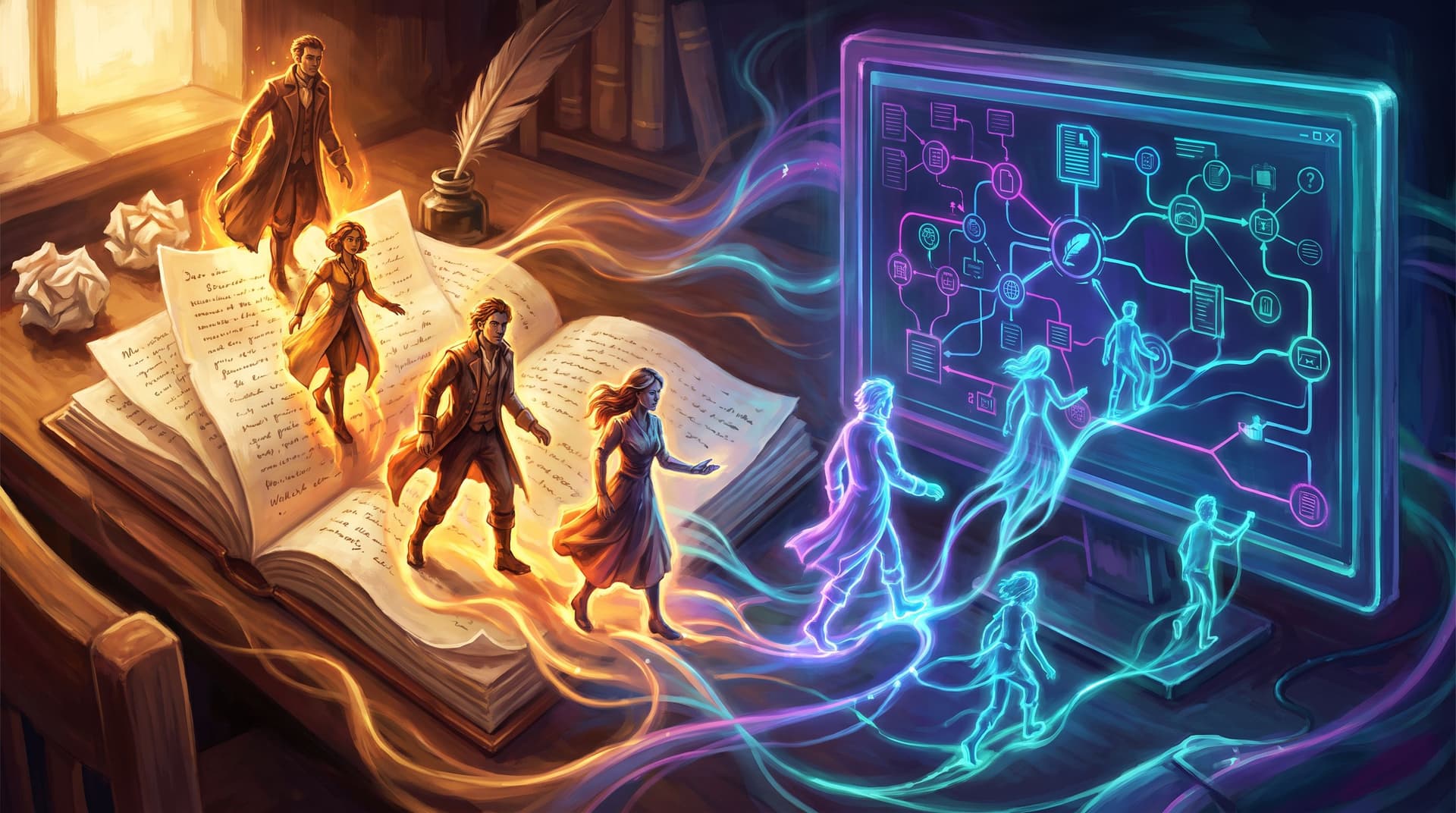
You already have a finished story: a short story, a novella, maybe a self‑published book or a popular fan‑fic arc. It has characters you love, a world that feels lived‑in, and readers who still DM you about their favorite scene.
So why stop at a single, linear read?
Turning that existing fiction into a multi‑season interactive narrative built with Questas lets players live inside the story instead of just reading it. They make decisions, test values, and explore roads your original plot only hinted at.
This post walks through how to go from “I have a finished story” to “I have a playable story system that can run for multiple seasons”—without code, and without losing what made the original work special.
Why expand a finished story into a multi-season quest?
Adapting existing fiction into a branching, multi‑season experience isn’t just a format change. It unlocks new creative and practical advantages.
Creative benefits
- Explore the roads not taken. Every cut scene, alternate ending, or character arc you trimmed for pacing can become a playable branch.
- Deepen secondary characters. Sidekicks, mentors, and antagonists can anchor entire seasons or spin‑off arcs.
- Turn lore into lived experience. Instead of exposition dumps, players visit the festival, negotiate the treaty, or sneak into the archives.
- Experiment safely. You can test wild what‑ifs ("What if the villain wins season one?") as optional branches without rewriting your canon.
Audience and business benefits
- Replayability and retention. Multiple seasons and branches give readers reasons to return and re‑read through play.
- Better feedback loops. With Questas, you can see where players drop off, backtrack, or screenshot key moments—gold for future seasons (for more on this, see how we read behavior in The Quiet Metrics of Play).
- Transmedia potential. A structured, branching adaptation makes it easier to align with podcasts, newsletters, or other formats later.
Most importantly: you’re not starting from zero. Your existing fiction is your source code. The work now is about restructuring and expanding it into a system.
Step 1: Decide what kind of adaptation you’re making
Before you open Questas, decide how faithful you want this adaptation to be. There are three broad patterns:
1. Canon‑faithful with perspective shifts
You keep the main events and ending, but let players experience them from different viewpoints.
- Players might switch between characters each episode.
- Choices mostly affect how events unfold, not whether they happen.
- Great when your original plot is tight and you don’t want to break it.
2. Canon‑flexible with guarded “pillars”
Certain story beats must happen (pillars), but players can significantly change the journey.
- Pillars might include: “the heist happens,” “the mentor dies,” or “the city falls.”
- Branches determine who’s present, who betrays whom, and what the emotional cost is.
- Ideal for multi‑season arcs: each season can orbit a pillar.
3. Canon‑optional “what if?” universe
Your original story is treated as one possible path.
- Players can avert big tragedies, join the villain, or abandon the main quest.
- You might treat your published version as the “prime timeline” and label others as alternates.
- Best when your audience loves exploring wild variations.
Pick one approach and write it down in a short adaptation brief. This will guide every structural choice you make in Questas.
Step 2: Break your existing story into seasonal arcs
A multi‑season narrative needs clear arcs. Luckily, your existing fiction already has structure—you just need to refactor it.
Find the natural season breaks
Print (or skim) your story and mark moments where:
- A major goal is achieved or abandoned.
- A location or status quo changes dramatically.
- A relationship crosses a point of no return.
- Time jumps forward.
These are strong candidates for season finales.
Then, group chapters or scenes around those tentpoles:
- Season 1: Arrival in the city, first big mistake, choosing a faction.
- Season 2: Life inside the faction, uncovering a conspiracy, betrayal.
- Season 3: Open conflict, sacrifices, resolution or transformation.
If your original story is short, don’t force length. A “season” in Questas can be as compact as 15–30 minutes of play. For compact designs, patterns like the 3‑path structure from The 3‑Path Pattern: A Reusable Blueprint for Short, High‑Impact Questas Stories can anchor each season.
Define each season’s dramatic question
For each season, write a one‑sentence question:
- Will Kai survive their first week in the Glass City?
- Can Mira keep the crew together after the failed heist?
- Will the village choose peace or revenge?
This question becomes your design north star. Every branch should:
- Move the player closer to or farther from answering it, or
- Reveal something that reframes the question.
Step 3: Turn scenes into nodes and choices
Now it’s time to translate prose into interactive structure.
Identify decision points already in your prose
Read through your story and highlight:
- Moments where a character could have chosen differently.
- Tense conversations with multiple plausible responses.
- Scenes where someone with different values would act another way.
Each of these can become a choice node in Questas.
For example, a linear scene:
"Lena saw the guard notice her. She ran for the alley, heart hammering."
Could become a choice:
- Bolt for the alley.
- Pretend to be lost and ask for directions.
- Step into the crowd and disappear.
Behind the scenes, you can still converge these options later to avoid branch sprawl (we’ll come back to that).
Decide your baseline complexity per episode
To keep your story maintainable, set a simple rule of thumb for each episode:
- 1–2 major decisions that significantly alter consequences.
- 2–4 minor decisions that change flavor, reveal secrets, or adjust variables (trust, suspicion, resources).
If you’re new to branching design, you can even treat early episodes like extended versions of the single‑decision format from Minimal Choices, Max Impact: one big fork, plus some light personalization.
Step 4: Design seasons as systems, not just trees
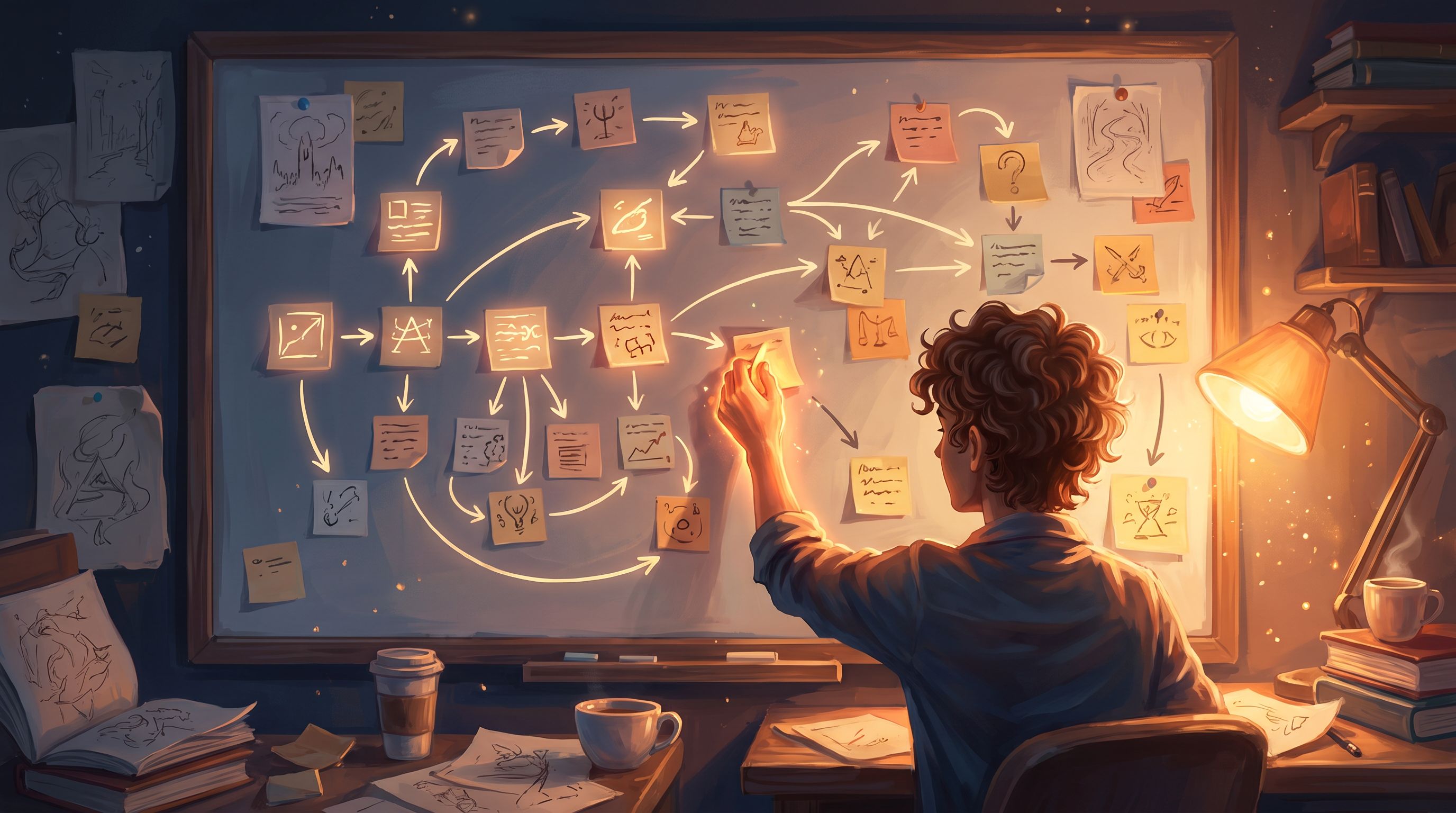
A multi‑season story isn’t just a tall tree of scenes; it’s a system where past choices echo forward.
Introduce a few simple variables
In Questas, you can track state without touching code. Think in terms of 3–5 key variables that define your world’s moving parts.
Common examples:
- Trust between protagonist and a key ally.
- Reputation with factions or communities.
- Resources like money, supplies, or influence.
- Secrets known: flags for critical information the player has uncovered.
You don’t need a full RPG ruleset. Even:
trust_mira(0–3)reputation_faction_a(‑1, 0, 1)knows_truth_about_heist(true/false)
…is enough to create meaningful variation.
Let variables gate content across seasons
Instead of constantly branching the main spine, use variables to:
- Gate scenes: Season 2 opens with a different intro if
trust_mira >= 2. - Recolor outcomes: The same heist scene plays out, but dialogue and visuals differ based on reputation.
- Unlock side arcs: A secret route appears in Season 3 only if the player found a clue in Season 1.
This approach keeps your structure branch‑smart, not branch‑wide—very much in the spirit of the patterns we explore in Branch Smart, Not Wide: Blueprint Patterns for Scalable Questas Stories.
Plan your “memory moments”
Across seasons, sprinkle in scenes that explicitly acknowledge past choices:
- An NPC references that time you abandoned them.
- A location bears scars from an earlier decision.
- A rumor circulates about something only you and one other character know.
These callbacks are where a story system feels alive, even if the underlying graph is carefully constrained.
Step 5: Use visuals to differentiate seasons and branches
Because Questas supports AI‑generated images and video, you can use visuals as a storytelling lever, not just decoration.
Establish a visual language per season
Define a simple visual palette for each season:
- Season 1: Warm, street‑level, hand‑held feel. Lots of dusk and neon.
- Season 2: Cooler tones, more interiors, tighter framing on faces.
- Season 3: High‑contrast, wider establishing shots, more symbolic imagery.
This helps players feel the progression, even when revisiting familiar locations.
If you’re juggling multiple AI tools to get the look you want, the strategies in Onboarding Your AI Art Stack: A Practical Guide to Choosing and Combining Tools for Questas Visuals can help you keep everything cohesive.
Reflect branches in the art
You don’t need new art for every node, but a few targeted variations go a long way:
- Show a character with a different expression or posture when trust is low.
- Swap background details (banners, graffiti, uniforms) based on faction alignment.
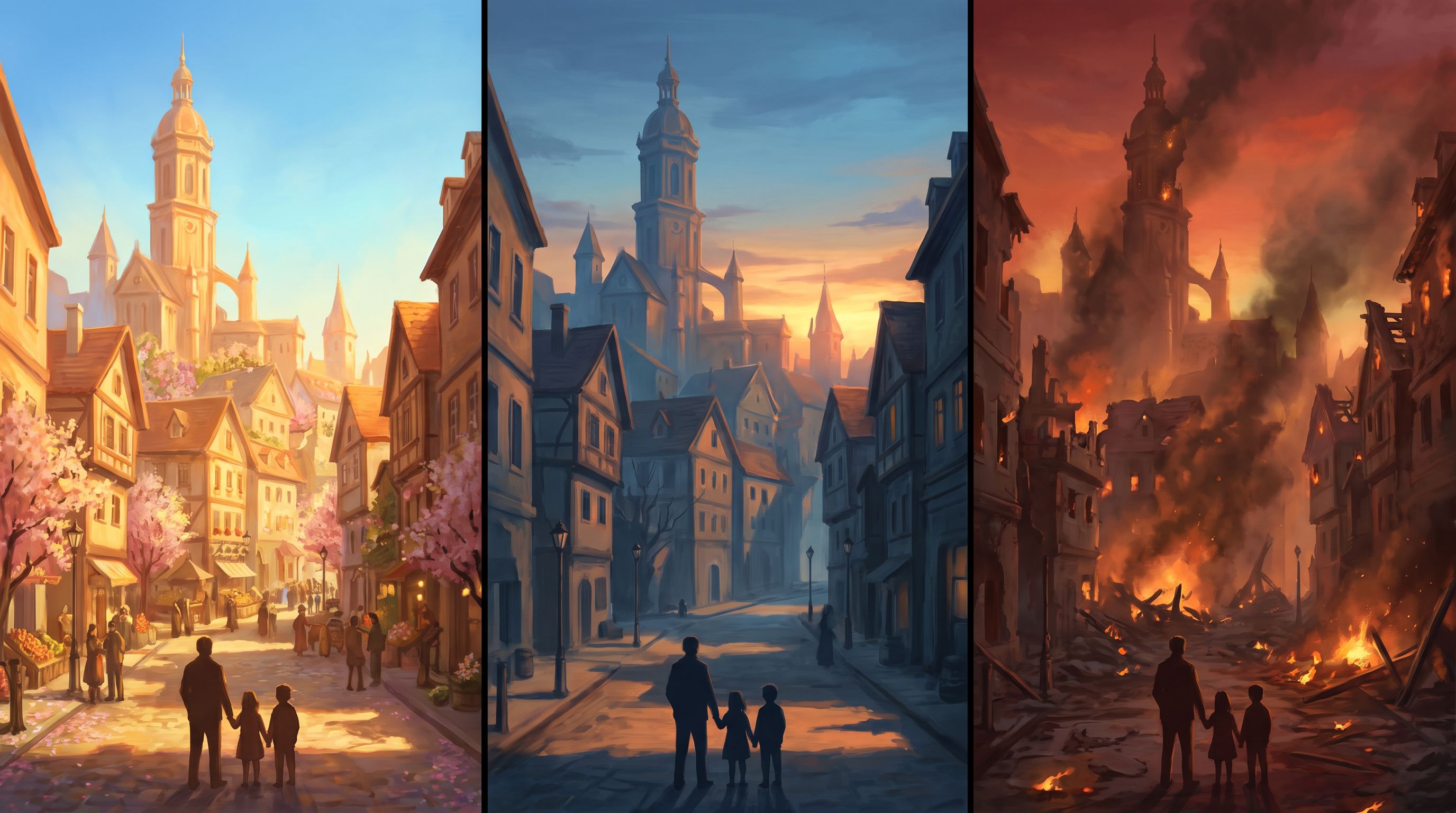
- Age locations over seasons: more damage, new construction, different weather.
Think of visuals as another “variable” that carries the consequences of choice.
Step 6: Keep scope sane with convergence patterns
The biggest risk when adapting linear fiction into a branching system is scope creep. Without guardrails, your story graph explodes.
A few patterns help keep things manageable:
Funnel structure within seasons
Design each season like this:
- Shared opening: Onboards players, sets stakes.
- Branching mid‑section: 2–4 distinct paths based on key decisions.
- Convergent finale: Different lead‑ups, but a shared climax framed by variables.
This lets players feel real agency while protecting your writing and art budget.
Reusable scenes with different context
Write certain scenes to be context‑agnostic, then flavor them based on variables.
Example: a confrontation with your rival can happen whether you’re rich or broke, famous or unknown—the dialogue and stakes shift, but the core node is shared.
Strategic “soft resets” between seasons
End some seasons with a change of location, time skip, or new role. This:
- Lets you retire or compress older variables.
- Gives you permission to reframe relationships.
- Keeps the story from being crushed under its own history.
You can still honor past choices through flashbacks, rumors, or optional scenes without simulating every possible path in detail.
Step 7: Pilot a “Season 0” before committing to the full arc
Even with an existing story as your foundation, assumptions will get tested the moment players touch your quest.
Before you adapt the entire book or series, build a Season 0:
- A short prequel, side story, or alternate POV.
- 15–30 minutes of play.
- 2–3 key decisions and a glimpse of your variable system.
Use this to test:
- Whether your visual style works in motion.
- How players respond to your choice density.
- Which characters they gravitate toward.
The techniques in From Premise to Playable Pilot: Rapidly Testing New Story Worlds in Questas Before You Commit are directly applicable here—just swap “premise” for “existing story.”
Once you’ve watched people play Season 0, you can adjust your season plan, variables, and art direction with real data instead of guesswork.
Step 8: Use player behavior to guide future seasons
One of the biggest advantages of adapting fiction into an interactive system is that your audience shows you what they care about.
Pay attention to:
- Completion rates per episode. Are players stalling mid‑season? Maybe that branch is too dense or confusing.
- Popular endings or branches. Do most players side with a particular faction? That might deserve a spin‑off season.
- Backtracking behavior. If people keep rewinding at a certain choice, it might be too punishing—or too intriguing.
We go deeper into these signals in The Quiet Metrics of Play: What Session Length, Backtracking, and Screenshot Habits Reveal About Your Questas, but the core idea is simple:
Let real play, not just your outline, shape the next season.
You can even build meta‑narrative around this: characters referencing “how many times” the player has tried to change a certain outcome, or hidden scenes that unlock only on replays.
Step 9: Practical workflow tips for adapting prose into Questas
To keep your process smooth and sustainable:
- Work scene‑first, not chapter‑first. Break chapters into playable scenes (one location, one conversation, one decision).
- Draft in plain language, polish later. Get the structure and choices right inside Questas, then refine prose.
- Tag your nodes. Use clear naming like
S1E2_Docks_Confrontationso you don’t get lost. - Version your canon. Keep a simple doc noting which branches you consider “canonical” for future reference.
- Schedule art passes. Build the story with placeholder visuals, then do focused art passes per season using your AI stack.
This staged approach keeps you from over‑investing in art or micro‑polish before you’re sure the structure works.
Bringing it all together
Adapting your existing fiction into a multi‑season Questas narrative is less about throwing everything out and more about revealing the possibilities that were already there.
You:
- Choose your adaptation philosophy (faithful, flexible, or “what if?”).
- Break your story into clear seasonal arcs with strong dramatic questions.
- Turn scenes into nodes and decisions, with a sane level of complexity.
- Treat the whole thing as a system, powered by a few well‑chosen variables.
- Use visuals and convergence patterns to keep it playable and maintainable.
- Pilot a Season 0, then let player behavior steer future seasons.
The result isn’t just “my short story, but clickable.” It’s a living storyworld that can grow, respond, and surprise both you and your audience over time.
Your next step
You don’t need to map your entire saga tonight. Start small:
- Pick one completed story—a short story, a novella, or a favorite chapter.
- Identify one season’s worth of arc inside it (even if that’s just three key beats).
- Open Questas and sketch a Season 0:
- A shared opening.
- One pivotal decision.
- Two or three variations on the outcome.
Once you’ve seen your characters move, speak, and react inside an interactive frame, you’ll never look at your “finished” fiction the same way again.
Adventure awaits—this time, with branches.