From Static IP to Living Canon: Keeping Fan Theories and Player Choices in Sync Across a Questas Series


Interactive stories don’t end at the last scene anymore.
Once you publish a branching story, players keep going—on Discord, in comment threads, in classrooms and teams. They argue about what really happened, share screenshots of obscure branches, and spin elaborate theories about side characters you barely outlined.
If you’re building a series of stories in Questas, that energy is gold. But it also creates a new challenge:
How do you keep a coherent canon when your world is shaped by player choices and an active fandom that’s constantly discovering edge cases?
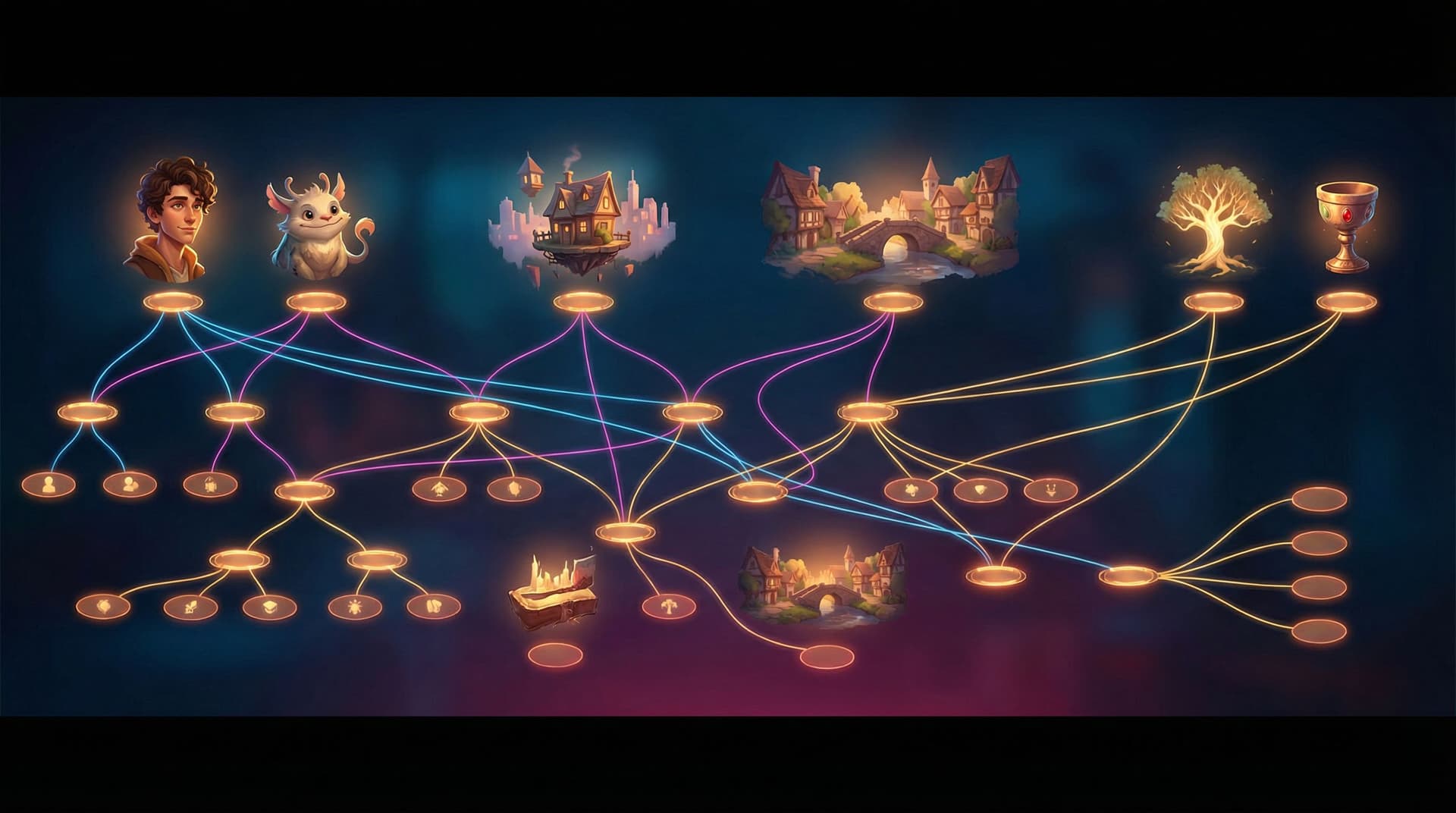
This post is a deep dive into turning your intellectual property from a static “IP bible” into a living canon—one that can adapt to player decisions, incorporate fan insights, and still feel internally consistent across an entire Questas series.
We’ll look at:
- Why living canon matters for replayability, community, and long-term IP value
- How to design your series so player choices can echo forward without breaking everything
- Practical systems for tracking branches, codifying canon, and responding to fan theories
- Concrete workflows you can use inside Questas to keep story, visuals, and lore aligned
Why Living Canon Matters for Interactive Questas Series
In linear media, canon is simple: what’s on screen or on the page is the story. Deleted scenes and alternate endings are bonus material.
In a branching Questas series, you’re dealing with:
- Multiple endings that all feel true to different players
- Choices that ripple across episodes, seasons, and spin‑offs
- AI‑generated visuals that can subtly shift how people interpret characters and events
If you treat your IP as a static bible, you’ll run into three problems fast:
-
Continuity headaches
You forget which branch introduced which secret, or whether a character is alive in a given timeline. That confusion bleeds into new episodes. -
Player distrust
If a later episode contradicts a choice players sweated over, it can feel like the story “didn’t count.” They disengage. -
Wasted community energy
Fans surface brilliant interpretations and edge‑case playthroughs—but if you have no way to fold that energy back into the series, it just evaporates.
A living canon approach flips the goal:
Canon isn’t a frozen PDF. It’s a system for deciding what becomes “true enough” to build on next.
That mindset is especially powerful if you’re using Questas beyond entertainment—say, in training, HR, or education. When your storyworld is teaching real behaviors, you need consistency and flexibility. For example, HR teams building interactive change journeys (see how that works in practice in Beyond PDFs and Portals: How HR Teams Can Turn Policy Rollouts into Playable Questas Change Journeys) need to keep policies aligned even as they test alternative scenarios.
Step 1: Decide What “Canon” Means in a Branching Story
Before you open your editor, define your canon philosophy. A few common models:
1. Single-Track Canon
You choose one “golden path” that represents official continuity.
- Pros: Easiest to manage; clear reference for sequels and spin‑offs.
- Cons: Risks invalidating player choices that diverge from the golden path.
Use this when:
- You’re adapting your Questas series into a linear format (novel, show, comic)
- Brand or compliance constraints require a single, approved storyline
2. Branch-Scoped Canon
Each major branch is its own mini‑canon. You treat them like alternate timelines.
- Pros: Honors divergent player paths; great for “what if?” stories.
- Cons: Can explode in complexity if every branch gets sequels.
Use this when:
- You’re exploring ethical dilemmas or policy tradeoffs
- You want players to replay and compare “universes” (e.g., in training scenarios)
3. Convergent Canon
Many paths, but key events always “snap back” to a shared spine.
- Pros: Balances player agency with manageable continuity.
- Cons: Requires careful design so convergence feels earned, not railroaded.
Use this when:
- You’re building an ongoing franchise in Questas
- You want to reuse characters and locations across multiple stories
Pick one model before you start a series. You can always refine it later, but having a default rule—"This is how canon works here"—will save you from chaos when fan theories start flying.
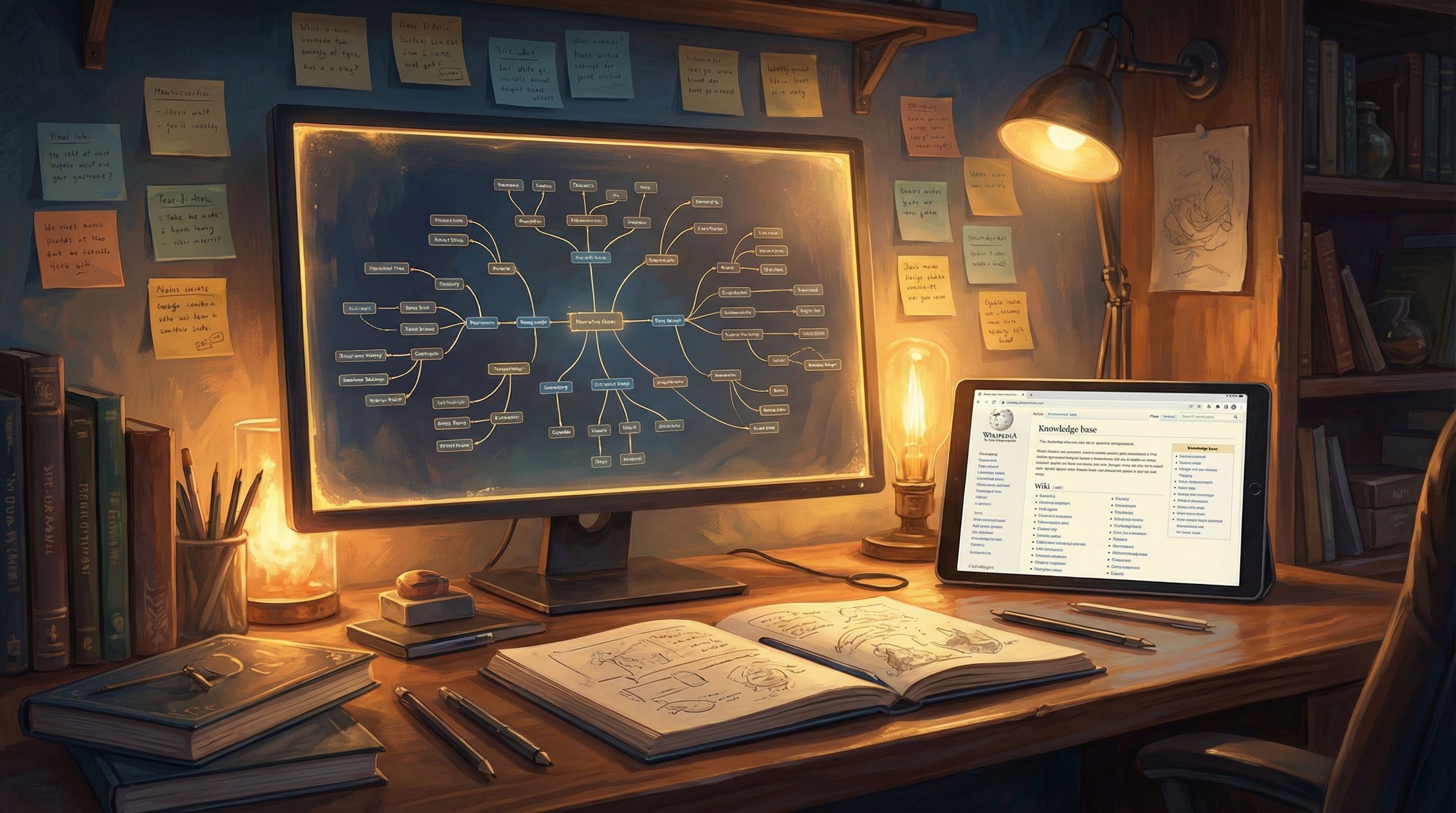
Step 2: Turn Your Lore Bible into a Living Canon Hub
If you’ve read From Lore Bible to Living Wiki: Using Questas to Maintain Continuity Across Expanding Story Universes, you already know why static docs break down as your universe grows.
For a living canon, you need something more dynamic than a folder of notes.
Build a Canon Hub with Three Layers
-
Immutable Facts
These are the bedrock elements that don’t change across branches:- Core world rules (magic systems, tech limits, physics quirks)
- Character anchors (origin, core motive, hard lines they won’t cross)
- Non‑negotiable brand or educational constraints
-
Branch-Conditional Facts
Things that are true if and only if certain choices were made:- “If the player spared the rival in Episode 1, they lead the rebellion in Episode 3.”
- “If the team chose policy A, the regulator appears in the finale.”
-
Speculative Space
Open questions, fan theories, and unresolved mysteries:- “Is the Archivist actually human?”
- “What caused the blackout 20 years ago?”
Keep these in a living tool (Notion, Airtable, Obsidian, or even a dedicated wiki) and link it directly to your Questas projects:
- Use tags like
IMMUTABLE,BRANCH-A,BRANCH-B,OPEN. - Reference specific scene IDs or node labels from your Questas stories so you can trace where each fact is introduced.
This hub becomes your referee whenever you’re unsure:
- “Can this character know this secret yet?”
- “Does this twist contradict a previous branch?”
Step 3: Design Branches with Canon Hooks, Not Canon Chaos
A lot of canon problems start in the outline phase. The good news: a few structural habits can keep things manageable.
Use “Decision Families” Instead of One-Off Choices
Group related decisions into families that map to ongoing variables:
- Loyalty (who the player sides with)
- Knowledge (what secrets they’ve uncovered)
- Cost (what they’ve sacrificed)
In Questas, that might look like:
- Tagging nodes with
LOYALTY: FACTION XorKNOWLEDGE: BLACKOUT_SECRET - Designing later scenes to check those tags before unlocking dialogue or outcomes
This way, when you’re planning the next episode, you’re not staring at 40 unique branches—you’re looking at a handful of story variables you can carry forward.
For a practical example of building around real decisions first, see how trainers do it in Scenario-First Story Design: Building Training Questas That Start with Real-World Decisions.
Plan Canon Anchors for Each Episode
For every story in your series, define 3–5 canon anchors:
- Events that must happen (even if the path varies)
- Information that must be revealed (even if the source changes)
- Relationships that must be established (even if the context differs)
Example:
- Anchor 1: “The player discovers the existence of the underground network.”
- Anchor 2: “The mentor’s betrayal is revealed.”
- Anchor 3: “The artifact is damaged, not destroyed.”
Then design your branches so they may reorder or recontextualize these anchors, but not delete them.
Limit Canon-Critical Endings
Not every ending needs to be canon-critical. In fact, most shouldn’t be.
A healthy mix might look like:
- 1–2 spine endings that you treat as the basis for sequels
- Several side endings that feel satisfying but don’t need follow‑ups
- A few secret or joke endings that live outside official canon
Label these clearly in your canon hub:
ENDING: SPINEENDING: SIDEENDING: NON-CANON (JOKE)
That way, when players ask “Which ending is canon?”, you have a thoughtful answer instead of a shrug.
Step 4: Keep Visual Canon in Sync with Story Canon
Living canon isn’t just about plot. It’s also about how your world looks.
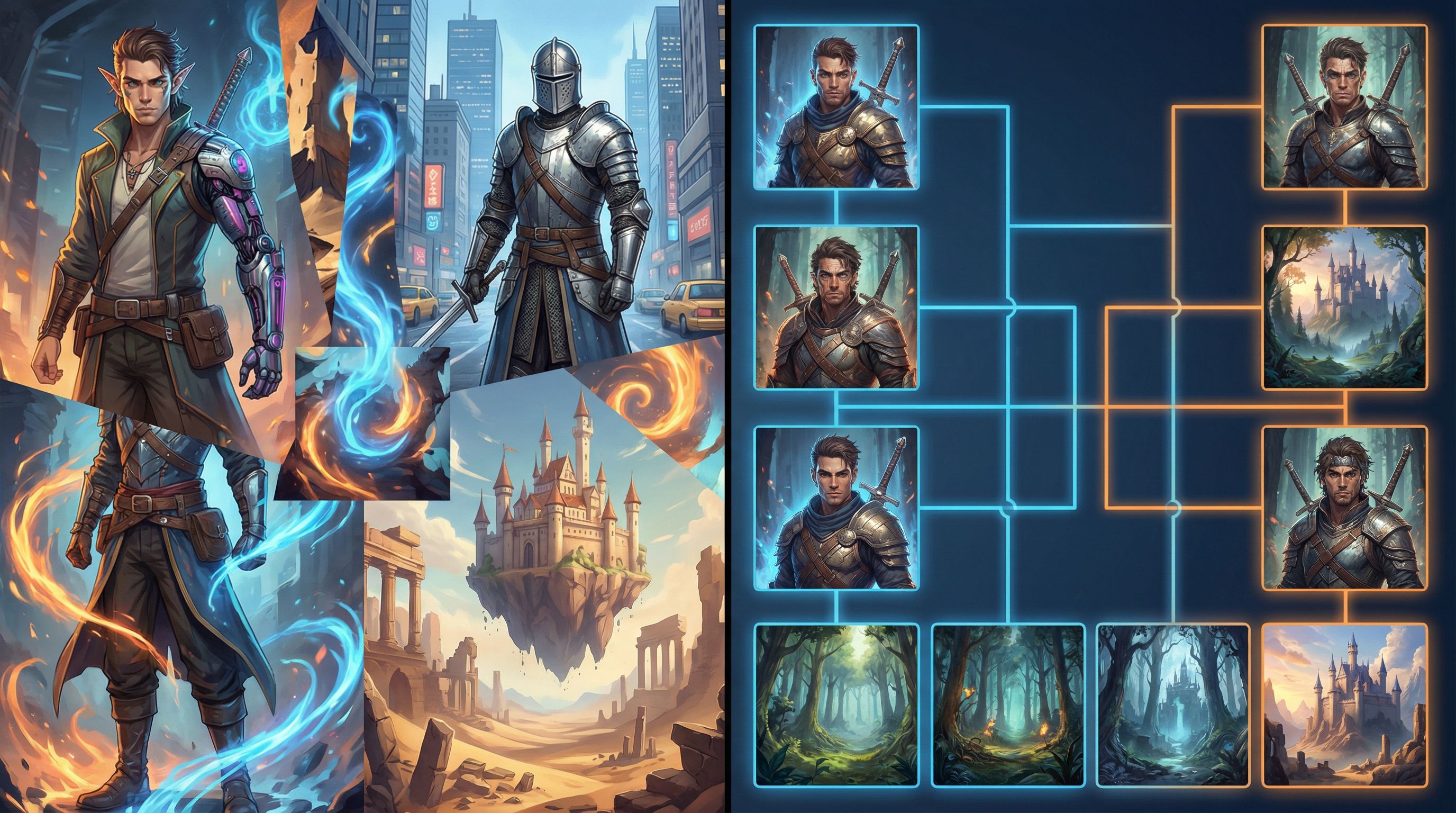
If your detective’s trench coat changes color every episode, or the headquarters keeps teleporting to new architecture styles, players will feel the seams. Visual drift can quietly break canon even if your scripts are airtight.
Combine your canon hub with visual systems inside Questas:
- Maintain prompt templates and style references for each recurring character, location, and prop.
- Store these alongside your canon entries so you can see, at a glance, both who a character is and how they should appear.
- Use consistent negative prompts to avoid unwanted changes (e.g., “no beard” for a clean‑shaven protagonist).
For a deeper dive on this, check out AI Style Chains: Keeping Characters, Locations, and Props Consistent Across a Questas Series.
Step 5: Treat Fan Theories as R&D for Future Canon
Your players are not just consumers; they’re unpaid story analysts.
They’ll:
- Notice continuity slips you missed
- Invent motives and backstories you never wrote
- Discover obscure branches and combinations of choices
Instead of fearing that, build a feedback loop that turns fan speculation into fuel.
Create Clear “Canon Channels”
Give players designated spaces to talk about:
- Confirmed canon (what’s definitely true)
- Speculation (what might be true)
- Non‑canon experiments (fanfic, alternate universes)
This can be:
- A Discord server with channels like
#canon-questions,#theories,#au-and-fanfic - A community forum with tags for
CANON,THEORY,AU - In‑story notes or codex entries that explicitly mark some content as “rumor”
Build a Theory Intake Ritual
On a regular cadence (say, monthly or between episodes):
- Collect standout theories that align with your themes and don’t break your immutable rules.
- Tag them in your canon hub as
CANDIDATEwith links to the original discussion. - Decide their fate:
- Promote to soft canon (“heavily implied in future episodes”)
- Promote to hard canon (“explicitly confirmed on screen”)
- Keep as non‑canon but celebrated (e.g., highlight in a community roundup)
When you do fold a theory into canon, credit the community in release notes or behind‑the‑scenes commentary. That transparency builds trust and shows that player engagement matters.
Step 6: Let Player Choices Echo Across a Series—Without Losing Control
One of the biggest joys of a Questas series is when a choice from Episode 1 comes back to haunt (or reward) players in Episode 4.
To pull that off without drowning in complexity, think in terms of signals, not exhaustive state tracking.
Track Signals, Not Every Micro-Choice
Instead of carrying forward every single decision, define a small set of series‑level flags:
ALLY_TRUSTEDvsALLY_BETRAYEDTOOK_RISKY_OPTIONvsPLAYED_IT_SAFEEXPOSED_CONSPIRACYvsPROTECTED_STATUS_QUO
Within Questas:
- Use variables or tagged nodes to set these flags when key decisions happen.
- In later episodes, check these flags to:
- Adjust dialogue
- Unlock or block scenes
- Change who shows up to help (or hinder) the player
The trick is to design with fuzziness: you don’t need to represent every possible micro‑path, only the patterns that matter to your themes.
Use “Soft Recaps” to Reconcile Divergent Histories
If your series allows players to import a save or select past choices:
- Start new episodes with a soft recap that acknowledges key past decisions without re‑rendering the entire tree.
- Use flashbacks, rumors, or NPC dialogue to summarize:
- “Some say you sided with the rebels; others insist you only pretended to.”
This lets you keep canon flexible while still grounding players in a shared sense of history.
Step 7: Build a Canon-Aware Workflow in Questas
A living canon isn’t just a philosophy; it’s a workflow. Here’s a practical loop you can adopt for each new episode or spin‑off you build in Questas.
-
Canon Check-In
- Review your canon hub’s
IMMUTABLEandBRANCH-CONDITIONALsections. - Lock in which previous endings or branches this episode will acknowledge.
- Review your canon hub’s
-
Outline with Anchors and Variables
- Define your episode’s canon anchors (3–5 key events).
- Decide which series‑level flags this episode will read or set.
-
Draft Nodes with Canon Tags
- As you build scenes in Questas, tag them with relevant canon info:
SETS: ALLY_TRUSTEDUSES: BLACKOUT_SECRETANCHOR: MENTOR_BETRAYAL
- As you build scenes in Questas, tag them with relevant canon info:
-
Run a Canon QA Pass
- Do at least one playthrough per major branch family specifically looking for:
- Contradictions with immutable rules
- Visual drift on key characters and locations
- Unintended “canonization” of what should be rumors or theories
- Do at least one playthrough per major branch family specifically looking for:
-
Publish with Canon Notes
- In your release notes or community post, highlight:
- What’s now confirmed canon
- What remains unresolved
- Any nods to fan theories you’ve folded in
- In your release notes or community post, highlight:
-
Update the Canon Hub
- After launch, immediately log new facts and flags.
- Archive any retired branches or non‑canon experiments.
This may sound structured, but it actually protects your creativity. By externalizing canon decisions, you free your brain to focus on character, emotion, and pacing—knowing the system will catch you if you start to contradict yourself.
If you’re collaborating with other writers or using AI heavily (for example, following the workflows in AI as Co‑Writer, Not Ghostwriter: Collaborative Writing Workflows for Complex Questas Plots), a canon‑aware workflow becomes even more important. It gives everyone a shared reference point.
Bringing It All Together
Turning your IP from a static bible into a living canon is about embracing the reality of interactive stories:
- Players will see branches you barely tested.
- Communities will invent theories you never planned.
- Visual tools will give you more flexibility—and more ways to drift—than ever.
Instead of fighting that, you can:
- Define a clear canon philosophy (single‑track, branch‑scoped, or convergent)
- Maintain a living canon hub that separates immutable facts, branch‑conditional truths, and open questions
- Design branches around variables and anchors, not one‑off chaos
- Align visual and narrative canon through style systems and prompt discipline
- Treat fan theories as R&D, selectively promoting the best into future episodes
- Track a few powerful signals across a Questas series so choices genuinely echo forward
- Adopt a canon‑aware workflow so every new story strengthens, rather than fractures, your universe
Do that consistently, and your Questas series stops being a collection of disconnected episodes. It becomes a storyworld players can inhabit, argue about, and revisit for years.
Your Next Move
You don’t need a massive franchise to start treating your work like a living canon. You just need:
- One Questas project you care about
- A simple canon hub (even a single page of notes is enough to begin)
- A decision about how you want player choices to matter across time
From there, pick one concrete step:
- If you’re early in a project, define your canon philosophy and a handful of immutable rules.
- If you’re mid‑series, build or upgrade your canon hub and tag your existing episodes with anchors and variables.
- If you already have an active community, set up clear canon/theory channels and start a regular theory‑intake ritual.
Then open Questas, revisit your current story, and ask a simple question:
“If this world were going to last for five more episodes, what would I need to track right now so it doesn’t fall apart later?”
Answer that, write it down, and you’ve taken the first real step from static IP to a living, breathing canon your players will love exploring.