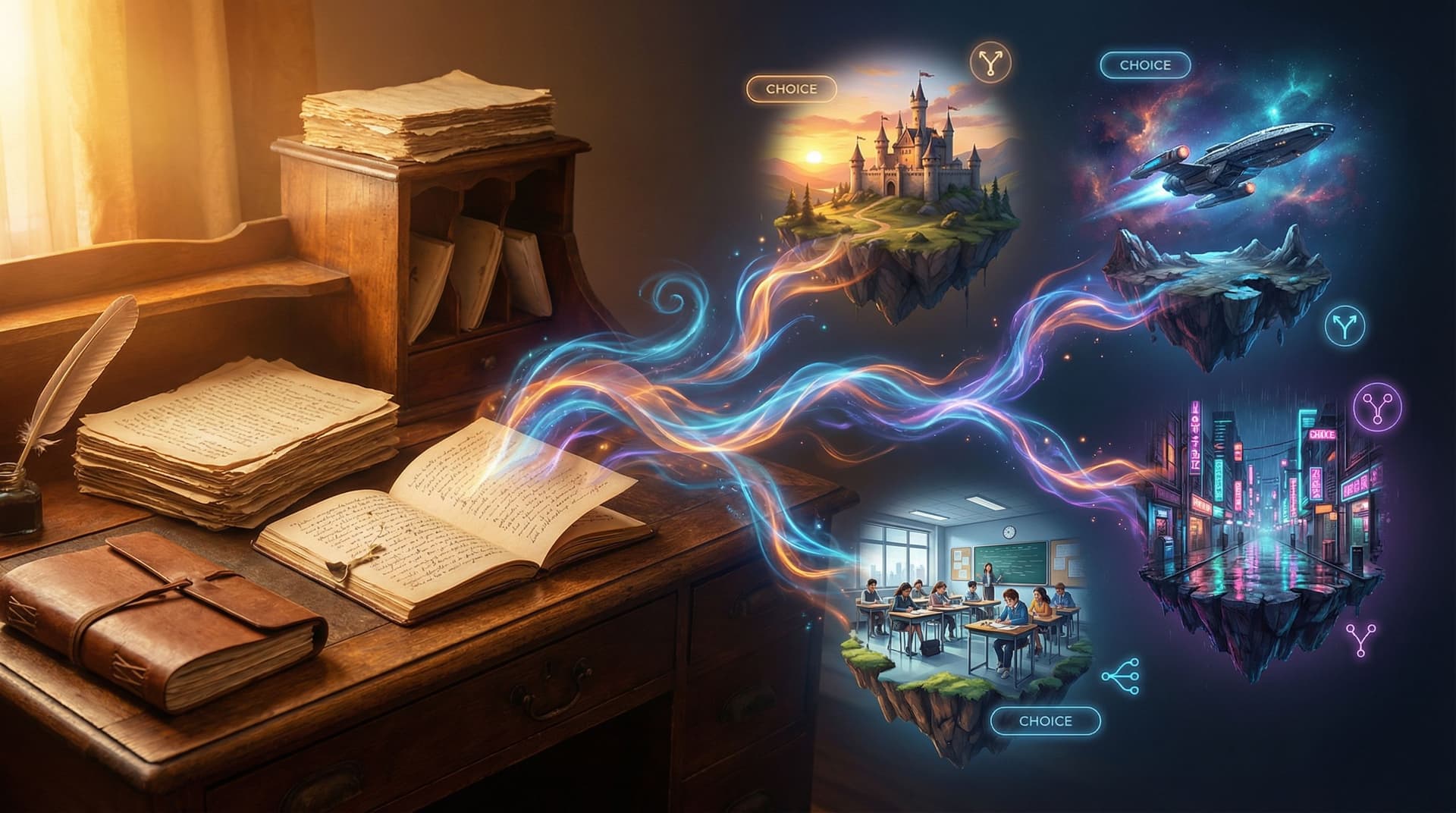
Micro-Adventures in Minutes: Building Short, Replayable Questas Experiences for Social Media

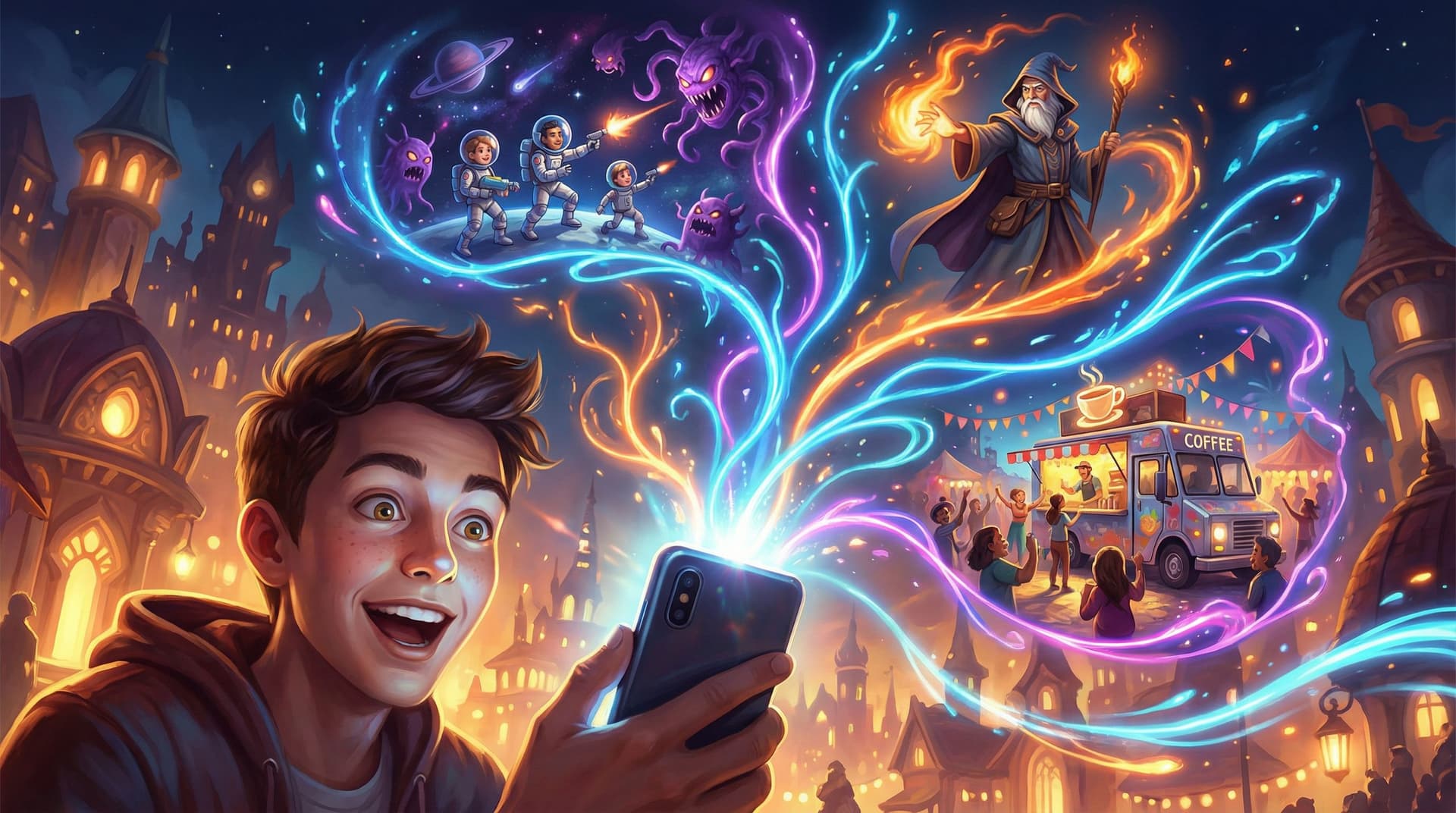
Micro-adventures are the snackable stories your audience can actually finish.
On social platforms where attention is measured in swipes and seconds, a 45-minute interactive epic is a tough sell. But a 2–5 minute, highly visual, replayable story that ends with, “Try again for a different outcome”? That’s the kind of experience people share, argue about in comments, and come back to.
That’s where Questas shines: it gives you a visual, no‑code canvas to design branching stories with AI-generated images and video—perfect for short, punchy adventures that fit right into a social feed.
This guide will walk you through how to design, build, and share micro-adventures built in Questas specifically for platforms like Instagram, TikTok, X, and YouTube—without needing a dev team or a six-week production schedule.
Why Micro-Adventures Work So Well on Social
Short, replayable stories are tailor‑made for social media because they:
1. Respect attention spans
Your audience is scrolling between memes, DMs, and videos. A micro-adventure that promises “Play this in under 3 minutes” lowers the barrier to trying something new.
2. Encourage instant replay
When a story has:
- 3–6 key decision points
- 2–4 distinct endings
- Clear feedback on how choices changed the outcome
…it naturally invites, “Okay, but what if I choose the other option?”
3. Generate shareable moments
People don’t just share that they played—they share what happened:
- “I accidentally doomed the whole crew.”
- “I got the secret ending on my third try.”
- “I made the worst marketing decision and tanked the campaign.”
Those outcomes translate well into captions, stitches, duets, and comment threads.
4. Double as content and funnel
A micro-adventure can be:
- A teaser for a larger interactive series
- A lead magnet for your newsletter or Patreon
- A playful explainer for your product or brand
If you’re planning longer episodic stories, you can use these short experiences as on‑ramps—something we explore deeply in From One-Shots to Series: Planning Episodic Questas Stories That Keep Players Coming Back.
Define the Shape of Your Micro-Adventure
Before you open Questas, get clear on the shape of the experience you want.
Think in terms of:
1. Timebox the experience
Aim for 2–5 minutes of playtime for a typical run. That usually means:
- 6–10 scenes total
- 3–6 choice points
- 2–4 endings
A simple pattern that works beautifully for social:
- Hook scene – Sets the premise and stakes in 2–4 sentences.
- Decision 1 – Big fork that defines the tone of the run (bold vs cautious, logical vs emotional, etc.).
- Midpoint twist – A consequence of the first decision; maybe a surprise ally, a setback, or new information.
- Decision 2–3 – Rapid‑fire choices that steer toward different endings.
- Ending – A clear win, loss, or “weird” outcome plus a prompt to replay.
2. Choose a high-contrast premise
Micro-adventures need to be instantly understandable. Go for concepts you can pitch in one line:
- “You’re the last juror who hasn’t decided the verdict.”
- “You’re a junior wizard trying to bluff your way through a magical disaster.”
- “You’re running a coffee truck at a chaotic music festival.”
If you already have a longer script, novel, or campaign, you can carve a single decision moment out of it and turn that into a micro-adventure. Our post From Static Stories to Living Worlds walks through how to mine existing material for interactive moments.
3. Design for strong endings, not massive scope
Scope is the enemy of finishing.
Instead of trying to cover every possibility, focus on a few very distinct endings:
- Triumphant – Everything goes surprisingly well.
- Disastrous – A hilarious or dramatic failure.
- Bittersweet – You win something but lose something else.
- Secret / rare – Harder to reach, perfect for bragging rights.
Each ending should feel like a punchy payoff people can screenshot or quote.

Building the Story in Questas (Step by Step)
Once you’ve sketched the shape, it’s time to build. Here’s a practical workflow for creating a micro-adventure in Questas quickly.
1. Start with a simple story map
Even tiny adventures benefit from a quick map. You don’t need a spreadsheet; a napkin sketch works.
A reliable pattern:
- Scene 1: Hook + setup
- Scene 2A / 2B: First big choice branches here
- Scene 3A / 3B / 3C: Consequences or twist
- Scene 4–5: Endings (merge branches where possible)
If mapping branches intimidates you, check out our techniques in Branching Without Chaos: Simple Story Mapping Techniques for Complex Questas Narratives. The same principles apply at micro scale.
2. Draft lean, punchy scenes
Micro-adventures thrive on economy of words. For each scene:
- Aim for 40–120 words of text.
- Lead with a strong sensory detail or tension.
- End on a clear decision or reaction.
Try this structure:
- 1–2 sentences of context – Where are we? What just happened?
- 1–2 sentences of tension – What’s at stake right now?
- 2–3 choice options – Each one should:
- Be clearly different in tone or risk level
- Hint at possible consequences
Example (for a music festival coffee truck story):
The line snakes past your food truck, everyone chanting for cold brew. Your grinder just died with a sad mechanical wheeze.
The band’s manager storms up. “We go on in 10. My drummer needs caffeine or he walks.”
What do you do?
Choices might be:
- “Admit the problem and offer free pastries instead.”
- “Serve instant coffee in fancy cups and hope no one notices.”
- “Beg the rival truck to borrow their gear—for a cut of your profits.”
3. Use AI visuals strategically
Questas lets you generate images and video for scenes. For micro-adventures:
- Prioritize key scenes: the opening, the twist, and each ending.
- Keep characters visually consistent: same outfit, features, and style across scenes. Our post Picture This: How to Prompt AI for Consistent Characters and Worlds in Questas dives deep into this.
- Think vertical-first: Design images that still look good cropped or framed in 9:16 for social previews.
Practical prompts tips:
- Mention camera angle (close‑up, wide shot, over‑the‑shoulder).
- Lock in style (comic‑book, painterly, hyper‑realistic, minimalist).
- Include lighting and mood (“neon-lit night market, moody blue and pink lighting”).
4. Tune the choices for speed
On social, long reading time between choices can lose people. Use the editor to:
- Space choices every 1–3 short paragraphs.
- Avoid more than 3 options per choice; 2 is often perfect.
- Make consequences visible quickly—ideally in the very next scene.
A good rule: if a player goes more than 20 seconds without making a choice, consider splitting the scene.
5. Add onboarding that doesn’t feel like onboarding
Many social players will be brand‑new to interactive stories and to Questas. Your first scene should quietly teach them how to play.
Try:
- A micro-tutorial in character voice:
“Tap your choice to decide how the night goes. No takebacks. Ready?” - A low‑stakes first choice:
“Start bold” vs “Play it safe” with both paths leading somewhere fun.
For more on welcoming new players smoothly, you can dig into Onboarding Your Audience: Best Practices for Introducing New Players to Questas Stories.
Designing for Replayability (So People Actually Re-run It)
Replayability is where micro-adventures punch above their weight. A 3‑minute story that people play three times is effectively a 9‑minute engagement.
Here’s how to make that happen on purpose.
1. Make differences obvious, not subtle
If a player replays and everything feels the same until the last line, they won’t try again.
Instead:
- Change locations based on early choices.
- Introduce or remove key characters depending on a decision.
- Swap tone: one path comedic, another tense.
2. Telegraph hidden outcomes
Give players a reason to hunt for more.
Examples:
- An NPC says, “Most people never find the backstage entrance…”
- An ending screen teases, “You survived—but there is a way to save everyone.”
- A progress indicator: “You’ve discovered 2 of 4 endings.”
3. Let failure be fun
If failure just feels like a scolding, people bounce. But if failure is:
- Dramatic
- Funny
- Revealing
…they’ll immediately hit replay.
Design at least one over‑the‑top failure ending that makes people laugh and share.
4. Encourage experimentation in your copy
Use language that invites play:
- “Try the reckless option and see what happens.”
- “You could play it safe… but where’s the story in that?”
- “You sense this might be a terrible idea. Proceed?”
Subtle nudges like this remind players that multiple runs are expected, not cheating.
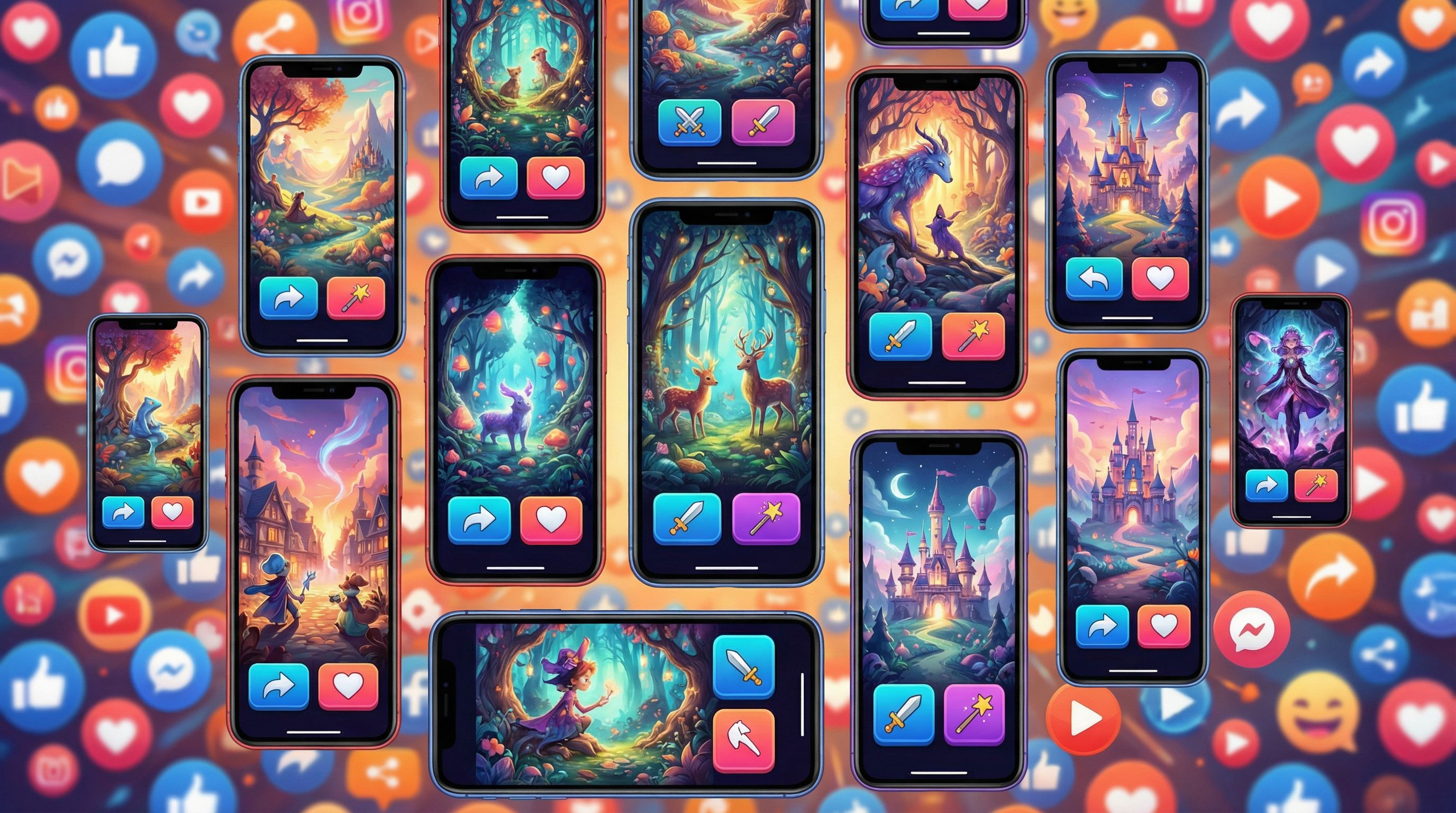
Packaging Your Questas Micro-Adventure for Social
Once your story feels great inside Questas, it’s time to turn it into something scroll‑stopping.
1. Craft a hook that fits the platform
You’re not just sharing a link; you’re pitching an experience.
Hook formulas that work:
- “Can you…?” challenge:
“Can you keep the entire spaceship crew alive in 3 minutes?” - Role fantasy:
“You’re the social media manager for a brand in crisis. Every choice goes public.” - Moral dilemma:
“Would you tell your best friend the truth if it ruined their big night?”
Adapt the tone:
- TikTok / Reels: punchy, playful, curiosity‑driven.
- LinkedIn: outcomes framed as decisions, strategy, or learning.
- X: strong, short hook + “Play the story” link.
2. Use visuals as trailers
Turn your Questas visuals into:
- Vertical teaser videos: quick pans across scenes, overlaid with text like “Choose your path” or “3 minutes, 4 endings.”
- Carousel posts: each card shows a different ending or choice moment.
- Story stickers: polls that mirror your first story choice.
If you’re comfortable with screen recording, a 10–15 second playthrough clip of the first choice is incredibly effective.
3. Make sharing part of the design
In your endings and captions, prompt specific sharing behaviors:
- “Comment with the ending you got: Triumph / Disaster / Secret.”
- “Tag a friend who would absolutely choose the chaotic option.”
- “Screenshot your ending and share it to your Story.”
Inside the story, your final scene can include a short line like:
Liked this run? Try picking the opposite choices and see what happens.
4. Connect to your broader goals
Micro-adventures can also support:
- Email growth: link to a signup for “more interactive stories like this.”
- Product education: base the choices on real product scenarios.
- Training or marketing: for more serious use cases, see ideas in Beyond Fantasy: 10 Unexpected Use Cases for Questas in Business, Training, and Marketing.
Add a clear next step in your caption or bio link, whether that’s another Questas story, a waitlist, or a resource.
Measuring What Works and Iterating Fast
One of the advantages of micro-adventures is how quickly you can learn and improve.
1. Watch basic social metrics
Pay attention to:
- Click‑through rate (CTR) on your story link
- Completion rate (how many people reach any ending)
- Comments and shares mentioning endings or choices
Low CTR? Your hook or thumbnail may not be strong enough.
Low completion rate? Scenes may be too long or choices too sparse.
2. Tweak, don’t rebuild
Because the stories are small, you can:
- Shorten or split a slow scene.
- Make an early choice more dramatic.
- Add a new “weird” ending without touching everything else.
If you’re using analytics features inside Questas, combine them with your social stats to see which paths people actually take and where they drop off. For a deeper dive into improving stories with data, see Analytics for Adventure: Using Player Data to Improve Your Questas Stories Over Time.
3. Turn hits into series
When a particular micro-adventure performs well, consider:
- A sequel with the same protagonist.
- A “what if?” alternate universe version (same setup, different genre or tone).
- A themed week where you release one new micro-adventure per day.
These can evolve into a full episodic arc, using the planning ideas from your longer-form projects.
Quick Checklist: From Idea to Published Micro-Adventure
Use this as a one‑page guide next time you build a social‑ready story in Questas:
- Premise: One‑sentence hook with clear stakes.
- Scope: 6–10 scenes, 3–6 choices, 2–4 endings.
- Map: Simple branching sketch with at least one twist.
- Scenes: 40–120 words each, frequent decisions.
- Visuals: Consistent characters, vertical‑friendly key scenes.
- Replayability: Obvious differences between paths, teased secret outcomes.
- Onboarding: First scene teaches how to play in‑character.
- Packaging: Strong social hook, teaser visuals, clear link.
- Sharing prompts: Ask players to comment, tag, or screenshot endings.
- Iteration: Review metrics, tweak scenes, and experiment with new hooks.
Wrapping Up: Small Stories, Big Impact
Micro-adventures prove that you don’t need a massive saga to create memorable, interactive moments. With a few scenes, smart choices, and striking AI visuals, you can:
- Turn casual scrollers into active participants.
- Test story ideas and characters before committing to a long series.
- Create content that people don’t just watch—they play.
Questas gives you the tools to build these experiences in minutes instead of weeks. The rest is practice, experimentation, and a willingness to ship small, weird, delightful stories.
Your Next Step
Don’t plan your “perfect” micro-adventure for three months. Build one this week.
- Open Questas.
- Choose a simple premise you can describe in one sentence.
- Map 6–8 scenes with 3–4 choices.
- Generate visuals for the opening, one twist, and each ending.
- Publish, share the link on your favorite social platform, and invite people to post the ending they got.
Once you’ve launched your first one, you’ll see how quickly micro-adventures can become a repeatable part of your content strategy—and how much fun your audience has when adventure really does await, just a tap away.