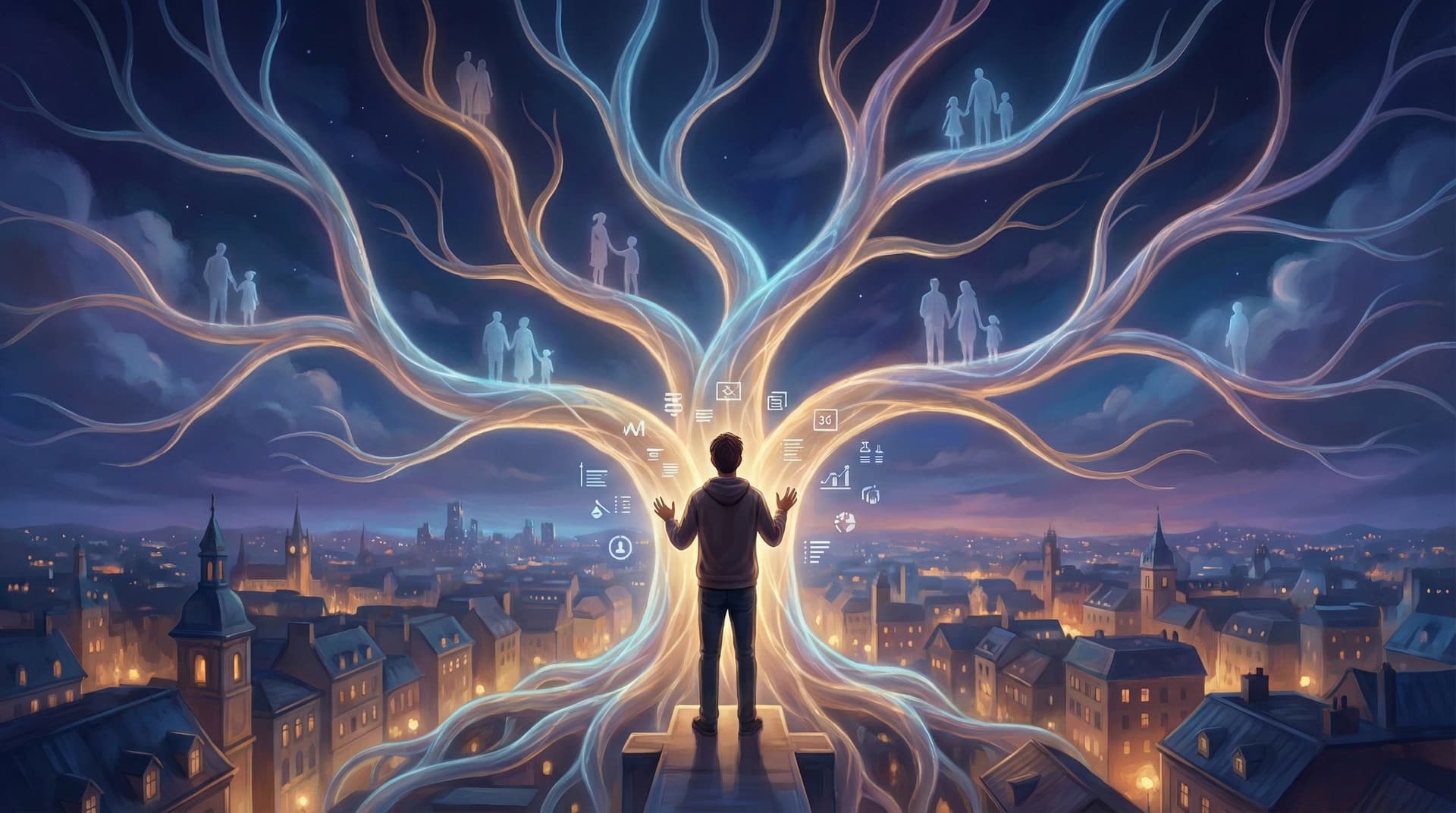
The New Interactive Zine: Short-Form, Lo-Fi Questas Experiments for Writers and Indie Creators

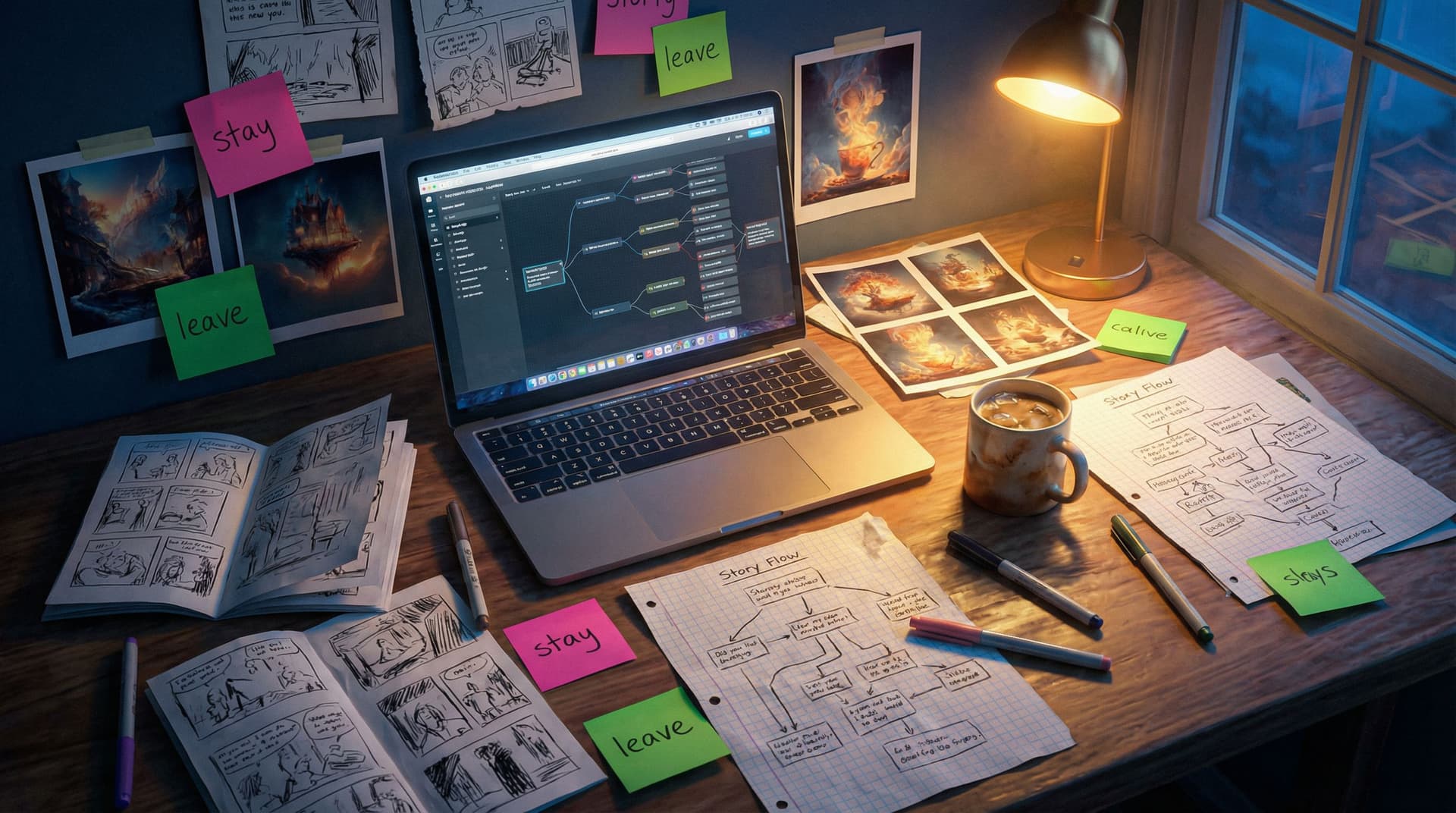
Zines have always been about scrappy experimentation: photocopied pages, hand-drawn margins, weird ideas shipped before they’re “ready.” Now that spirit is colliding with interactive storytelling and AI visuals—and it’s opening up a new playground for writers and indie creators.
Short, lo-fi, branching “micro-quests” built in tools like Questas are starting to feel like the next evolution of the zine: compact, personal, a little rough around the edges, and wildly expressive.
This post is a guide to that space: why it matters, what makes it different from traditional interactive fiction, and how to start running your own low-stakes experiments without disappearing into a six‑month production hole.
Why Interactive Zines Are Having a Moment
Zines thrived because they were:
- Cheap to make
- Fast to share
- Deeply personal and niche
Interactive zines built in Questas keep all of that—but add:
- Choice and consequence instead of linear reading
- AI-generated images and video that you can spin up in minutes
- Instant sharing via links instead of mailing lists and photocopiers
For writers and indie creators, this matters because it:
-
Lowers the bar to experimentation
You don’t need a dev team, a game engine, or a polished art pipeline. A simple branching story with a handful of scenes and rough-but-evocative visuals is enough. -
Lets you test ideas as experiences, not just concepts
Instead of asking, “Would you read a story about X?”, you can ask, “What choices do you make when you play through this scenario?” That’s a much richer signal. -
Turns your audience into collaborators
Readers can replay, compare endings, and send you screenshots of their favorite paths. That feedback loop is gold for iterating quickly. -
Fits into real creative lives
Many of us are juggling jobs, families, and other projects. Short-form, lo-fi Questas experiments are small enough to build in a weekend or a few evenings—something we’ve explored in depth in Low-Lift, High-Impact: Weekend Questas Projects for Writers, Educators, and Marketers.
What Makes a “Lo-Fi” Questas Zine?
Lo-fi doesn’t mean lazy. It means intentional roughness: embracing constraints so you can ship more often and focus on the core idea.
A lo-fi interactive zine in Questas typically has:
-
A tight scope
5–12 scenes, 2–3 key decision points, 2–4 endings. -
Minimalist prose
Short paragraphs, punchy dialogue, and lots of white space. -
Deliberately simple visuals
- One consistent art style (e.g., risograph-inspired, black-and-white linework, VHS stills)
- Reused character portraits or backgrounds across scenes
- Occasional “glitches” or imperfections treated as part of the aesthetic
-
A single creative constraint
For example:- Every scene must fit in 80 words
- Only one new image per branch
- All choices are framed as questions the reader is asking themself
If this sounds familiar, it’s because it echoes the philosophy in Creative Constraints as Superpowers: Time-Boxed, Word-Count, and Image-Only Challenges in Questas. The same constraints that make great interactive training or product prototypes also make for sharp, memorable zines.
Core Benefits for Writers and Indie Creators
1. A Safe Lab for Voice and Style
Short, experimental Questas zines are perfect for trying out:
- A new genre (cosmic horror, slice-of-life romance, autofiction)
- A different narrative POV (second person, collective “we,” epistolary logs)
- Non-traditional structures (looping memories, nested dreams, unreliable narrators)
Because the projects are small, you can:
- Ship more often
- Abandon experiments that don’t resonate
- Double down on the ones that do—expanding them into larger quests later
2. A Playground for Visual Storytelling
AI-generated images and videos inside Questas let you treat visuals as:
- Mood setters (grainy alleyways, overexposed polaroids, scribbled notebook pages)
- Story clues (objects that change between branches, background details that hint at secrets)
- Diegetic artifacts (in-world posters, security feeds, tarot cards)
If you want to go deeper on using visuals as clues and Easter eggs, check out AI-Generated Props and Clues: Using Visual Details to Hide Secrets, Codes, and Easter Eggs in Questas.
3. A Low-Stakes Way to Build a Body of Work
Instead of one giant, “perfect” interactive novel you never finish, you can:
- Release a series of micro-quests, each exploring a theme or character from a new angle
- Treat each zine as a chapter in a loose storyworld
- Rapidly learn what resonates through qualitative feedback and simple metrics
Over time, this becomes a portfolio: proof that you can ship interactive stories, not just talk about them.
Designing Your First Interactive Zine in Questas
Let’s walk through a concrete, repeatable process you can use for your first short-form experiment.
Step 1: Pick a Tiny Concept
Aim for something you could pitch in one sentence.
Examples:
- “You’re a barista deciding whether to join the underground union in your city.”
- “You wake up as the only passenger on a night bus that never seems to stop.”
- “You’re an indie musician choosing between three wildly different record deals.”
Good test: if the premise requires worldbuilding footnotes to make sense, shrink it.
Helpful constraint: limit yourself to one emotional question you want the reader to wrestle with, such as:
- “What would you sacrifice for stability?”
- “When do you walk away from a dream?”
- “How much truth is too much truth?”
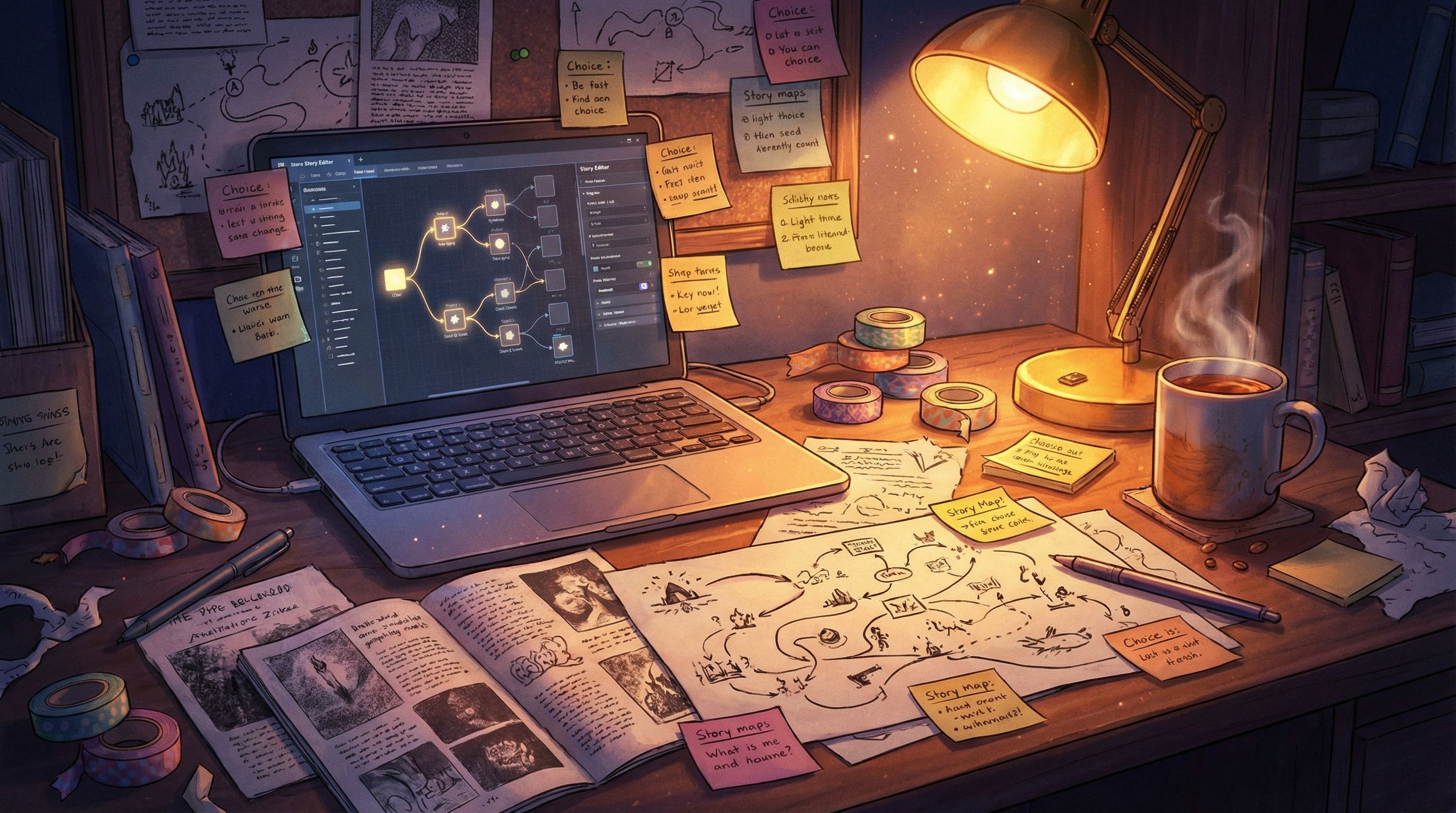
Step 2: Sketch the Branches on Paper (Yes, Paper)
Before you open Questas, grab a notebook.
- Draw a starting node. Write your opening situation in 1–2 lines.
- Add two choices. Not three, not five. Two.
- For each choice, draw 1–2 more nodes. Ask:
- What’s the immediate consequence?
- How does the emotional question get sharper?
- Aim for 2–4 endings max. Label them with vibes, not plot:
- “Bittersweet acceptance”
- “Chaotic freedom”
- “Quiet regret”
You’ll end up with something like:
- 1 starting scene
- 2 scenes at depth 1
- 2–4 scenes at depth 2 (some may converge)
- 2–4 endings
That’s a perfect size for a lo-fi zine.
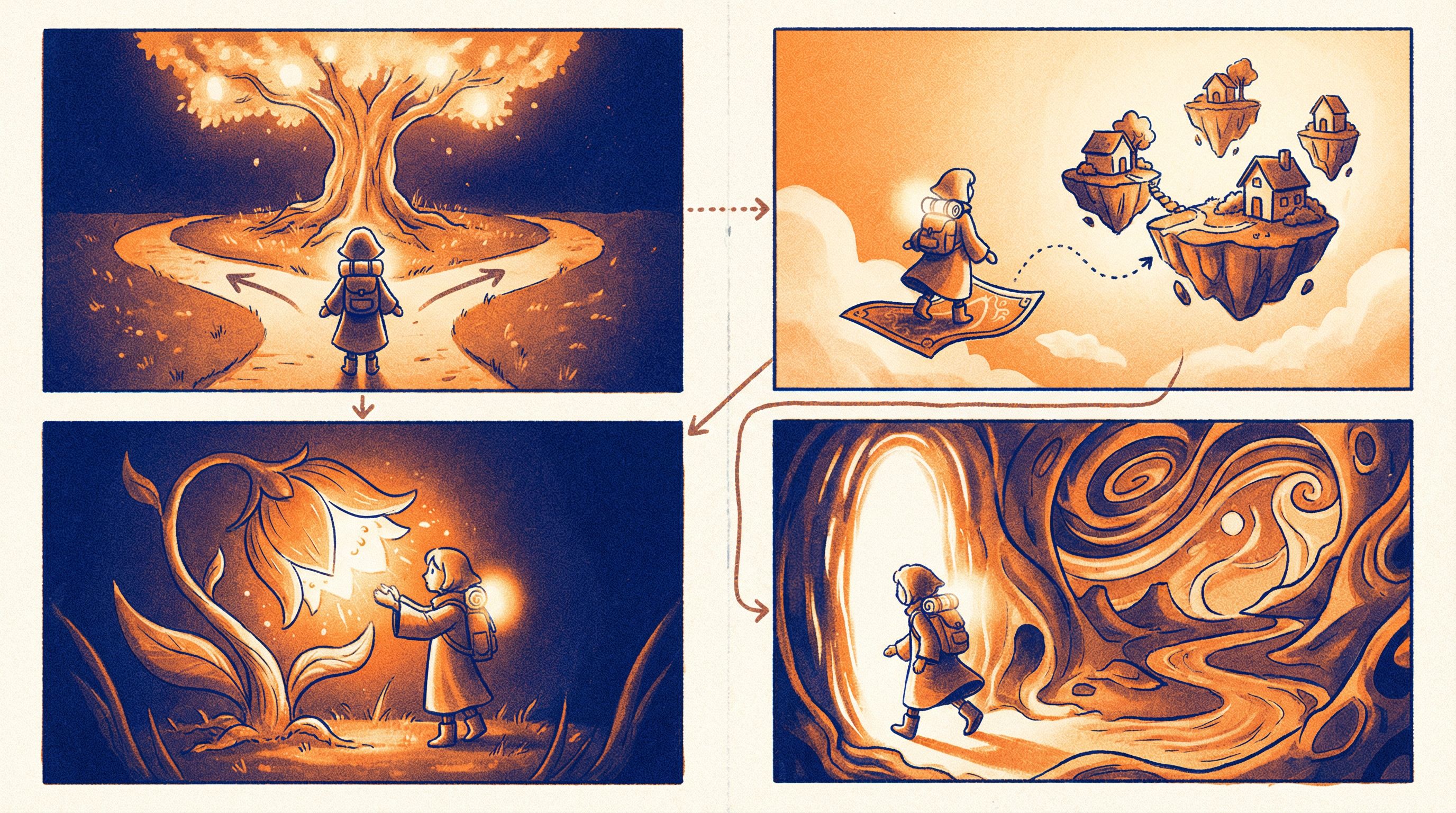
Step 3: Decide on Your Lo-Fi Aesthetic
Pick one visual rule set and stick to it.
Some easy modes:
-
Photocopied collage
- Black-and-white, high-contrast images
- Visible texture: paper grain, torn edges, tape
- Great for punk, memoir, or political themes
-
Risograph-inspired color
- 2–3 flat colors (e.g., neon pink, teal, cream)
- Slight misalignment and grain
- Great for dreamy, surreal, or playful stories
-
VHS / CRT stills
- Soft blur, scan lines, timestamp overlays
- Great for horror, nostalgia, or liminal spaces
In Questas, you can bake this into your AI prompts:
“grainy black-and-white photocopy style illustration, high contrast, visible paper texture, zine aesthetic, no shading, minimal linework”
Reuse prompts across scenes, tweaking only the content (location, pose, key object) to keep everything cohesive.
For more advanced visual systems, you can later graduate to the workflows in AI as Art Director: Building Cohesive Visual Storyworlds in Questas Without a Design Team, but don’t start there—start scrappy.
Step 4: Write Micro-Scenes, Not Chapters
Each node in your zine should feel like a panel, not a chapter.
Try this pattern:
-
One establishing sentence
Set place, time, or mood. -
One sensory detail
Sound, smell, texture—something concrete. -
One line of inner conflict or dialogue
What’s at stake right now? -
Two choices
Each framed as a clear, active decision.
Example:
The night bus hums like a refrigerator, too bright and too cold.
The city outside is just streaks of sodium orange, repeating the same three storefronts like a glitch.
The driver hasn’t moved in an hour.
Do you…
• Walk up the aisle and ask where this bus is actually going?
• Pretend everything is fine and put your headphones back on?
Keep it tight. If you’re tempted to explain the lore, put it in the visuals instead: a poster on the bus wall, a reflection in the window.
Step 5: Use Visuals as Zine “Pages”
For each key scene:
- Generate one main image that sets the tone.
- Consider adding small, repeatable motifs across branches:
- A recurring sticker on a guitar case
- The same subway map with different lines highlighted
- A notebook that accumulates scribbles as the story progresses
You don’t need an image for every node. Focus on:
- Opening scene
- First major choice
- Emotional turning point
- Endings
This keeps production light while still giving the experience a visual spine.
Lo-Fi Publishing and Feedback Loops
A zine isn’t finished when you export the PDF; it’s finished when it’s in someone else’s hands. Same here.
Lightweight Ways to Share
Once your micro-quest is built in Questas:
-
Send it to 3–5 trusted friends
Ask them to play through once without instructions. -
Share a “soft launch” link on:
- A small Discord server
- A private Patreon post
- A newsletter “PS” section
-
Pair it with a single question, like:
- “Which ending felt most ‘true’ to you?”
- “Where did you feel most stuck or unsure?”
- “If this zine had one more scene, where would you put it?”
What to Pay Attention To
You don’t need a full analytics dashboard for these early experiments (though as you scale up, the ideas in Beyond Clicks and Completion Rates: Qualitative Playtesting Methods for Deeply Improving Your Questas Stories become incredibly useful).
For now, focus on:
- Screenshots players send you of favorite moments
- Branches they talk about unprompted
- Confusion points where they weren’t sure what a choice meant
Use this feedback to:
- Tighten choice wording
- Clarify stakes
- Add or remove one scene—not overhaul the whole thing
Remember: the goal is to iterate in public, not to perfect in private.
Experiment Formats to Try
Once you’ve shipped one interactive zine, you’ll start seeing formats everywhere. Here are a few to play with:
-
Two-Endings, One-Choice Zine
- One big decision in the middle.
- Very short buildup, two sharply different outcomes.
- Great for moral dilemmas, relationship crossroads, or political choices.
-
Looping Day-in-the-Life
- The same “day” repeats, but small details change based on prior choices.
- Use visuals to highlight what’s different each loop.
-
Artifact-Driven Mystery
- Each scene is a different “found object”: diary entry, receipt, voicemail transcript, polaroid.
- Choices determine which artifact you uncover next.
-
Forked Memoir
- Start from a real moment in your life.
- Branch into what you did vs. what you almost did.
- Let endings explore the emotional truth of both.
-
Collaborative Chain Zine
- Creator A makes the opening and first branch.
- Creator B continues one branch, Creator C continues another.
- Everyone keeps the same lo-fi visual rules.
These formats are intentionally small. They’re meant to be finished, not just started.
Keeping It Sustainable (So You Don’t Burn Out)
The biggest risk with interactive work is scope creep. To keep your zine practice sustainable:
-
Time-box each project
Decide upfront: “This zine gets 6 hours total.” When time’s up, you ship or you shelve. -
Reuse assets shamelessly
- Same character portrait across multiple quests
- Same background image with different color grading
- Same UI framing (e.g., notebook pages, terminal windows)
-
Limit branching complexity
Resist the urge to add “just one more” choice. If you must, replace a choice instead of adding a new branch. -
Think in series, not epics
If an idea feels bigger than one zine, break it into a season of micro-quests, each self-contained.
This mindset is especially helpful if you’re a solo creator, something we explore more deeply in Branching Narratives on a Budget: How Solo Creators Can Ship Polished Questas Without Burning Out (worth a read once you’ve got a zine or two under your belt).
Quick Recap
If you remember nothing else, take this:
- Small is the point. Your interactive zine should feel like a single, strong idea, not a whole universe.
- Lo-fi is a choice. Consistent roughness beats inconsistent polish every time.
- Visuals carry story. Use AI images in Questas as mood, clues, and artifacts—not just decoration.
- Two choices are enough. Most of the magic comes from how you frame decisions, not how many there are.
- Ship, then iterate. Get your zine in front of a handful of people, listen closely, and let that inform the next one.
Your First Step: Make a 5-Scene Zine
Don’t bookmark this and promise yourself you’ll return “when you have time.” Give yourself a tiny, concrete challenge:
This week, create a five-scene interactive zine in Questas:
- Pick a one-sentence premise and one emotional question.
- Sketch a simple branch with 2–4 endings on paper.
- Choose a lo-fi visual style and write one reusable AI prompt.
- Build 5 scenes with tight, micro-scene writing and two choices per decision point.
- Generate 3–4 images to anchor key moments.
- Share it with three people and ask them which ending felt most “real.”
That’s it. No epic lore, no 40-branch flowchart, no perfection.
Your interactive zine doesn’t have to be big to matter. It just has to be finished, shared, and honest.
Adventure awaits—one scrappy, lo-fi quest at a time.