From Library to Lab: How Educators Turn Classic Texts into Experimental Questas Adaptations

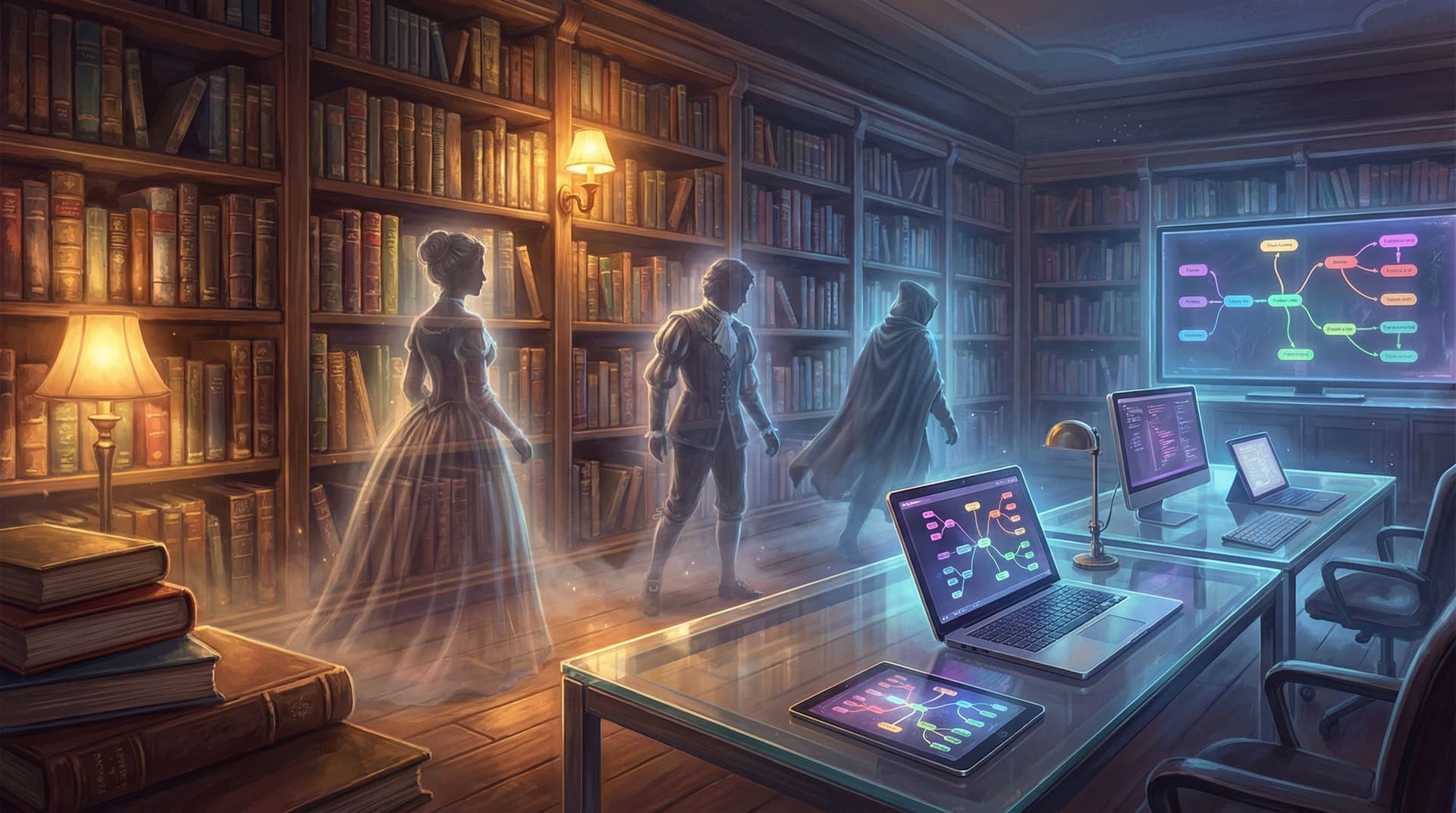
Classic literature has always been the backbone of language arts: Shakespeare, Austen, Douglass, Achebe, Orwell, Cisneros. These works anchor curricula, build shared cultural references, and stretch students’ reading muscles.
But many teachers quietly wrestle with the same tension:
“I know this text matters. I’m just not sure my students feel it.”
That’s where turning the library into a lab comes in.
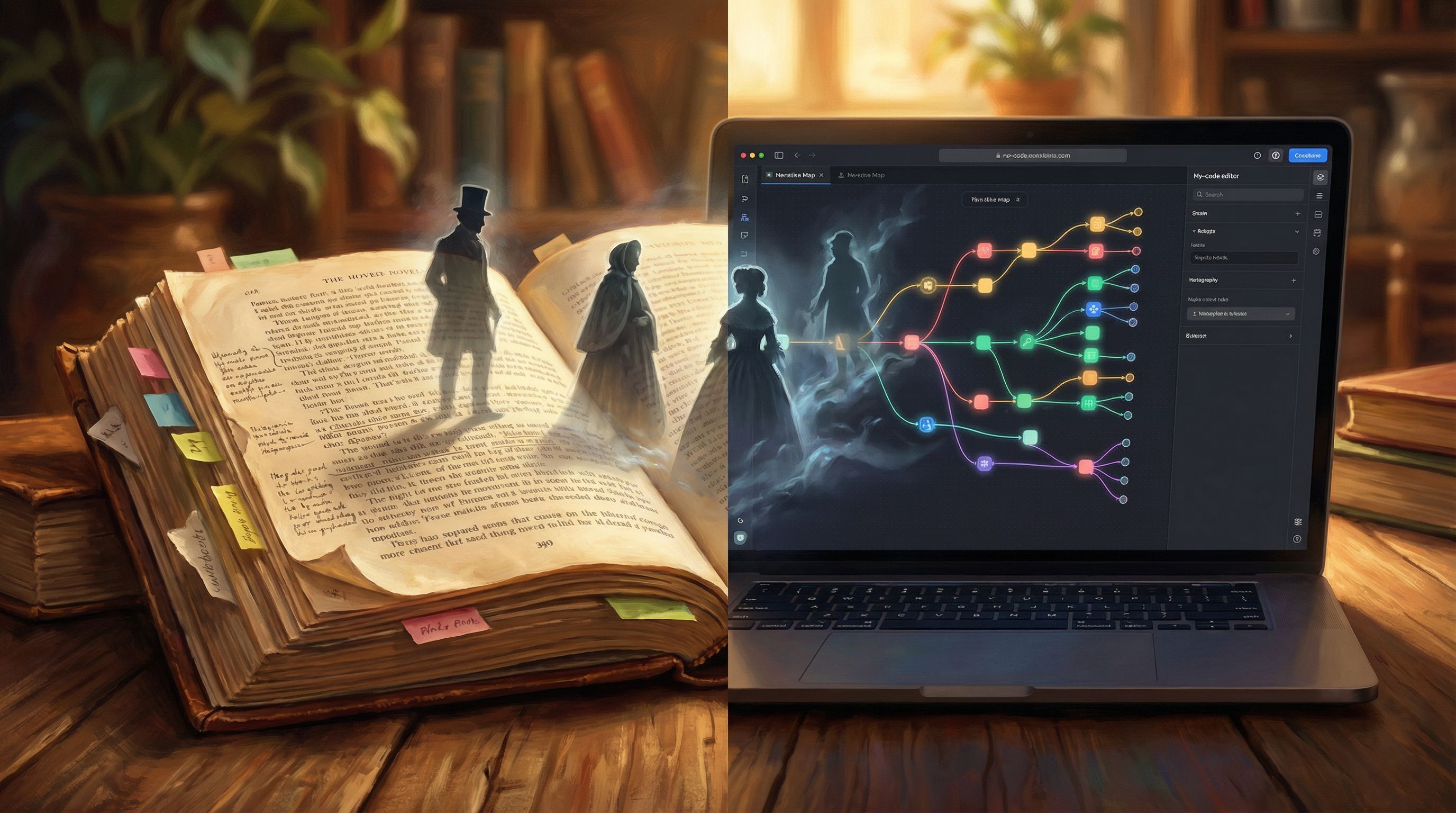
Interactive, choice-driven adaptations of classic texts let students experiment with canon instead of just analyzing it. With a visual, no-code platform like Questas, you can keep the rigor and language of the original while inviting students to:
- Step into a character’s shoes and make consequential choices
- Explore alternate paths, endings, and perspectives
- See how small decisions ripple through a storyworld
This post is a practical guide to turning those “must-teach” works into experimental Questas adaptations that feel more like narrative labs than book reports.
Why Turn Classic Texts into Playable Experiments?
Interactive fiction isn’t just a novelty; there’s a growing body of research behind it.
Studies on branching narratives and interactive e‑books have found that:
- Choice-driven reading boosts motivation. A recent systematic review reported that a majority of young readers prefer interactive fiction over static texts and say it motivates them to read more.
- Interactive e‑books can improve vocabulary and comprehension, especially when they embed strategy prompts and decision points directly into the story.
- Narrative-based, gamified learning increases presence and engagement—students describe it as “being inside the story,” which is exactly where we want them when wrestling with complex language and ideas.
For classic literature specifically, interactive adaptations help you:
- Preserve rigor, increase access. Keep the original language in key scenes while scaffolding with summaries, choices, and visual context.
- Honor the text, invite critique. Students can test “what if” scenarios: What if Hamlet actually trusted someone? What if the creature in Frankenstein found a different mentor?
- Make literary analysis concrete. Instead of only talking about themes, students feel them as they navigate conflicting values and consequences.
- Support diverse learners. English learners and reluctant readers can grasp plot and character through images, short bursts of text, and replayable paths.
If you’ve explored how classroom discussions can become playable journeys, you’ll see parallels with our post on turning debates into Questas decision journeys: From Classroom Debates to Playable Dilemmas. Classic texts are another rich source of “hidden branches” waiting to be surfaced.
Choosing the Right Texts and Angles
You don’t have to rebuild the entire canon as branching epics. Start with texts and units where interactivity will do the most work for you.
Good candidates for Questas adaptations
Look for works that already contain:
- High-stakes decisions
- Macbeth, Antigone, The Crucible, Things Fall Apart
- Unreliable narrators or limited perspectives
- The Great Gatsby, Catcher in the Rye, Beloved
- Clear turning points and moral dilemmas
- To Kill a Mockingbird, Of Mice and Men, Lord of the Flies
- Rich worldbuilding and setting
- Jane Eyre, Their Eyes Were Watching God, The Odyssey
You can also start smaller with short stories: Poe, Jackson, Chopin, Borges, Díaz, Lahiri. Shorter texts are perfect for first experiments.
Decide what you’re “experimenting” with
Before opening Questas, define the core question for your adaptation:
- Character experiment:
- What if this character made a different choice at a key moment?
- Perspective experiment:
- What does this scene look like from another character’s point of view?
- Theme experiment:
- How do different choices illuminate justice, power, gender, race, or class?
- Structure experiment:
- What happens if we reorder events or reveal information at different times?
Write that experiment question at the top of your planning doc. Every branch you build should help students explore it.
Mapping the Original into Branching “What Ifs”
Think of your Questas adaptation as a layer on top of the original text, not a replacement. The goal is to help students see the architecture of the story more clearly.
1. Identify the “hinge” scenes
Skim the text and mark 3–7 moments where a character:
- Makes a consequential choice
- Fails to act
- Misunderstands or misinterprets someone else
- Receives or withholds crucial information
These become your choice points inside Questas.
For each hinge scene, jot down:
- What the character actually does in the text
- At least two plausible alternatives that still fit their personality and context
- The immediate consequence of each alternative
- A longer-term ripple effect (even if you don’t fully branch it out)
2. Decide your branching depth
To keep your first adaptation manageable:
- Choose 3–5 major decision points for a novel, or 2–3 for a short story.
- Limit yourself to 2–3 branches per choice, with some branches converging back later.
- Reserve fully divergent endings for 1–2 key decisions.
If you want a deeper dive into designing meaningful decisions, our post on The Tension Triangle is a helpful companion. It walks through balancing risk, reward, and information at each choice—perfect for adapting morally complex classics.
3. Tag your choices with skills and standards
For each decision point, add a note like:
- RL.3 – Analyze how complex characters develop
- RL.6 – Point of view and perspective
- RI.9 – Comparing source and adaptation
Then design follow-up prompts or reflections that explicitly hit those standards. The branching narrative becomes the vehicle for the skill, not a distraction from it.

Building Your First Questas Adaptation, Step by Step
Let’s walk through a concrete workflow you can reuse across texts.
Step 1: Create a “spine” of scenes
In the visual editor inside Questas:
- Add nodes for the key scenes you’ve identified (exposition, rising action, climax, resolution).
- Write short scene summaries in student-friendly language while anchoring them with direct quotes from the text.
- Link nodes in a straight line first—this is your canonical path that mirrors the original.
Think of this as your “teacher edition” storyboard of the novel.
Step 2: Layer in decision points
For each hinge scene:
- Split the node into a choice node with 2–3 options.
- Label each option with clear, character-grounded language, not just plot directions. For example:
- “Confront the uncle publicly at dinner”
- “Wait and gather more evidence first”
- “Confide in a trusted friend before acting”
- Create outcome nodes that:
- Show the consequence of the choice
- Either rejoin the main spine later (soft branch) or
- Diverge into an alternate arc or ending (hard branch)
Step 3: Weave in text evidence and analysis
To keep this academically rich:
- Embed short excerpts from the original text at key nodes.
- Ask players to justify choices with quotes before proceeding.
- Include mini-reflection prompts:
- “Which line from Chapter 5 best explains why you chose this?”
- “How does this outcome support or challenge the theme of fate vs. free will?”
You can treat each branch as a pre-writing scaffold for essays and Socratic seminars.
Step 4: Add AI-generated visuals and/or video
One of the big advantages of Questas is built-in AI image and video generation.
Use visuals to:
- Clarify setting and mood for students who struggle to visualize dense description
- Highlight symbolic details (the green light, the conch shell, the red room)
- Differentiate branches—slightly altered visuals can signal that players are in an alternate timeline
If you’re not confident with visual design, the style tips in AI Visual Storytelling for Non-Artists pair well with this work. You’ll find concrete prompt templates and style systems you can reuse across classic-lit units.
Step 5: Quietly teach the “rules” of your story
Students new to interactive stories may need gentle onboarding:
- Start with a short prologue that gives them a low-stakes choice (e.g., how their character reacts to a minor annoyance).
- Use that prologue to demonstrate:
- Choices have consequences
- They can’t “see everything” in one playthrough
- Replaying is encouraged
Our guide to Designing ‘Invisible Tutorials’ goes deeper into this idea—teaching mechanics inside the story instead of through separate instructions.
Classroom Models: How to Run the Experiment
Once you’ve built your adaptation, there are several ways to bring it into your classroom.
1. Whole-class “lab run”
Use a projector or screen-share and:
- Play through the Questas experience as a class.
- Let different tables or rows vote on each choice.
- Pause at each branch to:
- Predict outcomes
- Connect to the original text
- Debate which option is most “in character”
Then assign homework where students replay individually and write about a different path.
2. Literature circles, branching edition
Combine classic literature circles with interactive play:
- Each group focuses on a different branch or perspective in the same Questas adaptation.
- They annotate how their path diverges from the original text.
- In a jigsaw discussion, groups teach each other the consequences of their branch.
This model works especially well if you’re already comfortable with literature circles and want to add a modern layer without rebuilding your whole unit.
3. Student-designed micro-adaptations
Once students have played your teacher-built adaptation, flip the script:
- Assign short story micro-adaptations as a culminating project.
- Provide a template Questas project with:
- A few pre-built nodes
- One example choice
- Clear constraints (e.g., max 10 nodes, at least 2 endings)
- Let students choose:
- A scene to rewrite from a different POV
- An alternate ending
- A “missing chapter” that fills a narrative gap
This turns your classroom into a true lab where students experiment with narrative structure, not just interpret it.
Assessment Ideas That Go Beyond “Did You Click Through?”
Interactive experiences can absolutely be rigorous. Here are some ways to assess learning around your Questas adaptation.
Evidence-based reflections
Ask students to submit a short written reflection after playing:
- Which path did you follow, and why?
- Where did your choices align with or diverge from the original text?
- Which quote best captures the theme of your playthrough?
Require text evidence from both the original work and the adaptation.
Comparative essays
Prompts like:
- Compare the consequences of [character]’s canonical choice with an alternate path you explored in the Questas adaptation. Which outcome better supports the author’s message?
- How does experiencing multiple branches change your interpretation of the ending?
Students can cite scenes from your Questas story as they would film adaptations or critical essays.
Design critiques
Have students:
- Analyze one of your choice points using the “tension triangle” lens (risk, reward, information).
- Propose an improved version of the choice with:
- Clearer stakes
- Better alignment with character
- Stronger connection to theme
This not only deepens literary analysis but also builds media literacy and UX thinking.
Data-informed teaching tweaks
Because Questas is web-based, you can track:
- Popular branches
- Drop-off points
- Time spent per scene
Use that data to:
- Identify confusing passages in the original text
- Spot where students consistently choose the “safe” option
- Plan mini-lessons targeting those friction points
If you’re curious about digging deeper into playtesting and qualitative feedback, the post Beyond Clicks and Completion Rates offers practical methods you can adapt for classroom use.
Common Pitfalls (and How to Avoid Them)
A few patterns tend to trip educators up the first time they adapt a classic.
1. Trying to adapt the entire novel at once
Solution: Start with a single act, section, or pivotal chapter. Treat it as a pilot.
2. Choices that don’t really matter
Solution: Make sure at least some decisions:
- Change what the player knows
- Change how other characters treat them
- Lead to different scenes, not just different dialogue lines
3. Losing the author’s voice
Solution:
- Keep key passages verbatim where language matters most.
- Use your own narration mainly for summaries, transitions, and meta-prompts.
4. Overcomplicating the visual design
Solution:
- Pick a simple, consistent visual style.
- Reuse character and setting prompts.
- Focus on 3–5 iconic images rather than illustrating every node.
5. Treating the Questas adaptation as “extra” instead of central
Solution:
- Tie major assessments and discussions directly to choices and branches.
- Make it clear that this is not just a game; it is the unit’s core learning experience.
Bringing It All Together
When you turn a classic text into a Questas-powered experiment, you’re not replacing the book—you’re:
- Making the architecture of the story visible
- Giving students agency inside that architecture
- Turning analysis into something they do, not just something they write about afterward
The library becomes a lab where canonical works are:
- Tested
- Reimagined
- Lived through multiple times
And along the way, students practice exactly the skills we care about: close reading, inference, argumentation, empathy, and critical thinking.
Your Next Step
You don’t need to overhaul your entire curriculum to start.
Here’s a simple, concrete first move you can take this week:
- Pick one short story or a single chapter from an upcoming unit.
- Identify two hinge moments where a character could plausibly act differently.
- Sketch a mini-branching map on paper: original path + 1 alternate path.
- Open Questas and:
- Build a 6–10 node prototype
- Add 1–2 AI-generated images to anchor setting and mood
- Run a 15–20 minute “lab session” where students play through and then write a short reflection comparing their path to the original.
Once you’ve seen how engaged they are—and how much richer the discussion becomes—you can decide how far you want to take the experiment in future units.
Adventure awaits in the stacks you already own. The classics aren’t museum pieces; they’re story engines. With a little help from Questas, you can invite your students to step inside, flip the switches, and see what else these stories can do.