From Classroom Debates to Playable Dilemmas: Turning Real Discussions into Questas Decision Journeys

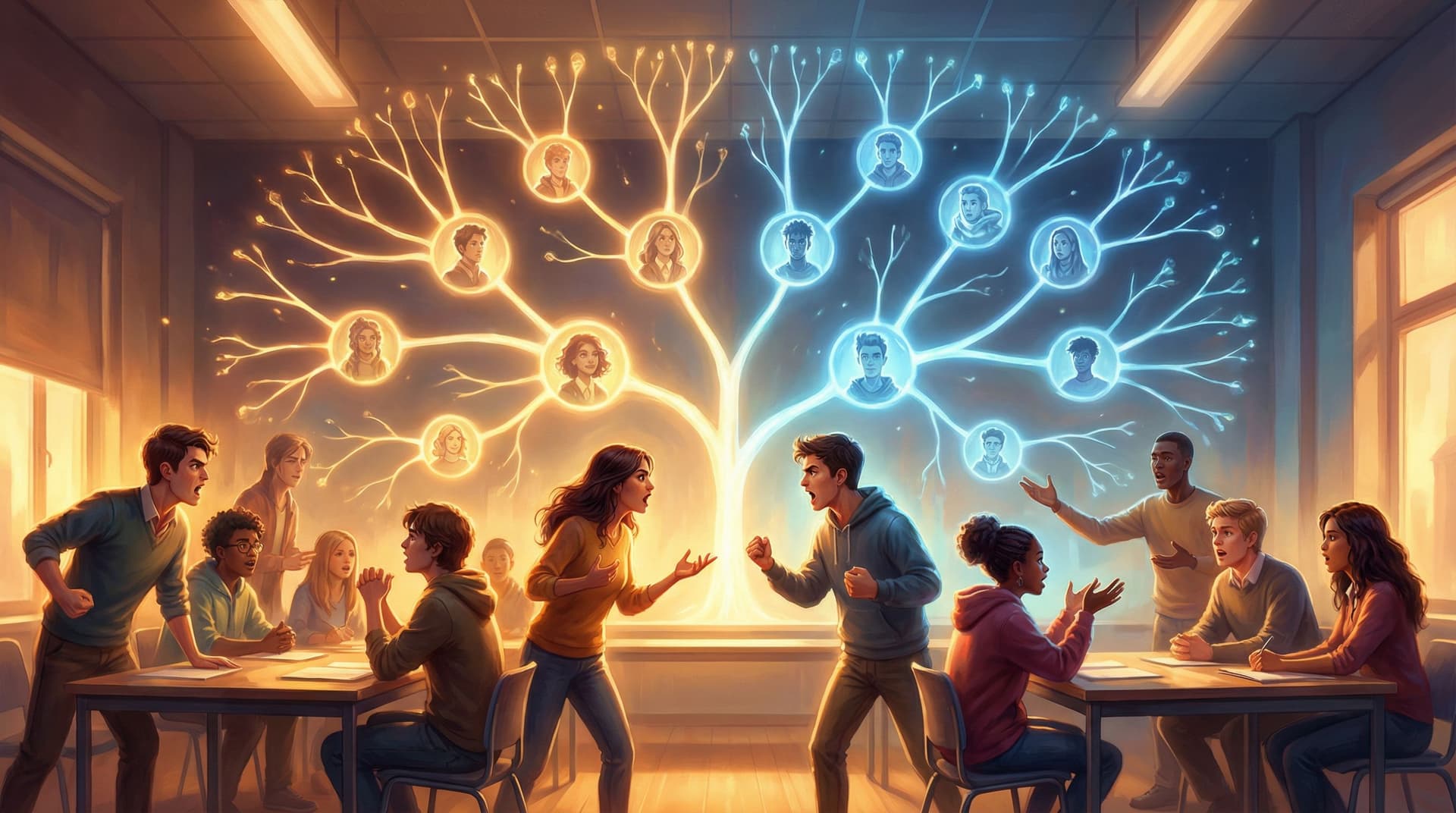
Classrooms are already full of branching narratives.
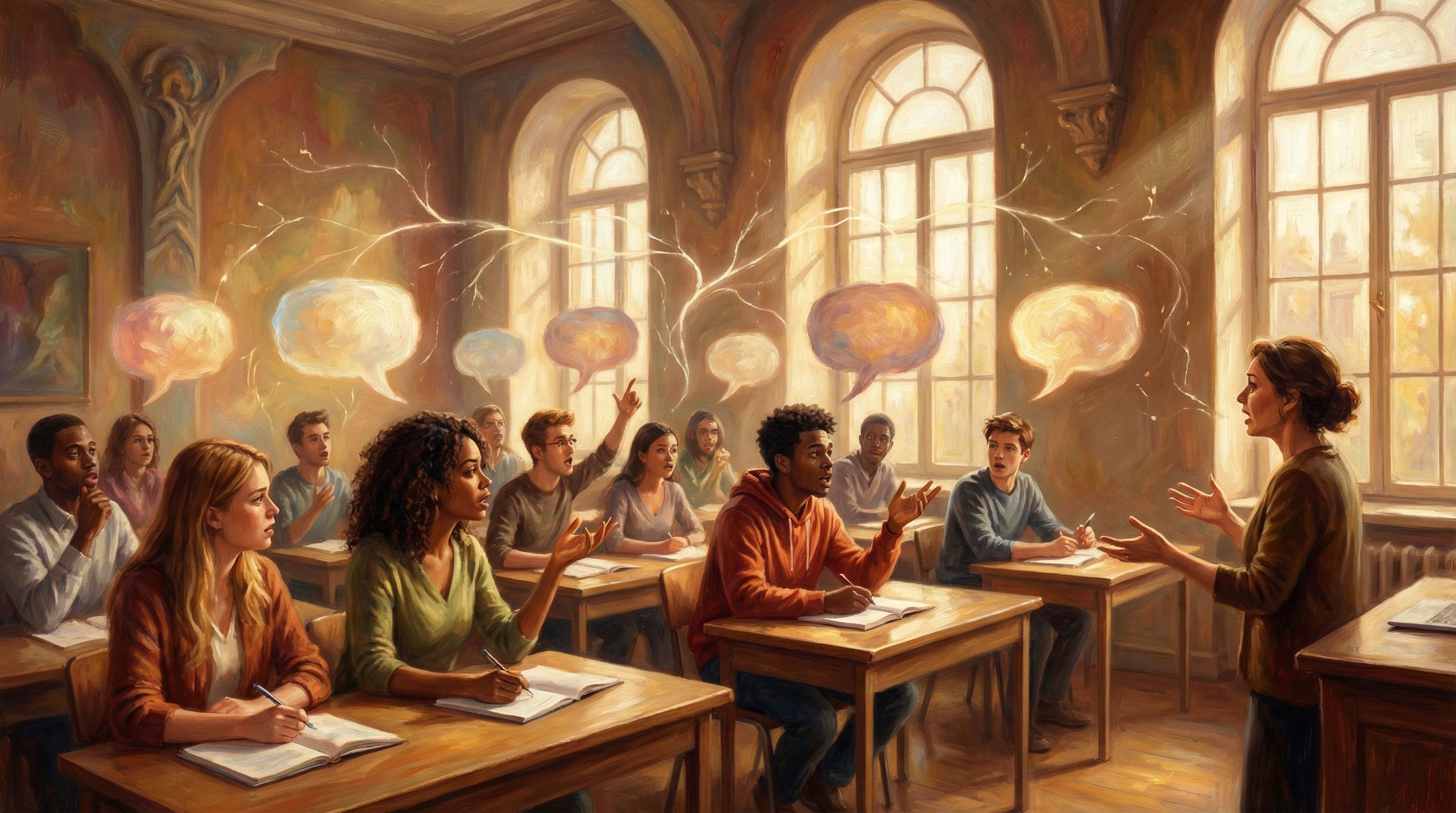
A student raises a hand. Someone pushes back. The room divides. New angles emerge. By the end of a good debate, the group has walked through multiple “what ifs” together—even if there’s only one grade in the gradebook.
What’s missing is replay.
Once that bell rings, the debate is gone. Students who were quiet don’t get a second shot. The class never sees what would have happened if they’d followed a different line of reasoning all the way through.
That’s where turning real discussions into interactive stories comes in.
With a platform like Questas, you can capture the best debates and dilemmas from your classroom, then rebuild them as playable decision journeys: students step back into the moment, make choices, see consequences, and compare paths. Instead of “remember that one debate we had about data privacy?”, you get a reusable, visual scenario you can run every semester.
This post is a practical guide to doing exactly that.
Why turn live debates into playable journeys?
You’re not doing this just because it’s cool (though it is). You’re doing it because it compounds the value of work you’re already doing.
1. Debates already build the right skills
Research on structured classroom debates consistently finds gains in:
- Critical thinking and analysis – Students must research both sides, evaluate evidence, and anticipate counterarguments.
- Communication and oracy – They practice speaking clearly, listening actively, and responding under pressure.
- Collaboration and perspective-taking – Teams coordinate arguments and grapple with opposing views.
When you turn a debate into a branching scenario, you’re preserving and amplifying those same skills—just in a format students can revisit, reflect on, and share.
2. You capture rich, real dilemmas—not textbook hypotheticals
Classroom debates often surface exactly the kind of messy, gray-area questions that make for powerful interactive stories:
- “Is it ever okay to use AI to finish an assignment?”
- “Should the school ban phones during exams entirely?”
- “Does the city prioritize bike lanes or parking spaces?”
These are already emotionally charged, grounded in students’ lives, and full of tradeoffs. In other words: they’re perfect raw material for a Questas journey.
If you’re interested in ethical tradeoffs specifically, you might also enjoy our post on prototyping ethical dilemmas and grey-area choices in Questas.
3. You get reusable, replayable learning assets
Once a debate becomes a playable story:
- Future classes can experience the same dilemma without you re-running the whole activity.
- Students can replay to explore different strategies and outcomes.
- You can embed quick reflections, prompts, or even mini-assessments inside the narrative.
Over time, you build a library of “decision journeys” that extend your teaching far beyond a single period.
Step 1: Choose the right debate to capture
Not every discussion belongs in an interactive story. The best candidates share a few traits:
1. There’s a genuine dilemma, not a trivia question
Look for debates where:
- Reasonable people could disagree.
- There are tradeoffs in every direction.
- The “right” answer depends on values, priorities, or context.
For example:
- Strong candidate: “Should our school adopt facial recognition for security?”
Tradeoffs: safety vs. privacy, convenience vs. surveillance, bias risks. - Weak candidate: “What year did the Treaty of Versailles get signed?”
That’s a fact recall, not a dilemma.
If you want help stress-testing the dilemma itself, our post on balancing risk, reward, and information at each choice point is a great companion.
2. The conversation naturally branched
During the live debate, did you see moments like:
- “If we assume X, then we have to consider Y…”
- “Wait, but what if the company misuses the data?”
- “Okay, but what happens if everyone does that?”
Those are branching nodes. Each “what if” can become a decision point in your future Questas journey.
3. There were clear roles and stakeholders
Playable dilemmas get stronger when students step into a specific role:
- The school principal deciding on a new policy.
- A city council member voting on a zoning change.
- A student journalist deciding what to publish.
As you think back on the debate, ask: Whose eyes would make this story most compelling?
Step 2: Harvest the debate for story ingredients
Before you open Questas, you need raw material. Fortunately, most of it is already in your classroom.
Capture what actually happened
Right after a strong debate (or while it’s happening), collect:
- Key positions – What were the main stances? (e.g., “Ban phones entirely”, “Allow phones with restrictions”, “No ban—teach responsible use”.)
- Supporting arguments – Facts, examples, analogies students used.
- Counterarguments and rebuttals – Where did teams clash?
- Turning points – Moments when the room’s opinion shifted.
- Unanswered questions – “We didn’t have time to get into…” often makes great bonus branches.
You can do this via:
- A quick post-debate reflection form.
- A shared doc where teams dump notes.
- Recording the session (audio or video) and skimming for highlights.
Translate arguments into possible actions
Interactive stories are driven by choices, not just claims. For each major argument, ask:
“If a character believed this, what would they actually do?”
Example: Debate topic – “Should the school use AI proctoring software?”
- Argument: “It’s necessary to prevent cheating.”
→ Action: Approve the software for all exams this semester. - Argument: “It invades privacy and may be biased.”
→ Action: Reject the software and invest in redesigned assessments instead. - Argument: “We need more data first.”
→ Action: Run a small pilot with volunteer classes and publish findings.
You’ve just turned abstract debate points into concrete decision branches.
Step 3: Map the debate as a decision tree
Now you’re ready to sketch the journey your players will take.
Start with a single, high-stakes decision
In Questas, think of your opening node as the “debate prompt made personal.” Instead of a generic question, frame it as a concrete moment:
“You’re the student body president. The principal asks you to recommend a policy on AI-assisted homework. You have one week.”
From there, offer 2–3 strong options that reflect the real positions students took:
- Ban AI tools entirely for graded work.
- Allow AI with strict citation and usage rules.
- Encourage experimentation and trust student judgment.
Each option leads to a different branch—but you don’t need infinite complexity.
Use a “3 x 3” structure to stay sane
A simple but powerful pattern for classroom dilemmas:
- 3 major initial choices.
- Each leading to up to 3 key consequences or follow-up decisions.
That gives you enough depth for meaningful exploration without overwhelming you or your students.
For each node in your map, jot down:
- What the player knows (information revealed so far).
- What they decide (the choice they make).
- What changes (consequences, reactions, new constraints).
Later, you’ll translate these notes directly into scenes in Questas’s visual editor.
Weave in the “tension triangle”
To keep choices from feeling obvious or shallow, check each major decision against three forces:
- Risk – What could the player lose? (Reputation, trust, grades, safety.)
- Reward – What could they gain? (Innovation, fairness, efficiency, autonomy.)
- Information – How much do they really know at this point?
If you want a deeper dive on this, the post on balancing risk, reward, and information in each Questas choice point walks through examples and templates you can borrow.
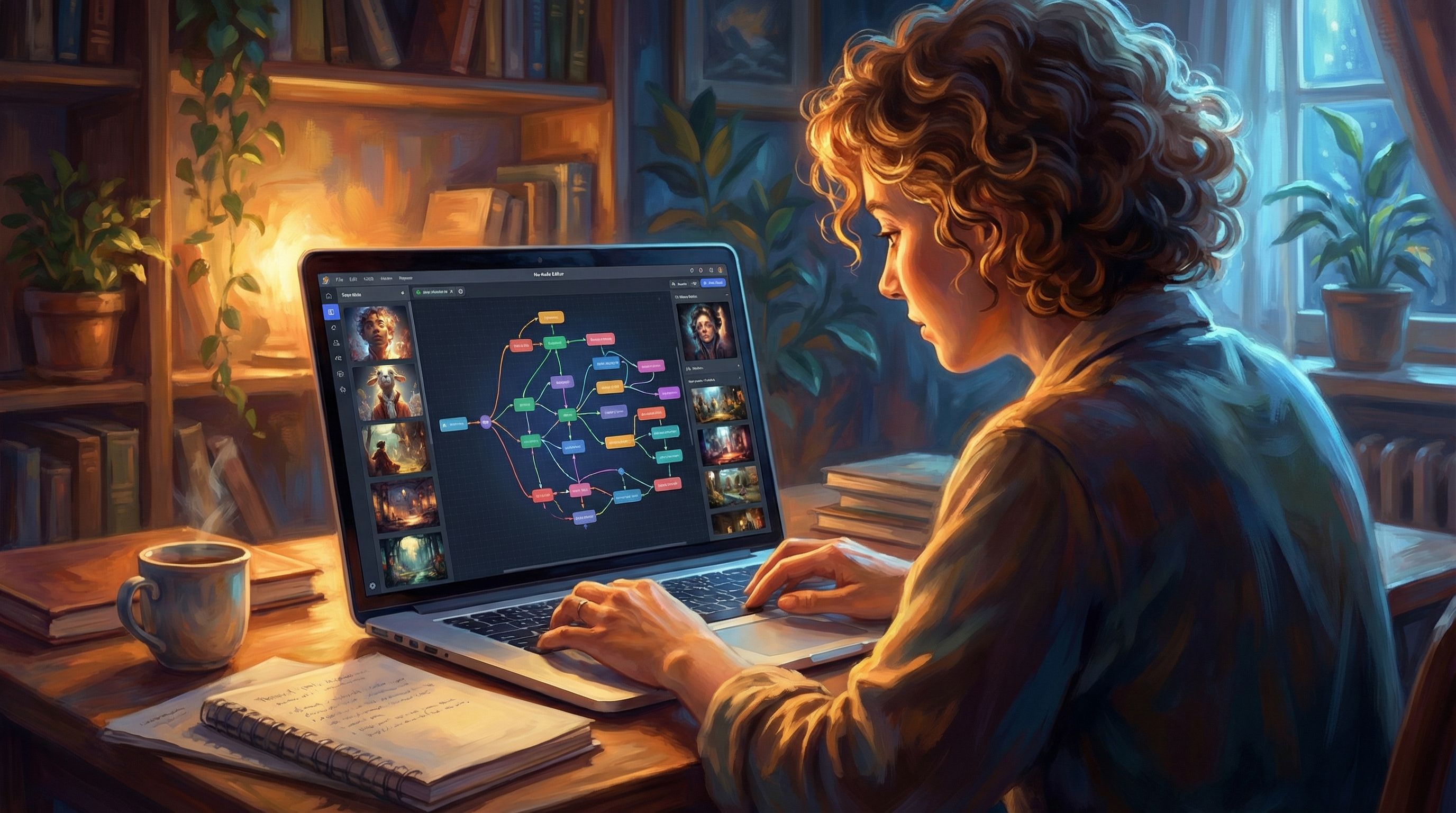
Step 4: Bring the journey to life in Questas
Once your map is sketched, it’s time to build.
1. Set up your core scenes
Inside Questas:
- Create a new story and define your player role (e.g., “You are the principal…”).
- Add scene nodes for each major step in your decision tree: introduction, first decision, consequences, follow-up dilemmas, endings.
- Use clear, concise text to describe what’s happening—aim for 150–300 words per scene.
2. Turn debate arguments into dialogue and feedback
This is where your classroom notes shine. For each choice:
- Use student-style language to keep it authentic.
- After a decision, show how different stakeholders react:
- A teacher might say, “I’m worried this sets a precedent.”
- A student might post a frustrated comment in a school forum.
- A parent might email the administration.
Then, briefly echo the underlying argument:
“By prioritizing security over privacy, you’ve reassured some staff—but you’ve also made students feel watched. Participation in online discussions drops 20% over the next month.”
3. Use AI-generated visuals to anchor the dilemma emotionally
Questas lets you generate images and video directly in the editor. You don’t need to be an artist; you just need to think cinematically.
Consider visuals for:
- The initial setup – A shot of the school board meeting, a city council chamber, or a crowded hallway.
- Key turning points – A tense parent meeting, a protest, a quiet one-on-one conversation.
- End states – A headline in the school paper, a celebratory assembly, or an empty classroom that hints at unintended consequences.
If you’d like more guidance on visual cohesion and style, check out our “cookbook” approach in AI Visual Storytelling for Non-Artists.
Step 5: Embed reflection, not just outcomes
The magic of turning debates into Questas journeys isn’t just letting students “win” or “lose.” It’s giving them space to think about why they chose what they chose.
Here are a few ways to do that.
Branch-based debriefs
At the end of each major path, add a short reflection scene:
- Ask 2–3 open questions:
- “What value did you prioritize most in your decisions?”
- “Who benefited most from your policy? Who was harmed?”
- “If you replayed, what’s the first decision you’d change?”
- Prompt students to jot answers in a notebook, submit them via your LMS, or discuss in small groups.
Compare paths live in class
After students play individually or in pairs:
- Have different groups walk through their paths on the projector.
- Ask the class to identify:
- Where their path mirrored the real debate.
- Where it diverged into new territory.
- Which arguments felt stronger when “lived” versus discussed abstractly.
This turns your Questas journey into a second-generation debate—now grounded in shared experience.
Use “quiet choices” to surface values
Not every decision has to be high-stakes. Sprinkle in low-stakes, character-building branches that reveal preferences and priorities, like:
- Which student you consult first about the policy.
- Whether you read the comments on a controversial post.
- How you respond to a peer’s snarky message.
These “quiet choices” (we unpack them in detail in Designing ‘Quiet Choices’ in Questas) help students see how small actions accumulate into big outcomes.
Step 6: Iterate with your students as co-designers
One of the biggest advantages of building in Questas is how easy it is to tweak and extend your story.
Turn your class into a design team:
- Invite critique – After a playthrough, ask:
- “Where did the story feel too simple or unrealistic?”
- “What choice did you wish you had that wasn’t there?”
- “Which character’s perspective is missing?”
- Assign branch-building – Let small groups propose and draft:
- An additional branch from an existing decision.
- A new stakeholder POV (e.g., a parent, a teacher, a local journalist).
- Alternative endings that reflect different values.
- Run mini playtests – Have groups test each other’s new branches and give feedback on clarity, tension, and fairness.
If you’d like a structured way to run these playtests, our guide on qualitative playtesting methods for Questas stories offers interview prompts and observation tips you can adapt for the classroom.
Over time, your original debate-based story evolves into a richer, community-authored simulation.
Putting it all together: A quick classroom workflow
To make this concrete, here’s a streamlined path from live debate to Questas journey:
- Run the debate on a genuinely thorny question tied to your curriculum.
- Debrief and capture:
- Have students submit short reflections and argument summaries.
- Note key turning points and unresolved questions.
- Map the dilemma into a simple decision tree:
- 1–2 scenes of setup.
- 3 main options for the first big decision.
- 2–3 follow-up decisions per path.
- Build the prototype in Questas:
- Create scenes and choices.
- Add a handful of AI-generated images to anchor key moments.
- Pilot with a small group:
- Have a subset of students play through.
- Collect feedback on clarity and realism.
- Refine and launch to the whole class.
- Use it again next term:
- Compare new students’ choices to last term’s.
- Update branches as laws, norms, or tech change.
This doesn’t have to be a months-long project. With a focused scope and a tool like Questas, many teachers build a solid first version in a few hours of prep.
Summary
Classroom debates already do the hard work of surfacing rich dilemmas, diverse perspectives, and emotionally charged tradeoffs. When you turn those discussions into interactive decision journeys in Questas, you:
- Preserve your best debates as reusable, replayable learning experiences.
- Let every student—not just the loudest voices—step into high-stakes roles and feel the consequences of their choices.
- Embed reflection and comparison across cohorts, so understanding deepens over time.
The process is straightforward:
- Pick a debate with a real dilemma and clear stakeholders.
- Harvest arguments and turning points as raw material.
- Map them into a branching decision tree.
- Build scenes, choices, and visuals in Questas.
- Layer in reflection, quiet choices, and student-led extensions.
The result is a bridge between live discussion and interactive storytelling—where your classroom’s best ideas don’t just fade at the end of the period, but live on as journeys that future students can explore.
Your next move
If you’ve read this far, chances are you can already name at least one debate from this year that deserves a second life.
Here’s a simple challenge for your next planning block:
- Pick one past debate that still sticks with you.
- Write one paragraph of setup that puts a single decision-maker at the center.
- List three concrete options that reflect the positions your students took.
- Open Questas and turn that into your first scene and choice point.
You don’t need a full, polished simulation on day one. Start with a small, honest slice of a real dilemma—and let your students help you grow it.
Adventure awaits in your own classroom. It’s time to make those debates playable.