Interactive Brand Journalism: Turning Long-Form Articles into Questas Investigations Readers Can Play Through


Brand stories used to live in 1,500-word articles, glossy PDFs, and polished case studies. People might skim the headline, maybe scroll once, and then bounce to the next tab.
Interactive brand journalism flips that script.
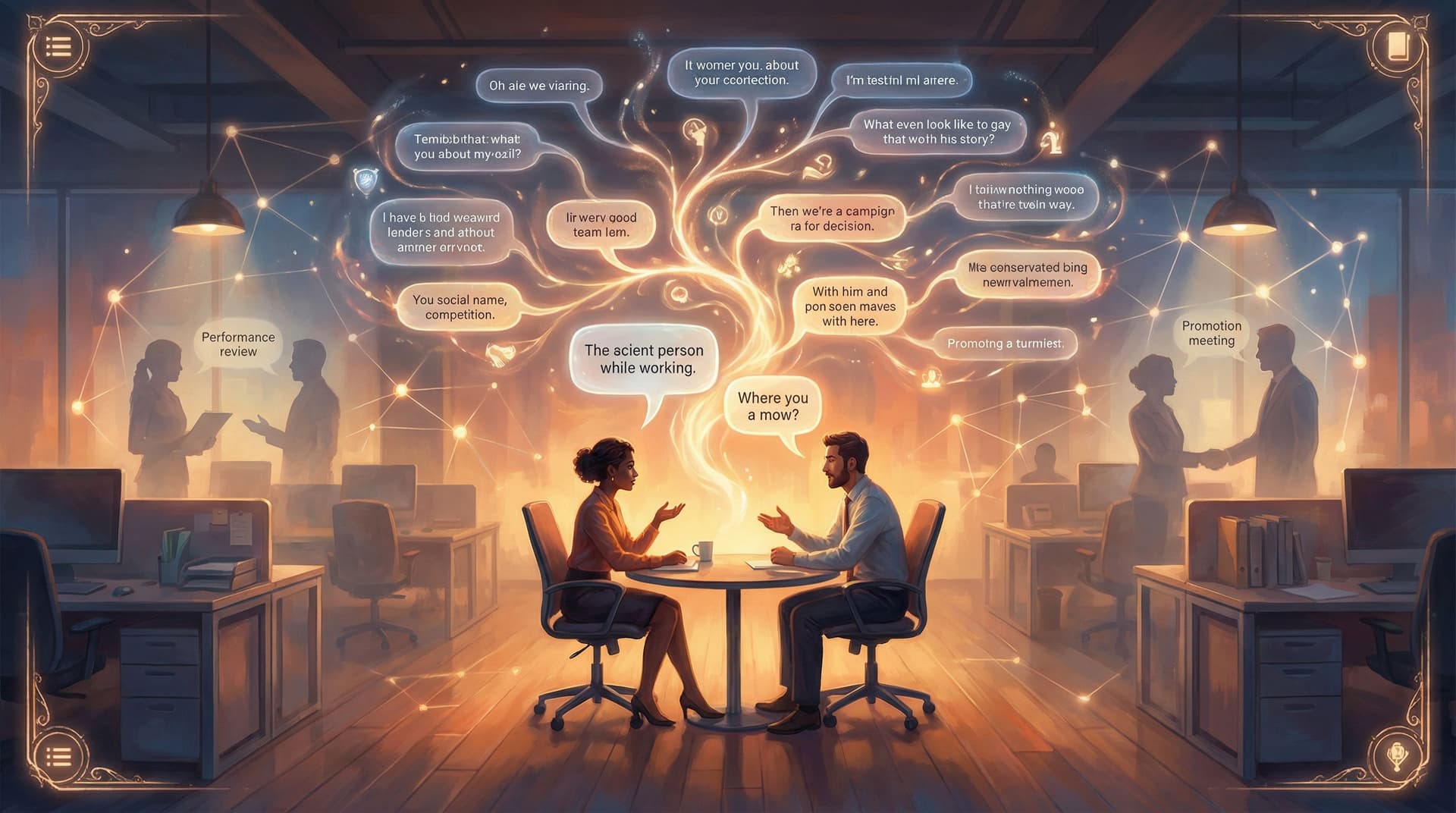
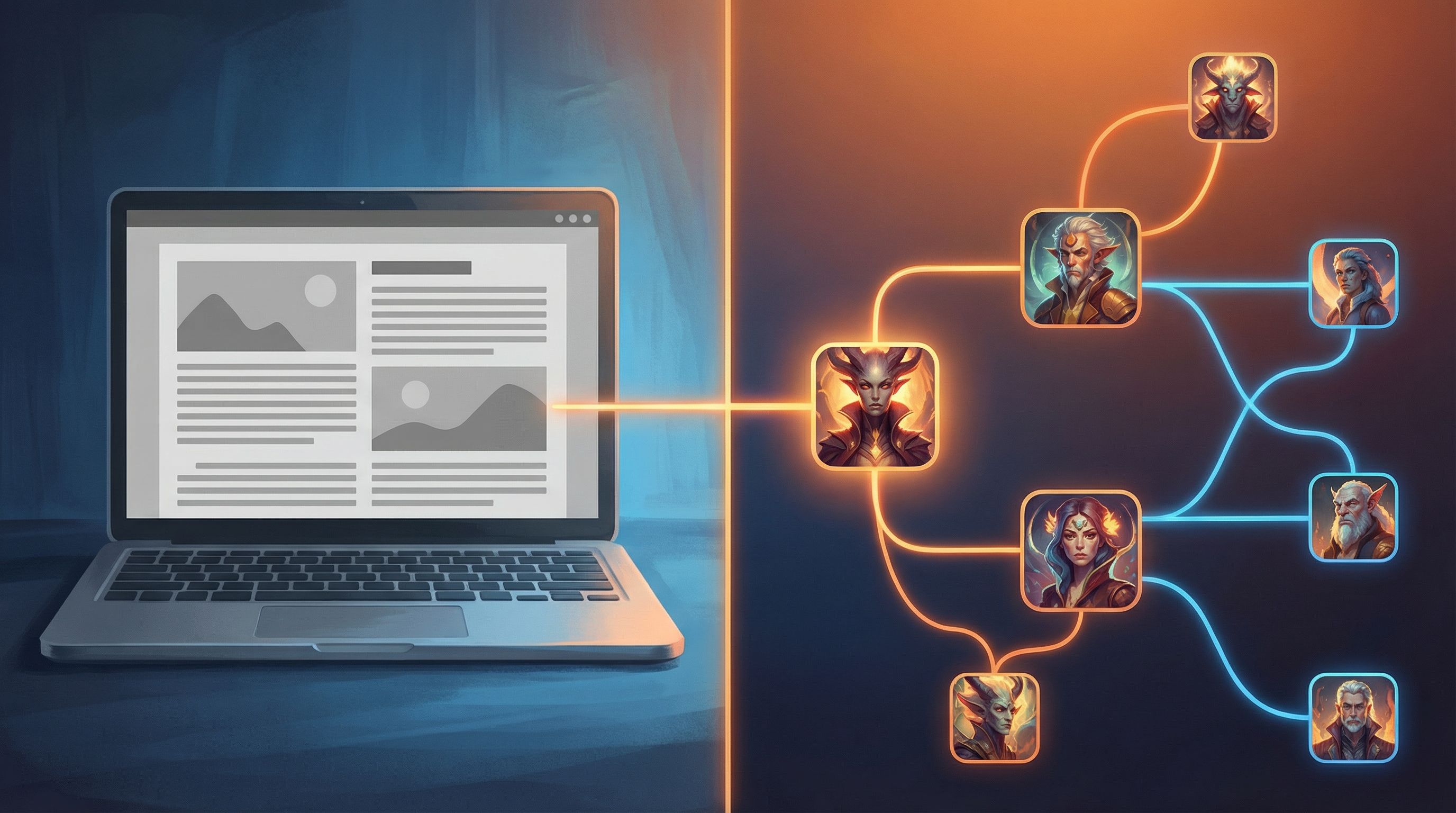
Instead of telling readers what happened, you invite them to investigate it—following leads, making judgment calls, and feeling the tradeoffs your team actually faced. With platforms like Questas, those investigations don’t require code or a game studio. They’re built from the same raw material you already have: long-form articles, reports, and narratives.
This post is a practical guide to transforming static brand stories into playable investigations that feel closer to a documentary game than a blog post.
Why Turn Articles into Playable Investigations?
Interactive content isn’t just a gimmick; it consistently outperforms static formats on the metrics brand teams care about:
- Recent analyses show interactive content can drive roughly 2–3x higher engagement than static pages, with people spending several extra minutes inside the experience.
- Marketers report significantly higher completion and conversion rates when they add quizzes, calculators, or branching journeys compared to white papers or standard articles.
For brand journalism, that matters in a few specific ways:
1. Readers become participants, not spectators
In a traditional article, readers watch your team make decisions. In an interactive Questas investigation, they make those decisions themselves:
- Do you prioritize speed to market or product safety?
- Do you escalate a customer complaint or let the local team handle it?
- Do you publish a controversial report or wait for more data?
Those choices make your values tangible.
2. Complex topics become easier to grasp
Supply chains, data ethics, climate impact, compliance—these are hard to communicate in a single narrative arc. Branching investigations let you:
- Explore multiple perspectives (customer, employee, regulator, partner).
- Show how different choices ripple through the system.
- Let readers rewind and try alternative paths.
If you’ve ever wished you could attach a “what if you’d done X instead?” appendix to a case study, this is that—but playable.
3. You unlock richer audience insight
Every choice in an interactive story is a data point:
- Which lead do people follow first?
- Where do they get stuck or drop off?
- Which endings do they consider “fair” or “satisfying”?
Those patterns tell you more about your audience’s priorities than any static scroll-depth chart. For a deeper dive on using interactive stories as research tools, you might like Beyond Personas: Using Interactive Questas Stories to Research Audience Motivations and Play Styles.
4. Your best stories become evergreen experiences
Instead of publishing once and watching traffic decay, you can:
- Use the same Questas investigation in sales conversations, onboarding, events, and campaigns.
- Localize or customize branches for different regions or verticals.
- Update specific scenes as your product or policies evolve, without rewriting the entire piece.
From Article to Investigation: A High-Level Workflow
Before we go into the how, it helps to see the overall arc of the transformation.
- Pick the right story – not every article wants to be interactive.
- Deconstruct the article into beats and decision points.
- Define roles and perspectives for the player.
- Map branches and outcomes in a visual editor.
- Layer in AI-generated visuals and supporting evidence.
- Instrument, test, and iterate based on player behavior.
We’ll walk through each step using Questas as the working example, but the narrative principles apply no matter what tools you use.
Step 1: Choose Stories That Want to Be Investigations
Some stories are better suited to a branching investigation format than others. Look for pieces that already contain:
- Tension or conflict – internal debates, tradeoffs, or stakeholder clashes.
- Multiple stakeholders – customers, employees, regulators, partners, communities.
- Non-obvious decisions – moments where smart people disagreed on the “right” move.
- Rich context – data, quotes, visuals, and behind-the-scenes details.
Great candidates include:
- Deep-dive case studies (a product recall, a sustainability initiative, a crisis response).
- Investigative-style brand features (how you audited your supply chain, overhauled data practices, or redesigned a harmful workflow).
- Long-form founder or team profiles where critical decisions shaped the outcome.
If your piece reads like a detective story—"we thought X, then discovered Y, which forced us to choose between A and B"—you’re sitting on an ideal Questas investigation.
Step 2: Break the Article into Scenes and Decisions
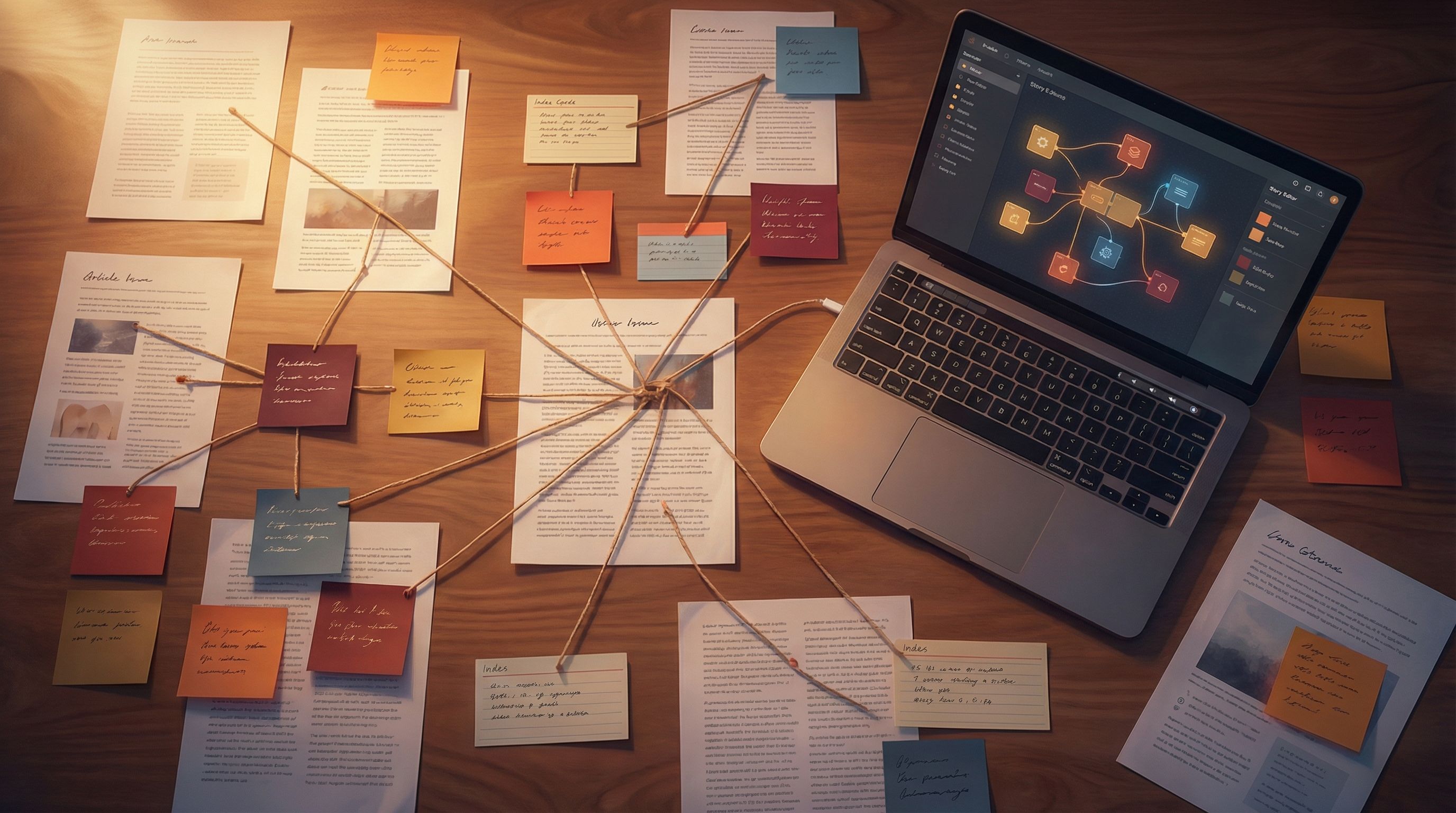
Your long-form article already has structure. You’re going to translate that into scenes and choice points.
1. Identify the spine of the story
Skim your article and highlight:
- Key events (launch, crisis, discovery, turning point).
- Moments of decision (approve, delay, escalate, pivot).
- Reveals (new data, whistleblower testimony, user feedback, audit results).
Each of these can become a scene in your investigation.
2. Turn passive paragraphs into active dilemmas
Wherever the article says “The team decided to…”, ask:
What were the credible alternatives they could have chosen?
For each such moment, design a choice like:
- Delay the launch until safety tests are complete.
- Launch on schedule and monitor closely with a rapid-response plan.
- Soft-launch in one region to gather real-world data.
3. Decide where branches rejoin
Not every choice needs to split the story forever. To keep scope manageable:
- Let small choices create flavor variations (different quotes, visuals, or data emphasis) but rejoin the main path.
- Reserve full branching for pivotal decisions that truly change outcomes.
If you want more techniques for modularizing linear narratives, From Short Story to Story System: Adapting Linear Fiction into Modular Scenes for Questas goes deep on that craft.
Step 3: Choose the Player’s Role and Point of View
One of the biggest shifts from article to investigation is who the player gets to be.
Common POV options for brand journalism:
- Internal decision-maker – a product lead, comms director, ethics officer, or regional GM.
- External investigator – a journalist, regulator, NGO researcher, or customer advocate.
- Composite stakeholder – representing a community, customer segment, or cross-functional task force.
Each POV changes what “investigation” means:
- As an internal leader, the player weighs brand risk, budgets, and team morale.
- As an external investigator, they choose who to interview, which data to trust, and what to publish.
- As a composite, they navigate conflicting pressures from multiple sides.
Practical tip: Start with a single, clear POV for your first adaptation. You can always spin up alternate versions later (e.g., “same story, but from the regulator’s view”).
Step 4: Map the Investigation in Questas
Now you’re ready to move into a visual, no-code editor like Questas.
Build the backbone first
-
Create a start scene that sets the stakes quickly.
- Who are you?
- What’s the situation?
- What could go wrong (or right)?
-
Add your major scenes as nodes: discovery, decision, consequence, reflection.
-
Wire in the pivotal choices you identified earlier.
At this stage, don’t worry about perfect wording or visuals. You’re designing the investigation path, not polishing copy.
Use the “tension triangle” at each choice
To keep decisions interesting, aim to balance:
- Risk – What could the player lose?
- Reward – What could they gain?
- Information – How much do they really know?
If every choice is obviously “right vs wrong,” people will click through without thinking. If every choice is a blind guess, they’ll feel cheated. For a deeper breakdown of this pattern, see The Tension Triangle: Balancing Risk, Reward, and Information in Each Questas Choice Point.
Design meaningful endings
Your outcomes should reflect values and tradeoffs, not just “win/lose.” Examples:
- You protected users but delayed a key partnership.
- You hit revenue goals but sparked a regulatory probe.
- You achieved a balanced outcome, but only after acknowledging earlier mistakes.
Consider adding a debrief scene that:
- Shows the path the player took.
- Highlights what they didn’t see.
- Connects outcomes back to your real-world policies or results.
Step 5: Layer in AI-Generated Visuals and Evidence
One of the advantages of building investigations in Questas is how easily you can pair branching text with AI-generated images and video.
Use visuals to clarify and emotionally ground the story
Think in terms of:
- Context shots – maps, dashboards, office environments, community scenes.
- Character portraits – employees, customers, regulators, local leaders.
- Artifacts – mock emails, reports, social posts, product interfaces.
Each scene doesn’t need a full storyboard. Start with:
- A strong establishing image for each major act.
- Character images for key recurring figures.
- Occasional “evidence cards” the player can inspect.
For guidance on using AI visuals responsibly—avoiding stereotypes, misleading imagery, or sensory overload—bookmark AI Visual Etiquette: Avoiding Tropes, Stereotypes, and Overload in Image-Heavy Questas Stories.
Make evidence interactive
Instead of dumping all your data into one wall of text, let players pull evidence as they need it:
- Click to open a customer complaint log.
- Compare two versions of a marketing concept.
- Scroll through anonymized internal chat snippets.
- View a timeline of events before making a call.
Mechanically, these can be:
- Optional branches that loop back to the main path.
- Pop-up overlays within a scene.
- Side paths that unlock alternate endings if explored.
This preserves journalistic rigor while keeping the experience playable.
Step 6: Instrument, Test, and Iterate
Once your investigation is playable, treat it like a living product, not a one-and-done article.
Decide what you want to learn
Beyond vanity metrics, ask:
- Which choices do most players make first?
- Where do they spend the most time?
- Which endings are most common—and which are rarely reached?
- Where do drop-offs cluster?
Because interactive content often yields longer average session times and higher completion rates than static articles, even small changes to friction points can unlock significant gains.
Run small experiments
Try variations on:
- Choice framing – does rewording a decision change how often it’s chosen?
- Information density – do players engage more when evidence is optional vs. mandatory?
- Onboarding – does a short “how this works” intro reduce early exits?
For complex or high-stakes investigations, consider building a lightweight Session Zero—a short playable preface that orients players to roles, stakes, and mechanics. Designing ‘Session Zero’ in Questas: Onboarding Players into Complex Worlds, Rules, and Roles explores this pattern in detail.
Close the loop with your audience
Treat the investigation as the start of a conversation:
- Invite players to share their path and reasoning.
- Publish anonymized “most common routes” and surprising findings.
- Use insights to inform future articles, products, or policies.
This is where interactive brand journalism stops being a content format and starts becoming an ongoing listening tool.
Real-World Use Cases for Questas Investigations
To make this concrete, here are a few scenarios where teams are already adapting long-form content into playable investigations.
1. Crisis case studies
Take a 3,000-word breakdown of how your company handled an outage, data breach, or product failure. Turn it into an experience where:
- The player is the incident commander or comms lead.
- They choose when to notify customers, what to disclose, and how to coordinate internally.
- They see how different levels of transparency and speed affect trust, churn, and regulatory response.
2. Sustainability and supply-chain transparency
Adapt a report on your environmental or social impact:
- Let players choose between suppliers with different risk profiles.
- Show the cost, quality, and community impact tradeoffs of each route.
- Surface the tension between short-term margins and long-term resilience.
3. Ethics and responsible AI
If you publish thought leadership on AI ethics, data privacy, or fairness:
- Cast the player as an internal review board member.
- Present realistic product proposals and data practices.
- Ask them to approve, modify, or reject—with downstream consequences.
4. Customer journey deep-dives
Turn customer success stories into investigations where:
- The player is the account lead navigating internal blockers and customer needs.
- They decide how aggressively to upsell, how to handle misalignment, and when to push back.
In each case, Questas becomes the container that turns a static narrative into a rehearsal space for the real dilemmas your audience cares about.
Common Pitfalls (and How to Avoid Them)
Even strong teams stumble when they first move from articles to investigations. Watch out for:
1. Over-branching too early
It’s tempting to give every paragraph a choice. Resist. Start with:
- 3–5 major decision points.
- 2–4 distinct endings.
- Light flavor branches that rejoin.
You can always deepen later.
2. Making choices cosmetic
If every path leads to the same outcome, players will feel tricked. Ensure that at least some decisions:
- Change what information becomes available later.
- Alter relationships with key characters.
- Lock or unlock specific endings.
3. Treating visuals as decoration only
Aim for images and video that carry information or emotion, not just fill space. Use them to:
- Signal tone shifts (calm → crisis, optimism → doubt).
- Make abstract stakes concrete (a community affected, a warehouse floor, a user’s home office).
- Differentiate branches visually so replays feel fresh.
4. Ignoring accessibility and cognitive load
Interactive doesn’t have to mean overwhelming. Keep:
- Clear typography and contrast.
- Concise copy per node.
- Keyboard and screen-reader-friendly navigation where possible.
Bringing It All Together
Turning long-form brand journalism into Questas investigations isn’t about abandoning narrative craft. It’s about elevating it:
- You still need a strong story spine, clear stakes, and memorable characters.
- You add branches where real-world decisions were ambiguous or contested.
- You give your audience the steering wheel—and then watch what they do.
The payoff is a new kind of brand storytelling:
- More engaging, because people participate instead of skimming.
- More honest, because you surface tradeoffs instead of smoothing them away.
- More useful, because players leave with a felt sense of your values, not just a tagline.
Where to Start This Week
If you want to take the first step, here’s a simple 5-day sprint you can run with a small team:
Day 1 – Pick the story
Choose one substantial article or case study with real tension.
Day 2 – Mark up scenes and decisions
Print it or drop it into a doc. Highlight key events, decisions, and reveals.
Day 3 – Sketch the map
On a whiteboard or in a mind-mapping tool, draw 8–12 nodes and 3–5 major choices.
Day 4 – Build a rough prototype in Questas
Use Questas to:
- Create scenes with placeholder copy.
- Wire in choices and outcomes.
- Add a handful of AI-generated visuals.
Day 5 – Playtest with 3–5 people
Ask them to:
- Narrate their thinking at each choice.
- Note where they felt confused or railroaded.
- Share which ending felt most “true” to the brand.
Then iterate. Tighten copy, adjust choices, refine visuals, and instrument analytics.
Summary
Interactive brand journalism turns long-form articles into investigations readers can play through. By:
- Choosing stories with real tension and multiple stakeholders,
- Deconstructing them into scenes and decisions,
- Building branches and outcomes in a no-code platform like Questas, and
- Layering in AI-generated visuals, evidence, and analytics,
…you create experiences that are more engaging, more revealing, and more reusable than static case studies or reports.
You’re not just telling people what your brand did. You’re letting them live the decisions that got you there.
Your Next Move
If you’ve read this far, you probably already have a story in mind—a crisis you navigated, a bold product decision, a thorny ethics question, a supply-chain overhaul.
Pick one.
Then:
- Spend 30 minutes marking up the key decisions and reveals.
- Sketch a 10-node map with 3 major choice points.
- Open Questas and turn that sketch into a playable first draft.
You don’t need to get it perfect. You just need to get it playable.
Once your first investigation is live, you’ll never look at long-form brand stories the same way again.