Playable Personas for Solopreneurs: Turning Your Ideal Customer Profiles into Questas Micro-Adventures

If you’re a solopreneur, you’ve probably been told to "get clear on your ideal customer" more times than you can count. Maybe you’ve even filled out a persona template or two: name, age, job title, a stock-photo headshot, a few bullet points about their goals and pains.
And then… that persona file quietly disappears into your drive.
What if, instead of staring at static documents, you could play your personas? What if you could drop into your ideal customer’s day, make decisions as them, and feel where your offer lands—or falls flat?
That’s where playable personas come in.
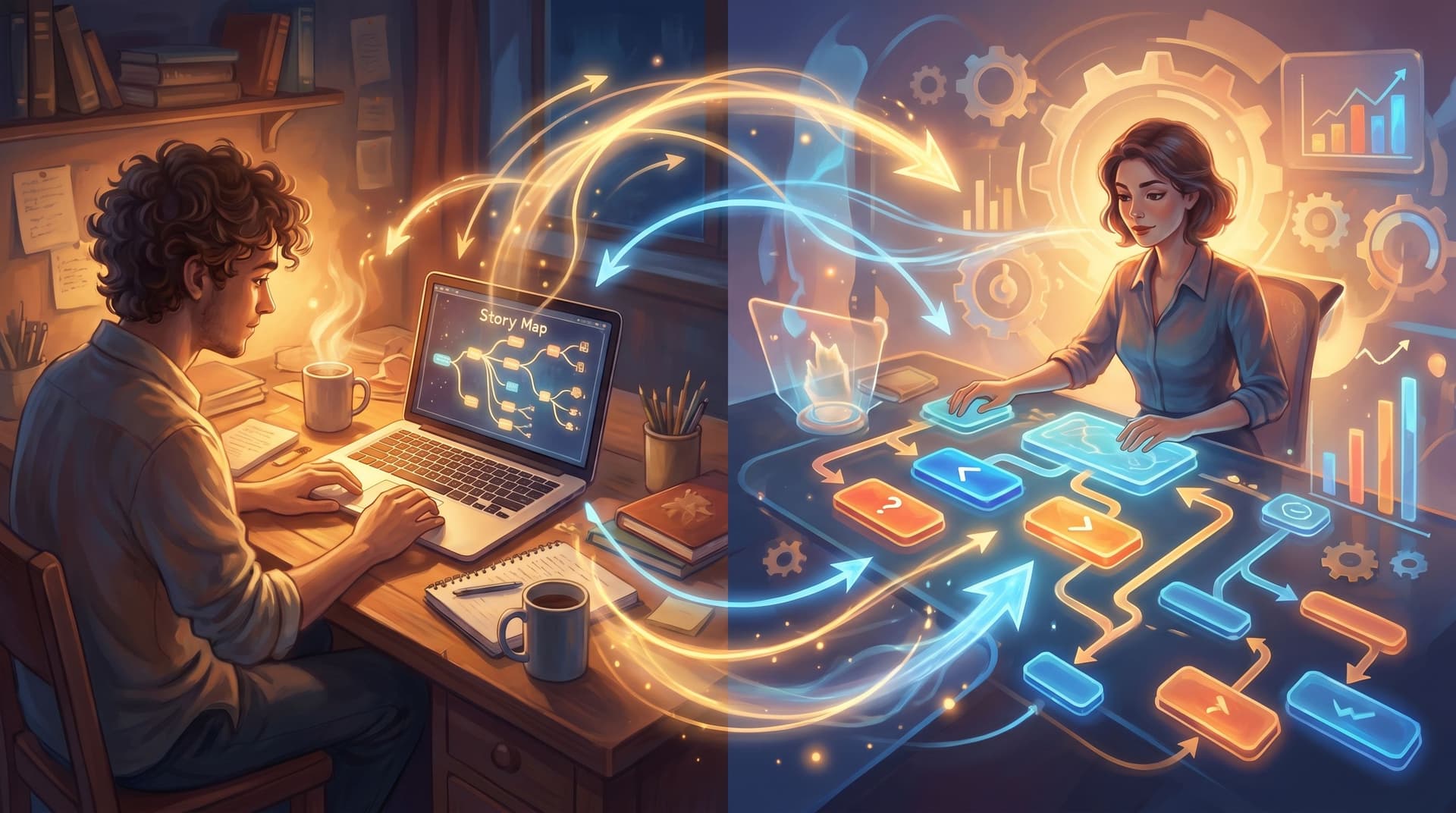
Using a platform like Questas, you can turn your ideal customer profiles into short, branching, choose‑your‑own‑adventure stories—micro‑adventures where you step into your customer’s shoes and navigate their choices. You’re not just guessing what they might do. You’re simulating it.
This post walks through how to do exactly that, even if you’re a one‑person business with limited time and zero coding skills.
Why Playable Personas Are a Solopreneur Superpower
Traditional personas do have value. Research‑backed customer profiles help align your messaging, product decisions, and content around what your audience actually cares about.
But as a solo founder, consultant, or creator, you face a few specific challenges:
- You’re making high‑impact decisions alone. There’s no product team or research department to sanity‑check your assumptions.
- Your time is brutally limited. Deep customer interviews, formal journey maps, and big research projects are hard to sustain.
- You live close to the work. You’re handling sales calls, onboarding, support, and delivery. That means you feel customer friction, but it can be hard to zoom out and see patterns.
Playable personas help with all three:
- They expose weak assumptions fast. When you try to play through a day in your customer’s life, you quickly notice gaps: “Wait, why would they even see this offer?” or “They’d never have time for this step.”
- They double as marketing and product experiments. A micro‑adventure built in Questas can be shared with real prospects. Their choices become data about what they actually value.
- They make empathy a repeatable habit. Instead of a one‑time persona exercise, you have a living simulation you can tweak as you learn more.
Simulation‑based training and customer‑journey games are already used by larger companies to build empathy and decision‑making skills; they outperform static content because people learn more effectively when they can act and see consequences.
Playable personas bring that same power down to a one‑person business.
Step 1: Pick One Persona and One Moment That Really Matters
The biggest trap for solopreneurs is over‑scope. You don’t need a 40‑node epic for every persona you’ve ever brainstormed.
Start tiny:
- Choose one persona. The person most likely to buy from you in the next 90 days.
- Choose one critical moment. The decision where everything tilts toward “yes” or “no.”
Some examples:
- A freelance designer’s persona: SaaS head of marketing at a 10–50 person startup. Moment: deciding whether to reply to your cold email.
- A fitness coach’s persona: Remote tech worker in their 30s. Moment: choosing between your 12‑week program and another cheaper, generic app.
- A course creator’s persona: Senior IC who wants to move into leadership. Moment: deciding whether to invest in your cohort‑based course or wait for a promotion.
Ask yourself:
- Where does this person first become aware of me? (LinkedIn post, referral, podcast appearance, search, etc.)
- What’s the next fork in the road? (Click vs. scroll past; book a call vs. close the tab; download vs. ignore.)
That fork is the heart of your micro‑adventure.
Step 2: Turn the Persona into a Playable Character
Now, you’ll translate your static persona into someone a player can be.
Give them:
- A name that signals context. “Jordan, Overloaded Marketing Lead” or “Priya, Burned‑Out Senior Engineer.”
- A concrete situation. Not “wants to grow their business,” but “has to show pipeline growth in the next 60 days or budget gets cut.”
- Two or three non‑negotiable constraints. Time, money, politics, energy, risk tolerance.
In Questas, this becomes your opening scene:
You are Jordan, the only marketer at a 20‑person SaaS startup. It’s Monday, 8:13 a.m. Your CEO just Slacked you: “We need more demos booked this month. What’s the plan?” You have $2,000 left in your budget and a calendar already packed with internal meetings.
From there, you’ll present the first decision.
Pro tip: Keep the persona’s goal front and center on every screen. A simple text reminder like “Goal: hit 30 demo calls this month without burning out” keeps you honest about whether each branch actually serves that goal.

Step 3: Map 3–5 Key Choices, Not a Whole Life Story
You’re building a micro‑adventure, not a full RPG. The goal is to explore the shape of your customer’s decision, not every possible detail.
Aim for:
- 1 strong opening decision that sets the tone.
- 2–3 follow‑up decisions that reveal trade‑offs.
- 2–4 endings that show different outcomes (good, bad, and ambiguous).
For each decision, ask:
- What would a reasonable version of this persona consider doing? (Avoid straw‑man options that no one would pick.)
- What invisible constraint are they dealing with? (Manager expectations, family obligations, past failures.)
- What’s the emotional flavor of each choice? (Relief, anxiety, excitement, guilt.)
A simple structure you can borrow:
- Decision 1 – React or ignore?
- Do they engage with your message/offer at all?
- Decision 2 – How do they evaluate options?
- Compare you vs. alternatives; weigh price vs. outcomes.
- Decision 3 – Commit or delay?
- Choose to buy, book, sign up—or put it off.
If you’re new to branching structures, the patterns in Branch Smart, Not Wide: Blueprint Patterns for Scalable Questas Stories pair perfectly with playable personas. You’ll avoid the “spaghetti diagram” problem while still capturing meaningful variation.
Step 4: Use Questas to Build a Visual, No‑Code Prototype
Once you’ve sketched your choices, it’s time to make the persona playable.
Inside Questas, you can:
- Create a new story and name it after the persona and scenario.
- Example: “Jordan the Overloaded Marketer: The Demo Dilemma.”
- Build your scenes as nodes.
- One node for the opening situation.
- One node per decision.
- One node per ending.
- Add branching choices visually.
- Drag connectors from each choice to the next scene.
- Label choices in the persona’s voice, not yours (e.g., “Ugh, not another tool. Close the tab.” vs. “Decline offer”).
- Enrich scenes with AI‑generated visuals.
- Use consistent prompts to reflect the persona’s environment: cluttered home office, corporate open‑plan, coffee shop, etc.
- If you’re building a whole series of personas, the techniques in AI as Art Director: Building Cohesive, On‑Brand Visual Languages for Your Questas Series will help keep your visuals on‑brand.
- Keep it short.
- A full run‑through should take 3–7 minutes. That’s enough to surface insights without becoming another giant project.
Remember: your first version is a prototype, not a finished campaign asset. You’re building this for yourself first.
Step 5: Design Endings That Teach You Something
The endings of your micro‑adventure are where the real insight lives.
Instead of “You bought my product = good” and “You didn’t buy = bad,” use your endings to answer questions like:
- What else would this persona reasonably choose instead of me?
- Under what conditions do they decide to “wait and see”?
- What objections or fears stop them at the last minute?
A simple set of ending types:
- Win for them, win for you. They choose your offer and get the outcome they care about.
- Win for them, lose for you. They solve the problem another way (competitor, DIY, internal solution).
- Lose for them, lose for you. They avoid deciding, stay stuck, or choose a poor fit.
- Ambiguous. They partially solve the problem but create new issues.
This is a great place to borrow ideas from Designing Failure on Purpose: How to Use ‘Bad’ Endings to Teach, Not Punish, in Questas. “Bad” endings in a playable persona aren’t about shaming the customer; they’re about illuminating patterns like:
- “My persona routinely underestimates the cost of doing nothing.”
- “They over‑optimize for price at the expense of risk.”
- “They’re burned by previous experiences and default to inaction.”
When you see those patterns, you can redesign your offers, messaging, and onboarding to meet them where they are.

Step 6: Invite Real People to Play—and Watch What Happens
Once your micro‑adventure feels coherent, share it with:
- A handful of current or past clients who resemble the persona.
- Warm leads who are “on the fence.”
- Peers in similar niches who understand your audience.
Ask them to:
- Play through once without overthinking.
- Tell you where the story felt off.
- “I would never choose that.”
- “You’re missing the option I actually took last time.”
- Share which ending felt most like their real life.
Inside Questas, you can track which branches get the most clicks. Even with a tiny sample, patterns emerge:
- If most people choose the “DIY and regret it later” path, your nurture content might lean into the hidden costs of DIY.
- If nearly no one chooses the “premium package” path, maybe your offer feels too risky or too vague.
This is lightweight research you can run in a week, without surveys or complex analytics setups.
For solopreneurs already repurposing content, there’s another bonus: you can embed micro‑adventures in your existing channels. The techniques in Minimal Choices, Max Impact: Designing Single‑Decision Questas for Email, Social, and Landing Pages are perfect for turning a playable persona’s key fork into a one‑click experience.
Step 7: Turn Insights into Concrete Business Changes
A playable persona is only as valuable as the decisions it helps you make.
After a few rounds of playtesting, sit down with your notes and ask:
- Offer design:
- Do I need a lower‑risk entry point (audit, workshop, trial)?
- Should I bundle services differently to match how they think about the problem?
- Messaging:
- Which phrases and fears showed up repeatedly in the persona’s inner monologue?
- How can I mirror that language in my website, outreach, and sales calls?
- Customer journey:
- Where does this persona first encounter me in the story? Is that true in real life?
- What small “bridge” could I add between awareness and purchase (e.g., a short interactive lead magnet, a micro‑quest, a diagnostic quiz)?
Then, pick one change per week to test:
- Update a landing page section to speak directly to one ending scenario.
- Add a new email that addresses a specific objection surfaced in the story.
- Create a tiny Questas experience as a lead magnet that mirrors the persona’s opening dilemma.
Over time, your playable persona becomes a living lab. As your business evolves, you can:
- Add new branches when you introduce new offers.
- Retire outdated paths when your positioning changes.
- Spin off new personas based on real customer segments that emerge.
Bringing It All Together
Playable personas are not just a clever storytelling trick. For a solopreneur, they’re a practical way to:
- Stress‑test your assumptions about customers.
- Practice empathy in a structured, repeatable format.
- Turn abstract “ideal customer” talk into concrete scenes, choices, and consequences.
- Create interactive assets you can reuse across marketing, sales, and onboarding.
With a visual, no‑code platform like Questas, you don’t need to be a game designer to make this work. You need:
- One well‑defined persona.
- One critical decision in their journey.
- A handful of honest branches and endings.
From there, you can iterate, share, and refine—using every playthrough as fuel for clearer offers, sharper messaging, and more aligned clients.
Next Step: Build Your First Playable Persona This Week
If you’d like to try this without it becoming another “someday” project, here’s a simple 5‑day sprint you can follow:
- Day 1: Choose your persona and write a one‑paragraph “day in their life” focused on the problem you solve.
- Day 2: Sketch 3 key decisions and 3–4 endings on paper or in a simple doc.
- Day 3: Build the scenes and branches in Questas, keeping the experience under 7 minutes.
- Day 4: Add AI‑generated visuals and polish the copy so it sounds like them, not you.
- Day 5: Share it with 3–5 people and collect their reactions.
By this time next week, you could have a working, playable persona you and your prospects can actually experience—not just a PDF gathering dust.
Adventure awaits. Your ideal customer is already out there, making choices. It’s time to step into their story and see what happens when they finally meet you.