From Podcast Episode to Playable Episode: Turning Audio Narratives into Questas Story Paths

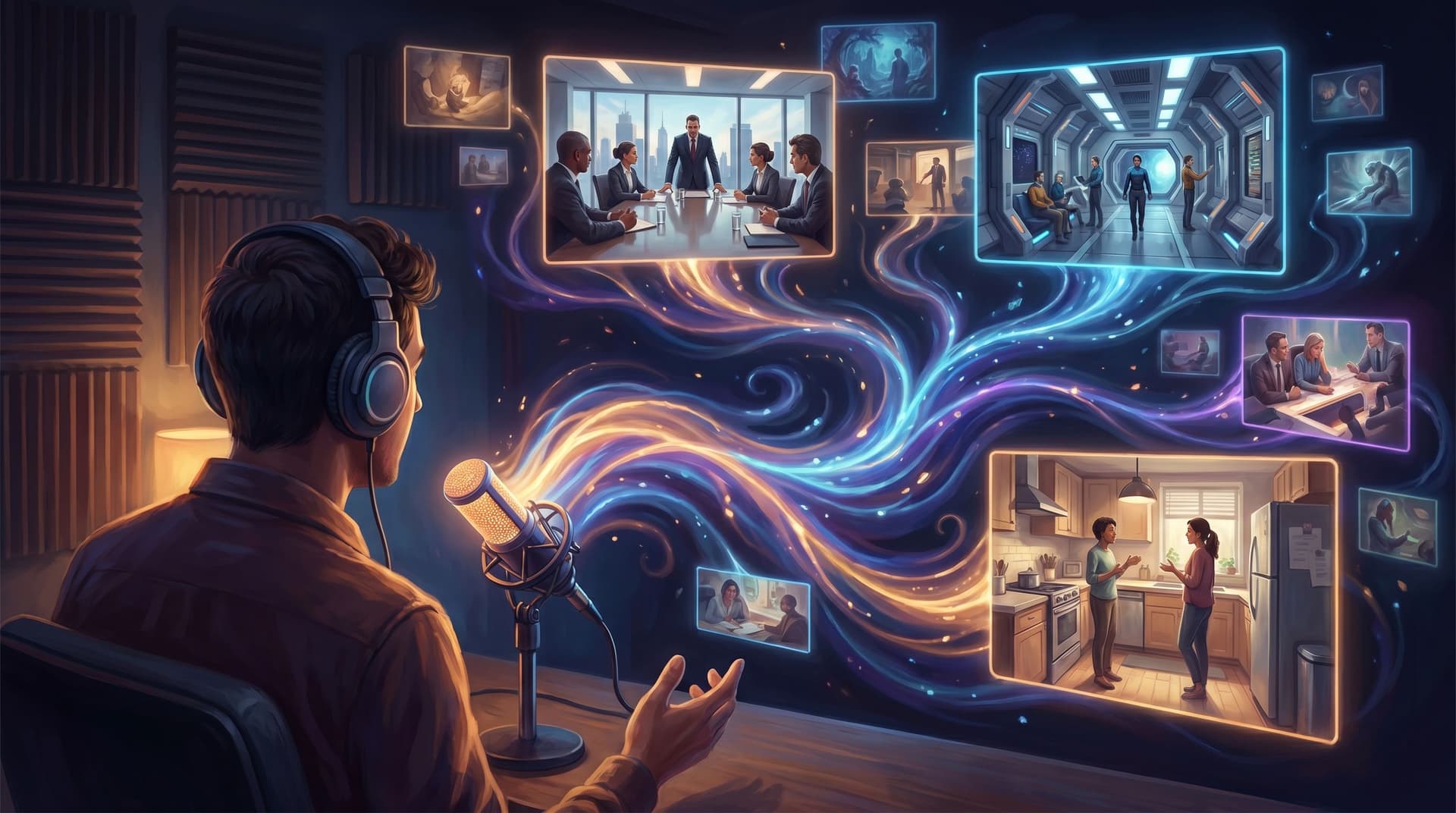
Podcasts are already some of the most intimate stories we consume. A voice in your ear, a scene unfolding while you commute, cook, or walk the dog. But once an episode ends, it ends. You can’t jump into the world, make a choice, or see what would have happened if the host had taken the other path.
That’s where turning a podcast episode into a playable episode comes in.
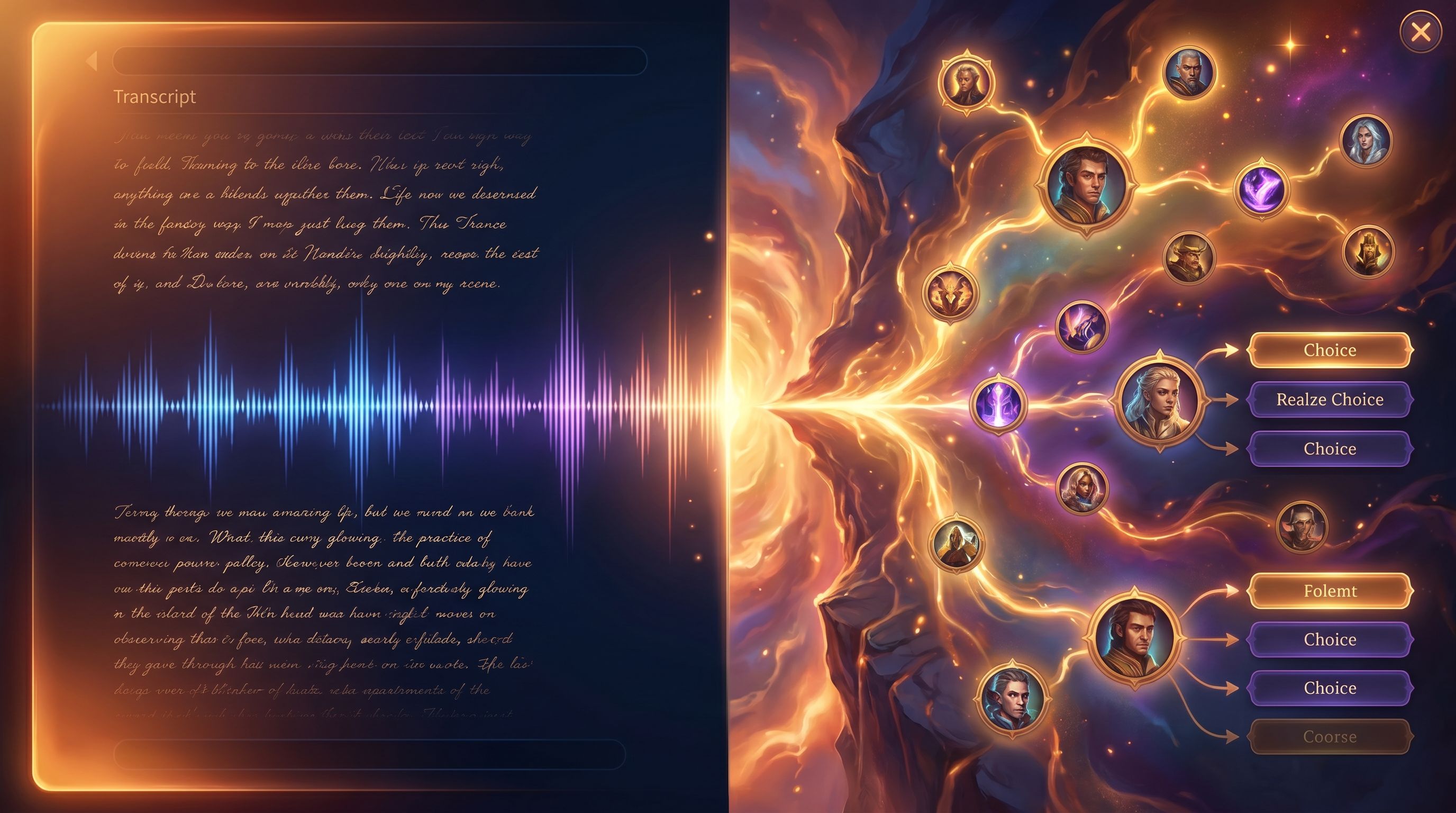
With Questas, you can transform linear audio into interactive, choose‑your‑own‑adventure stories—complete with AI‑generated images and video—so listeners become players who explore, decide, and replay.
This guide walks through how to take an existing podcast episode and translate it into a branching Questas experience, step by step.
Why Turn a Podcast Into a Playable Story?
Before we dive into workflow, it’s worth grounding in the “why.” Turning audio into interactive story paths isn’t just a fun experiment; it can change how your audience engages with your work.
Key benefits for podcasters and storytellers:
- Deeper engagement: Instead of passively listening, your audience makes decisions, explores alternate routes, and sees consequences. That extra layer of agency keeps them around longer and drives repeat visits.
- Replay value: A single episode can become multiple experiences. Different branches, endings, and perspectives give fans reasons to come back and compare paths.
- New formats for the same content: One recorded episode can power:
- A narrative game-like experience
- A training simulation
- A decision-making workshop
- A classroom activity
- Better learning and retention: For educational and business podcasts, interactive scenarios help listeners practice judgment instead of just hearing advice.
- New monetization and community opportunities: Premium “director’s cut” branches, patron-only paths, or community-designed routes can become part of your membership or paid offerings.
If you’re already experimenting with cross-channel storytelling, you may have seen how podcasts, newsletters, and interactive experiences reinforce each other. For a bigger-picture strategy, you might enjoy The New Transmedia Toolkit: Blending Podcasts, Newsletters, and Questas into One Story Universe.
Step 1: Choose the Right Episode and Focus
Not every podcast episode is equally suited to becoming a branching narrative. Some will convert cleanly; others may need more adaptation.
Look for episodes that already contain:
- Clear decision points – A protagonist facing a dilemma, a founder choosing between strategies, a character weighing moral trade‑offs.
- Natural scenes or beats – Distinct segments (setup → conflict → decision → consequence) that can map to individual Questas nodes.
- Tension or uncertainty – Moments where listeners might think, “Wait, what if they’d done X instead?”
- Multiple perspectives – Interviews, panel discussions, or investigative pieces where different voices can become different playable routes.
Great candidates include:
- Narrative journalism episodes about a crisis, investigation, or turning point
- Fiction podcasts with episodic plots
- Business or leadership shows that unpack real decisions
- Educational or training podcasts that walk through case studies
Then, narrow your focus.
Instead of trying to convert an entire season at once, pick:
- One strong episode, or
- One segment inside a longer episode (e.g., a 12‑minute case study or story arc)
Your first goal is not to capture every detail, but to build a playable version of the core decision.
Step 2: Break the Audio Into Story Beats
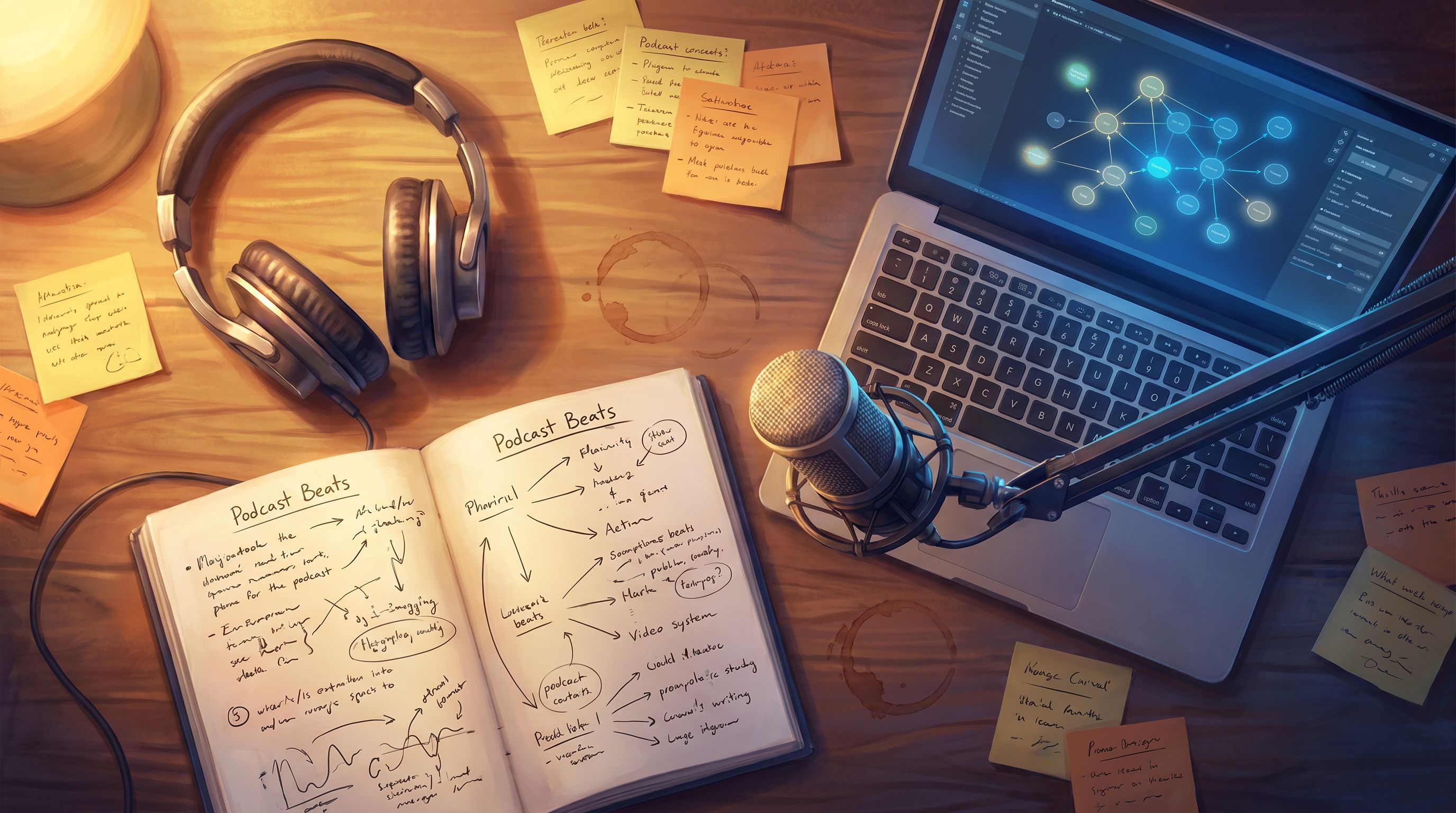
Next, you’ll translate the episode from continuous audio into a series of discrete story beats.
A simple way to do this:
- Listen through once with a notepad. Mark timestamps where something changes:
- New location or time
- New character or speaker
- A choice is described
- A consequence lands
- On a second pass, label each chunk as a beat:
- Beat 1 – Hook / setup
- Beat 2 – Inciting incident
- Beat 3 – First key decision
- Beat 4 – Short‑term consequence
- Beat 5 – Second key decision
- Beat 6 – Resolution / reflection
- Write 1–2 sentence summaries for each beat. Keep it simple and focused on what the player will experience.
You’ve just created a rough beat sheet. If you want to go deeper on pacing and emotional rhythm, From Branch Map to Beat Sheet: Structuring Scene Pacing in Complex Questas Stories is a helpful companion.
At this stage, you’re still working with the original linear story. The branching comes next.
Step 3: Identify Where Players Should Make Choices
Now you’ll turn a one-way narrative into a playground of “what ifs.” The goal is not to branch on every sentence, but to choose moments that matter.
Types of choices to look for
-
Fork-in-the-road decisions
The protagonist or subject explicitly chooses between options. Example: “We could either shut the factory down or try to push through the strike.” -
Quiet character choices
Subtler moments where tone, empathy, or priorities shift. Example: “Do you level with your team about the risk, or keep the message upbeat?” These are great for building emotional depth—see The Quiet Choice: Using Low-Stakes Branches to Build Empathy, Not Just Drama, in Questas for more on that. -
Information-gathering choices
Places where a listener might want to dig deeper into a detail, backstory, or perspective. -
Perspective shifts
If your episode includes multiple voices, you can let players choose whose shoes to step into next.
A practical pattern
For your first playable episode, aim for:
- 1–2 major decisions that significantly change the outcome
- 2–4 minor decisions that color the journey (tone, relationships, extra context)
This keeps your Questas story manageable while still feeling genuinely interactive. If you’re worried about complexity, Branch Smart, Not Wide: Blueprint Patterns for Scalable Questas Stories offers patterns that prevent your story graph from exploding.
Step 4: Map Your Branches in Questas
Now it’s time to open Questas and translate your plan into a visual structure.
Start with the spine
- Create nodes for your linear beats in order: setup → incident → decision → consequence → resolution.
- Drop in text summaries for each node based on your beat sheet. Don’t worry about perfect copy yet.
Add branches at key decisions
For each decision point you identified:
- Turn the beat into a choice node.
- Present the situation in 2–3 short paragraphs.
- Offer 2–3 options that feel distinct and meaningful.
- Create outcome nodes for each option.
- You can either:
- Diverge significantly (different scenes, characters, or stakes), or
- Diverge briefly and then reconverge later to keep scope manageable.
- You can either:
Keep the structure readable
As you build, follow a few guardrails:
- Limit branching depth for your first conversion. A simple “diamond” pattern (branch out, then come back) works well.
- Name nodes clearly (e.g.,
Factory – Night Shift – Tell the Truthvs.Factory – Night Shift – Spin the Story). - Use color-coding or tags (if available) for major vs. minor choices.
Your goal is a playable skeleton—something you can click through from start to finish—even if the writing is still rough.
Step 5: Adapt the Script From Audio to Interactive Text
You now have a structural map. Next, you’ll adapt the spoken audio into on-screen text that works as an interactive narrative.
Don’t just transcribe—translate
Spoken audio and interactive text have different rhythms. Instead of pasting transcripts, rewrite with the player’s experience in mind.
Tips for adapting your script:
- Use a second-person lens when appropriate.
“You step into the empty factory floor…” instead of “She walked into the factory.” This pulls the player into the scene. - Borrow the host’s voice.
Keep the tone, humor, and phrasing that listeners already love, but tighten rambling sections. - Turn recaps into reflection.
Where the host recaps events, you can use that space for the character (or player) to reflect: “Looking back, you can’t shake the feeling that…” - Add choice‑aware copy.
Reference what the player previously decided: “Because you chose to confront your co‑founder earlier…”
Decide what to do with the original audio
You have a few options inside Questas:
- Embed short audio clips for key moments (the original narration, a dramatic reveal, or dialogue).
- Use audio as optional flavor. Let players click to “hear the original clip” while reading the adapted text.
- Create a fully text‑first experience that uses the podcast as source material but stands on its own.
Short, purposeful audio snippets often work best—they preserve the intimacy of the medium without slowing down interaction.
Step 6: Layer in AI-Generated Visuals and Video
One of the biggest shifts from podcast to playable episode is the move from pure audio to a rich visual experience. This is where Questas shines.
Design a consistent visual language
Before generating dozens of images, define a few anchors:
- Art style: Cinematic realism, painterly, comic book, flat illustration, etc.
- Color palette and mood: Warm and hopeful, cold and tense, neon cyberpunk, grounded documentary.
- Character look-and-feel: Age, clothing, posture, signature props.
Then, use AI image and video generation to:
- Establish key locations (the newsroom, the starship bridge, the startup office).
- Introduce main characters with recognizable features.
- Highlight pivotal moments (the confrontation, the discovery, the celebration, the failure).
If you plan to turn multiple episodes into a series, it’s worth treating AI like an art director and building a style bible. AI as Art Director: Building Cohesive, On-Brand Visual Languages for Your Questas Series walks through how to keep everything consistent across episodes.
Match visuals to branches
Use visuals to reinforce the consequences of choices:
- Different images for “you told the truth” vs. “you hid the data.”
- Subtle shifts in lighting or composition as tension rises.
- Visual callbacks—an object or location that appears differently based on earlier decisions.
Even a few well-placed images per branch can dramatically change how “alive” the story feels.
Step 7: Decide How Deep the Branching Should Go
It’s tempting to build an infinite tree of possibilities. Resist that urge—especially for your first conversion.
Instead, design a branching pattern that fits the length and complexity of your source episode. For a 20–40 minute narrative episode, a strong baseline might be:
- 2–3 major endings that reflect different philosophies or outcomes
- 4–8 mid‑level branches that change the journey but not the entire premise
- Several micro‑variations (extra scenes, different reactions, bonus context) based on earlier choices
This gives players meaningful agency without turning your story into an unmanageable tangle.
If you’ve ever felt overwhelmed by flowcharts, you’ll appreciate the approach in From Flowchart Fatigue to Playable Prototypes: Using Questas to Replace Sprawling Narrative Diagrams—it’s all about getting to something playable quickly.
Step 8: Playtest, Iterate, and Publish
Once your playable episode is structurally sound and visually supported, it’s time to test.
Run quick playtests
- Solo passes: Play through every path yourself. Look for:
- Dead ends or missing transitions
- Jarring tone shifts
- Choices that feel fake or redundant
- Small audience tests: Invite a handful of listeners, patrons, or colleagues to try it. Ask them:
- Where did you feel most “in” the story?
- Which choices felt meaningful—or not?
- Did you want to replay? Why or why not?
Polish based on feedback
- Tighten or rewrite scenes where people skim.
- Clarify stakes around confusing choices.
- Add or remove branches to match the emotional weight of decisions.
Publish and integrate with your podcast
When you’re ready to share:
- Link the Questas story in your episode show notes.
- Mention it in the audio itself. For example: “Want to see what would’ve happened if we’d chosen the other path? Play through the interactive version of this episode at the link in the show notes.”
- Share branches as teasers on social or in your newsletter—short clips or screenshots that hint at alternate outcomes.
Over time, you’ll start to see which branches resonate most, which can inform future episodes and future playable builds.
Bringing It All Together
Turning a podcast episode into a playable Questas story path is less about technology and more about mindset:
- Treat your episode as a world of decisions, not just a story that already happened.
- Distill that world into beats and branches that players can navigate.
- Use AI‑generated visuals and video to make invisible scenes visible and reinforce the emotional core.
- Start with manageable scope, then grow into richer, more complex series once you’ve shipped a few successful conversions.
The payoff is big: fans don’t just listen to your stories—they inhabit them, test them, and return to see what else could have been.
Where to Start, Today
If you’re ready to experiment, here’s a simple first move you can take this week:
- Pick one episode that has a clear decision at its heart.
- Listen once and mark 5–7 beats.
- Open Questas and build a minimal branching prototype:
- One intro scene
- One major choice
- Two different outcomes
- Add a couple of AI‑generated images to each path.
- Share it with a small group of listeners and ask what they’d love to see next.
You don’t need a full season, a giant branch map, or a new production team. You just need one episode, one meaningful decision, and the willingness to let your audience step inside your story.
Adventure awaits—this time, your listeners get to choose the route.