The New Transmedia Toolkit: Blending Podcasts, Newsletters, and Questas into One Story Universe

If you’re a storyteller, educator, or creator, you’re probably already juggling formats: a podcast here, a newsletter there, maybe a live stream or social thread when you have time.
What most people don’t do is treat all of those channels as a single, living story universe.
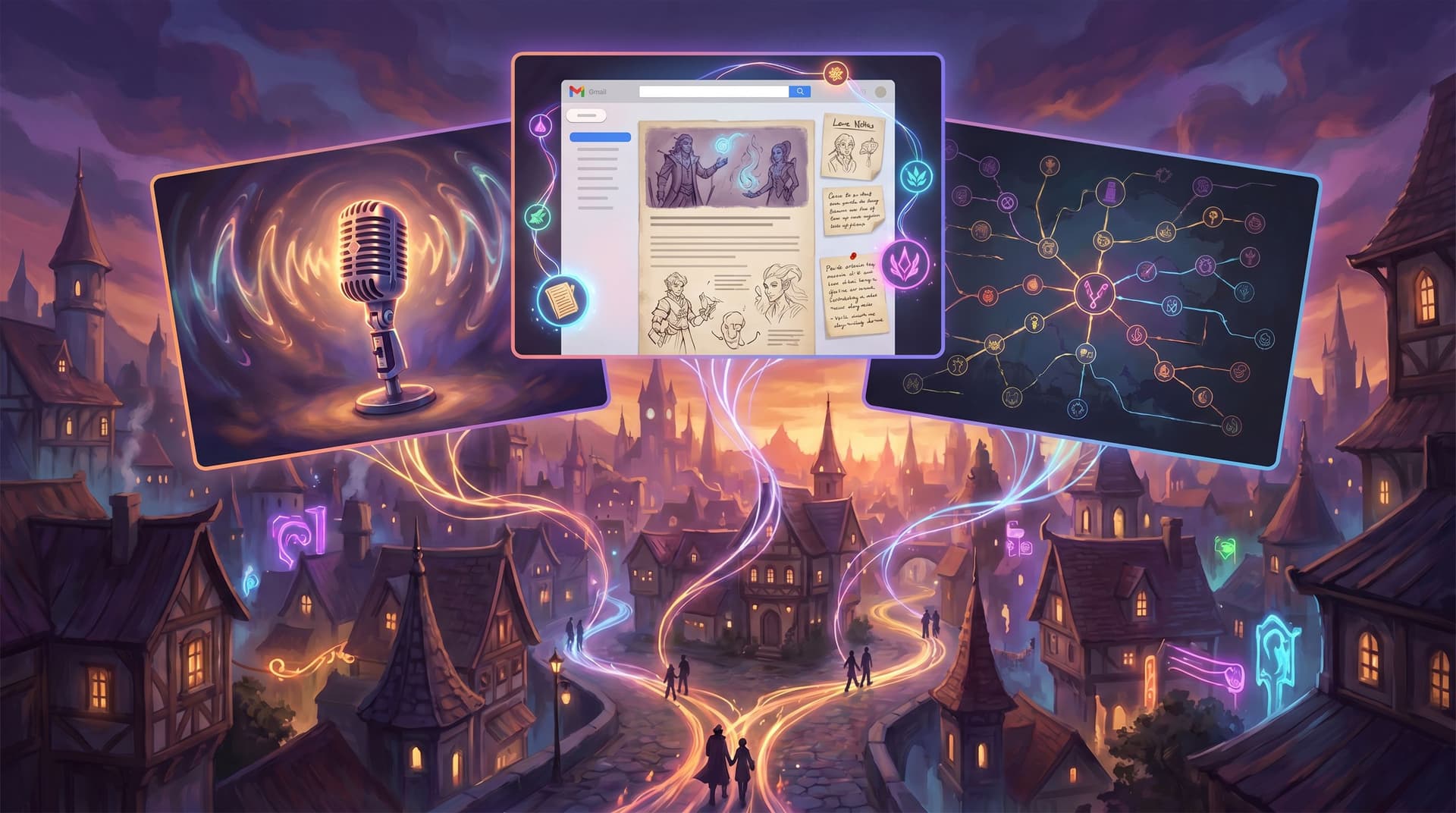
That’s where a modern transmedia toolkit comes in—one that combines:
- The intimacy of podcasts
- The depth and cadence of newsletters
- The interactivity and visual power of platforms like Questas
Put together, they let you build storyworlds your audience can listen to, read through, and play inside.
In this post, we’ll explore how to design that kind of ecosystem—and how to make Questas the interactive core that ties your podcast and newsletter into one coherent universe.
Why a Unified Story Universe Matters
Transmedia storytelling scholar Henry Jenkins describes this style of storytelling as “the art of world‑making”: a single universe that unfolds across multiple platforms, with each piece adding something unique.
For creators, that approach pays off in several ways:
1. Deeper engagement, not just higher reach
Instead of repeating the same content everywhere, each channel becomes a new way to experience the world:
- The podcast dramatizes key scenes and character voices.
- The newsletter unpacks lore, behind‑the‑scenes thinking, or practical applications.
- Your Questas stories let people make decisions inside that world and see consequences.
Your audience isn’t just hearing about your universe—they’re inhabiting it.
2. Multiple “on‑ramps” for different kinds of fans
Some people will never sit down to play a 30‑minute interactive story. Others don’t listen to podcasts at all. Transmedia design means:
- Audio‑first folks discover you through a show.
- Readers meet you via a newsletter essay.
- Interactive‑curious fans jump straight into a quest.
As they move between channels, they discover that everything connects.
3. More ways to express your POV
If you’re doing thought leadership, education, or advocacy, a single article often can’t carry the full nuance of your perspective. A transmedia universe lets you:
- Explore your ideas as playable scenarios (see how we approach this in Branching Narratives for Thought Leadership: Turning Your POV into Playable Questas Essays).
- Use podcast conversations to surface real‑world stories and tensions.
- Use newsletters to reflect on what you’re learning from how people play your quests.
4. Stronger replay and retention
When choices in a Questas story echo in a podcast episode or show up as a case study in your newsletter, you give people a reason to come back, re‑listen, and replay. You’re not just publishing content; you’re running an ongoing experiment your audience wants to keep testing.
The Core Roles: What Each Medium Does Best
Before you combine podcasts, newsletters, and interactive stories, it helps to be clear about the job of each format.
Podcasts: Emotion, Voice, and “Being There”
Podcasts are perfect for:
- Character voice and performance – monologues, in‑world news reports, interviews with fictional characters.
- Emotional beats – a tense negotiation, a confession, a turning point.
- Companion commentary – you (or guests) reacting to what’s happening in the story universe.
Think of your podcast as the soundtrack and radio drama of your universe.
Newsletters: Canon, Context, and Reflection
Newsletters excel at:
- Lore drops and worldbuilding – maps, timelines, character dossiers.
- Analysis and application – “Here’s what this week’s quest teaches about leadership / ethics / product strategy.”
- Calls to action – pointing people to the latest quest or podcast episode.
Think of your newsletter as the field guide and debrief log for your universe.
Questas: Decisions, Consequences, and Visual Memory
Questas gives you:
- A visual, no‑code editor for branching narratives.
- AI‑generated images and video to make locations, characters, and artifacts feel real.
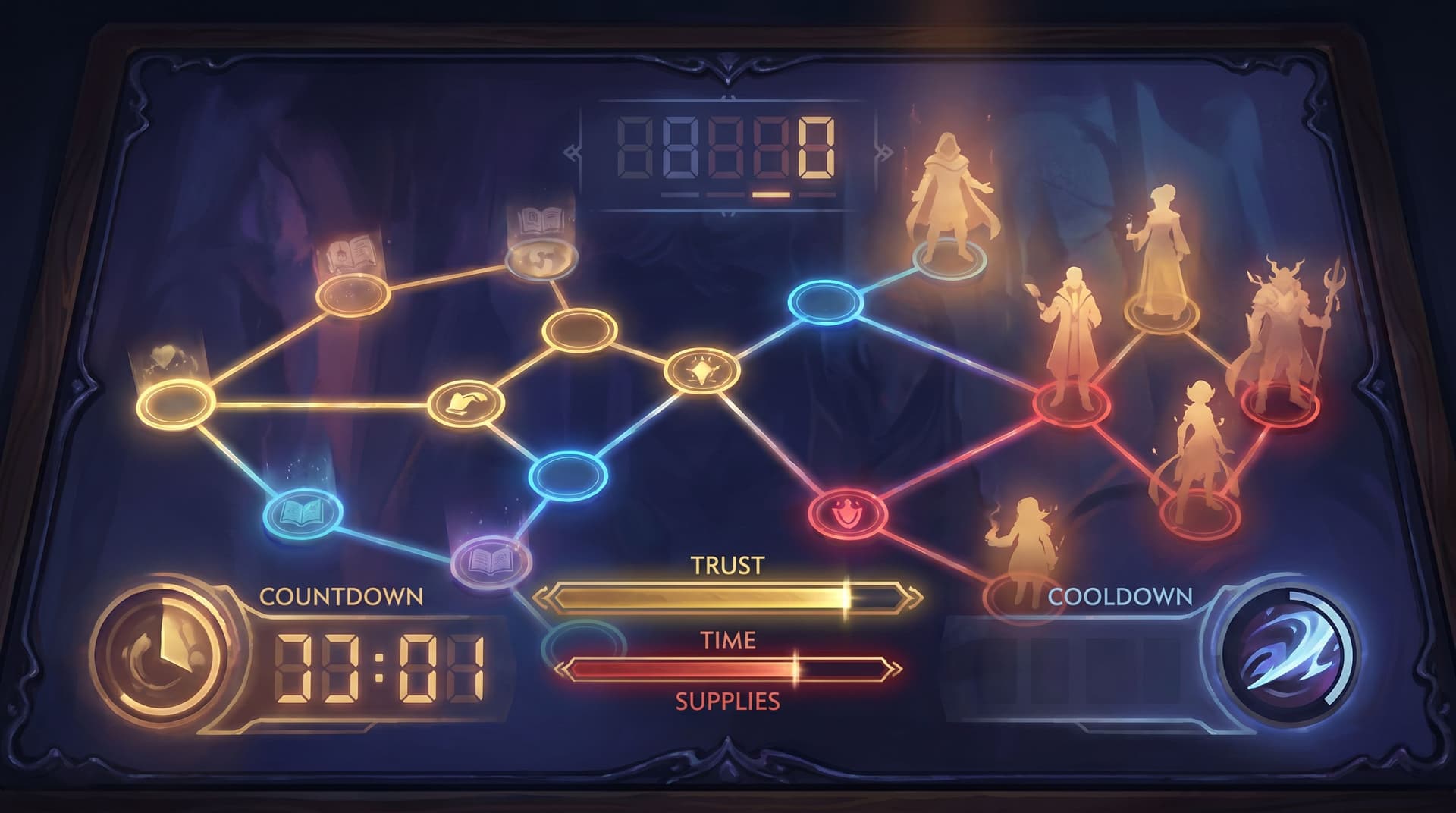
- A way to encode timers, resources, and branching logic without touching code (for deeper systems, see No‑Code Narrative Systems: Building Timers, Cooldowns, and Limited Resources Inside Questas).
Think of your quests as the simulation layer: the place where your audience steps into the world and tests their instincts.
Designing One Coherent Story Universe
Let’s walk through how to actually architect a universe that spans all three channels.
1. Start with a World, Not Just a Plot
Transmedia works best when you design a world that can sustain many stories, not just a single storyline.
Ask yourself:
- What’s the central tension or theme of this world?
(e.g., “What does ethical AI look like when the stakes are life‑and‑death?”) - Who are the key factions, locations, or institutions?
(e.g., a scrappy startup, a legacy regulator, an underground hacker collective.) - What kinds of decisions do people have to make here again and again?
(e.g., trade‑offs between safety and speed, transparency and privacy.)
Those recurring decisions become the backbone of your Questas stories and the themes of your podcast and newsletter.
2. Map Channels to Layers of the World
A simple way to keep things coherent:
-
Podcast = ground‑level experiences
First‑person stories, interviews, and in‑world audio. Listeners feel like they’re inside the moment. -
Newsletter = bird’s‑eye view
Timelines, commentary, “what really happened,” and how it connects to real‑world questions. -
Quests = branching timelines
The same crisis or scenario, but with multiple possible outcomes based on player choices.
You’re not repeating content—you’re looking at the same world from three different vantage points.
3. Decide What’s Canon (and What’s a “What If”)
Transmedia can get confusing fast if you’re not clear on what actually happened.
A practical approach:
- Treat the podcast + newsletter as your “main timeline.”
- Treat Questas stories as:
- Canonical when they’re part of a structured series (e.g., a season of quests where the “most played” or “official” outcome becomes canon), or
- Explicit “what if” scenarios you label as such.
If you’re building complex branching plots, the techniques in The Tangled Timeline: Techniques for Keeping Branching Questas Plots Coherent When Players Jump Across Perspectives can help you stay sane while you decide what counts as canon.
A Practical Blueprint: From Idea to Transmedia Season
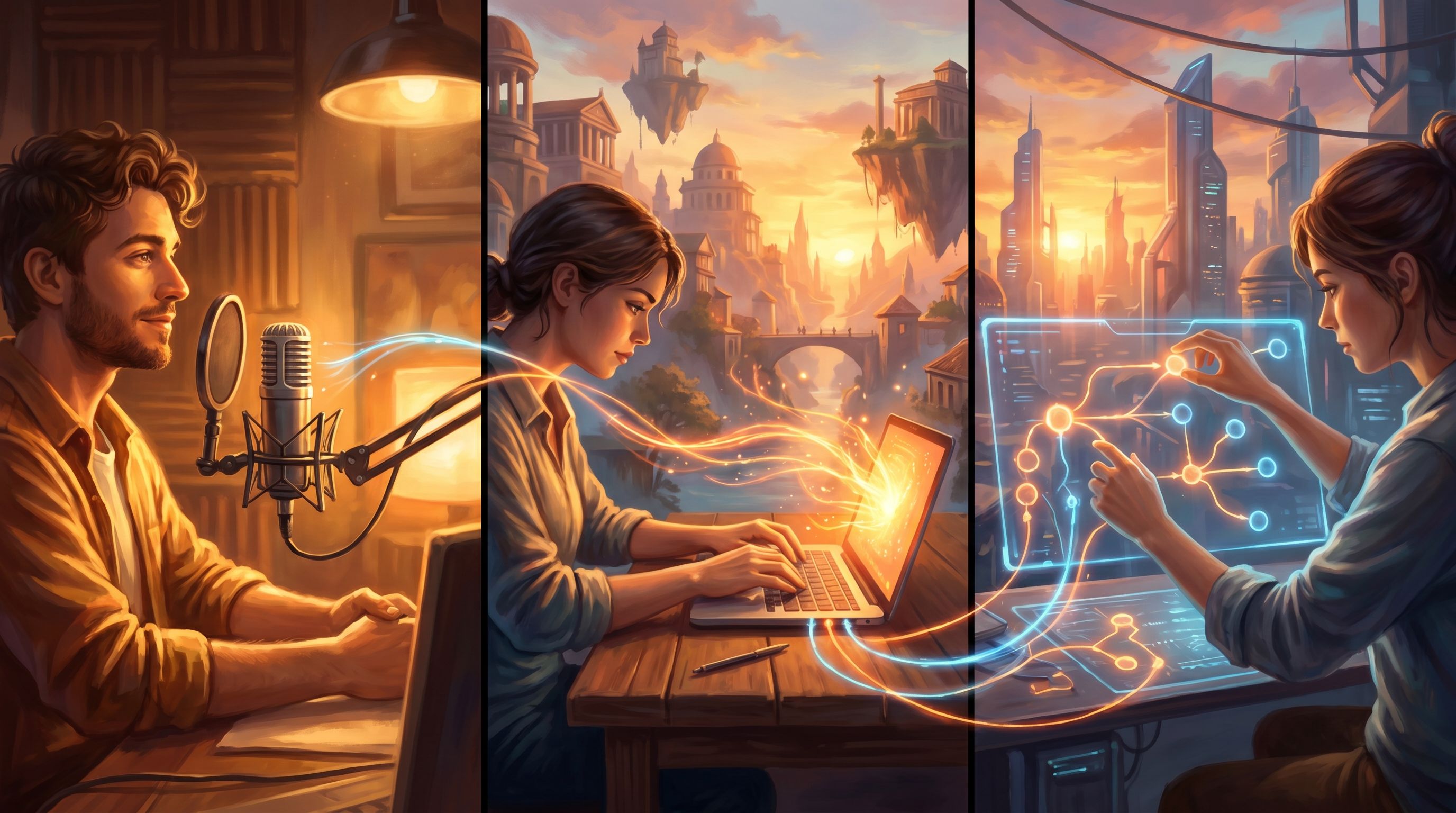
Let’s say you want to launch a 6–8 week “season” that ties together a podcast, a newsletter, and one or more Questas experiences.
Here’s a step‑by‑step workflow you can adapt.
Step 1: Define the Season Arc
Answer these questions:
-
What’s the core question of the season?
Example: “How do leaders make ethical decisions under pressure?” -
Who is the focal character or role?
Example: “A newly promoted VP at a tech company facing a product crisis.” -
What are the 3–5 major decision points?
Example:- Whether to ship a feature despite known risks
- How transparent to be with customers
- Whether to protect a whistleblower or the company’s short‑term interests
Those decision points become the spine of your main quest.
Step 2: Build the Interactive Core in Questas
Using a workflow like the one in From Idea to Interactive: A Step‑By‑Step Workflow for Building Your First Questas Story, you can:
-
Sketch your branch map
- Start with your 3–5 major decision nodes.
- Add 2–3 branches per node that reflect real‑world options.
-
Draft scenes and choices
- Write short, punchy scenes that end with a meaningful choice.
- Use low‑stakes branches between big decisions to build empathy and texture (see The Quiet Choice: Using Low-Stakes Branches to Build Empathy, Not Just Drama, in Questas).
-
Add AI‑generated visuals
- Create recurring character portraits and key locations.
- Use a consistent style so that when these visuals show up in your newsletter, they feel like part of the same universe.
-
Publish a playable draft
- Start with a “pilot” quest that covers the first half of your season arc.
- Share it with a small test group before you tie it into your podcast and newsletter.
Step 3: Script the Podcast to Echo Player Decisions
Once your core quest exists, design a short podcast season around it:
-
Episode 1: The inciting incident
- Introduce the world and central character.
- End the episode at the first big decision point.
- Tell listeners: “You can decide what happens next by playing the interactive scenario—link in the show notes.”
-
Episodes 2–4: Parallel routes
For each episode, pick one branch or outcome from the quest and dramatize it:- Use voice actors or a single narrator to perform key scenes.
- Weave in clips from real experts, customers, or stakeholders reacting to that path.
- Acknowledge that other listeners may have chosen differently in the quest.
-
Finale: Debrief and synthesis
- Compare the most common player paths.
- Discuss surprising decisions or outcomes.
- Tease the next quest or season.
This structure turns your podcast into a living commentary track for the choices your audience is making inside Questas.
Step 4: Use the Newsletter as Glue and Guide
Your newsletter keeps the whole ecosystem understandable and inviting.
Across the season, you can:
-
Onboard new readers
- “Here’s the story so far” recaps.
- Simple diagrams showing how the podcast, quest, and newsletter connect.
-
Highlight player stories
- Share anonymized data or quotes: “42% of you chose to delay the launch; here’s why that matters.”
- Embed screenshots from your quest—branch maps, key scenes, AI visuals.
-
Offer deeper dives
- Case studies, frameworks, or templates based on what’s happening in the story.
- Links back to relevant quests for people who haven’t played yet.
-
Set up the next interactive beat
- “Next week’s episode covers the fallout from this decision. Play through the scenario now so you’re ready.”
Keeping the Universe Manageable (and Fun)
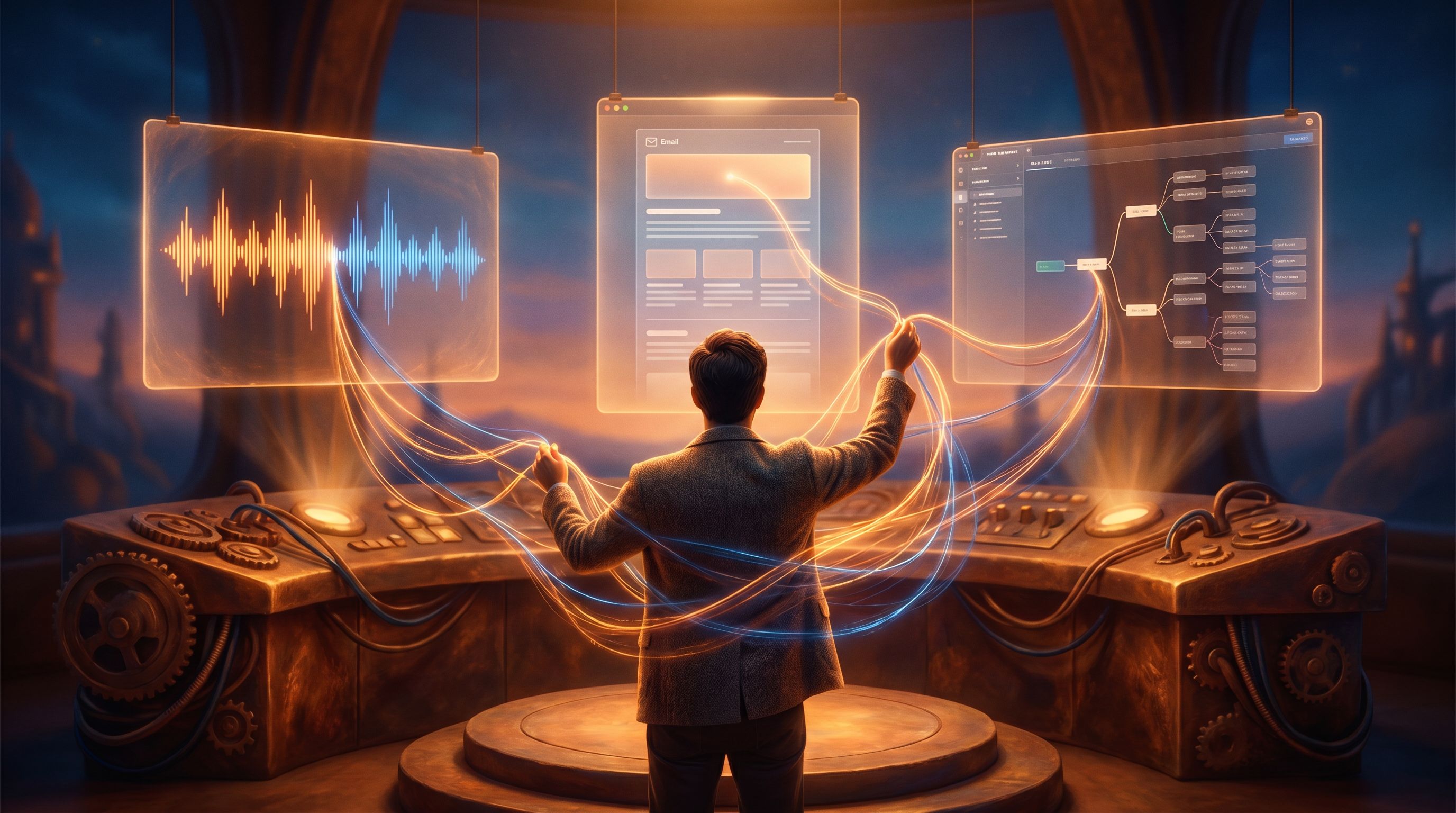
A transmedia toolkit can get overwhelming if you’re not careful. Here are ways to keep it sustainable.
Reuse Structures, Not Just Assets
- Turn one well‑designed quest structure into a template for future seasons.
- Reuse pacing patterns across quests (for help here, see From Branch Map to Beat Sheet: Structuring Scene Pacing in Complex Questas Stories).
- Reuse audio motifs, visual styles, and newsletter sections so your audience always feels oriented.
Design for Replay on Purpose
If you want people to re‑engage:
- Include meaningfully different endings in your quests and reference them explicitly on the podcast.
- Run occasional “community routes” where newsletter readers vote on which branch becomes canon.
- Design soft fails and alternate paths that keep the story going even when players “mess up,” rather than punishing them with dead ends.
Start Small and Expand
You don’t have to launch a full, Marvel‑sized universe on day one.
A realistic first season might be:
- 1 flagship quest in Questas (15–30 minutes of play)
- 3 podcast episodes (intro, middle, debrief)
- 3–4 newsletters (onboarding, mid‑season, finale, recap/resources)
Once that’s working—and you’ve seen how people actually move between channels—you can decide where to go deeper.
Summary: Why This Toolkit Is Worth Building
Bringing podcasts, newsletters, and Questas into a single story universe lets you:
- Meet your audience where they are (listening, reading, or playing)
- Turn passive content into active experiences through branching, visual quests
- Express complex ideas and worlds from multiple angles without repeating yourself
- Create long‑term engagement as people follow your universe across seasons and formats
Most importantly, it turns your work into something people don’t just consume—they participate in.
Your Next Move: Build a Tiny Transmedia Pilot
You don’t need a studio budget to get started. This week, you can:
-
Pick a single scenario you care about.
A leadership dilemma, a customer journey, a fictional crisis—whatever fits your goals. -
Draft a small quest in Questas.
5–8 scenes, 2–3 key choices, a handful of AI‑generated visuals. -
Record one short podcast episode (10–20 minutes).
- Introduce the scenario.
- Invite listeners to play the quest.
- Share your reflections on the themes.
-
Send one newsletter that:
- Recaps the scenario.
- Links to the quest and the podcast.
- Asks readers what they chose and why.
From there, you can iterate: expand the quest, add more episodes, deepen the lore. But that first tiny pilot will teach you more about transmedia storytelling than any theory ever could.
Adventure awaits—and your story universe is ready to spill off the page.
Open a new tab, log into Questas, and start building the world your audience will soon be listening to, reading about, and playing inside.