The Tangled Timeline: Techniques for Keeping Branching Questas Plots Coherent When Players Jump Across Perspectives

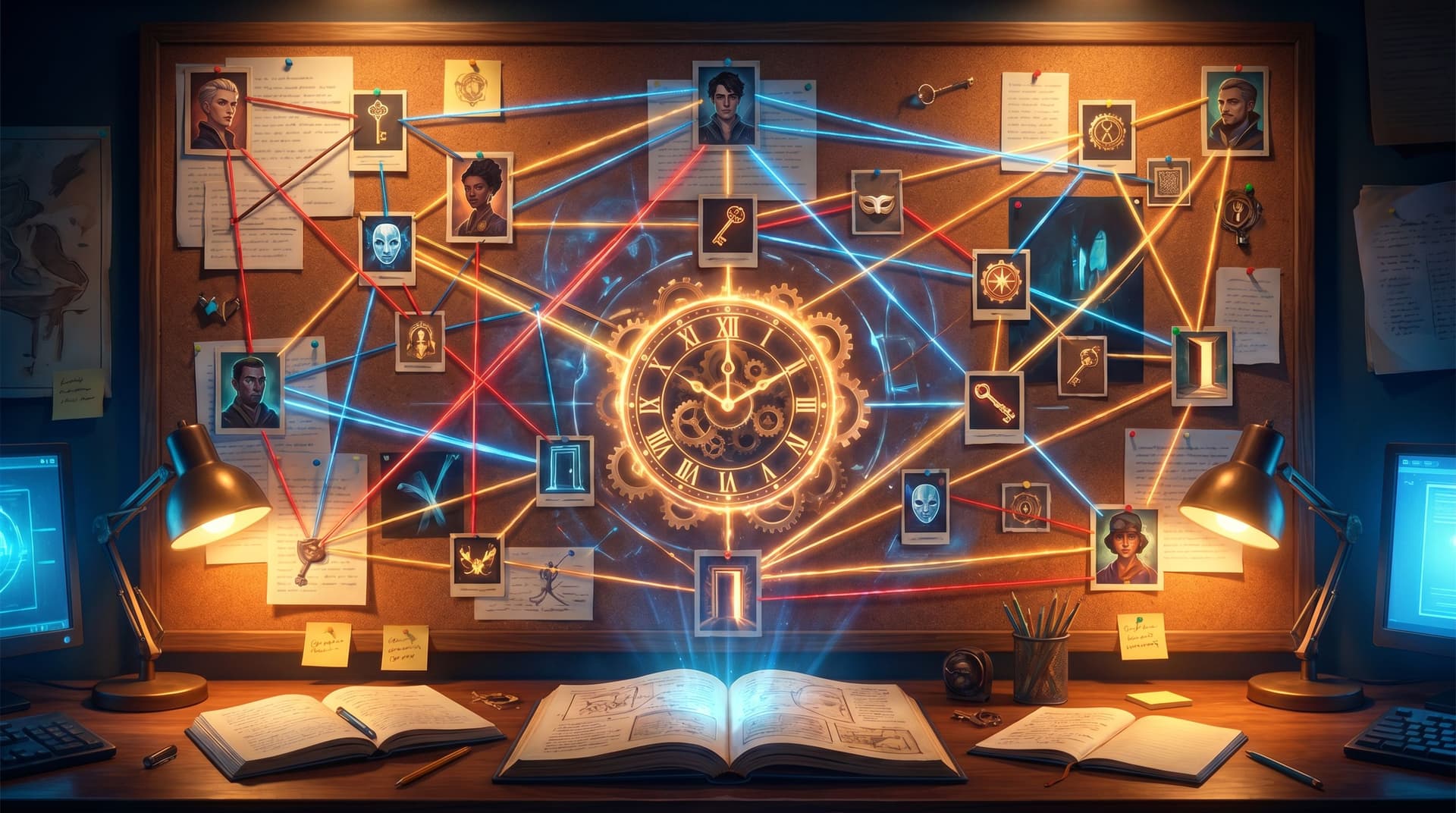
Multi‑POV stories are catnip for interactive creators. Letting players hop between the rebel spy, the corporate fixer, and the AI starship is thrilling—especially when each choice reshapes what the others experience.
But as soon as you mix branching paths with shifting points of view, your story logic can start to fray:
- Did this scene happen before or after the riot?
- How does Character B know something the player only discovered as Character A?
- Why does the city look untouched in one route and half‑burned in another?
On a platform like Questas, where you can rapidly spin up alternate routes, perspectives, and AI‑generated visuals, those questions come fast. Without a plan, your “tangled timeline” turns into a continuity headache—for you, and for players.
This post is about keeping that tangle readable. You’ll learn practical techniques to:
- Map a clean underlying timeline beneath messy player routes
- Track what each POV character knows (and when)
- Use visuals and UI to signal time, perspective, and continuity
- Avoid paradoxes when players jump between viewpoints mid‑story
By the end, you’ll have a toolkit for building multi‑POV Questas that feel complex, not confusing.
Why Multi‑POV Branching Stories Are Worth the Effort
Before we talk techniques, it’s worth asking: why put yourself through this?
Done well, multi‑POV branching stories give you:
- Stronger replay value. Players come back to see how another character experienced the same crisis. If you’re designing for deliberate replays, pair this with the structural ideas in Designing Replay Value on Purpose.
- Richer worldbuilding. Different perspectives surface different parts of your setting—front‑line chaos vs. executive boardrooms vs. street‑level rumors.
- Built‑in mystery and reveals. What looks like a random disaster in one route becomes a planned sabotage when you play as the saboteur.
- Natural empathy-building. Players don’t just hear that two factions misunderstand each other—they play both sides.
The catch: all of that only lands if the underlying story stays coherent. Players will forgive limited branching. They won’t forgive feeling lost or cheated by contradictions.
Start with One Master Timeline (Then Layer Perspectives)
The biggest mistake multi‑POV creators make is trying to “discover” the story branch‑by‑branch. That’s how you end up with:
- Scenes that can’t logically coexist
- Characters reacting to events that never happened on this route
- Visuals that show the world in incompatible states
Instead, treat your story like a TV season: one master timeline that everything else hangs off.
1. Sketch the spine as if it were linear
Before you open Questas:
- Write a simple event list from start to finish.
- Keep it to 15–30 beats: inciting incident, key confrontations, reveals, turning points, climax, aftermath.
- Mark global events that affect everyone.
- E.g., “Riot starts at 18:00,” “Server farm explodes,” “CEO resigns on live stream.”
- Note who’s physically present at each event.
- This will matter later for what each POV can plausibly know.
You can do this in a spreadsheet, a whiteboard, or a visual narrative tool like Arcweave or Fabletoria if you like working diagram‑first.
2. Layer character tracks on top of the spine
Next, add rows or swimlanes for each POV character:
- Row per character, columns as time slices (or numbered beats)
- Fill in where they are and what they’re doing at each global beat
- Leave gaps where they’re off‑screen
You’re building a bus timetable for your cast. It doesn’t have to be pretty; it just has to be consistent.
3. Decide where players can diverge the spine
Not every event needs to be mutable. In fact, you’ll keep your sanity if you:
- Lock a few anchor beats that always happen, regardless of choices
- Identify branchable beats where choices meaningfully change outcomes
This is where ideas from Beyond the Hero’s Journey: Non-Linear Story Structures That Shine in Questas are useful: think of your master timeline as a structure with fixed pillars and flexible bridges.
Once you have this, you can safely move into the Questas editor knowing every branch still lives on the same underlying calendar.
Track What Each POV Knows (and When)
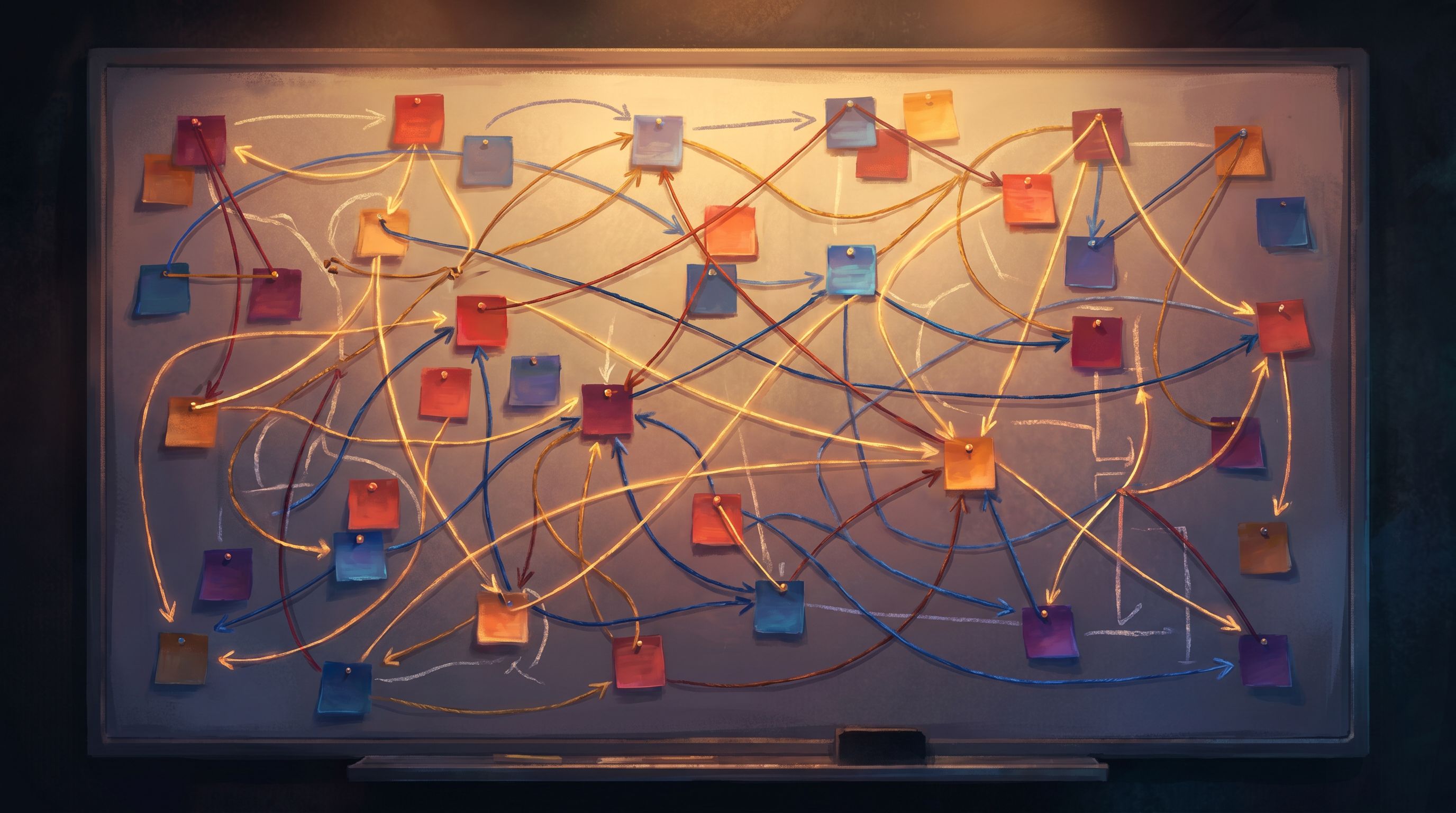
The second source of chaos in multi‑POV branching is information leakage. Players feel it when:
- A character references an event the player never saw in this route
- A reveal lands flat because another route already spoiled it
- A supposedly shocking twist is obvious from another character’s earlier scene
You can’t fully avoid this in replayable stories—but you can manage it.
1. Create a “knowledge matrix” instead of just flags
Most interactive creators are used to tracking state with simple flags:
riot_happened = trueplayer_saved_agent = false
For multi‑POV, you also need who knows what:
riot_publicly_knownvs.riot_known_to_securityvs.riot_known_to_ceo
In practice, that means:
- Prefixing variables with the POV:
A_knows_riot,B_knows_riot - Or tracking knowledge level:
A_riot_awareness = none / rumor / confirmed
In Questas, you can store these as scene‑level variables and check them in conditional text or branch logic.
2. Gate dialogue and choices by knowledge
Once you track knowledge, use it to:
- Hide or alter dialogue lines
- Unlock extra choice options when a character knows more
- Prevent impossible references (no one can mention the server explosion before it happens)
Example:
- If
B_knows_riot == 'rumor', they might say, “I heard something’s going down downtown.” - If
B_knows_riot == 'confirmed', they say, “Downtown is burning. Half the squad is missing.”
Same beat, different flavor, coherent timeline.
3. Use perspective to reinterpret shared events
You don’t need every POV to discover new plot points. Often, the magic is in reinterpretation:
- The protest leader sees a police charge as unprovoked brutality.
- The police commander sees the same moment as a necessary response.
Structurally, these can be two scenes mapped to the same timestamp, each written from a different POV with shared variables controlling the objective facts (who fired first, who was injured).
Designing Perspective Jumps Without Breaking the Story
The moment you let players jump between perspectives mid‑quest, your timeline risk spikes.
Here’s how to keep the jumps thrilling instead of disorienting.
1. Make jumps happen at “clean edges”
Try to restrict perspective switches to:
- End of a beat (after a decision, before consequences play out)
- Natural cliffhangers (door opens, gunshot rings out, transmission cuts)
Avoid switching mid‑conversation or mid‑reveal, where the player is still parsing what just happened.
In Questas, this often means:
- One scene per “beat”
- Jumps triggered at the end of a scene, not halfway through
2. Always orient the player within 2–3 lines
After a jump, the player should quickly know:
- Whose head they’re in
- Roughly what time it is relative to the last POV
- Whether we’re before, during, or after a known event
Use a consistent opening pattern:
“Three hours earlier, across town, you—Captain Reyes—watch the same smoke rise from a different angle.”
or
“Now, from Jae’s perspective, ten minutes after the power goes out…”
You can reinforce this with UI in Questas:
- A small POV nameplate at the top of the scene
- Optional time stamps for stories where chronology is central
3. Decide your “time travel rules” and stick to them
Perspective jumps can move:
- Forward only (each jump advances global time)
- Forward with flashbacks (jumps can explicitly go back in time)
- Freely (non‑linear, puzzlebox style)
All three can work, but you must:
- Make the rules clear to the player through framing
- Avoid “secret” time jumps where they only realize it later by accident
If you want a heavily non‑linear structure, consider grounding it with recurring anchor scenes or visual motifs—techniques we also talk about in Designing Emotional Arcs in Branching Stories.
Using Visuals to Signal Time, State, and Continuity
AI‑generated images and video are one of the big strengths of Questas—but they can also accidentally break continuity if you’re not careful.
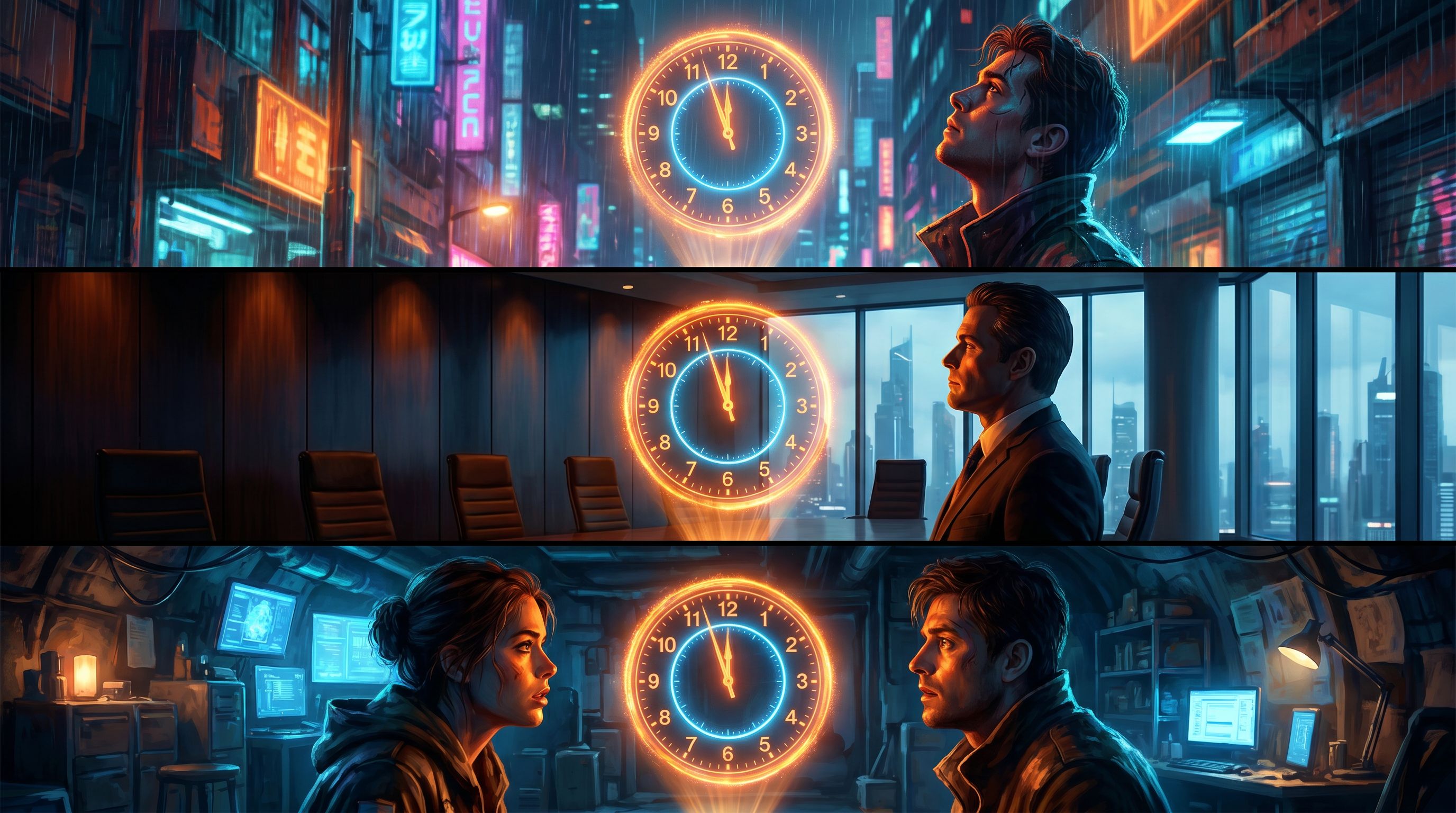
When players are jumping between perspectives, visuals become a crucial way to silently say:
- “This is the same night as before.”
- “The city is now under curfew.”
- “We’ve jumped back in time—notice the intact tower.”
1. Define visual states for key locations
For major locations, think in versions over time, not just one hero shot:
- City plaza: peaceful → protest → riot → aftermath
- Server room: pristine → breached → burning
- Office: normal → evacuation → abandoned
In your Questas project notes (or in a shared canon doc if you’re working with a team), define:
- A short description for each state
- A consistent prompt pattern for your AI visuals
If you haven’t already built a visual bible, the techniques in AI as Art Director: Building Cohesive, On-Brand Visual Languages for Your Questas Series translate perfectly here.
2. Use color and lighting as temporal cues
Even if players don’t consciously track timestamps, they feel:
- Cool, blue‑toned lighting as night or aftermath
- Warm, golden light as afternoon or calm before the storm
- Harsh red alarms as crisis moments
When you brief or prompt your visuals, bake in those cues:
- “Same plaza as earlier, but at night, lit by emergency vehicles, heavy smoke.”
- “Boardroom, early morning light, city skyline still intact.”
3. Echo compositions across perspectives
A powerful way to sell coherence is to reuse compositions from different POVs:
- First, you show the plaza from the protest leader’s POV, looking up at the drones.
- Later, as the security chief, you see the same plaza from above, with the same statue and banners visible.
Even if the art style shifts slightly between AI generations, the shared landmarks and layout tell players: this is the same place, same event.
Keeping Branch Sprawl Under Control
Multi‑POV stories can explode in size if you’re not ruthless about scope. The more branches and perspectives you add, the harder it is to:
- Test all combinations
- Keep the timeline consistent
- Update logic when you change one key event
Here’s how to keep things manageable without feeling shallow.
1. Use “hub and spoke” rather than pure trees
Instead of endless binary splits, design around hubs:
- A hub scene offers several choices and side explorations
- Most paths reconverge on a shared next beat
This gives players a sense of agency and exploration without multiplying downstream timelines uncontrollably.
You can:
- Let each POV have its own hubs
- Occasionally build cross‑POV hubs where jumps happen based on previous choices
2. Prune aggressively with soft gates
Not every combination of choices needs bespoke content. Use soft gates:
- If the player missed a key clue as Character A, Character B gets an extra scene to discover it another way.
- If they already know too much, you skip redundant exposition and jump ahead.
Soft gates rely on your knowledge matrix and variables, but they reduce total scenes instead of adding more.
For more on designing forgiving structures that don’t punish experimentation, see Designing ‘Soft Fails’ in Questas: Letting Players Mess Up Without Breaking the Story.
3. Treat each POV as a “route,” not a whole new tree
A common trap is building each POV as if it were a completely separate quest.
Instead, think of POVs as routes through the same forest:
- They share many global beats
- They diverge primarily in what they can influence and what they notice
In Questas, that translates to:
- Reusing scenes with conditional text depending on POV
- Branching within a shared scene based on
current_povand knowledge flags
This keeps your graph denser but shallower—and much easier to maintain.
Testing for Timeline Integrity (Before Players Find the Holes)
Even with careful planning, tangled timelines hide bugs. You need deliberate testing passes focused not just on typos, but on chronology and knowledge.
1. Run “POV marathons”
Play through the entire quest:
- Only as POV A whenever possible
- Then only as POV B
- Then switching whenever the story offers it
For each run, keep notes:
- Did any character know something they shouldn’t?
- Did any visual contradict a prior state?
- Did any time jump feel unmarked or confusing?
2. Ask testers to annotate confusion
When you share your Questas link with playtesters, give them a very specific ask:
“Whenever you feel confused about when something is happening, or how a character knows something, pause and screenshot it.”
You can then:
- Tag those scenes in your editor
- Add or adjust orientation lines, time markers, or knowledge gates
3. Maintain a “canon change log”
Every time you change a major event (e.g., moving the riot earlier, changing who survives), update a simple canon change log:
- Date
- What changed
- Which scenes/POVs are affected
This habit pays off especially if you’re running a longer series or anthology, like the community projects described in From Linear Fan Zines to Playable ‘What Ifs’: Designing Community-Driven Questas Anthologies. When multiple creators are extending the same storyworld, a shared change log is the only way to keep your timelines compatible.
Bringing It All Together
Keeping a branching, multi‑POV Questas story coherent isn’t about memorizing every branch. It’s about building systems that make coherence the default:
- A master timeline spine that all branches respect
- Knowledge tracking per POV, not just global flags
- Clean, clearly signposted perspective jumps that orient the player quickly
- Visual continuity across time and viewpoints, using location states and recurring compositions
- Scoped structures (hubs, reconvergence, soft gates) that limit branch explosion
- Deliberate testing aimed at catching timeline and knowledge bugs early
Do that, and your “tangled timeline” stops being a liability. It becomes the reason players come back—piecing together the full story by walking it from every angle.
Your Next Step
If you have even a half‑formed idea for a story with multiple perspectives—a heist crew, a crisis team, a fandom AU with rotating leads—this is the perfect moment to try it.
- Open your notes app and sketch a 10–20 beat master timeline.
- Add two or three POV tracks on top of it.
- Jump into Questas and:
- Build just one act with perspective jumps
- Track knowledge per POV for one key secret
- Generate two visual states of your main location
You don’t need a 40‑scene epic to start. A tight, 8–12 scene prototype is enough to test your timeline systems, see where confusion creeps in, and refine your approach before you scale.
Your players are ready to walk the same night from three different angles. Your job is to make sure it still feels like one unforgettable story.
Adventure awaits—go build the first tangled timeline that actually holds together.