AI, Interactivity, and the Death of the Static Syllabus: The Future of Course Design in 2030

By 2030, the syllabus as a static PDF handed out on day one will feel as quaint as an overhead projector.
Learners are already used to:
- Adaptive apps that adjust difficulty in real time
- Streaming platforms that recommend the next episode with eerie accuracy
- Games that respond to every choice and playstyle
Yet many courses are still organized around a frozen artifact: a syllabus that locks content, pacing, and assessment months before a single learner shows up.
That mismatch is why the next wave of course design is going to look a lot more like an interactive story than a table of contents. AI, branching narratives, and no‑code tools are converging to turn syllabi into living systems—systems that respond to each learner’s choices, goals, and performance.
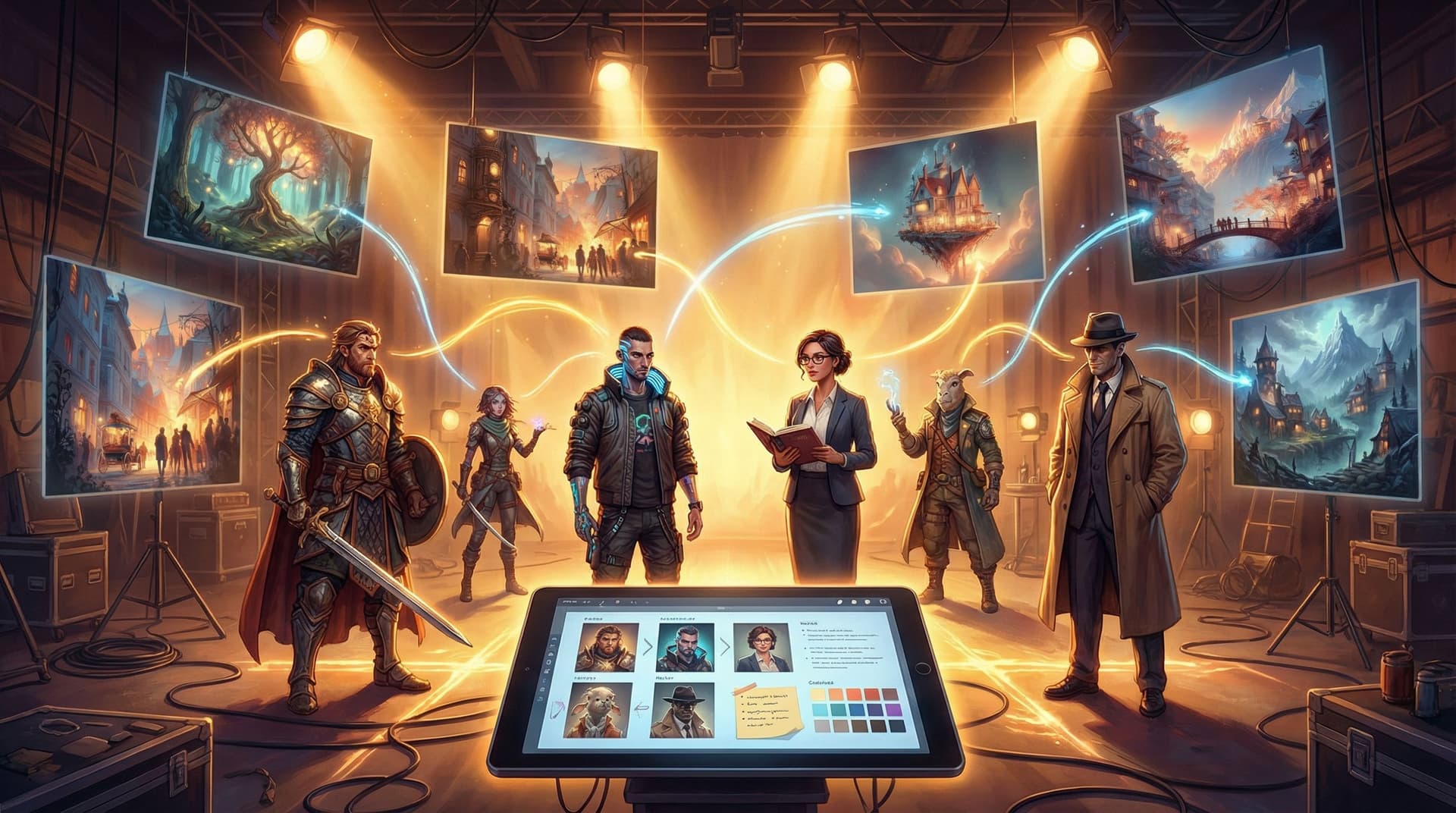
Platforms like Questas are already showing what this looks like in practice: visual, no‑code editors where you design branching journeys, embed AI-generated images and videos, and let learners “play” through complex decisions instead of just reading about them.
This isn’t just a shiny upgrade. It’s a fundamental shift in how we design, deliver, and iterate on learning.
Why Static Syllabi Are Quietly Failing Learners
Static syllabi weren’t designed for:
- Cohorts with wildly different prior knowledge
- Rolling enrollments and self-paced timelines
- AI tools that can personalize content on demand
They were designed for a world where:
- Everyone starts at the same time
- Content is scarce and slow to update
- Assessment happens in big, infrequent chunks
That world is gone, but the artifact remains.
The hidden costs of a frozen syllabus
By 2030, the pain points we already feel will be impossible to ignore:
-
One-size-fits-none pacing
Fast learners get bored and disengage. Struggling learners fall behind and quietly disappear. -
Front-loaded cognitive overload
Learners are handed a dense document on day one, expected to absorb policies, outcomes, grading schemes, and schedules long before they’re emotionally invested. -
No graceful way to adapt mid-course
If a module flops, or a world event makes your content outdated, you either bolt on fixes or rewrite the whole doc later. -
Assessment divorced from context
Quizzes and exams show up as disconnected checkpoints rather than meaningful decisions inside a narrative arc.
The result: courses that are administratively tidy but pedagogically brittle.
What Replaces the Static Syllabus by 2030
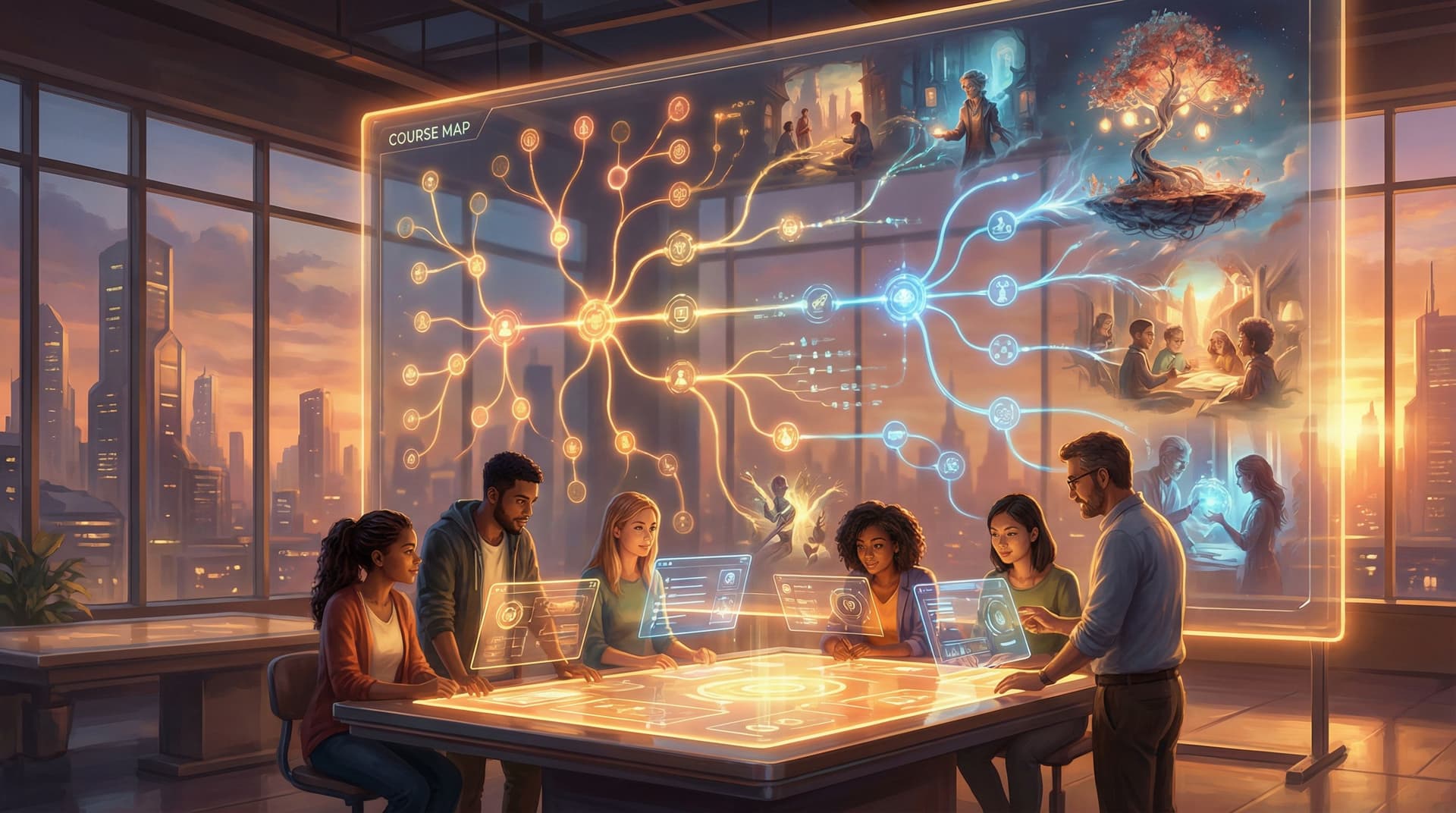
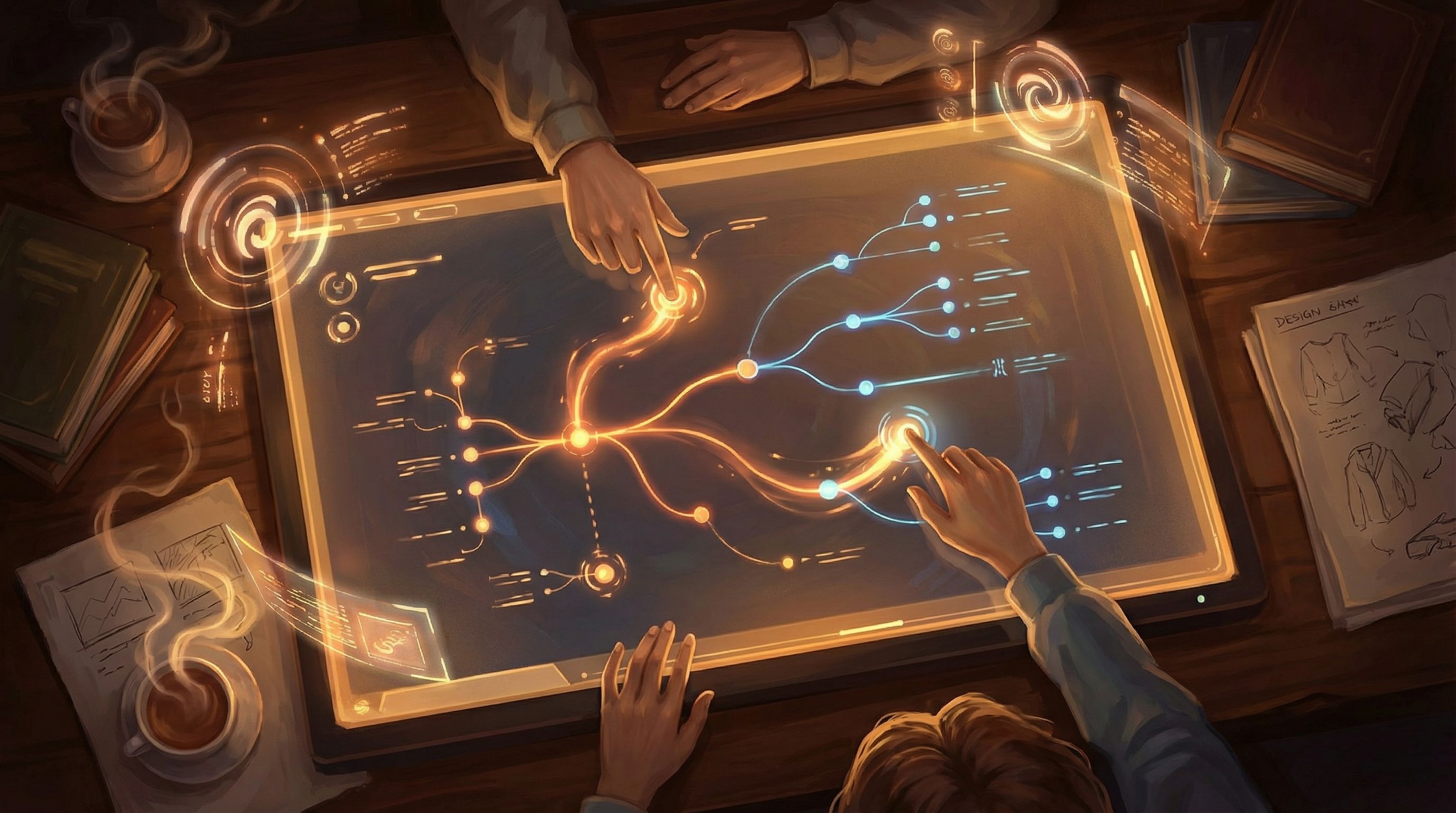
By 2030, the “syllabus” for many courses will feel more like a playable map than a contract. Learners will step into a guided, AI-supported journey that adapts as they move.
Here’s what that looks like.
1. The syllabus becomes a branching story
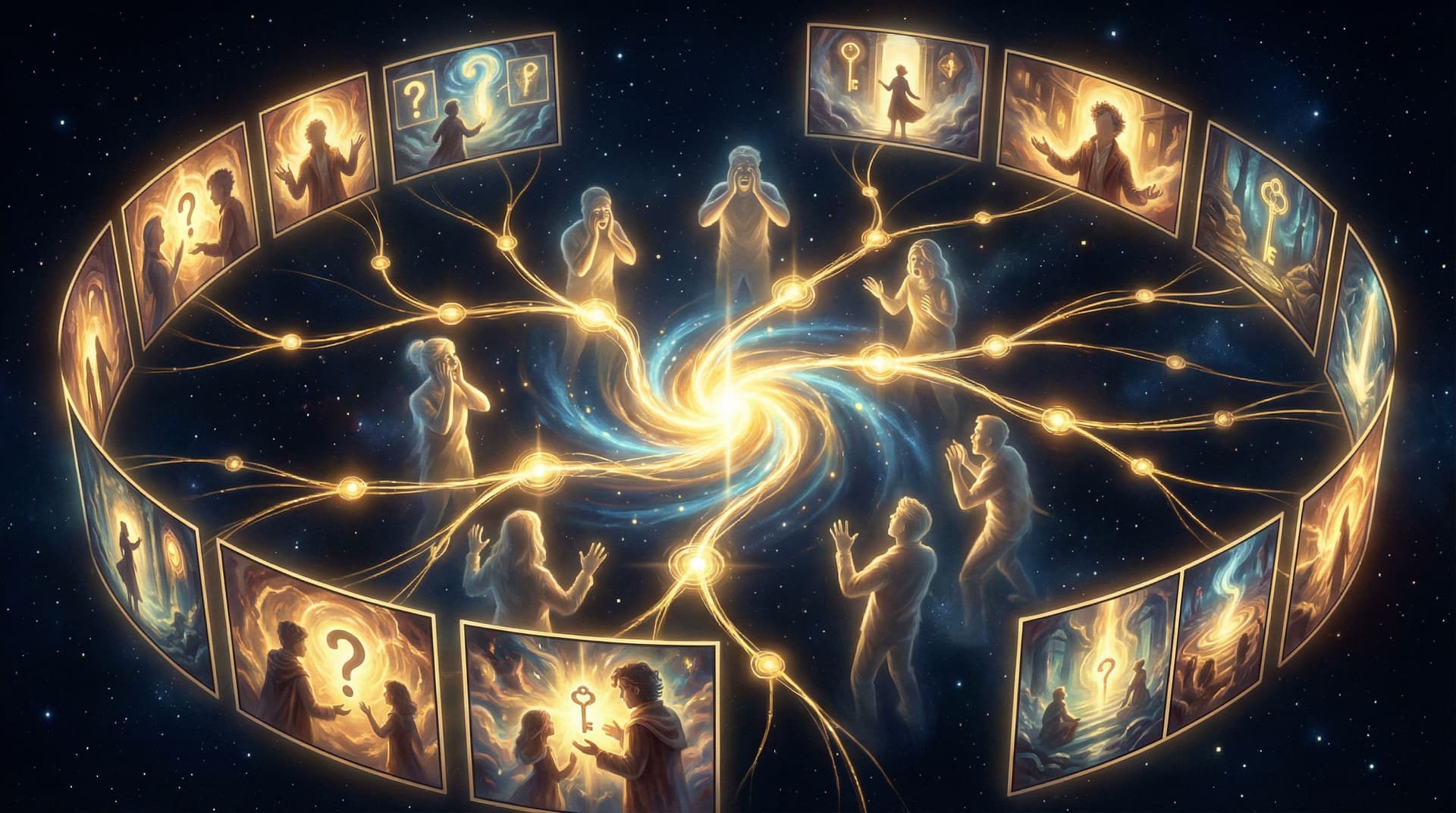
Instead of a linear list of weeks and topics, learners see a network of paths:
- Core path: the essential concepts and skills everyone must hit
- Elective branches: optional deep dives, case studies, or projects aligned with different interests or industries
- Remediation loops: targeted side quests that shore up prerequisite skills when the system detects gaps
Tools like Questas already make it possible to design these branching structures visually. Educators drag and drop scenes, add decision points, and attach AI-generated images or short videos to bring scenarios to life.
If you’re curious how branching design works in practice, check out how creators turn linear content into modular scenes in From Short Story to Story System: Adapting Linear Fiction into Modular Scenes for Questas.
2. AI acts as co-instructor and course architect
By 2030, AI systems will:
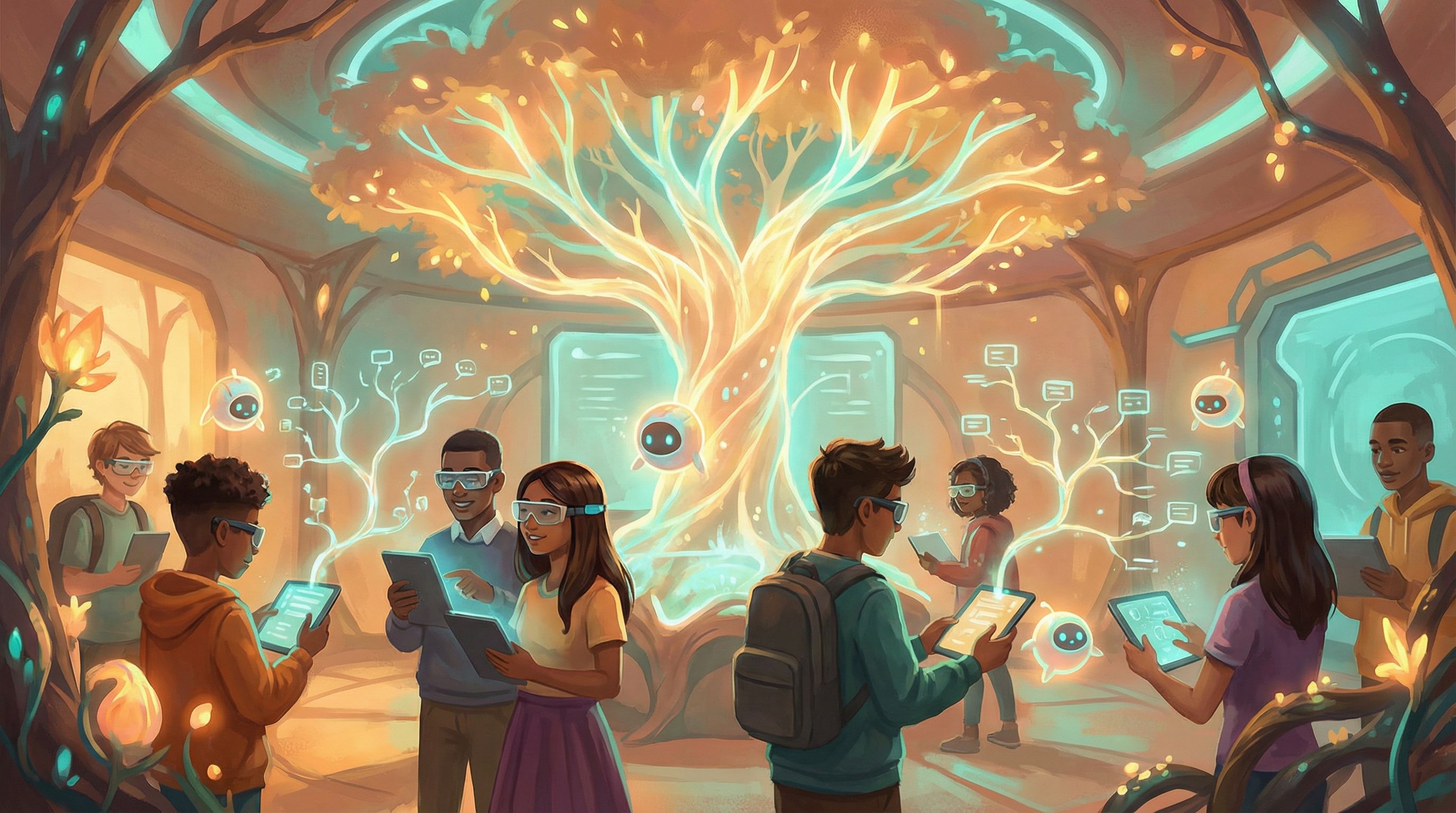
- Diagnose starting points via quick, conversational assessments
- Recommend personalized routes through your course map
- Generate micro-explanations and analogies tuned to each learner’s background
- Flag friction points where learners consistently stall, and suggest design changes
Instead of rewriting the whole syllabus each term, you’ll maintain a course graph: a living network of modules, resources, and assessments. AI helps route learners through that graph, while you focus on designing great nodes and meaningful decisions.
3. Assessment becomes embedded decisions, not separate events
Traditional quizzes sit at the end of a unit. In an interactive, AI-supported course, assessment is woven into the story:
- Learners make decisions in realistic scenarios
- The system infers understanding from those choices
- Feedback arrives in-character and in-context, not as a red X on a separate page
If you want to explore this idea in depth, From Knowledge Checks to Narrative Arcs: Rethinking eLearning Quizzes as Questas Stories dives into how to turn assessments into narrative beats.
4. Policies and expectations become playable
Instead of a wall of text about participation, deadlines, or collaboration, you can:
- Drop learners into short, interactive vignettes that dramatize common dilemmas
- Let them make choices (e.g., “Do you ask for an extension?”) and see consequences in a low-stakes environment
- Use AI to adapt examples to their context (e.g., workplace vs. university)
This is where platforms like Questas shine: you can turn classroom norms and ethical guidelines into playable dilemmas, similar to the scenarios described in Beyond Branching Dialogues: Using Questas to Prototype Ethical Dilemmas, Tradeoffs, and Grey-Area Choices.
Designing Your First “Living Syllabus”: A Practical Blueprint
You don’t have to wait until 2030 to start designing like it’s 2030. Here’s a concrete path to evolve your next syllabus from static to interactive.
Step 1: Turn your course into a map, not a list
Start with your existing syllabus and reframe it as a network.
-
List your core outcomes.
What must every learner be able to do by the end? Keep this tight. -
Group content into nodes.
Think in scenes or modules, not weeks. Each node should:- Teach or practice 1–2 outcomes
- Take a manageable amount of time (e.g., 30–90 minutes)
-
Identify natural decision points.
Where could a learner reasonably:- Choose between two case studies
- Pick a context (e.g., healthcare vs. finance)
- Decide how to demonstrate mastery (project vs. reflection vs. quiz)
-
Sketch the branches.
On paper or in a whiteboard tool, map:- Core path: minimum nodes to meet outcomes
- Optional branches: enrichment, applications, or alternative perspectives
- Remediation loops: short detours for learners who need more practice
This becomes the backbone of your interactive syllabus.
Step 2: Wrap your map in a narrative frame
Humans remember stories better than schedules. Give your course a narrative container:
- Role: Who is the learner “playing” as? A junior analyst? A historian? A product designer?
- Mission: What are they trying to achieve by the end of the course?
- Constraints: What pressures or tradeoffs shape their decisions?
For example:
Instead of “Week 3: Stakeholder Communication,” learners might play as a product manager navigating conflicting demands from engineering, sales, and customers.
Posts like From Case Study to Character Arc: Turning Real Customer Stories into Branching Questas Journeys offer great patterns for transforming dry case studies into engaging arcs you can plug into your course.
Step 3: Make key choices do triple duty
Design decision points that simultaneously:
- Teach content (by forcing tradeoffs)
- Assess understanding (based on the options learners choose)
- Shape the path (by unlocking different nodes or support)
For each major choice, define:
- What misconception or skill it targets
- What “good,” “partial,” and “weak” decisions look like
- What feedback learners get immediately after choosing
- How the next node changes based on that decision
This is where frameworks like risk–reward–information balancing (explored in The Tension Triangle: Balancing Risk, Reward, and Information in Each Questas Choice Point) become incredibly useful.
Step 4: Use AI to personalize—not randomize
By 2030, most learning platforms will ship with built-in AI. Even today, you can:
- Use large language models to generate alternative explanations or examples on the fly
- Let learners ask natural-language questions inside nodes
- Auto-generate plausible-but-wrong distractors for choices, based on real misconceptions
The key is to constrain the AI with your course graph:
- It can remix and rephrase within each node’s learning goal
- It can recommend next nodes based on performance and preferences
- It cannot invent entirely new outcomes or bypass core skills
Think of AI as a casting director and improviser inside your world, similar to the way character ensembles are reused and adapted across stories in AI as Casting Director: Designing Reusable Character Ensembles for Multiple Questas Stories.
Step 5: Turn policies into micro-scenarios
Pick 3–5 policies or norms that usually cause confusion:
- Late work and extensions
- Collaboration vs. plagiarism
- Participation expectations
- Use of AI tools
For each, design a micro-scenario:
- A short vignette (2–3 screens) where a learner must choose what to do
- Immediate, narrative feedback showing the consequences
- A quick debrief that links back to your actual policy
Build these as small branches near the start of your course in a platform like Questas. Learners will internalize expectations by doing, not skimming.
What This Means for Educators, Instructional Designers, and Cohort Builders
By 2030, designing a course will feel less like filling out a template and more like building a story system.
New skills that matter
- Systems thinking: Seeing your course as a network of states and transitions, not a line of lectures.
- Narrative design: Framing content as missions, dilemmas, and character arcs.
- Data-informed iteration: Using interaction data (not just end-of-course surveys) to refine nodes, branches, and feedback.
- AI literacy: Knowing what to automate, what to constrain, and where human judgment is irreplaceable.
The good news: you don’t need to become a game designer overnight. Many of these muscles are extensions of what you already do—crafting case studies, leading discussions, and writing scenarios.
Institutional and business upside
For schools, bootcamps, and learning businesses, living syllabi unlock:
- Higher engagement and completion as learners feel seen and challenged at the right level
- Reusability as course graphs can be adapted to new audiences without starting from scratch
- Richer analytics from every choice learners make, not just final grades
- Differentiation in a crowded market where static video libraries are commoditized
Interactive stories are already replacing static marketing pages, as explored in Beyond Branches and Banners: How Interactive Stories Are Replacing Static Landing Pages in 2026. The same forces are about to reshape how courses attract, onboard, and retain learners.
Getting Started This Term (Not “Someday in 2030”)
If all of this sounds exciting but a bit overwhelming, shrink the scope.
You don’t have to rebuild your entire curriculum. You just need to replace one static element with an interactive, AI-supported one.
Here are three low-lift starting points:
-
Turn your course overview into a playable tour.
Instead of a PDF, build a short interactive journey in Questas where learners:- Choose their goals
- Preview different paths through the content
- Experience a sample scenario from later in the course
-
Convert a single quiz into a branching scenario.
Take one unit test and reframe it as a narrative with decisions, consequences, and adaptive feedback. Use AI to help generate variations of explanations and hints. -
Prototype one policy scenario.
Pick your most misunderstood policy and turn it into a 5-minute interactive dilemma that plays out on day one.
Once you see how learners respond—and how much richer the data becomes—it’s hard to go back to a frozen syllabus.
Wrapping Up
By 2030, the question won’t be “Should we move beyond static syllabi?” but “How did we ever teach without living ones?”
AI, interactivity, and no‑code tools are converging to:
- Turn syllabi into branching maps instead of linear contracts
- Embed assessment inside meaningful decisions
- Personalize routes through shared course graphs
- Make norms and expectations something learners experience, not just read
The educators and course builders who start experimenting now will be the ones defining what “normal” looks like in a few years.
Your Next Step
You don’t need permission from 2030 to begin.
Pick one course, one module, or even one policy, and:
- Sketch a tiny branching map (3–7 nodes).
- Wrap it in a simple narrative frame (role + mission).
- Build it in a no‑code interactive tool like Questas and share it with a small group of learners.
Notice what changes:
- How they talk about the course
- How quickly they grasp expectations
- How much more data you have about their thinking
The death of the static syllabus doesn’t happen all at once. It happens the moment you decide that your course isn’t a document—it’s an adventure your learners deserve to play.
Adventure awaits. Design the first branch.