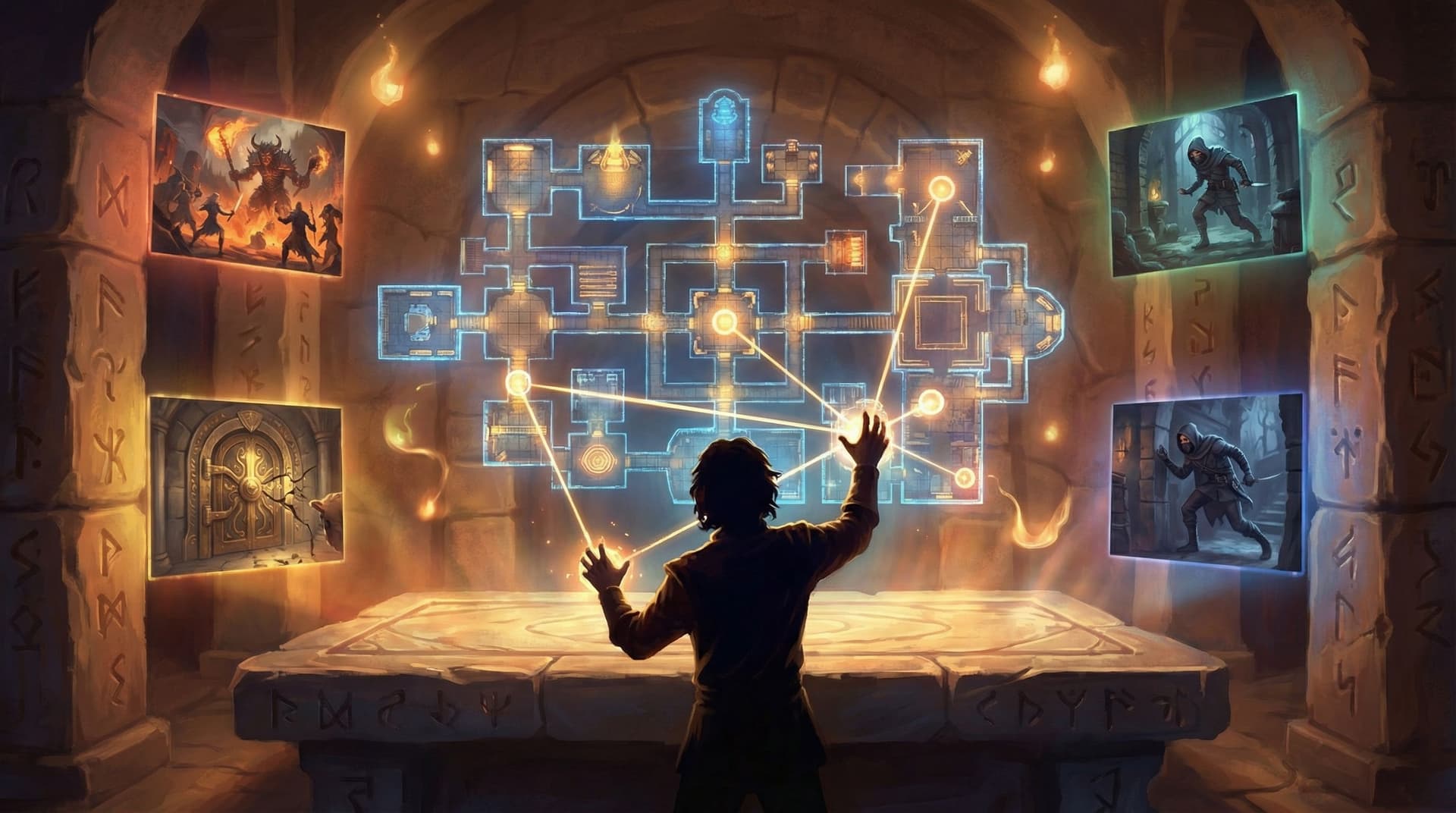
AI Storyboarding for Nonfiction: Mapping Real Events into Branching Questas Timelines


Nonfiction doesn’t have to mean linear.
Biographies, case studies, investigations, policy rollouts, customer journeys, even internal retrospectives—all of these are really networks of decisions, perspectives, and what‑ifs. Yet we usually flatten them into a single path: one article, one video, one slide deck.
Interactive story platforms like Questas open up a different approach: treat real events as story systems, then let your audience explore them as branching timelines.
In this post, we’ll dig into how to use AI storyboarding to turn nonfiction material into playable, branching narratives—especially using Questas’ visual, no‑code editor and AI visuals.
Why Branch Real Events at All?
Before we get tactical, it’s worth asking: if something already happened, why bother turning it into a branching story?
Because nonfiction is rarely just “what happened.” It’s also:
- What could have happened instead (roads not taken, decisions not made)
- How it felt from different perspectives (stakeholders, teams, critics, customers)
- What we can learn for next time (training, rehearsal, sense‑making)
Branching timelines let your audience:
- Rehearse real decisions. Learners can step into the shoes of a founder, manager, journalist, or public official and try alternative paths without real‑world consequences.
- See tradeoffs clearly. Instead of reading a tidy post‑hoc explanation, they experience how small choices cascade into big outcomes.
- Engage emotionally. Making choices (even in a historical or documentary context) creates ownership: “I chose that; now I’m living with it.”
- Return for replays. Nonfiction usually gets one read. A well‑designed branching nonfiction Questas can be replayed multiple times to explore side routes and hidden branches.
If you’ve read about turning long‑form articles into playable investigations, you’ve already seen how this can transform brand storytelling—see Interactive Brand Journalism: Turning Long-Form Articles into Questas Investigations Readers Can Play Through for a deep dive into that angle.
What “AI Storyboarding” Really Means for Nonfiction
When we talk about AI storyboarding here, we’re talking about three things working together:
- Narrative mapping. Breaking a real event (or series of events) into key beats, decisions, and perspectives.
- Branch design. Deciding where the audience can diverge from the historical record ("what if we chose X instead of Y?") and how those choices feed back into the story.
- AI‑assisted visuals and text. Using tools inside Questas to:
- Generate draft scene descriptions and dialogue
- Create AI images and short clips that anchor each node
- Iterate quickly on variations of scenes, outcomes, and viewpoints
You’re not fabricating reality; you’re:
- Framing real decisions as playable choices
- Surfacing the constraints and unknowns people faced at the time
- Showing both the actual path and plausible alternatives
Think of it as building a “documentary game” around your subject.
Step 1: Choose the Right Nonfiction Moment
Not every nonfiction topic works equally well as a branching Questas timeline. Look for stories that already have tension and decision points.
Good candidates:
- Crisis responses. Security incidents, PR crises, production outages, public health decisions.
- Big strategic forks. Entering a new market, pivoting a product, rebranding, or merging teams.
- Investigations and audits. Internal reviews, journalistic investigations, compliance cases.
- Policy or culture shifts. New HR policies, diversity initiatives, remote‑work transitions.
- Personal journeys. Founder stories, solo‑creator journeys, career pivots.
Ask yourself:
- Where did people disagree about what to do next?
- Where were the stakes high enough that the wrong move would really hurt?
- Where did uncertainty or incomplete information shape the outcome?
If you’re building training content, this aligns nicely with the “scenario‑first” approach—start from a real decision, then build outward. The post Scenario-First Story Design: Building Training Questas That Start with Real-World Decisions is a great companion here.
Step 2: Build a Timeline Spine (Before You Branch)
Before you touch branches, map the single, true timeline of what actually happened. Treat this as your spine.
Create a simple list of scenes:
- Inciting incident. The moment that kicked things off.
- Early response. First decisions, first reactions.
- Escalation. New information, higher stakes, public scrutiny.
- Pivotal decision. The moment that changed the trajectory.
- Resolution. How things settled—success, failure, mixed results.
- Aftermath. Consequences, learnings, next steps.
For each scene, jot down:
- Who is present? Roles, not just names (e.g., “Head of Product,” “Union Rep,” “Lead Investigator”).
- What did they know (or not know) at this point?
- What decision(s) were on the table?
- What constraints were in play? Time pressure, budget, legal, politics, emotions.
Drop this spine into Questas as a straight line of nodes. This becomes your “documentary mode”—a baseline path you can always preserve as one canonical route.
Step 3: Identify Natural Branch Points
Now, walk through your spine and look for moments where people could reasonably have chosen differently.
At each scene, ask:
- What was the default or actual choice?
- What were the top 1–3 realistic alternatives?
- What did people argue for at the time (even if they lost)?
These become your branch points.
Types of Branches That Work Well in Nonfiction
-
Counterfactuals (“What if we’d done X instead?”)
- Example: In a product recall story, branch on whether the company issues a public apology immediately or waits for more data.
-
Perspective shifts (“Whose priorities win?”)
- Example: In a labor negotiation story, branch based on whether leadership prioritizes short‑term cost savings or long‑term trust.
-
Information handling (“What do we share, and with whom?”)
- Example: In a security breach, branch on whether to notify customers right away or after patching.
-
Ethical dilemmas (“What value do we protect?”)
- Example: In investigative journalism, branch on whether to publish a story that may endanger a source.
Not every scene needs branches. In fact, fewer, more meaningful branch points often produce a clearer, more powerful experience.
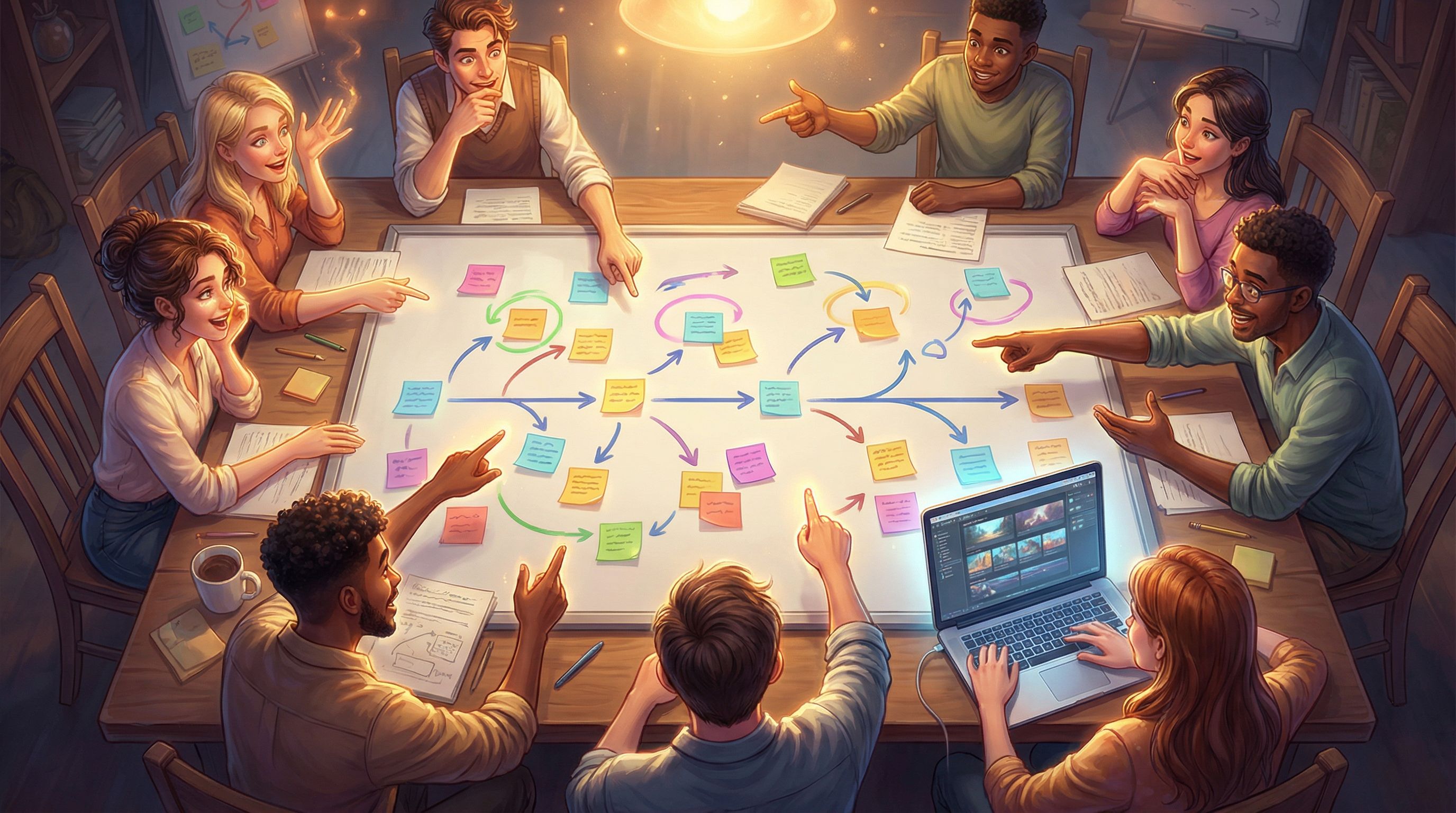
Step 4: Sketch the Branching Structure Like a Map
Before you start writing scenes, sketch the shape of your story.
Common structures for nonfiction:
- Fork and return. Branches diverge on short‑term tactics but reconverge on the same major event.
- Mirrored outcomes. Different choices lead to similar outcomes but with different costs or winners.
- Divergent futures. Key decisions lead to genuinely different end states (e.g., successful launch vs. public failure).
In Questas, use the visual editor to:
- Lay out your spine left‑to‑right.
- Add branches downward (or upward) from key nodes.
- Color‑code or label branches:
- “Actual history”
- “Counterfactual A: early disclosure”
- “Counterfactual B: quiet containment”
Keep an eye on branch explosion. A practical rule of thumb:
- Aim for 2–4 major branch points in a first version.
- Let each branch point create 2–3 options, not 5–7.
- Use soft reconvergence: different paths lead back into shared scenes, but characters’ attitudes, resources, or reputations differ based on what the player did.
If you’re short on time, the one‑evening prototype approach from The One-Evening Story Sprint: Shipping a Complete Questas Prototype from Blank Page to Playtest works beautifully here: build a minimal version of your nonfiction timeline, then expand after playtests.
Step 5: Use AI to Draft Scenes Without Losing Truth
Once your structure is in place, it’s time to fill in scenes.
Inside Questas, you can:
- Use AI to draft dialogue based on role descriptions and constraints.
- Generate summaries of complex documents (e.g., policy texts, press releases) to keep scenes readable.
- Ask AI to propose three variants of a scene tone (e.g., “measured and cautious,” “defensive,” “transparent and vulnerable”).
To keep nonfiction grounded:
-
Anchor every scene in a source.
- Quote or paraphrase from meeting notes, emails, articles, interviews.
- Link out to primary documents when appropriate.
-
Label speculative content.
- Clearly mark branches that are counterfactual: “In reality, the team chose X. This branch explores what might have happened if they’d chosen Y.”
-
Preserve the constraints.
- When AI suggests unrealistic options (“Just double the budget”), revise to reflect actual limits.
-
Use AI as co‑writer, not ghostwriter.
- Let AI propose drafts, then you:
- Trim jargon
- Correct facts
- Add nuance
- For more on this mindset, see AI as Co‑Writer, Not Ghostwriter: Collaborative Writing Workflows for Complex Questas Plots.
- Let AI propose drafts, then you:
A helpful pattern:
- Write the canonical scene first (what really happened).
- Duplicate the node for each counterfactual branch.
- Edit each duplicate to show how different choices shift:
- Who speaks up
- What information is shared
- How tense or hopeful the room feels
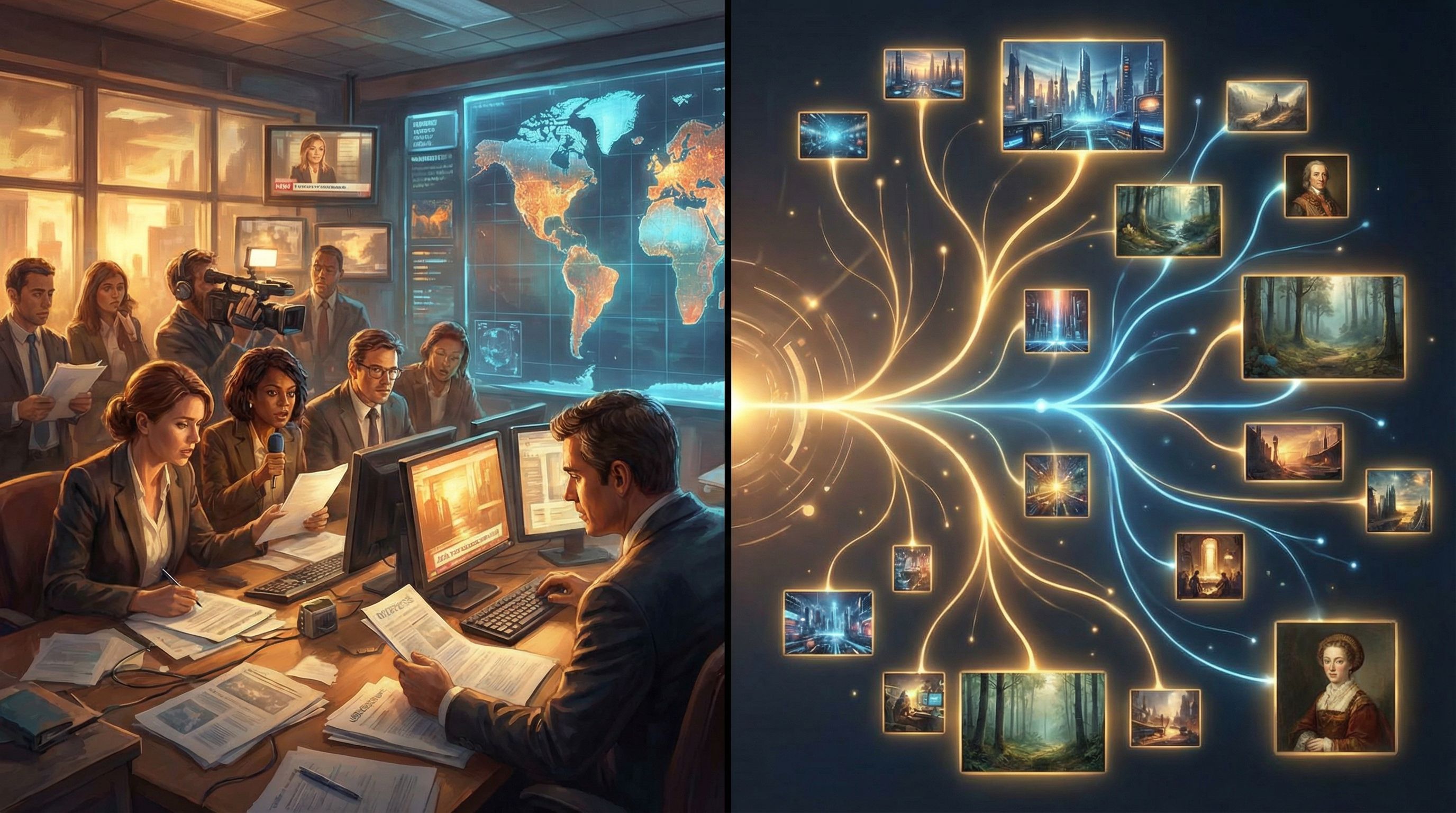
Step 6: Generate AI Visuals That Clarify, Not Distort
Nonfiction visuals carry extra responsibility: they shape how people imagine real individuals, communities, and events.
When you’re using AI image and video tools inside Questas:
-
Focus on context and mood, not faces.
- Use wide shots of rooms, dashboards, cityscapes, whiteboards, or symbolic imagery.
- Avoid photorealistic depictions of real individuals unless you have consent and a clear reason.
-
Use consistent visual language.
- Keep color palettes, camera angles, and environments consistent across branches so players can easily track where they are in the timeline.
-
Avoid sensationalism.
- Don’t exaggerate disasters, violence, or suffering for drama.
- Represent sensitive topics with care and clarity.
-
Label composite or illustrative images.
- Add captions like “Illustrated reconstruction of the war room” or “Symbolic representation of the decision point.”
If you’re building image‑heavy timelines, the principles from AI Visual Etiquette: Avoiding Tropes, Stereotypes, and Overload in Image-Heavy Questas Stories apply directly—especially around representation and avoiding cliché.
Step 7: Design Choices That Teach, Not Just Entertain
Branching nonfiction shines when every choice teaches something—about tradeoffs, ethics, or systems.
When writing options at each branch point, aim for:
- Plausibility. Every option should be something a reasonable person might choose in that moment.
- Clarity of stakes. Briefly signal what each option is optimizing for (e.g., “protect brand reputation,” “protect employee safety,” “protect short‑term revenue”).
- No obvious “correct” answer. Real decisions are messy. Let options reflect competing values.
You can reinforce learning by:
- Adding post‑scene reflections: short debriefs that explain how similar choices played out in reality.
- Letting characters call out the downsides of the path the player chose.
- Including “historian’s notes” that unlock after a full run, comparing the player’s path to the actual timeline.
For training scenarios (HR, leadership, coaching), this aligns with making tough conversations playable—similar to what’s explored in posts like Office Politics, But Make It Playable and Branching Narratives for Therapists and Coaches.
Step 8: Test with Real Participants and Refine
Once you have a playable draft in Questas:
-
Run small playtests.
- With people who lived through the events (if possible).
- With learners or readers who know nothing about the story.
-
Ask targeted questions:
- Where did you feel the most tension?
- Which choices felt unrealistic or too easy?
- What did you learn that you didn’t get from the original article/report?
- Where did you feel lost in the branching structure?
-
Watch how they navigate.
- Do they skim or read carefully?
- Do they replay branches?
- Do they feel compelled to “optimize” for a perfect outcome, or are they exploring?
-
Iterate the map, not just the prose.
- Merge branches that feel redundant.
- Add a new branch where everyone asks, “What if I could do X here?”
- Tighten or expand scenes based on where attention naturally spikes.
Over time, your nonfiction Questas becomes a living artifact—a way to revisit and re‑interrogate real events as new information or perspectives emerge.
Practical Use Cases to Spark Ideas
If you’re wondering how to apply this in your own work, here are a few concrete patterns:
-
Interactive postmortems.
- Turn a project or incident review into a branching timeline where new hires can “play through” the decisions and see how alternative choices might have changed outcomes.
-
Policy change journeys.
- As explored in Beyond PDFs and Portals: How HR Teams Can Turn Policy Rollouts into Playable Questas Change Journeys, let employees explore what different interpretations of a policy look like in practice.
-
Customer journey documentaries.
- Build a story where the player is the customer, choosing between options, support channels, and competitors—then reveal which path matches your real data.
-
Brand or product origin stories.
- Let your audience step into the founder’s shoes at key inflection points: raising or not raising funding, pivoting or persevering, choosing one market over another.
-
Investigative explainers.
- For journalists or comms teams, turn complex investigations into playable explainers where readers follow leads, decide when to publish, and see the consequences.
Bringing It All Together
AI storyboarding for nonfiction is about more than cool visuals or clever branching.
It’s about:
- Treating real events as systems of decisions, not just stories with tidy endings.
- Using tools like Questas to map those systems visually, then invite audiences to explore.
- Leveraging AI to accelerate drafting and illustration while you stay in charge of truth, nuance, and ethics.
When you:
- Choose a nonfiction moment with real stakes
- Build a clear timeline spine
- Identify meaningful branch points
- Sketch a manageable branching structure
- Use AI carefully to draft scenes and visuals
- Design choices that illuminate tradeoffs
- Playtest and refine based on real feedback
…you end up with something rare: nonfiction that doesn’t just inform, but lets people live inside the decisions that shaped reality.
Ready to Map Your First Real-World Timeline?
You don’t need a studio, a dev team, or a full documentary budget to start.
Pick one real event—a launch, a crisis, a negotiation, a personal turning point—and:
- Write a six‑scene spine of what actually happened.
- Circle two moments where different choices were seriously considered.
- Open Questas and:
- Drop those six scenes into a linear path.
- Add two branch points with 2–3 options each.
- Use AI to draft scene text and generate 3–5 illustrative images.
By the end of a single focused session, you can have a playable prototype: a branching nonfiction timeline others can step into.
Your real experiences—and your organization’s real history—are already full of choices, tension, and what‑ifs. AI storyboarding just gives you the tools to make those moments explorable.
Adventure awaits in the stories that actually happened. Now it’s your turn to map them.