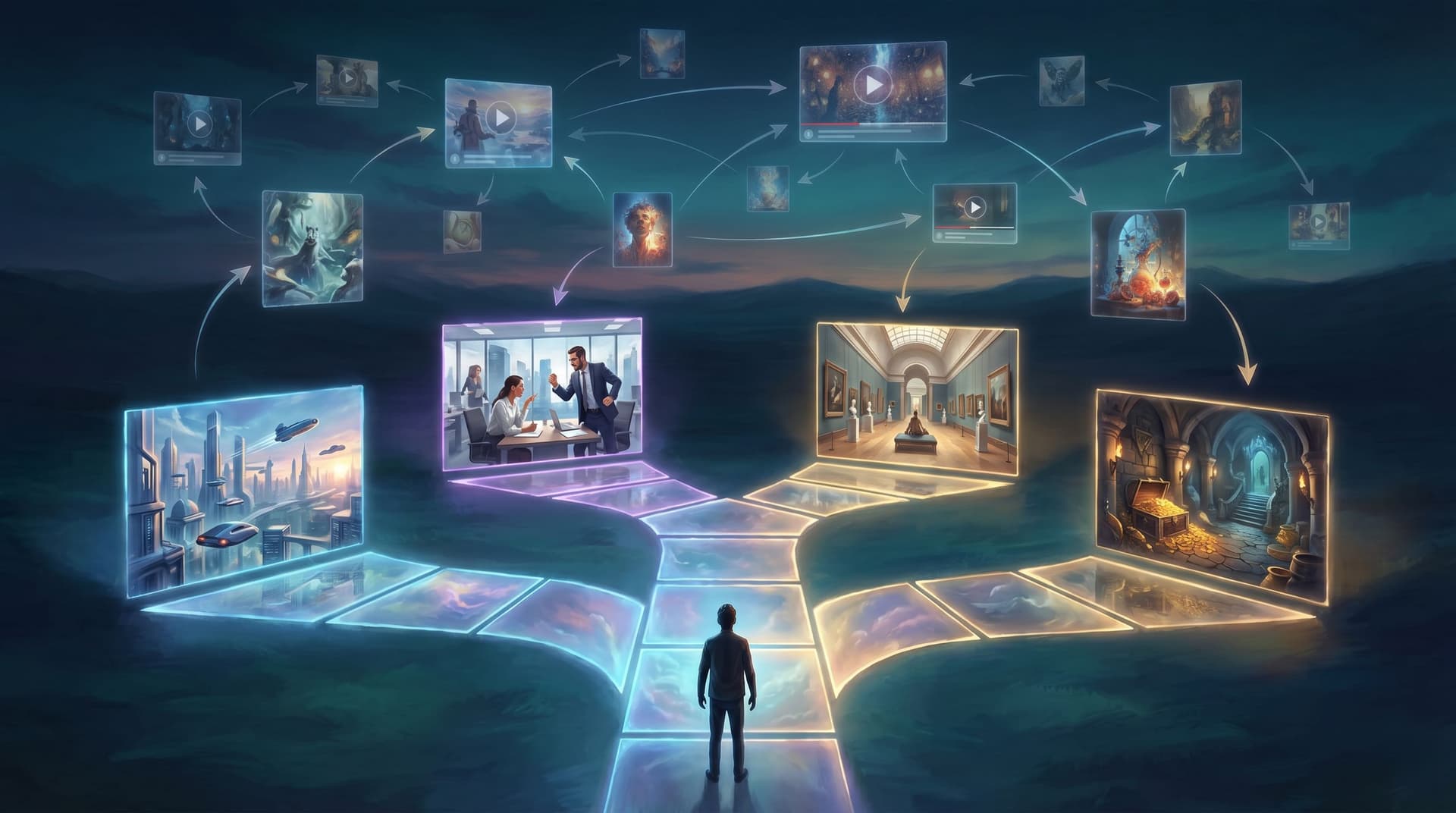
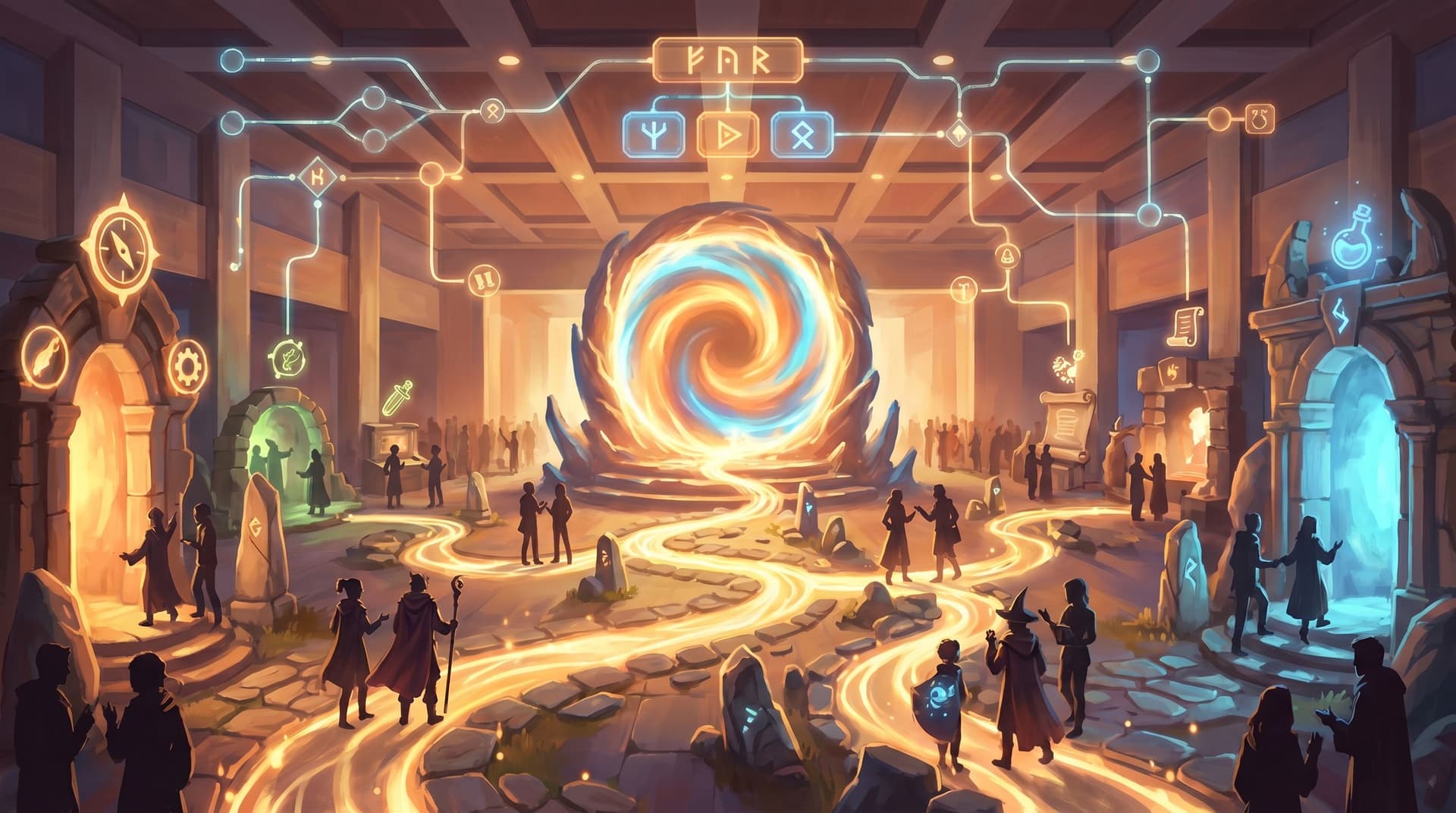
Beyond Badges and Leaderboards: Designing Intrinsic Motivation Loops in Your Questas Worlds

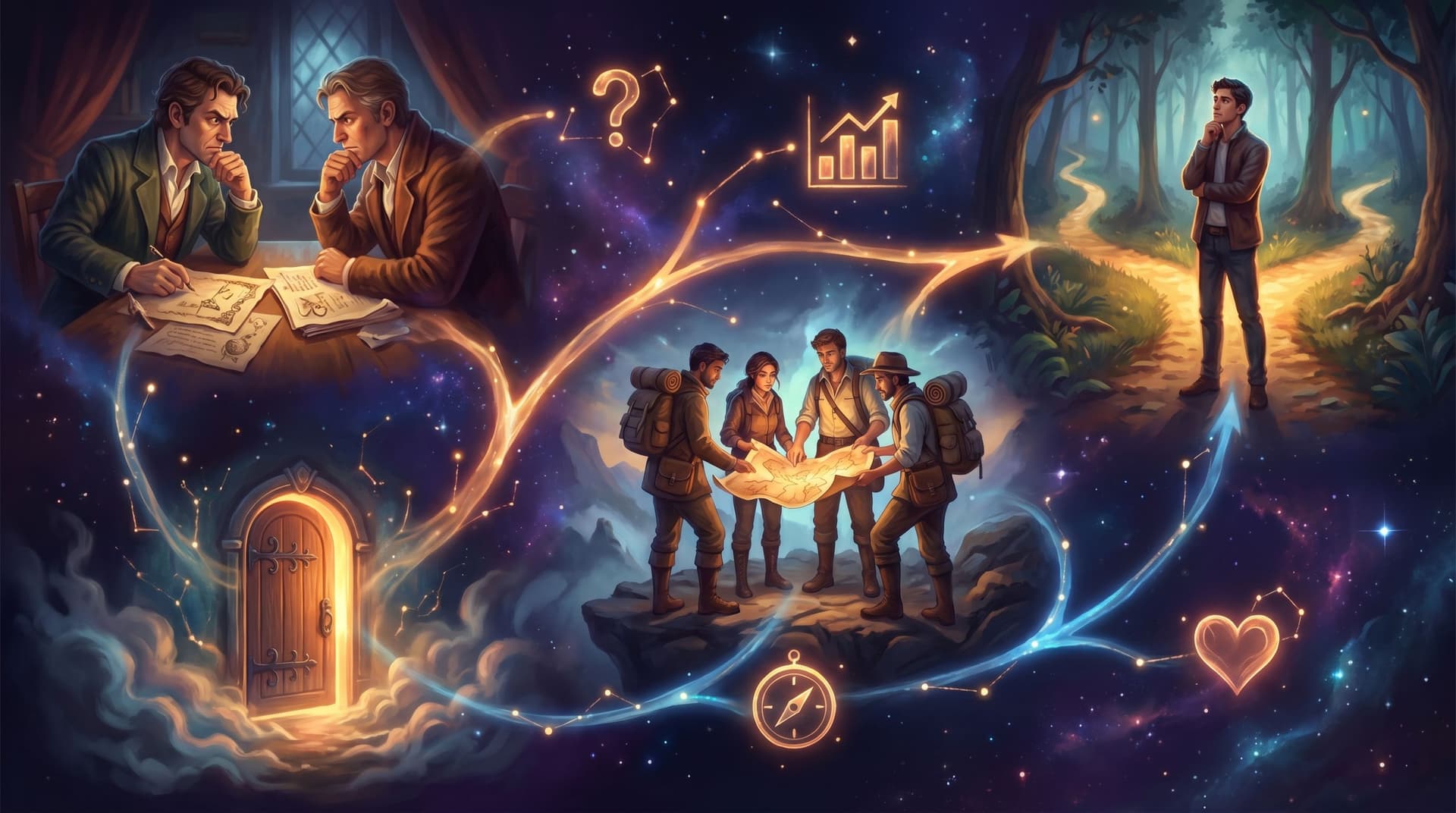
Most creators start with the same toolkit when they want players to care:
- Points
- Badges
- Leaderboards
- Progress bars
Those can work—but they’re also fragile. Once the novelty wears off, people stop showing up. If your interactive story lives or dies on a streak counter, you’re always one notification away from churn.
To build Questas worlds that people return to, talk about, and replay, you need something deeper: intrinsic motivation loops—design patterns that make the experience rewarding for its own sake.
Questas gives you the scaffolding: branching choices, AI‑generated images and video, and a visual, no‑code editor. Intrinsic motivation loops are how you turn those raw materials into worlds players want to inhabit, not just “complete.”
This post will walk through what intrinsic motivation looks like in interactive stories, then break it down into concrete design moves you can apply scene by scene.
Why Intrinsic Motivation Matters for Interactive Stories
Extrinsic rewards (badges, XP, ranks) are about what you get for playing.
Intrinsic motivation is about how it feels to play:
- Curiosity – “I need to know what happens if I choose the other option.”
- Mastery – “I’m getting better at reading this world and its systems.”
- Autonomy – “My choices actually matter here.”
- Meaning – “This story connects to something I care about.”
For branching narratives built in Questas, intrinsic motivation is especially powerful because:
- Branching is expensive. Every new path you build costs time and attention. Intrinsic loops help you get more replay and reflection out of each branch.
- Your audience is diverse. Learners, fans, sales reps, museum visitors—they all respond differently to external rewards. Intrinsic levers like curiosity and mastery cut across those differences.
- You want replayability, not just completion. A well‑designed Questas world should invite people back to explore alternate routes, not just check a box and move on.
If you’ve ever read about Self‑Determination Theory (the psychology framework behind autonomy, competence, and relatedness), you’ve seen the backbone of intrinsic motivation design. Here, we’ll translate those ideas into concrete patterns you can implement in your next story.
The Four Pillars of Intrinsic Motivation in Questas Worlds
Think of intrinsic motivation as four overlapping pillars you can weave through your story.
1. Curiosity: Designing for "What’s Around the Corner?"
Curiosity is the engine of exploration. In a branching story, it’s the difference between “I finished it” and “I have to see that other path.”
You can design for curiosity by:
-
Showing consequences, not just labels. Instead of a choice like:
- [Ask about the artifact] / [Ignore it]
Try:
- [Ask why the artifact is locked behind three alarms]
- [Quietly note the serial number for later]
Each option hints at a different future, which invites speculation.
-
Planting unanswered questions early. Drop small mysteries—unexplained symbols, half‑finished messages, conflicting accounts—that pay off only on certain branches.
-
Using AI visuals as hooks. In Questas, you can render a striking image of a door, a skyline, or a character with a subtle anomaly (a glowing sigil, a mismatched shadow). That single visual can fuel three or four branches of curiosity.
If you want more ideas on using visuals to seed intrigue, see how an image‑first approach can drive story structure in AI‑First Worldbuilding: Letting Images, Not Outlines, Lead Your Next Interactive Quest.
2. Mastery: Letting Players Get Better at Your World
Mastery is the sense that “I’m learning the rules here.” In interactive fiction, that can mean:
- Understanding how factions react
- Spotting patterns in puzzles
- Predicting the emotional fallout of a choice
You can design for mastery by:
-
Surfacing learnable systems. Instead of purely arbitrary outcomes, create simple, consistent rules:
- The Rebels approve when you protect civilians, disapprove when you sacrifice them.
- The AI trusts you more when you share data, less when you obfuscate.
Then let players see those rules echo across multiple scenes.
-
Using soft fail states. Rather than hard “Game Over” screens, let players recover—but with consequences they can learn from. If they fail a negotiation, maybe they can still progress, but with fewer allies and resources.
-
Rewarding pattern recognition. Include callbacks where a player who remembers a clue or recognizes a recurring symbol unlocks a better outcome or a hidden scene.
For a deeper dive into building these systems visually, without code, check out No‑Code, All Systems: Building Reputation, Factions, and Hidden Meters in Questas Without a Dev Team.
3. Autonomy: Making Choices Feel Like Choices
Autonomy is about agency. Even if your story has clear learning goals or brand beats, players should feel like they’re steering.
Design for autonomy by:
-
Avoiding fake choices. If every option leads to the same paragraph with a different opening sentence, players will feel it. You don’t need huge divergence every time, but:
- Short‑term: let choices change tone, information revealed, or who’s with you.
- Long‑term: let a subset of choices reshape later scenes.
-
Offering different play styles. Design routes for:
- The cautious investigator
- The bold risk‑taker
- The empathetic diplomat
- The data‑driven analyst
Even if they converge on key beats, the path should feel tailored.
-
Letting players set goals. Early on, ask what they care about:
- “What matters most to you in this mission?” (Protecting civilians / Uncovering the truth / Advancing your career)
Then echo that preference in later scenes—NPCs reference it, opportunities appear that align with it, and endings reflect how well they honored their priority.
4. Meaning: Connecting Story Outcomes to Real Stakes
Meaning is where interactive stories stop feeling like quizzes and start feeling like experiences that stick.
You can heighten meaning by:
-
Grounding choices in real trade‑offs. Instead of right/wrong answers, present dilemmas:
- Save time vs. preserve relationships
- Hit a metric vs. uphold a value
- Protect one group vs. another
-
Connecting to real contexts. For training and education, anchor your Questas world in the learners’ reality. That’s the core idea behind Scenario‑First Story Design: Building Training Questas That Start with Real‑World Decisions.
-
Letting endings reflect values, not just success. A “win” ending that violates the player’s chosen values should feel hollow; a bittersweet ending that honors them can feel deeply satisfying.

Turning Motivation Theory into Concrete Loops
Pillars are helpful, but loops are what keep people coming back. A motivation loop is a repeatable pattern:
Player takes an action → World responds in a meaningful way → Player feels something satisfying → Player is invited to act again, with new information or abilities.
Let’s build three types of loops you can implement directly in Questas.
Loop 1: Curiosity–Resolution–New Mystery
Goal: Keep players exploring branches without relying on streaks or checklists.
Pattern:
-
Seed a question.
- A cryptic warning from a side character
- A strange symbol in an AI‑generated image
- A discrepancy between two NPC accounts
-
Let the player choose how deeply to investigate.
- Ignore it and focus on the main objective
- Ask a direct question
- Quietly gather more evidence
-
Pay off the question in a satisfying way.
- Reveal a secret room, a hidden motive, or a new mechanic
-
Immediately open a new, slightly bigger question.
- The secret room contains evidence that someone on the inside is involved.
-
Echo the loop across branches.
- Even if players take different routes, they encounter parallel curiosity–resolution–new mystery beats.
How to build it in Questas:
- Use the visual editor to mark “mystery threads” with color‑coded nodes.
- Attach images with subtle clues (a recurring emblem, a familiar silhouette in the background) using AI generation.
- Ensure each mystery has at least one satisfying resolution, plus one branch where it remains unresolved to fuel replay.
Loop 2: Choice–Consequence–Reflection
Goal: Make choices feel weighty and memorable without punishing players.
Pattern:
-
Present a meaningful dilemma.
- Example: In a health and safety scenario, choose between evacuating immediately or staying to secure hazardous materials.
-
Show immediate consequences.
- Visuals shift: alarms, smoke, or relieved colleagues.
- NPC reactions: praise, anger, or fear.
-
Surface delayed consequences later.
- A later scene reveals that your choice affected long‑term trust, legal risk, or team morale.
-
Offer a moment of reflection.
- Let an NPC ask, “Would you make the same call again?”
- Present multiple reflective responses that don’t change the outcome but do change how the story frames it.
-
Feed that reflection into future choices.
- Tag the player’s reflective answer and use it to unlock a more nuanced option in a later dilemma.
How to build it in Questas:
- Use variables to track key decisions (e.g.,
evacuate_now = true). - Branch later scenes based on those flags to show delayed consequences.
- Create short “reflection scenes” that don’t branch heavily but reframe what just happened, reinforcing learning and meaning.
If you’re building compliance or safety content, this loop pairs well with the ideas in Branching Narratives for Health and Safety: Turning Procedures and Protocols into Rehearsable Questas Scenarios.
Loop 3: Experiment–Feedback–Improvement
Goal: Encourage replay and experimentation without feeling grindy.
Pattern:
-
Present a challenge with multiple viable approaches.
- Negotiate a deal
- Plan a heist
- Resolve a conflict between teammates
-
Let the player try a strategy.
- Direct confrontation
- Charm and rapport
- Data‑driven logic
- Quiet manipulation
-
Give clear, specific feedback.
- NPCs explicitly reference what worked and what didn’t.
- System‑level feedback: a hidden “trust” or “heat” meter changes, unlocking or closing routes.
-
Offer a chance to try again with new information.
- A replay of the same scene from a different angle
- A later, similar challenge where the player can apply what they learned
-
Celebrate growth, not just success.
- Endings and epilogues highlight how the character has changed, not only whether they “won.”
How to build it in Questas:
- Reuse scene templates with different parameters (e.g., a negotiation format applied to different stakeholders).
- Track strategy choices via tags, and reference them in later scenes.
- Use AI‑generated visuals to subtly show improvement (posture, environment, expressions) across repeated challenges.
For inspiration on designing replayable encounters, especially in adventure or RPG‑style stories, see AI as Dungeon Builder: Designing Replayable Dungeons, Raids, and Heists in Questas.
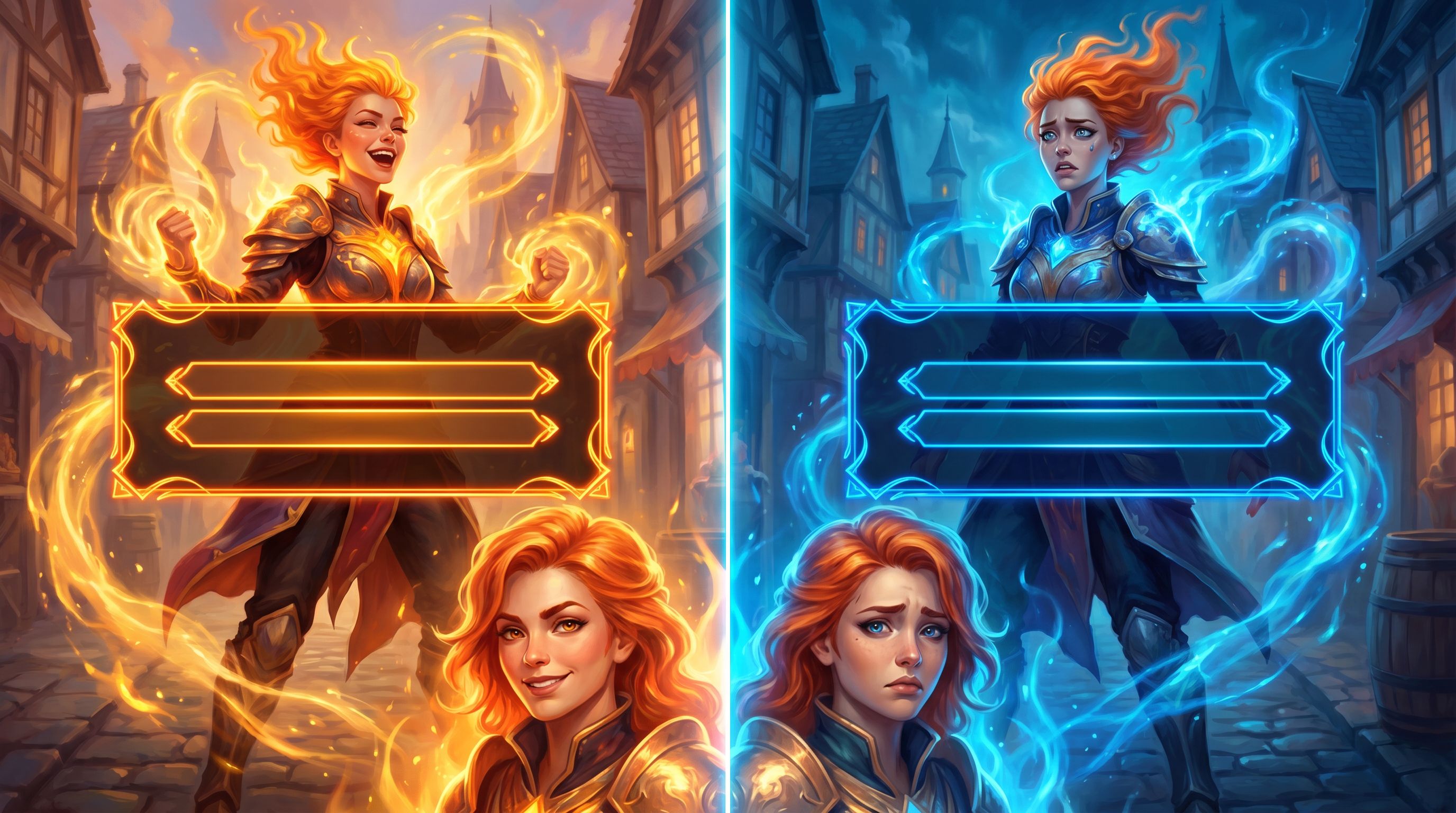
A Practical Blueprint: Building an Intrinsic Loop into Your Next Questas
Here’s a step‑by‑step way to apply all of this to your next project.
Step 1: Decide What You Want Players to Feel, Not Just Learn
Before you open Questas, answer:
- Do you want players to feel curious and exploratory?
- Do you want them to feel competent and growing?
- Do you want them to feel responsible for outcomes?
- Do you want them to feel seen in their preferences and values?
Pick 1–2 primary feelings. Those will guide your loops.
Step 2: Sketch One Core Loop on Paper
Choose a loop type (Curiosity–Resolution–New Mystery, Choice–Consequence–Reflection, Experiment–Feedback–Improvement) and:
- Draw 5–7 nodes representing scenes.
- Label each with its role in the loop (e.g., Seed question → Investigate → Reveal → Bigger question).
- Note where you’ll use visuals, variables, and NPC reactions.
You don’t need the whole story yet—just one solid loop you can repeat.
Step 3: Build the Loop in Questas First
In the visual editor:
- Create the scenes for your loop.
- Add branching choices that clearly signal different strategies or curiosities.
- Wire up variables where needed to track key decisions.
- Drop in AI‑generated images or video that:
- Highlight mysteries
- Emphasize consequences
- Show progression over time
Resist the urge to fill in every possible branch yet. Get one loop feeling great.
Step 4: Playtest for Feelings, Not Just Bugs
Share your Questas prototype with a small group. Instead of only asking, “Did anything break?”, ask:
- Where did you feel most curious?
- When did you feel like your choice really mattered?
- Did you ever feel like the story was lecturing you?
- Did you want to replay any part? Why or why not?
Their answers will tell you whether your intrinsic loops are landing.
If you want a structured way to reach a playable prototype quickly, combine this approach with the process from The One‑Evening Story Sprint: Shipping a Complete Questas Prototype from Blank Page to Playtest.
Step 5: Layer, Don’t Stack, Your Loops
Once one loop works, layer others on top:
- Add curiosity loops around your mastery challenges.
- Add reflection beats after your experimental replays.
- Add values‑based endings that give meaning to all of the above.
The goal isn’t complexity for its own sake. It’s to create a coherent emotional rhythm:
Explore → Decide → See consequences → Reflect → Try again with new insight.
Step 6: Use Extrinsic Rewards as Amplifiers, Not Crutches
Badges, progress markers, and completion percentages aren’t the enemy—they just shouldn’t be the only reason to keep going.
Use them to:
- Highlight meaningful milestones (“You uncovered all three conspiracy threads.”)
- Celebrate experimentation (“You tried every negotiation style at least once.”)
- Encourage reflection (“You experienced two endings with conflicting values.”)
When extrinsic rewards point back to intrinsic experiences, they amplify motivation instead of replacing it.
Bringing It All Together
Designing intrinsic motivation loops in your Questas worlds isn’t about adding more features. It’s about being intentional with the tools you already have:
- Curiosity: Seed mysteries, pay them off, and open bigger questions.
- Mastery: Expose simple, learnable systems and let players get better at them.
- Autonomy: Offer real choices, distinct play styles, and value‑aligned goals.
- Meaning: Tie outcomes to real trade‑offs, contexts, and values.
When you wrap those pillars into repeatable loops—Curiosity–Resolution–New Mystery, Choice–Consequence–Reflection, Experiment–Feedback–Improvement—you get stories that people don’t just finish. They remember them, argue about them, and come back to see what else your world can do.
Your Next Move
You don’t need to rebuild your entire story to start designing intrinsic motivation loops.
- Open an existing or new project in Questas.
- Pick one scene where a decision feels flat or purely informational.
- Turn it into a small loop:
- Add a mystery or dilemma.
- Show a clear, emotional consequence.
- Add a reflection beat or a chance to try again differently.
Ship that change. Watch how your next batch of players responds.
Then, loop back.
Adventure awaits—not just for your players, but for you as a designer learning how to build worlds people want to return to.